 Ferndale
 Decking on Lummi Island Faces a Different Set of Problems
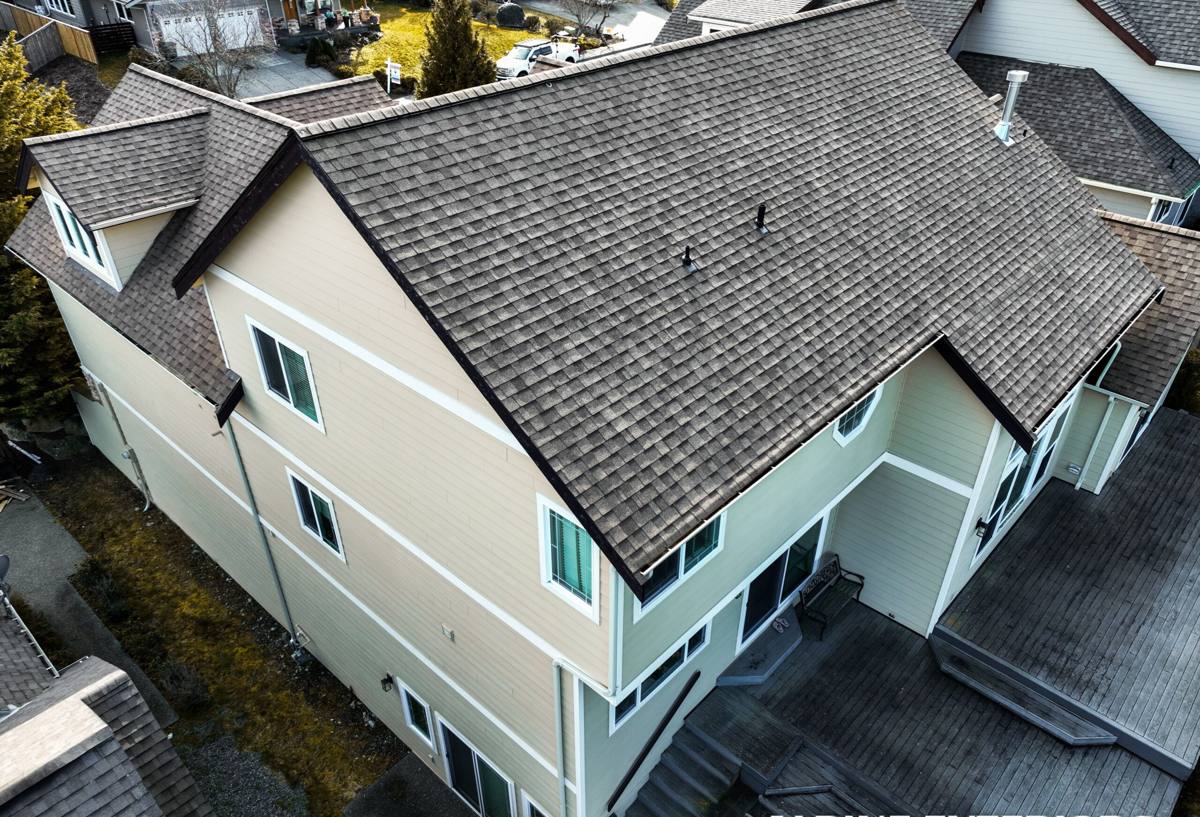
A deck built on Lummi Island isn't working under the same conditions as one built twenty miles inland. Between the salt-laden air coming off the water, the long stretch of wet months typical of Whatcom County, and the shade and moisture that let moss and algae take hold on almost any horizontal surface, an island deck ages faster than most homeowners expect if it wasn't built with those conditions in mind. This page is about what that actually means for a composite decking project here — what the climate does to decking, what a correctly built deck needs to resist it, how we approach the work, and why experience specific to this island matters more than it would in a drier, more sheltered location.
What Salt Air, Rain, and Moss Actually Do to a Deck
These three factors don't act alone — they compound each other, and understanding how each one works is the difference between a deck that lasts and one that needs premature repair.
Salt Air
Airborne salt from the surrounding water settles on every exposed surface of a home, including the deck. On wood decking, salt accelerates the breakdown of surface fibers and pulls moisture into the grain even between rain events, which speeds up cupping, splitting, and fastener corrosion. On metal fasteners, flashing, and hardware, salt exposure is one of the fastest ways to trigger rust and galvanic corrosion, especially where two dissimilar metals meet. Composite decking doesn't have wood grain for salt to work into, but the fasteners, screws, joist hardware, and any exposed metal railing components underneath and around it are just as exposed as they would be on a wood deck — which is why hardware selection matters as much as the decking material itself.
Driving Rain
Whatcom County gets a long wet season, and on the island that rain often comes with wind, driving moisture sideways into ledger connections, under rail posts, and into any gap in the substructure that isn't properly flashed or sealed. Standing water on a deck surface, or trapped moisture underneath it, is the single biggest cause of deck failure regardless of what decking material sits on top — it just shows up differently depending on the material. Wood surfaces rot; composite surfaces don't rot, but the frame underneath still can if it isn't wood that's rated for ground or weather contact, or if drainage under the deck is poor.
Moss and Algae
Shaded, damp decks on the island grow moss and algae readily, especially on north-facing exposures or under tree cover. Moss holds moisture against whatever surface it's growing on, and on a wood deck that means accelerated rot right where the growth sits. On composite decking, moss and algae mostly sit on the surface rather than working into the material, but they still create a slip hazard and, left unaddressed for a full season, can stain some composite surfaces enough that cleaning takes real effort to reverse.
Why Composite Decking Is a Strong Fit for This Environment
Composite decking doesn't solve every problem the island climate creates, but it removes the biggest one: it doesn't rot, splinter, or absorb moisture into its structure the way wood does. That matters a lot here, because a wood deck on Lummi Island is fighting rot from day one in a way a deck built inland isn't. Composite boards are manufactured from a mix of wood fiber and plastic (formulations vary by manufacturer and product line), which gives them a consistent, sealed surface that doesn't need annual staining or sealing to hold up against rain and salt air. That said, composite isn't maintenance-free — it's maintenance-different, and we'll get into what that maintenance actually looks like further down.
We should be upfront about trade-offs rather than oversell the material. Composite decking costs more up front than pressure-treated wood, it can get noticeably warmer underfoot in direct summer sun than wood does, and lower-quality composite products have historically had issues with moisture uptake at cut edges or surface fading — which is why board selection and correct edge treatment during installation matter, not just the fact that it's "composite."
What a Correctly Built Composite Deck Involves
The decking boards themselves are the visible part of the job, but most of what determines whether a deck holds up on Lummi Island happens underneath, before a single composite board goes down.
Substructure and Framing
The frame — ledger, joists, beams, posts, and footings — carries the weight and takes the brunt of moisture exposure over time. On the island, we treat this as the part of the job that determines the deck's real lifespan, since composite boards can outlast a poorly built frame underneath them by decades if the frame isn't done right the first time.
Ledger Flashing and Waterproofing
Where a deck attaches to the house is the single most common point of failure on any deck, coastal or not, because it's where water is most likely to get trapped against the structure. Correct flashing — set in the right order relative to the house's weather-resistant barrier, with proper counter-flashing and no gaps — keeps driving rain from working its way into the ledger connection and, eventually, into the house framing itself.
Joist Protection
Composite decking manufacturers generally require or strongly recommend joist tape over the top of each joist. In a high-rain, high-humidity environment like this one, that tape is doing real work: it sheds water off the top of the joist instead of letting it pool and soak in around every screw hole, which is exactly the kind of slow, hidden damage that shows up as soft framing years later.
Fasteners and Hardware
Given the salt exposure on the island, we use fasteners and structural hardware rated for coastal or corrosive environments rather than standard-grade hardware. This is a small cost difference at install time and a significant difference in how the connections hold up over years of salt air.
Drainage and Airflow Underneath
A deck built low to the ground or over damp, poorly draining soil traps moisture underneath it, which keeps the frame wet longer after every rain and gives moss and mildew a place to establish. Grading, ventilation gaps, and in some cases a drainage system under the deck surface all factor into keeping the underside of the structure as dry as the top.
Board Spacing and Fastening
Composite boards expand and contract with temperature more than wood does, and manufacturers specify gap tolerances between boards and at butt joints for exactly that reason. Getting this wrong shows up later as buckling, uneven gaps, or fasteners backing out — problems that are avoidable with correct spacing at the time of install.
Pre-Install Checklist We Work Through on Every Project
- Confirm frame condition — replace or sister any joists, beams, or posts that don't meet current structural standards
- Verify ledger flashing and house weather barrier integration before the ledger is fastened
- Apply joist tape across all joist tops per manufacturer specification
- Select coastal-rated or corrosion-resistant fasteners and hardware throughout
- Check grading and drainage path under and around the deck footprint
- Confirm board spacing plan accounts for the specific composite product's expansion tolerances
- Review railing post attachment method for wind and code compliance
How Our Process Works, Start to Finish
We start with an on-site visit rather than quoting off photos or a phone description, because deck framing problems, drainage issues, and access constraints (getting materials to a Lummi Island property often means factoring in ferry logistics for delivery timing) are things you have to see in person to price accurately. From there:
- Assessment — we inspect the existing deck or build site, check soil and grading, and identify any structural issues that need to be addressed before decking goes down.
- Design and material selection — we walk through composite product options, colors, and board profiles based on the home's exposure (sun, shade, wind direction) and your budget.
- Written estimate — a clear scope covering framing work, materials, fasteners, flashing, railing, and labor, so there are no surprise line items mid-project.
- Permitting — deck projects of most sizes require a permit in Whatcom County; we handle that process as part of the job rather than leaving it to the homeowner.
- Build — frame first, then flashing and joist protection, then decking, then railing and any finishing trim.
- Final walkthrough — we go over the finished deck with you, including what maintenance to expect and how to care for the specific product installed.
Composite vs. Wood vs. PVC: How They Hold Up Here
| Material | Behavior in Salt Air & Rain | Moss/Algae Resistance | Upkeep |
|---|---|---|---|
| Pressure-treated wood | Prone to splitting, cupping, and fastener corrosion; needs the frame and surface protected annually | Low — moss holds moisture against the wood, accelerating rot | Annual cleaning, staining, or sealing |
| Composite decking | Doesn't absorb moisture into the board; hardware/frame still need coastal-rated protection | Moderate — sits on the surface, cleans off, doesn't rot the board | Periodic cleaning; no staining or sealing required |
| PVC (cellular) decking | Fully moisture-resistant board; similar frame and hardware considerations as composite | Moderate to good, varies by product surface texture | Periodic cleaning; higher material cost than composite |
We install composite most often on the island because it offers the best balance of upfront cost, moisture performance, and appearance for this climate — but PVC is a reasonable option for homeowners who want to minimize upkeep even further and are comfortable with the higher material cost, and we'll talk through that trade-off honestly if it's relevant to your project.
What Actually Drives the Cost of a Composite Deck Project
| Factor | Why It Matters |
|---|---|
| Existing frame condition | A deck rebuild on a sound, code-compliant frame costs far less than one requiring full frame replacement |
| Composite product tier | Board lines vary in price based on shell technology, color-fastness, and warranty length |
| Deck size and shape | Multiple levels, curves, or picture-frame border details add labor beyond simple square footage |
| Railing style | Composite, aluminum, cable, and glass railing systems carry very different material and install costs |
| Site access | Ferry-dependent material delivery and site access on the island can affect scheduling and logistics costs |
| Permitting requirements | Height above grade, guard requirements, and footing depth affect both cost and code compliance |
We don't publish flat per-square-foot pricing because these variables genuinely change the number from one property to the next — an accurate price comes from seeing the site, not a generic estimate.
Caring for a Composite Deck in This Climate
Composite decking cuts down on maintenance significantly compared to wood, but "low maintenance" isn't "no maintenance," especially with the moss season this area sees.
- Rinse or sweep debris off the deck surface regularly, especially in fall when leaf litter builds up fastest
- Clean visible moss or algae growth promptly with a soft brush and a cleaner rated for composite surfaces — avoid pressure washing at close range, which can damage the board surface
- Keep gutters and downspouts near the deck clear so runoff isn't draining directly onto the deck surface or the frame below
- Trim back overhanging vegetation where shade and moisture are keeping sections of the deck damp longer than the rest
- Check railing posts and fastener points annually for any signs of movement or corrosion, particularly after winter storm season
- Inspect the underside of the deck periodically for drainage issues or standing moisture, not just the visible surface
Why It Matters That We Already Work on Lummi Island
Building decks on the island isn't identical to building them anywhere else in Whatcom County. Material delivery has to account for ferry access, framing decisions have to account for salt exposure most inland jobs don't see, and drainage planning has to account for a wetter, mossier microclimate than a lot of the surrounding mainland. A crew that's already worked island properties has already solved the logistics and material questions that a first-time-on-the-island contractor is solving for the first time on your project. That experience shows up in fewer surprises during the build and a deck that's actually specified for the conditions it has to survive, not a generic build dropped into a coastal setting.
Get a Straightforward Estimate
If you're weighing a new composite deck or a replacement for a wood deck that's showing its age, we're happy to come take a look and give you a clear, no-pressure estimate based on your specific property and exposure. There's a form below — reach out and we'll get a visit scheduled.