 Ferndale
 Lummi Island Roofs Work Harder Than Most
A roof on Lummi Island isn't dealing with the same conditions as one twenty minutes inland. Sitting out in Rosario Strait, homes here take on salt-laden air, wind-driven rain off the water, and long stretches of damp, low-sun weather that keep roof surfaces wet far longer than they'd stay wet on a drier, more sheltered lot. Add in the tree cover common on the island and you get moss season that can run most of the year instead of a few weeks. None of that means a roof here is doomed to fail early — it means the installation has to account for what the site actually throws at it, not just what a generic spec sheet assumes.
This page is specifically about new roof installation for Lummi Island properties — full replacements, not patch repairs. If your roof is past the point where another repair makes sense, here's what a correct install looks like, what it costs to get right, and why hiring a crew that already understands this stretch of Whatcom County matters more than it might on the mainland.
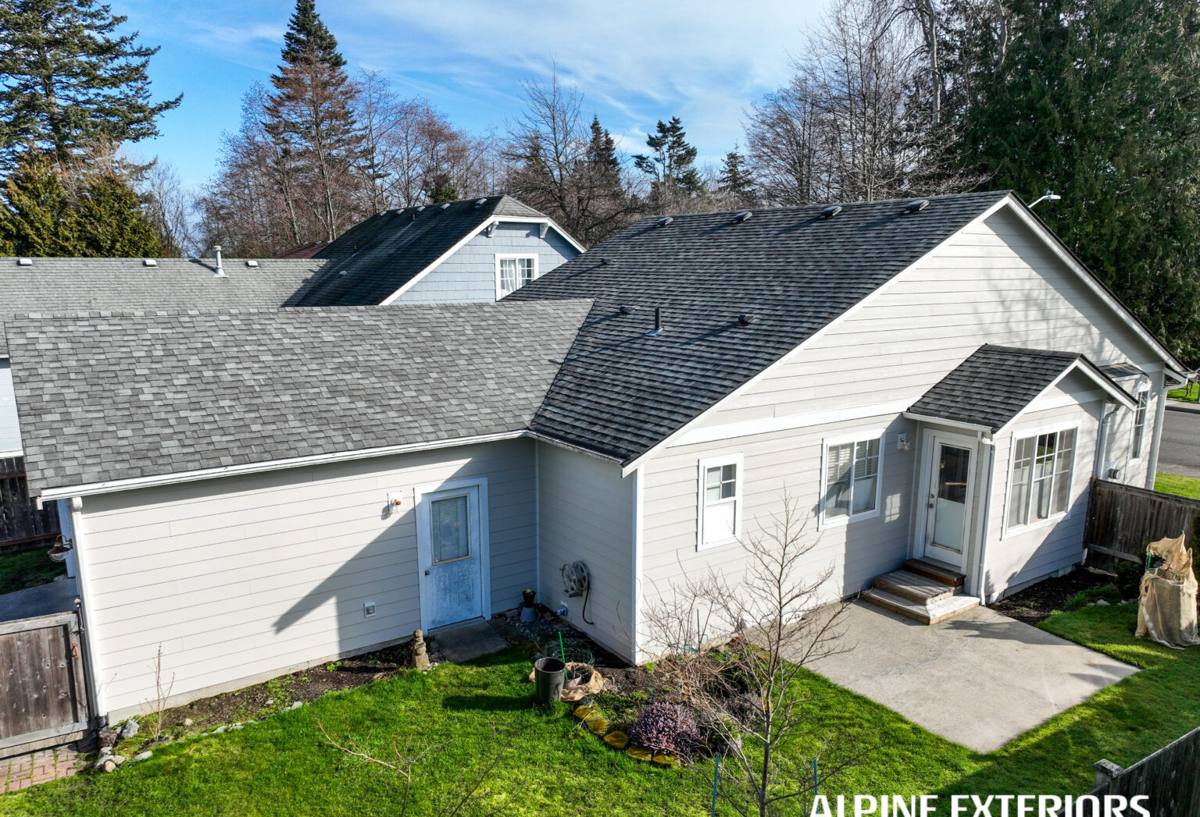
What Salt Air, Driving Rain, and Moss Season Actually Do
Each of these conditions attacks a roof differently, and a good installation plans for all three at once rather than treating them as separate problems.
Salt Air
Airborne salt accelerates corrosion on any exposed metal — nail heads, flashing, vent stacks, gutter hardware. Standard galvanized fasteners can start showing rust streaks years before they would inland. This is a fastener and flashing-material decision as much as anything, not something you can fix after the fact.
Driving Rain
Wind off the water doesn't just fall straight down — it drives rain sideways and up under shingle tabs, at ridge caps, and around any roof penetration. A roof that would shed water fine in a calm rain can leak in a wind-driven storm if the underlayment, flashing laps, and fastening pattern weren't installed with that wind direction in mind.
Extended Moss Season
Moss needs moisture and shade to establish, and Lummi Island has both for much of the year. Moss holds water against the roof surface, works its way under shingle edges, and — left unchecked — lifts and degrades roofing material well before its rated lifespan. The fix isn't just "install a roof," it's installing it in a way that limits where moss can gain a foothold in the first place.
Island Access Changes How a Roofing Job Has to Run
Getting to Lummi Island means a ferry crossing, and that has real, practical effects on a roofing project that a mainland job doesn't deal with:
- Material deliveries have to be scheduled around ferry sailings, not just a supplier's truck schedule.
- Weather windows matter more — a crew that has to catch a ferry back doesn't want to be mid-tear-off when a squall rolls in, so timing the exposed-deck window correctly is critical.
- Dumpster and debris hauling needs to be planned in advance rather than arranged same-day, since extra ferry trips add real time and cost.
- A crew unfamiliar with the ferry schedule can lose half a day without realizing it, which either stretches your project timeline or pushes a rushed decision on-site.
None of this is complicated, but it has to be planned for up front. A contractor who routinely works the island builds it into the schedule; a contractor who doesn't is learning it on your project.
What a Correct New Roof Installation Involves
A roof replacement is really a stack of individual details, and skipping or rushing any one of them is usually where premature failures come from.
Tear-Off and Deck Inspection
Full tear-off to the deck lets us actually see what's underneath — rot, soft spots, or old damage hidden by the previous roofing. On a coastal, moisture-heavy site like this, deck damage from long-term trapped moisture isn't rare, and any compromised sheathing gets replaced before anything new goes down. Installing over a bad deck just locks the problem in.
Underlayment and Water Protection
Given the driving rain here, we don't treat underlayment as a formality. Self-adhered ice-and-water membrane goes at eaves, valleys, and around penetrations — the places wind-driven rain is most likely to find a way in — with synthetic underlayment across the rest of the field for a consistent secondary water barrier.
Ventilation
Balanced intake and exhaust ventilation keeps the attic dry and temperature-stable, which does two things: it protects the roof deck from the underside, and it reduces the moisture buildup that helps moss and algae take hold on the surface above. A roof can have the best shingles available and still underperform if the attic underneath is trapping moisture.
Flashing and Roof-to-Wall Details
Chimneys, skylights, dormers, and roof-to-wall transitions are where most leaks actually start — not in the open field of shingles. We use corrosion-resistant flashing material given the salt air, and step flashing is woven correctly at every wall intersection rather than relying on caulk to do a flashing detail's job.
Choosing a Roofing Material for This Site
There's no single "best" roofing material for every home — it depends on your roof's exposure, your budget, and how much long-term maintenance you want to take on. Here's how the common options stack up for a marine, moss-prone environment like Lummi Island:
| Material | How It Handles Salt Air | How It Handles Moss | Typical Lifespan |
|---|---|---|---|
| Architectural asphalt shingle | Good, with corrosion-resistant fasteners and flashing | Moderate — benefits from algae-resistant granules and good ventilation | 25–30 years |
| Standing seam metal | Excellent, especially with a marine-grade coating | Very good — smooth surface sheds moss more easily than textured shingles | 40–50+ years |
| Cedar shake | Fair — needs regular maintenance and treatment | Poor without diligent upkeep — wood holds moisture and is a natural moss substrate | 20–30 years with upkeep |
| Synthetic shake/slate | Good | Good — non-organic surface doesn't feed moss growth | 40–50 years |
We install roofing systems as a professional standard we can stand behind, which is why we're direct about trade-offs. Cedar shake, for example, looks great and has a long history on this coast, but on a site with this much shade and moisture, it demands a maintenance commitment — regular treatment and moss removal — that a lot of homeowners underestimate when they choose it. That's not a knock on the material, it's an honest read of what it takes to keep it performing here.
Our Process, Start to Finish
- Free on-site inspection — we assess your current roof, attic ventilation, and any problem areas, and take ferry logistics into account when scheduling.
- Written estimate — material options, scope, and a clear price, with no pressure to decide on the spot.
- Scheduling — timed around weather and ferry sailings so the deck isn't left exposed longer than necessary.
- Tear-off and deck repair — full removal, inspection, and replacement of any compromised sheathing.
- Installation — underlayment, flashing, ventilation, and roofing material installed to manufacturer specification and the details this climate demands.
- Cleanup and walkthrough — full site cleanup, magnetic sweep for debris, and a final walkthrough before we call the job done.
What Drives the Cost of a New Roof Here
Every roof is priced based on its own specifics, but the main variables that move the number are consistent:
| Factor | Why It Matters |
|---|---|
| Roof size and pitch | More area and steeper slopes mean more material and labor time |
| Number of penetrations | Chimneys, skylights, and vents each need individual flashing work |
| Deck condition | Rotted or soft sheathing found during tear-off adds repair cost |
| Material choice | Asphalt, metal, and synthetic products carry different material costs |
| Site access | Ferry scheduling and staging space on the lot affect labor time |
Most full roof replacements on a typical home fall in a broad mid-to-upper thousands range and go up from there with roof size, material choice, and any deck repair needed. We won't give you a real number until we've actually looked at the roof — anything else is a guess.
Signs You Need a New Roof, Not Another Patch
- Shingles curling, cracking, or losing granules across large sections rather than one isolated spot
- Daylight visible through the attic roof deck
- Recurring leaks in different locations after repairs
- Heavy, established moss growth that keeps returning after cleaning
- Soft or spongy spots when walking the roof
- Roof is at or past its material's expected lifespan
- Rising energy bills tied to poor attic ventilation or insulation performance
If you're only seeing one or two of these, a repair may still make sense. If you're seeing several, a repair is usually just delaying the inevitable and spending money that would have gone toward a full replacement.
Why a Crew That Already Works Lummi Island Matters
Roofing skill matters everywhere, but on Lummi Island, local experience shows up in the details a mainland-only crew tends to miss: knowing which corrosion-resistant fasteners hold up against the salt air here, planning material deliveries and debris hauling around the ferry rather than discovering the problem mid-project, and recognizing which parts of a roof are most exposed to driving rain off the water. We work throughout Whatcom County, including Ferndale and the surrounding coastal areas, and we bring that same standard of work to every roof we install here.
If your roof is due for replacement, we'll come take a look, walk you through your options honestly, and put together a free, no-pressure estimate — use the form below to get started.