 Ferndale
 Windows Built for the Lummi Nation Climate
Homes in and around Lummi Nation sit close to the water — Bellingham Bay and the Strait of Georgia are right there, which means salt-laden air moves through this area almost constantly. Add in Whatcom County's long wet season, driving rain that comes in sideways off the water, and months of low sun angle that keep moss and mildew thriving on anything shaded or north-facing, and you've got a climate that is genuinely hard on windows. Old aluminum-frame windows corrode faster here than inland. Wood frames that aren't sealed correctly take on moisture and rot from the inside out. Even newer vinyl windows installed without proper flashing can let water track behind the trim and into the wall cavity, where it does damage long before anyone notices a problem.
Energy-efficient windows aren't just about lower heating bills, though that matters — they're about keeping water, wind, and salt air out of a house that's going to face all three, every year, for decades. That's the standard we build to on every job in this area.
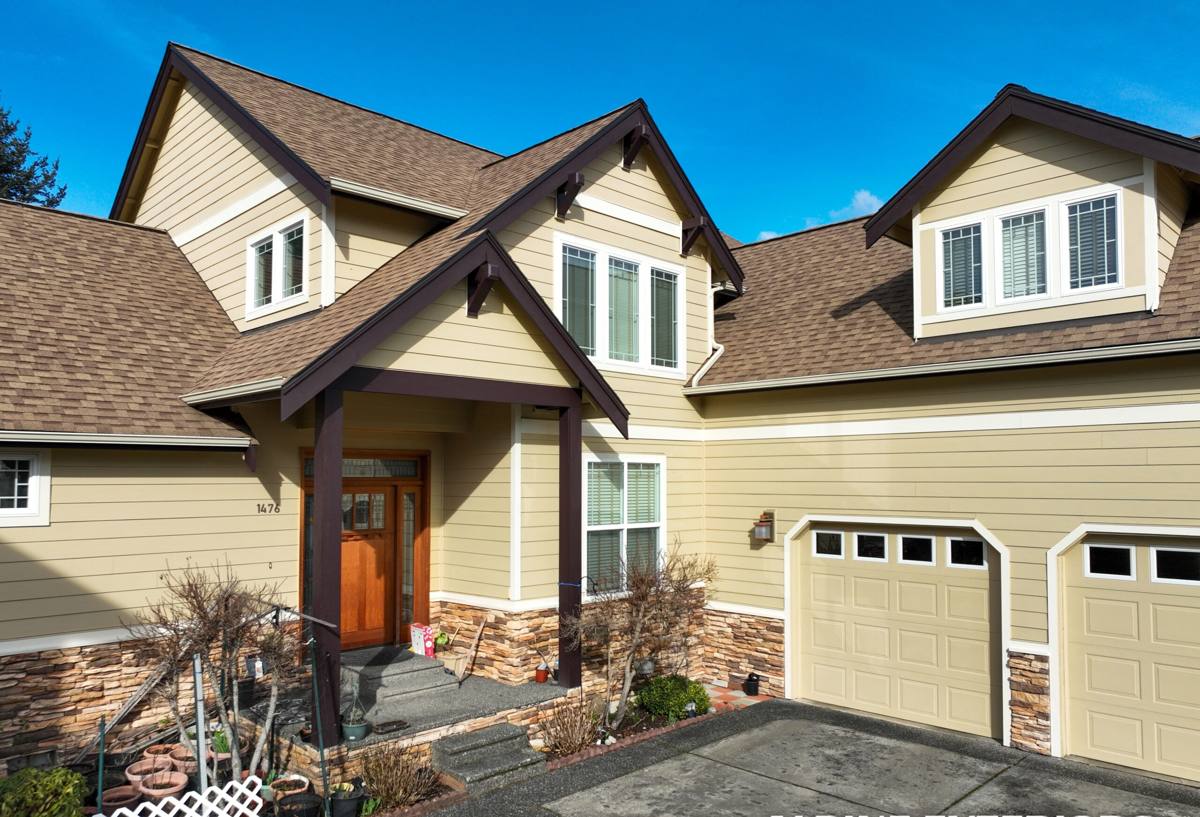
What "Energy-Efficient" Actually Means
It's a term that gets used loosely. For a homeowner deciding what to put in their walls, it comes down to a handful of measurable things:
- U-factor — how much heat the window lets escape. Lower is better for our cool, wet winters.
- SHGC (Solar Heat Gain Coefficient) — how much solar heat passes through the glass. Less critical here than in sunnier climates, but still worth checking on south- and west-facing rooms.
- Air leakage rating — how tight the sash and frame seal against wind-driven rain and gusts off the water.
- Glazing package — double-pane with argon gas fill is the practical baseline for this region; low-E coatings help with both heat retention and UV fading on interior flooring and furniture.
A window with strong energy numbers on paper but a mediocre installation will still leak, still fog between panes early, and still let cold air track in around the frame. The product spec and the install quality have to both be right — one doesn't make up for the other.
Where Water Actually Gets In
Most window failures we're called out to inspect in this area aren't glass failures — they're installation failures, usually around the edges. A correct window job addresses each of these:
Flashing and the sill pan
Every window opening needs a sloped sill pan and properly lapped flashing tape that ties into the house's weather-resistive barrier — the layer of building paper or synthetic wrap behind the siding. Water that reaches the sill has to drain back out, not pool and soak into the framing. This is the single most common shortcut we see on older or poorly done replacements, and it's the reason a window that "looks fine" can still be causing hidden rot.
Sealant, not just caulk
Exterior sealant around a window has to be rated for exterior exposure and applied to a clean, dry, properly primed surface, with backer rod used on wider gaps. In a climate this wet, sealant that's applied over dirty or damp substrate fails within a season or two — and once it fails, water gets behind the trim where you can't see it happening.
Integration with the siding
Because we install siding as well as windows, we pay close attention to how the window flange, the flashing, and the siding trim work together as one water-shedding system. A window installed correctly but with siding trim that directs runoff toward the frame instead of away from it will still fail over time. Treating the window as part of the whole exterior envelope, not an isolated component, is what actually keeps water out long-term.
Signs Your Current Windows Are Working Against You
- Fogging or a visible haze between the panes — the seal has failed and the argon gas fill is gone
- Soft or discolored wood trim, or bubbling paint, around the frame
- Drafts you can feel with a hand near the sash on a windy day
- Difficulty opening or closing — swollen frames or failed hardware
- Visible corrosion or pitting on aluminum frames
- Moss or dark streaking on the sill or lower frame that keeps coming back after cleaning
- Noticeably colder rooms on the side of the house that takes the worst weather off the water
Frame Material: What Holds Up Here
Frame material matters more in a salt-air, high-moisture climate than it does inland. Here's how the common options compare for this specific area:
| Material | How it handles this climate | Trade-offs |
|---|---|---|
| Vinyl | Won't corrode or rot; handles moisture well; good value | Can flex on larger openings; color/finish choices are more limited than clad wood |
| Fiberglass | Excellent dimensional stability, resists moisture and salt exposure very well | Higher upfront cost than vinyl |
| Wood-clad | Real wood interior look with a protective exterior cladding shielding it from weather | Any gap or damage in the cladding exposes wood underneath to rot; needs a careful install |
| Aluminum | Strong and slim sightlines | Prone to corrosion and pitting in salt air over time unless it's a marine-grade, properly finished product; conducts heat/cold more than other options |
We don't install bare aluminum-frame windows on homes this close to the water as our standard recommendation — not because the material is inherently bad, but because standard aluminum corrodes faster under sustained salt exposure and loses its thermal performance compared to vinyl or fiberglass. It's a maintenance and longevity trade-off we're upfront about before you buy.
Our Installation Process
- On-site assessment — we check existing framing for rot or moisture damage before quoting anything, since hidden damage changes the scope of the job.
- Measure and product selection — exact opening sizes, plus a conversation about frame material, glass package, and grille style based on the room and exposure.
- Removal — old window comes out carefully to protect interior trim and drywall, and we inspect the opening again once it's exposed.
- Repair framing if needed — any soft or rotted framing gets addressed before the new window goes in. Installing a new window into a compromised opening just hides the problem.
- Sill pan and flashing — sloped pan, properly lapped flashing tied into the house wrap, in the correct shingle-style order so water always sheds outward and down.
- Set and shim the window — leveled, plumb, and shimmed so the sash operates correctly for its full lifespan, not just on install day.
- Seal and trim — exterior-rated sealant, backer rod where needed, and trim work that ties cleanly into the surrounding siding.
- Interior finish and walkthrough — interior trim reset or finished, sashes tested, and a walkthrough so you know how to operate and maintain the new windows.
What Drives the Cost
Every job is different, but these are the factors that actually move the price up or down. We'll walk through your specific situation during the estimate rather than quote a number blind.
| Factor | Why it matters |
|---|---|
| Number and size of windows | Straightforward — more openings and larger units mean more material and labor |
| Frame material | Vinyl, fiberglass, and wood-clad price differently; see comparison above |
| Condition of existing framing | Rot or water damage found during removal adds repair scope before the new window goes in |
| Glass package | Double-pane with low-E coating and argon fill costs more than basic glass but pays back in comfort and lower heating bills |
| Access and story height | Second-story or hard-to-reach windows take more time and equipment |
| Full-frame vs. insert replacement | Insert replacement is faster and cheaper when the existing frame is sound; full-frame is necessary when there's rot or the opening needs correction |
Before You Hire: A Practical Checklist
Whoever you hire for window work on a home in this area, these are worth confirming upfront:
- Do they inspect the framing before quoting, or just measure the glass opening?
- Do they explain their flashing and sill pan method, or wave it off as "standard"?
- Are they licensed and insured to work in Washington, and can they show it?
- Do they install siding too, or only windows? A crew that does both understands how the two systems need to work together.
- What's the manufacturer's warranty, and what's their own labor warranty on the installation itself?
- Will they put the frame material, glass spec, and warranty terms in writing before work starts?
Working Near Tribal Land: Local Practicalities
Properties on and near Lummi Nation land can involve different permitting and inspection expectations than a standard county job, depending on jurisdiction and property status. We don't guess on this — we coordinate directly with the homeowner and the relevant building department or tribal authority as needed for the specific property, so there are no surprises mid-project. If you're not sure which jurisdiction your property falls under, that's a normal question and one we're glad to help sort out before work begins.
After Installation: Keeping Windows Performing in This Climate
New windows still need a little seasonal attention here. A quick rinse of frames and tracks a couple times a year clears salt residue before it can pit hardware or dull finishes. Keep an eye on exterior sealant lines — even good sealant has a service life, and catching a hairline gap early is a five-minute fix instead of a wall repair. If moss builds up on a north-facing sill, a soft brush and mild cleaner is enough; avoid pressure washing directly at the frame edges, since it can force water past seals that are otherwise sound.
If your windows are drafty, fogged, or just past their working life, we'd be glad to take a look and give you a straightforward assessment — no pressure, no upsell. Fill out the form below for a free estimate.