 Ferndale
 Building New Near the Water Changes What Your Windows Need to Do
Putting windows into a new-construction home in Lummi Nation is a different job than replacing windows in an older house. There's no old opening to work around, no compromised flashing to patch, and no guessing about what's hiding behind the trim. That's the good news — you get to do it right from the first nail. The catch is that "right" here means something specific, because homes this close to Bellingham Bay and the Strait of Georgia take a beating that inland Whatcom County houses simply don't see.
Salt-laden air corrodes hardware and fasteners faster than it does twenty miles inland. Driving rain off the water pushes water sideways into wall assemblies, not just straight down. And the long gray stretch from fall through spring means anything that traps moisture — a poorly lapped flashing, a gap in the weather-resistive barrier, a window installed without proper sill pan protection — turns into rot or mold instead of drying out between storms. New construction is your one chance to build the window opening correctly before the siding, trim, and interior finishes bury the evidence.
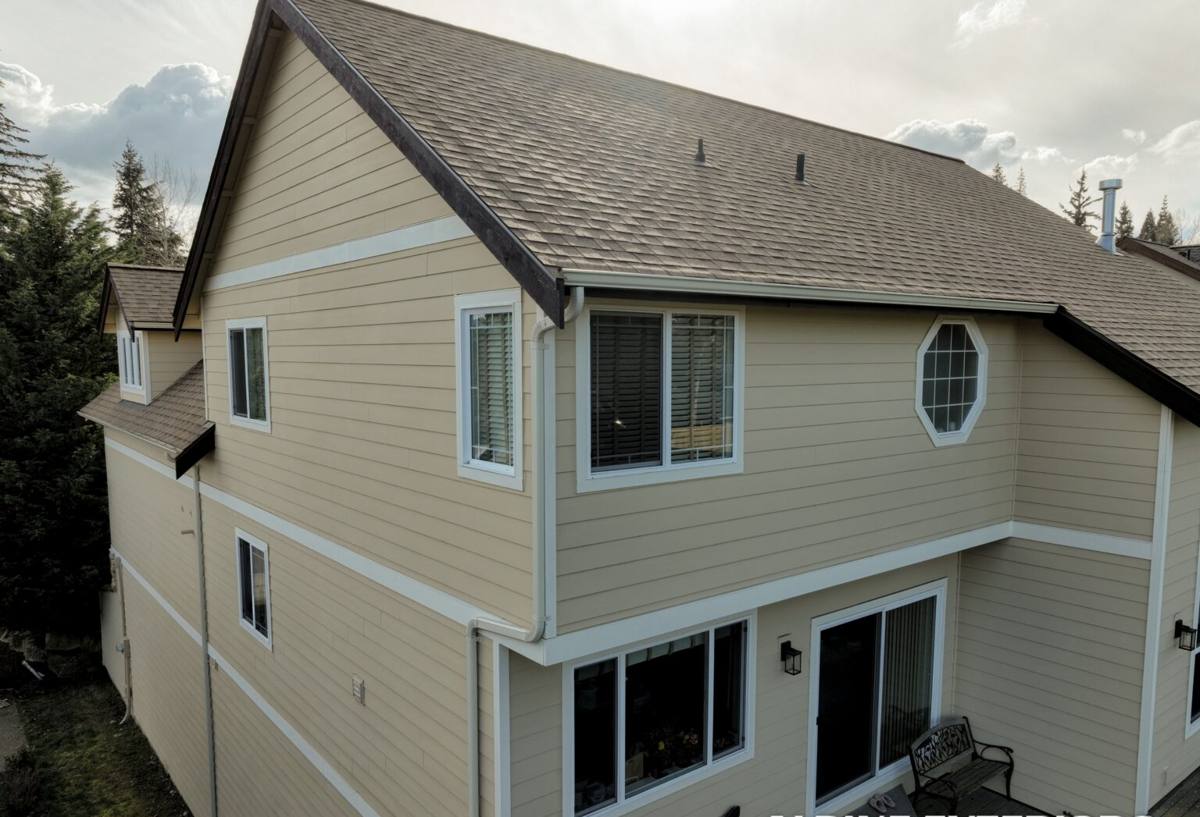
What "Correct" Actually Means for a New Window Opening
A new-construction window installation is really an assembly of several parts working together, not just a window unit dropped into a rough opening. On a project in this area, we treat each of these as non-negotiable:
- Sill pan flashing under every window, sloped to drain outward, so any water that gets past the window body has somewhere to go besides your framing.
- Proper shingle-lap sequencing of the weather-resistive barrier, flashing tape, and window flange — water always has to flow over the layer below it, never under.
- Correct rough opening sizing with shim space for square, plumb, and level — a window that's slightly racked will bind, leak at the corners, or fail its warranty terms.
- Fastening per manufacturer spec, not "however many screws looked right" — under-fastened windows shift over time; over-fastened or wrong-location fastening can void warranties and distort the frame.
- Sealed and backed joints at the interior and exterior, using foam backer rod and sealant rated for exterior exposure, not just caulk smeared over a gap.
None of this is exotic. It's standard best-practice window installation. What matters is that it's done consistently, on every opening, by people who've done it enough times in this climate to know where builders usually cut corners.
Why Salt Air and Moss Season Push the Standard Higher
Two things about Lummi Nation's setting change the margin for error compared to a drier, inland build:
First, salt air accelerates corrosion on exposed fasteners, hinges, and flashing metals. That's why we favor corrosion-resistant fastener grades and flashing materials on near-water builds, and why we're careful not to mix incompatible metals at flashing junctions — galvanic corrosion between the wrong metal pairings shows up as staining and pitting years before it would inland.
Second, the region's long moss season is really shorthand for extended dampness — weeks where surfaces don't fully dry between rain events. Any window detail that relies on things drying out to make up for a small installation flaw will eventually fail here. That's why the sill pan, the flashing laps, and the sealant joints all have to be right the first time, not "close enough."
New Construction vs. Replacement: Why the Approach Differs
| Factor | New Construction | Replacement (for comparison) |
|---|---|---|
| Access to framing | Fully open — flashing and sill pans installed before siding goes on | Limited — often working around existing siding and trim |
| Window style | Full-frame, nail-fin units set into the rough opening | Often insert-style units set into the existing frame |
| Flashing sequencing | Built in the correct order from scratch | Must be repaired or reconstructed around what's already there |
| Opportunity to correct sizing | Framer can adjust rough openings before windows arrive | Limited — existing opening dictates window size |
| Long-term risk if done wrong | Hidden behind finished walls for years before symptoms show | Often visible sooner due to disturbed existing materials |
The tradeoff is that new construction gives you a better result if it's installed correctly, and a worse, harder-to-diagnose problem if it isn't — because everything gets sealed up behind siding and drywall right after.
Choosing Window Products for This Site
We don't push one brand as the only option, because the right product depends on your home's design, your budget, and how exposed the building site is to wind-driven rain off the water. What we do insist on:
- Vinyl or fiberglass frames with manufacturer-rated water and air infiltration performance appropriate for coastal exposure — not just a generic residential-grade unit.
- Dual-pane or triple-pane glass with low-E coatings, which help with both energy performance and condensation control during the damp months.
- Factory-applied flashing systems or nail fins that are compatible with the flashing tape and WRB we're using, so the whole envelope works as one system instead of a patchwork of materials that were never designed to touch each other.
We're upfront about tradeoffs rather than picking a "winner": composite and fiberglass frames typically cost more up front but hold up better against the swelling and warping that constant moisture cycling can cause in lower-grade vinyl over many years. Higher-end glass packages cost more but reduce interior condensation, which matters more here than in a drier climate. We'll walk through the real options for your build and let you weigh cost against long-term maintenance — we're not in the business of overselling.
Our Process for a New-Construction Window Package
1. Plan Review and Rough Opening Verification
Before windows are ordered, we review the plans and confirm rough opening sizes against the actual selected window units. Catching a sizing mismatch on paper is a lot cheaper than catching it after framing.
2. Flashing and Sill Pan Installation
Each opening gets sill pan flashing and properly lapped flashing tape before the window ever goes in. This is the step that determines whether the building stays dry for the next thirty years, and it's the step that's invisible once the job is "done" — which is exactly why we don't rush it.
3. Setting, Shimming, and Fastening
Windows are set plumb, level, and square, shimmed correctly, and fastened per manufacturer instructions. We check operation — opening, closing, locking — before final fastening, because a window that's slightly out of square will bind or leak no matter how good the unit itself is.
4. Sealing and Weatherproofing
Exterior joints are backed and sealed with exterior-rated sealant. Interior air sealing is done separately from exterior weatherproofing — they solve different problems, and treating them as the same step is a common shortcut that causes trouble later.
5. Final Inspection Walkthrough
We walk every opening with you (or your builder) before siding closes it in, so there are no surprises hidden behind the finish work.
What to Check Before You Sign Off on Any Window Contractor
Whether you use us or someone else, here's a practical checklist for a new-construction window package in this area:
- Do they install sill pan flashing on every window opening, not just "as needed"?
- Can they explain their flashing lap sequence in plain language?
- Do they follow manufacturer fastening specs (and can they show you the spec sheet)?
- Are they using fastener and flashing materials suited to salt-air exposure?
- Will they walk the openings with you before siding closes them in?
- Do they carry manufacturer certification for the window lines they're installing?
If a contractor can't answer these clearly, that's worth noticing before the walls close up.
Timing It With Your Build Schedule
Window installation on a new build has to land at the right point in the sequence — after the structure is weathertight enough to receive windows, but before siding and exterior trim proceed. Scheduling this wrong causes real delays: framing crews waiting on windows, or windows sitting exposed to weather longer than they should be before the building envelope closes them in. We coordinate directly with builders and general contractors on Whatcom County new-construction projects so this handoff doesn't become the bottleneck on your schedule.
Get a Straightforward Estimate
If you're building new in Lummi Nation and want a window package specified and installed to hold up against the salt air, driving rain, and long damp season this area gets, we're happy to take a look at your plans. There's a free, no-pressure estimate form below — no obligation, just a straight answer on what your project needs.