 Ferndale
 Building a Deck That Actually Holds Up in Lynden
Lynden homeowners ask for a lot of the same things when they call about a new deck: something that looks good, something that doesn't turn green by October, and something that isn't going to need major repairs five years in. That's a reasonable ask, but it means the deck has to be built for this specific corner of Whatcom County, not just built to a generic plan pulled off the internet. The Nooksack Valley sits low, holds moisture, and gets the kind of steady, soaking rain that doesn't dry out quickly between storms. Add in the salt-tinged air that rolls in off the Strait and Bellingham Bay on a westerly wind, and you've got a combination that's genuinely tough on outdoor structures.
We build custom decks for homes throughout the Ferndale and Lynden area, and the projects that last aren't the ones with the fanciest railing design — they're the ones where the framing, flashing, fasteners, and decking material were all chosen with this climate in mind from the start. That's the approach we bring to every deck we build here.
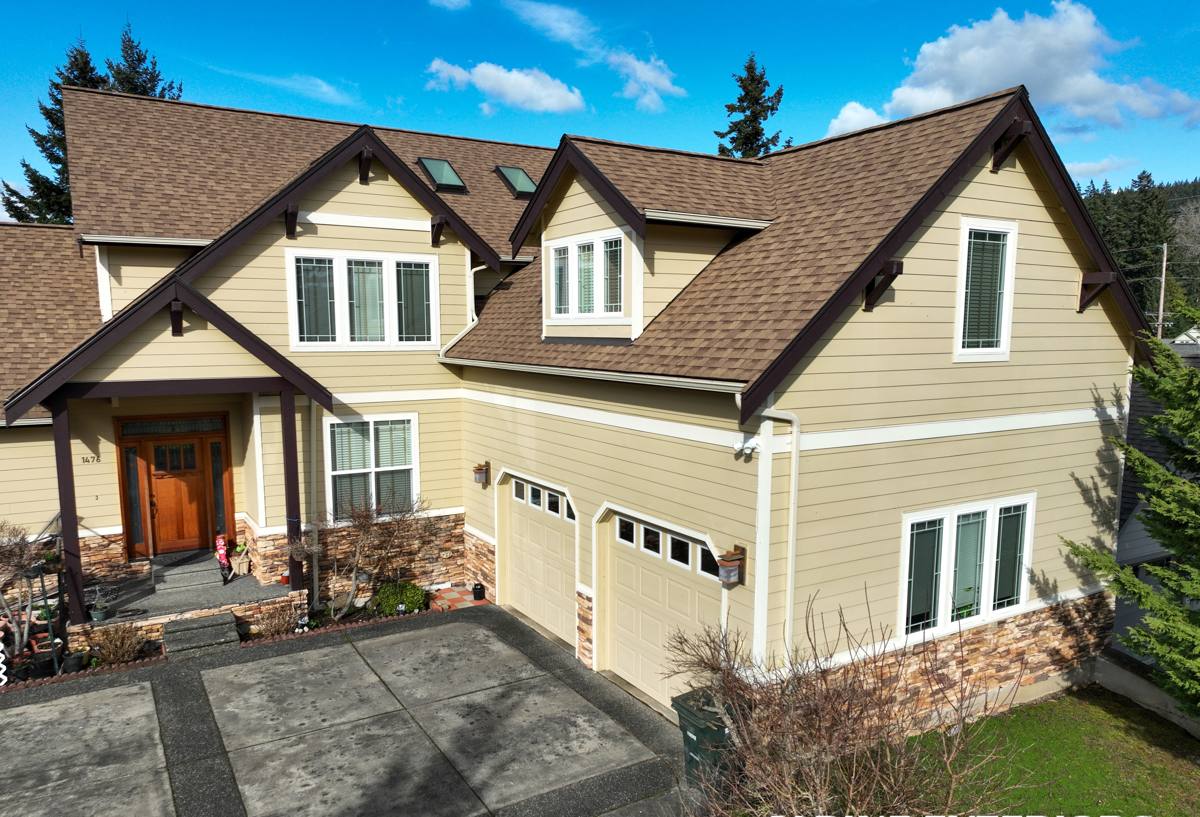
What Whatcom County Weather Does to an Outdoor Deck
Before talking about materials or design, it's worth being honest about what a deck in Lynden is up against year-round.
Driving Rain and Standing Moisture
Whatcom County gets long stretches of rain rather than short, hard downpours, which sounds gentler but is actually harder on wood. Boards and framing members stay damp for days at a time instead of getting a quick soak and a chance to dry. That extended moisture exposure is what drives rot in ledger boards, joists, and the undersides of decking — areas that don't get direct sun or airflow to dry them back out.
Moss and Algae Season
Between the shade many Lynden lots get from mature trees and the length of our wet season, moss and algae have months to establish themselves on any horizontal wood surface. Once moss takes hold on a deck board, it holds moisture directly against the wood surface, which accelerates decay and makes the deck slick and dangerous underfoot — a real concern on stairs and around hot tubs or grills.
Salt Air Corrosion
Ferndale and Lynden aren't right on the water, but the region still gets salt-laden air carried inland, especially on properties with more open exposure. Over years, that air accelerates corrosion on fasteners, hardware, and metal railing components that aren't rated for coastal-adjacent conditions. A deck built with standard interior-grade hardware will show rust streaks and weakened connections well before one built with the correct fastener spec.
Choosing Decking Material for This Climate
There's no single "best" decking material — there's a best material for your budget, your maintenance appetite, and how much sun or shade your deck actually gets. Here's how the common options hold up specifically under Whatcom County conditions:
| Material | How It Handles Our Climate | Maintenance | Typical Lifespan Here |
|---|---|---|---|
| Pressure-treated fir/hem-fir | Affordable, but absorbs moisture readily and needs consistent sealing to resist rot and moss | Annual cleaning, re-seal every 1-2 years | 10-15 years with upkeep |
| Western red cedar | Naturally rot- and insect-resistant, ages gracefully, but still needs maintenance to prevent moss and graying | Cleaning and oil/stain every 1-2 years | 15-20+ years with upkeep |
| Composite decking | Doesn't absorb water or feed rot the way wood does; capped composites resist moss buildup much better | Periodic washing, no sealing or staining | 25-30 years, per most manufacturer warranties |
| PVC decking | Fully synthetic, essentially immune to rot and largely resistant to moss adhesion | Occasional washing | 25-30+ years, per most manufacturer warranties |
We install all of the above, and we'll give you an honest read on which one fits your project rather than steering everyone toward the highest-margin product. If you love the look and warmth of real cedar and are willing to keep up with it, that's a legitimate choice. If you want to spend your weekends doing something other than deck maintenance, composite or PVC is usually the better call in this climate.
Why We're Selective About Low-Grade Composite
Not all composite decking is built the same. Early-generation and budget composite products without a proper cap layer can absorb moisture at the core over time, which is a real liability in a climate that stays wet as long as ours does. Our standard is to install capped composite or PVC products from manufacturers with a strong moisture-performance track record and a real structural warranty — that's a maintenance and longevity decision, not a brand preference.
What's Underneath Matters More Than What's On Top
A beautiful deck surface over a poorly built substructure is a short-term win and a long-term problem. Most of the deck failures we get called out to inspect in this area trace back to the framing, not the decking boards.
Footings and Frost Considerations
Footings need to be sized and set to local frost depth and soil-bearing requirements, not guessed at. Undersized or shallow footings lead to a deck that shifts, settles unevenly, or develops a bounce over a few wet seasons as the soil around the footing softens and moves.
Ledger Board Flashing
Where a deck attaches to the house is the single most common point of water intrusion on any deck we inspect. Proper ledger flashing — installed correctly against the house's water-resistive barrier, not just caulked and hoped for — is what keeps rainwater from tracking behind the siding and into the wall framing. This is a detail that's invisible once the deck is finished, but it's the difference between a dry wall cavity and a rot problem you don't discover for years.
Joist Protection and Spacing
Joists should be capped or wrapped with a protective tape at the top edge, where standing water and fastener penetrations create the most vulnerable spot on the entire frame. Spacing also matters more than people assume — composite and PVC boards often require tighter joist spacing than solid wood to prevent sagging over time, and that spec varies by manufacturer.
Hardware and Fasteners
Every structural connector, screw, and bolt should be rated for exterior and coastal-adjacent use — stainless steel or a comparable coated fastener, not standard galvanized hardware that will corrode faster given the salt content in our air.
Railings, Stairs, and Building Code
Guardrails, stair railings, and baluster spacing aren't design preferences — they're governed by Washington building code, and Whatcom County enforces its own permitting process on top of that. A deck built above a certain height off grade requires a guardrail at a set minimum height, baluster spacing that prevents a small child from passing through, and stair railings that meet graspability standards. We handle the permitting and inspection process as part of the build, so you're not left trying to interpret code language or schedule inspections yourself.
Our Process, Start to Finish
- On-site consultation: We walk the property, look at drainage, sun exposure, and how the deck will connect to the house, and talk through how you actually plan to use the space.
- Design and material selection: We put together a layout and material plan based on your budget and maintenance preference, with honest trade-offs explained up front.
- Permitting: We handle the Whatcom County permit application and coordinate required inspections.
- Site prep and footings: Footings are dug and set to code, accounting for local soil conditions.
- Framing and flashing: Ledger attachment, joist layout, and flashing are installed to keep water out of the house structure.
- Decking, railing, and stairs: Surface material and railings are installed per the design and code requirements.
- Final walkthrough: We go over the finished deck with you, including care instructions specific to the material installed.
Keeping a Lynden Deck Looking Good Year After Year
Whatever material you choose, a little seasonal attention goes a long way in this climate. Here's a practical checklist we give homeowners:
- Sweep leaves and debris off the deck regularly through fall — trapped organic matter is what moss and algae feed on
- Rinse the deck surface a few times a year to prevent moss spores from establishing, especially in shaded areas
- Check that gaps between boards stay clear so water can drain through rather than pool on the surface
- Inspect the ledger board area annually for any signs of staining, soft wood, or gaps in flashing or caulking
- Re-seal or re-stain wood and cedar decking on the schedule recommended for the product — don't wait until it's visibly graying
- Check railing posts and stair connections yearly for looseness, especially after a hard winter
- Keep gutters and downspouts near the deck clear so roof runoff isn't dumping extra water onto or under the structure
What Affects the Cost of a Custom Deck
Every deck project is different, but the same handful of factors drive most of the cost difference between projects in this area:
| Factor | Why It Matters |
|---|---|
| Size and shape | Multi-level decks, curves, and built-in features add framing complexity and labor time |
| Decking material | Pressure-treated lumber, cedar, composite, and PVC span a wide price range per square foot |
| Height off grade | Taller decks need more substantial footings, structural posts, and code-required railings |
| Site access and grade | Sloped or hard-to-access lots increase excavation and material-handling time |
| Railing and stair details | Cable rail, glass panels, and custom stair configurations cost more than standard baluster railing |
| Permitting scope | Larger or taller decks may require engineering and additional inspections |
We give a firm, itemized estimate before any work starts, so there aren't surprise costs partway through the build.
Why It Matters That We Already Work in Lynden
A deck design that works fine in a drier climate can be the wrong call here — and a contractor who doesn't build in Whatcom County regularly may not think twice about ledger flashing detail, joist spacing for composite in a wet climate, or fastener corrosion resistance for our salt-tinged air. We're already familiar with the Whatcom County permitting process, the frost and soil conditions common to Lynden lots, and the specific ways moss, rain, and salt air wear down an outdoor structure here. That local experience shows up in the parts of the deck you won't see once it's finished — which are exactly the parts that determine whether it's still solid in fifteen years.
If you're planning a new deck or replacing one that's showing its age, we're happy to come take a look and walk you through your options. Reach out for a free, no-pressure estimate — we'll tell you honestly what your property needs and what it doesn't.