 Ferndale
 Siding Repair Built for Lynden's Corner of Whatcom County
Lynden homeowners deal with a specific combination of weather that's harder on exterior siding than most people realize. Salt-laden air moving in off the Strait, driving rain that comes in sideways during fall and winter storms, and a moss season that can stretch nearly eight months out of the year all work on your home's exterior at the same time, year after year. A siding repair that doesn't account for all three usually fails again within a couple of seasons.
We're based in Ferndale and work throughout Whatcom County, and Lynden is a regular part of our service area. That matters more than it sounds like it should. Repair work is diagnostic work first and installation work second — you have to understand why a section failed before you patch it, or you're just delaying the same problem.
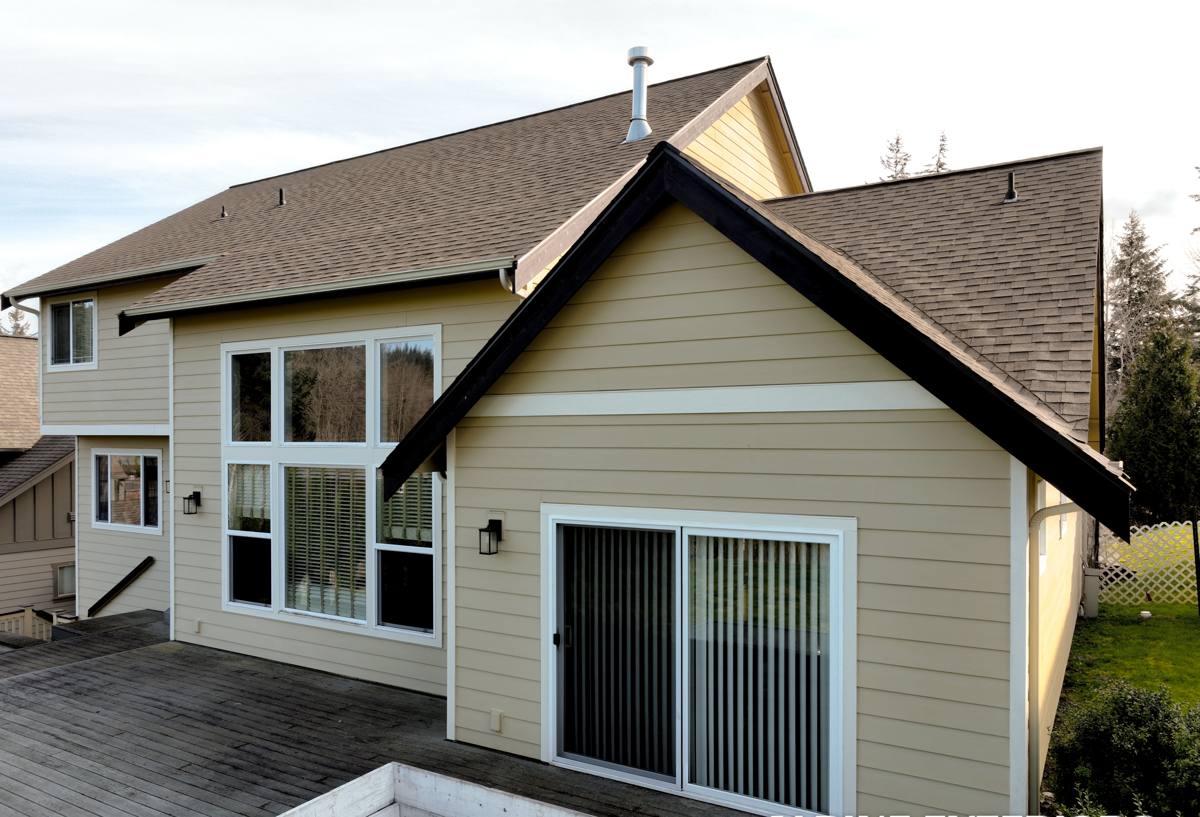
What This Climate Actually Does to Siding
Most siding repair calls we get aren't from one dramatic event. They're the result of slow, cumulative exposure.
Moisture Intrusion
Whatcom County gets a lot of rain, but it's the wind-driven rain that causes the real damage — it gets pushed up under laps, around trim, and into any gap where caulking has failed or flashing was installed short. Once moisture gets behind the siding, it doesn't dry out quickly in our climate. It sits against the wall sheathing and starts causing rot from the inside, which is often worse than it looks from the outside.
Moss and Algae Growth
A long moss season means more than cosmetic streaking. Moss holds moisture directly against the siding surface for weeks at a time, and on wood-based products it accelerates rot at the exact spots where moss tends to collect — under eaves, on north-facing walls, and anywhere sunlight doesn't reach long enough to dry things out.
Salt Air and Coastal Exposure
Even on the inland side of Whatcom County, salt-influenced air moving off the Strait of Georgia and Bellingham Bay reaches Lynden more than most homeowners assume. Salt exposure accelerates corrosion on fasteners, trim flashing, and any exposed metal, and it breaks down lower-grade paint and caulking faster than a purely inland climate would.
Common Repair Issues We See on Lynden Homes
- Buckled or warped panels from moisture absorption cycling through wet and dry seasons
- Rotted bottom edges near grade, decks, and porch attachments where water pools or splashes back
- Failed caulking at trim and butt joints, usually the first sign that a wider moisture problem is starting
- Cracked or delaminating panels on older wood composite or hardboard siding
- Impact damage from storm debris, hail, or landscaping equipment
- Chronic moss and algae staining that keeps returning even after cleaning
- Paint failure — peeling, chalking, or bubbling that points to moisture trapped underneath
What a Correct Repair Actually Involves
A lot of siding "repair" is really just cosmetic patching — cutting out a bad section, nailing in a new piece, caulking the edges, and calling it done. That approach can look fine for a season or two and then fail again, because it never addressed what let the water in to begin with.
A repair done right starts with removing enough surrounding material to see the sheathing and framing underneath. If there's rot, it gets cut back to solid wood — not just covered up. Flashing and house wrap get inspected and corrected where they're doing the damage. Only then does new siding go back on, tied into the existing wall correctly so water sheds the way it's supposed to.
| Patch-and-Cover Approach | Correct Repair Approach |
|---|---|
| Covers visible damage only | Opens the wall to check sheathing and framing condition |
| Reuses existing flashing as-is | Corrects or replaces flashing that's letting water in |
| Matches color/texture loosely | Matches profile and reveal so the repair isn't obvious |
| Often fails again in 1–3 years | Addresses the root cause, not just the symptom |
Repair or Replace? How We Make the Call
Not every damaged section needs a full re-side, and we don't push homeowners toward replacement they don't need. But there's a point where patching individual sections stops making financial sense compared to doing the wall — or the home — properly.
| Factor | Leans Toward Repair | Leans Toward Replacement |
|---|---|---|
| Damage location | Isolated to one or two sections | Spread across multiple walls |
| Underlying sheathing | Solid, dry when opened up | Soft, rotted, or already compromised |
| Siding material | Still available or closely matchable | Discontinued, faded, or mismatched |
| Age of existing siding | Under 10–12 years, otherwise sound | Nearing or past expected service life |
| Recurrence | First repair in this area | Same spot has failed more than once |
We'll always tell you honestly which side of that line your home falls on, including when the answer is "this one small section is all you need."
Our Siding Repair Process
- On-site inspection. We look at the damaged area and the surrounding siding, not just the spot you called about — Lynden's climate rarely damages just one board in isolation.
- Diagnosis. We identify the actual moisture path or failure cause, not just the visible symptom.
- Honest scope and estimate. You get a clear explanation of what needs to happen and why, in plain language, before any work starts.
- Repair or targeted replacement. Damaged material and any compromised sheathing or flashing gets addressed correctly, not just covered.
- Finish match. We match profile, reveal, and color as closely as the situation allows so the repair blends in rather than standing out.
- Follow-up guidance. We tell you what to keep an eye on and what routine maintenance will help the repair hold up long-term.
Why Replacement Sections Are James Hardie, Not a Patch Material
When a repair calls for new siding material rather than reusing what's there, we install James Hardie fiber cement — that's the only siding product we install, full stop. We don't carry vinyl, LP SmartSide, Cemplank, Allura, or primed wood siding for repair work, and that's a deliberate standard, not a matter of what's on the truck that day.
The reasoning is simple: a repair section has to survive the same moisture, moss, and salt-air exposure as the rest of the wall, and it has to do it without becoming the weak point in the system again. James Hardie's fiber cement is non-combustible, holds its shape in wet-dry cycling far better than wood-based composites, and its factory-applied ColorPlus finish resists the fading and peeling that plagues field-painted repairs in this climate. Hardie's HZ5 product line is engineered specifically for wet, freeze-prone climates like ours, which makes it a better match for a Lynden repair than trying to source and match a discontinued or lower-grade product.
It also means a repair we do today can be added to and matched years from now, since Hardie's product lines and colors stay in production far longer than most alternatives.
Why Hiring a Crew That Already Works in Lynden Matters
Siding repair is one of those jobs where local experience shows up in the details. A crew that regularly works Whatcom County knows which wall orientations take the worst of the wind-driven rain, where moss tends to establish first, and what a typical Lynden-area wall assembly looks like once it's opened up. That's the difference between a repair that gets diagnosed correctly the first time and one that gets re-opened a year later because the real cause was missed.
Being based in Ferndale also means we're not driving in from out of the area for a service call, a follow-up look, or a warranty question. We're already working in this region, and Lynden is part of our regular route — not a special trip.
Maintenance Checklist Between Repairs
A repair holds up longer when it's not fighting the same conditions unchecked in between. A few habits go a long way in this climate:
- Rinse siding annually to knock back moss and algae buildup before it takes hold
- Keep gutters clear so water isn't overflowing directly onto wall sections
- Trim back landscaping so foliage isn't holding moisture against the siding
- Check caulking at trim, windows, and butt joints each fall before winter storms
- Walk the exterior after major wind events and note any loose or damaged sections early
- Address small paint or caulk failures promptly — they're cheap to fix small and expensive to fix once water's gotten behind them
If you're dealing with damaged, buckling, or moss-stained siding on a Lynden home, we're happy to take a look and give you a straight answer about what it actually needs. Estimates are free, there's no pressure, and if the honest answer is a small repair instead of a bigger job, that's exactly what we'll tell you.