 Ferndale
 Marietta's Weather Is Harder on Windows Than Most Homeowners Realize
Marietta sits close enough to the water that homes here deal with a different mix of weather than you'd find further inland in Whatcom County. Salt-laden air off the bay works its way into window hardware and frame seams year-round. Add in wind-driven rain off the Salish Sea and a moss season that can stretch from fall through spring, and it's easy to see why windows in this part of Ferndale age faster than the manufacturer's brochure suggests.
Salt Air and Slow Corrosion
Salt air doesn't announce itself the way a leak does. It works quietly on metal hardware — hinges, cranks, locks, and screws — and on aluminum components in older window systems. Over years, that corrosion loosens seals and makes windows harder to open, close, and lock properly, which then lets in more moisture and more salt air. It's a slow cycle, but it's a real one for homes this close to the water.
Driving Rain and Wind-Driven Moisture
Whatcom County storms don't always fall straight down. When wind pushes rain sideways against a wall, it finds any gap in flashing, caulking, or trim and drives water behind the siding and into the wall cavity. Windows are the most common entry point for this kind of intrusion, because every window is a hole cut into the weather barrier of the house. A window that was installed correctly ten or fifteen years ago, using the standards of that time, may not hold up to how hard and how often this area gets driving rain today.
A Long Moss Season Means Prolonged Dampness
Moss doesn't just grow on roofs. In shaded corners and on north-facing walls, it collects on trim, sills, and siding around windows, holding moisture against the wood or composite material far longer than it would otherwise dry. That prolonged dampness is what actually causes rot — not a single rainstorm, but months of trapped moisture sitting against a window sill that can't breathe.
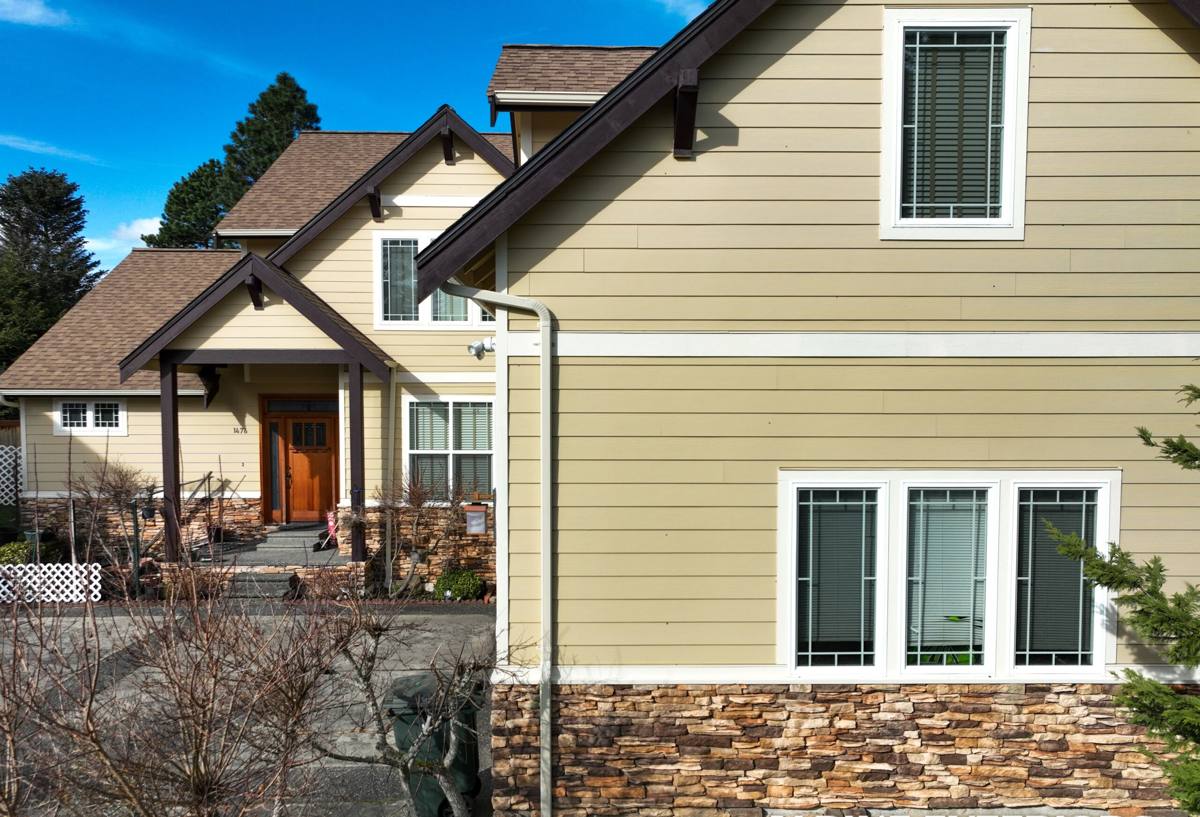
Signs a Marietta Home Needs Window Replacement, Not Just Repair
Not every window problem calls for full replacement. But there's a point where patching caulk or adjusting hardware stops being worth it. Here's what tells us a window has reached that point:
- Soft, spongy, or discolored wood at the sill or bottom corners of the frame
- Windows that are difficult to open, close, or lock, especially after damp weather
- Visible fogging or moisture trapped between panes of double-glazed glass
- Cold drafts near the frame even when the window is fully closed and latched
- Paint that keeps bubbling or peeling at the same spot no matter how often it's redone
- Condensation forming on the inside of the glass regularly during colder months
- Visible gaps between the frame and the siding or trim around the window
If you're seeing one or two of these, it may be a repair. If you're seeing several on the same window, or the same issue keeps coming back, replacement is usually the more honest answer — both for your comfort and for your wallet over time.
What a Correct Window Replacement Actually Involves
A window replacement is only as good as what happens inside the wall, not what you see from the street. This is where most of the long-term performance is decided.
Removing the Old Window Without Damaging the Opening
The old window and any damaged framing material around it need to come out cleanly. If there's rot in the sill or the jack studs, that gets addressed before anything new goes in — installing a new window into a compromised opening just hides a problem instead of fixing it.
Flashing and Sill Pans Done Right
This is the step that matters most for a home dealing with driving rain. A proper installation uses flashing tape and, where called for, a sloped sill pan so that any water that does get past the window sheds back outside the wall instead of collecting at the bottom of the opening. Skipping or rushing this step is the single biggest reason window replacements fail early in wet climates like ours.
Air Sealing and Insulation
The gap between the new window frame and the rough opening needs to be sealed and insulated correctly — not overpacked with expanding foam, which can bow the frame, and not left loose, which lets in drafts and moisture. Getting this right affects both your comfort and your heating bill.
Trim, Caulking, and Final Weatherproofing
Exterior trim and caulking are the last line of defense against wind-driven rain. These need to be sealed with a product rated for exterior exposure and applied in conditions where it can cure properly — not rushed on a damp Whatcom County morning.
Choosing the Right Window for This Climate
There isn't one "best" window for every home — the right choice depends on your budget, how exposed the home is to weather, and what look you're going for. Here's how the common options compare for a home dealing with salt air, rain, and moss:
| Frame Material | Moisture & Salt Air Resistance | Maintenance | Typical Lifespan |
|---|---|---|---|
| Vinyl | Good — won't rust or rot; seams are the main watch point | Low | 20-30 years |
| Fiberglass | Very good — dimensionally stable, resists corrosion well | Low | 30-40+ years |
| Aluminum | Fair — prone to corrosion near salt air unless well-coated | Moderate | 20-30 years |
| Wood | Requires diligent upkeep in this climate; attractive but vulnerable | High | Varies widely with maintenance |
| Wood-clad (wood interior, composite/vinyl exterior) | Good — exterior shell protects wood from the elements | Low to moderate | 25-35 years |
For most Marietta homes, we steer people toward vinyl or fiberglass on the exterior-facing side of the equation, simply because they hold up to salt air and repeated wetting without the ongoing upkeep that wood or bare aluminum demands. That's a maintenance and moisture-behavior call, not a knock on any manufacturer — plenty of wood and aluminum windows perform fine in drier climates, this area just asks more of a window than most.
Glass Matters as Much as the Frame
Double-pane, low-E glass is the standard for this climate and handles most homes well. Triple-pane glass adds cost and weight, and it's worth considering on north- or west-facing walls that take the brunt of wind and rain, or for homeowners prioritizing sound dampening and maximum energy efficiency. It's not a requirement for every window in the house — we'll walk through where it makes sense on your home specifically rather than upselling it across the board.
What Affects the Cost of Your Project
Every home is different, so we don't quote a flat per-window number until we've actually looked at the job. That said, a few things consistently move the price up or down, and it's worth knowing them before you start comparing estimates:
- Window size and how many are being replaced at once — larger batches often bring a better per-window rate
- Frame material — vinyl is typically the most budget-friendly, fiberglass and wood-clad cost more upfront
- Glass package — standard double-pane versus triple-pane or specialty coatings
- Condition of the existing opening — rotted framing or sills add labor beyond a straightforward swap
- Access and shape — second-story, oversized, or unusually shaped windows take more time to install correctly
For a typical single-family home replacing a batch of standard vinyl or fiberglass windows, homeowners in this area are generally looking at a broad range of a few hundred to a couple thousand dollars per window installed, depending on the factors above. Custom shapes, larger picture windows, or hidden rot repair can push individual windows above that range. We'll walk through exactly what's driving the number for your home during the estimate, rather than handing you a single lump figure with no explanation.
Our Window Replacement Process
1. On-Site Assessment
We look at each window individually — the frame condition, the sill, the surrounding trim and siding, and how exposed that side of the house is to prevailing wind and rain. Not every window on a home needs the same solution.
2. Straightforward Measurement and Options
We measure precisely and walk through frame material and glass options based on your budget and how that window is exposed to the weather, without pushing add-ons you don't need.
3. Installation Day
We protect your interior and landscaping, remove the old window and any compromised framing material, install flashing and the new window per manufacturer specifications, and seal and trim it out to shed water correctly.
4. Inspection and Cleanup
Every window gets checked for square, level, and smooth operation before we call the job done, and the work area is cleaned up before we leave.
Why a Crew That Already Works Marietta Matters
A window that's flashed and sealed correctly for a drier inland climate isn't automatically enough for a home taking direct wind and salt air off the water. A crew that regularly works this specific area already knows which sides of a house tend to take the worst of it, how moss and dampness behave on shaded walls here, and what a correctly weatherproofed window needs to hold up to a Whatcom County winter. That's the kind of judgment that only comes from doing the work in this exact area, season after season — not from a general install checklist.
Caring for New Windows Through Moss Season
New windows still need a little seasonal attention in this climate. Keeping nearby gutters clear so overflow doesn't run down onto trim, brushing moss or debris off sills and trim before it has a chance to sit and hold moisture, and doing a quick visual check of caulking each fall before the wet season sets in will all help your new windows last as long as they're built to.
Timing Your Replacement
Window replacement can be done in most seasons, but installation during a stretch of dry weather makes for cleaner flashing and caulking work, since those materials need time to set properly. If you're planning ahead, late spring through early fall tends to give the most predictable working conditions here — though we work with what the forecast allows and won't compromise the installation to hit a date.
If your Marietta home has windows that are drafty, hard to operate, or showing signs of moisture damage, we're happy to take a look and give you a straight answer — whether that's a repair or a full replacement. Use the form below to request a free, no-pressure estimate.