 Ferndale
 Metal Roofing Built for Lummi Island's Exposure
Lummi Island sits out in the water just off the Whatcom County coast near Ferndale, reached by a short ferry crossing, and that setting shapes what a roof out there actually has to survive. Homes on the island get a heavier, more constant version of the marine weather that the rest of Ferndale and the surrounding county deal with only part of the year: salt-laden air moving off the water, rain that comes in sideways as often as it falls straight down, and enough shade and dampness on wooded lots to keep moss active for most of the year. A roof that works fine on a sheltered inland street a few miles away can fall short out here, and that's a big part of why we see so much interest in metal roofing from Lummi Island homeowners specifically.
This page is about metal roofing for Lummi Island in particular — what the local climate demands of it, what a correctly installed system looks like, and what to expect when you work with a crew that already knows the island. If you're comparing roofing materials in general, this is the deeper, area-specific version of that conversation.
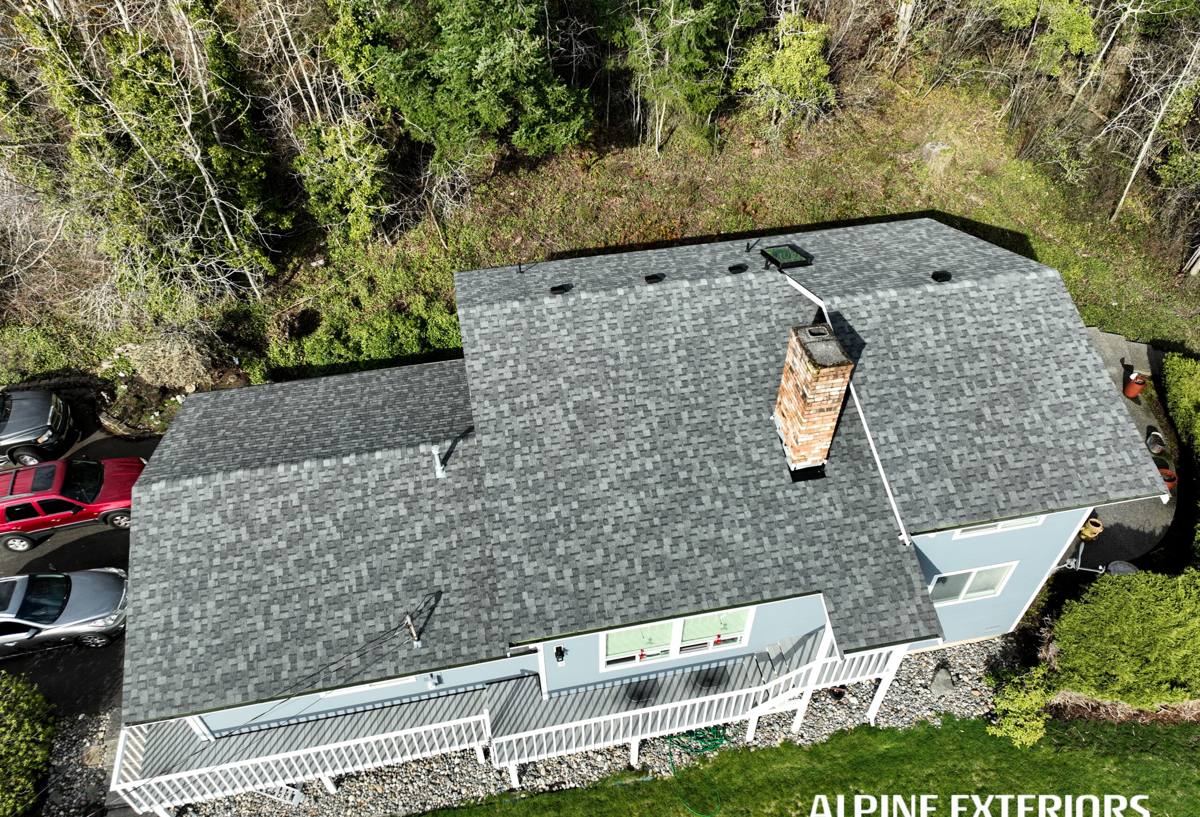
What Salt Air, Wind-Driven Rain, and a Long Moss Season Do to a Roof
Salt Air and Corrosion
The closer a home sits to open water, the more salt-laden moisture settles on every exposed surface, and most of Lummi Island qualifies as close. Salt accelerates corrosion in fasteners, flashing, and any hardware that isn't rated for it, and it breaks down lower-grade paints and coatings faster than a drier inland climate would. On a roof, that shows up first at the small stuff — rusting screw heads, pitting on cheap flashing, a painted finish that chalks and fades ahead of schedule — long before it becomes a leak. Materials and hardware chosen without that exposure in mind tend to look tired within a few years instead of holding their finish for decades.
Wind-Driven Rain
Open water means fewer windbreaks and more direct wind, and wind turns ordinary rain into a sideways problem. Driving rain gets pushed up under lap joints, into exposed fastener heads, and anywhere flashing details are thin or generic. A roof that would shed water fine on a calm, sheltered site can still let water in on an exposed island lot, because the water isn't just running downhill — it's being pushed uphill and sideways by wind. This is one of the main reasons flashing detail and fastener choice matter more here than the roofing material's brochure numbers.
A Long Moss Season
Shaded, damp lots and a mild, wet climate keep moss and algae active across most of the calendar on the island, not just in the darkest winter months. On asphalt shingles, moss roots into the granule surface and lifts it, shortening the roof's life. On wood shakes, it holds moisture directly against the material. Metal doesn't give moss the same foothold, but it isn't immune to the conditions that cause it — shade, moisture, and debris still need to be managed, just differently than with other roofing materials.
Why Metal Roofing Performs Well in This Climate
We recommend metal roofing to a lot of Lummi Island homeowners because it handles this specific combination of salt air, driving rain, and heavy moss pressure better than most alternatives, provided it's specified and installed correctly. A quality metal roofing system, whether steel or aluminum, is manufactured with factory-applied coatings designed to resist coastal corrosion and UV breakdown for decades, not just a few seasons. Its hard, non-porous surface doesn't give moss and algae the organic material and texture they need to establish, which matters a great deal on shaded island lots. And a properly installed metal roof sheds wind-driven rain through interlocking seams and continuous coverage rather than relying on thousands of individual overlapping pieces the way shingles do.
None of that means metal is automatically the right choice for every home, or that any metal roof will perform this way. The material's advantages only show up when the system underneath it — underlayment, flashing, fastening, ventilation — is built correctly for this exposure. A poorly installed metal roof can still leak, corrode at the fasteners, or fail at the flashing, the same as any other material installed without the coastal exposure in mind.
Choosing the Right Metal Roofing System
Not all metal roofing is the same, and the differences matter more on an exposed island property than they would somewhere calmer. The table below covers the main options we discuss with Lummi Island homeowners.
| System | How It's Fastened | Best Fit for Lummi Island |
|---|---|---|
| Standing seam | Concealed clips; no exposed fasteners on the field of the panel | Best overall choice for driving rain and salt exposure; nothing on the roof surface to corrode or back out over time |
| Exposed-fastener panel | Screws driven through the panel face into the deck | Lower upfront cost but every fastener is a potential leak and corrosion point; needs premium fasteners and disciplined maintenance to hold up here |
| Metal shingle or shake profile | Concealed or semi-concealed, interlocking | A middle option that mimics a traditional roof look while keeping most seams protected from direct weather |
For most fully exposed island homes, we steer homeowners toward standing seam specifically because it removes the weakest point in a metal roof's defense against wind-driven rain and salt: exposed fastener heads. Exposed-fastener systems can still be a reasonable choice on a more sheltered part of a lot, or where budget is the deciding factor, but we're upfront about the added maintenance and shorter realistic lifespan that comes with that trade-off.
Steel vs. Aluminum
Both are used successfully on coastal homes, and the right call usually comes down to the specific coating and gauge rather than the base metal alone. Steel roofing needs a robust, corrosion-resistant coating system to hold up against salt air over the long run. Aluminum resists corrosion naturally and is a strong fit for properties with the heaviest direct salt exposure, though it's typically a higher-cost option. We'll talk through which makes sense for your specific lot and budget rather than defaulting to one across the board.
What a Correct Installation Involves
Underlayment
Everything starts with what's under the metal, not the metal itself. A high-quality synthetic or self-adhered underlayment gives the roof a second line of defense if wind-driven rain ever gets past a seam or a flashing detail, which matters more here than on a sheltered inland roof. Skipping to a builder-grade underlayment to save a little on materials is one of the most common ways a metal roof underperforms its warranty on an exposed site.
Fasteners, Flashing, and Galvanic Corrosion
Salt air punishes mismatched metals. When a fastener or flashing piece made from the wrong metal touches the roofing panel, the two can react electrochemically and corrode faster than either would on its own — a problem called galvanic corrosion. Correct installation means matching fastener and flashing metallurgy to the panel material, using coated or stainless fasteners rated for coastal exposure, and detailing every penetration, valley, and edge so water has a controlled path off the roof instead of a chance to find its way underneath.
Ventilation
A roof deck that can't breathe traps moisture underneath the metal, which leads to condensation, wood rot, and premature failure regardless of how good the roofing material itself is. Balanced intake and exhaust ventilation is part of a correct metal roof installation, not an optional upgrade, and it's especially important on shaded, damp island lots where the air around the house already carries more moisture than average.
Living With a Long Moss Season: Maintenance That Actually Matters
Metal roofing needs less maintenance than shingles or shakes, but "less" doesn't mean "none," particularly with moss pressure as persistent as it is on the island. A little regular attention protects both the finish and the warranty.
- Clear needles, leaves, and branch debris out of valleys and off the roof surface a couple of times a year, especially under overhanging trees
- Keep gutters and downspouts clear so water has somewhere to go instead of backing up against roof edges
- Trim back branches that keep sections of the roof in constant shade, since shade is what lets moss and algae establish even on metal
- Do a visual check after major windstorms for lifted flashing, dented panels, or debris caught in seams
- Rinse the roof occasionally rather than pressure-washing it, and avoid abrasive cleaning tools that can damage the factory finish
- Have fastener heads and flashing checked periodically on any exposed-fastener system, since that's where wear shows up first
None of this is heavy work, but skipping it on a shaded, exposed lot lets moisture and organic debris sit against the roof longer than they should, which is exactly the condition that shortens any roof's life regardless of material.
What It Costs: Factors That Move the Price
Metal roofing costs more upfront than asphalt shingles, and the final number on any given Lummi Island home depends on several factors more than it depends on the material alone.
| Factor | Why It Moves the Price |
|---|---|
| Panel system | Standing seam runs higher than exposed-fastener panel because of the concealed-fastener manufacturing and installation labor |
| Roof complexity | Valleys, dormers, skylights, and multiple roof planes all add flashing work and labor time |
| Tear-off vs. overlay | Removing an existing roof and inspecting the deck underneath costs more than covering over it, but it's the only way to catch hidden rot before it's sealed under new material |
| Access and staging | Ferry logistics and material staging for island jobs are a real scheduling factor and get planned into the project timeline |
| Underlayment and flashing grade | Coastal-grade underlayment and properly matched flashing metals cost more than builder-standard materials but are what actually protects the investment |
We give every homeowner a written estimate that breaks these factors down rather than a single vague number, so you know exactly what you're paying for and why.
Our Process for Lummi Island Projects
Working on the island means building the ferry schedule and material staging into the plan from day one rather than treating it as an afterthought. Here's how a typical project runs:
- An on-site assessment of the existing roof, the home's exposure, and any specific problem areas like shaded valleys or wind-exposed slopes
- A written estimate covering material options, the scope of work, and a realistic timeline that accounts for ferry access and weather windows
- Material staging planned in advance so equipment and roofing materials arrive on the island together, minimizing return trips and delays
- Tear-off (when applicable), deck inspection, and repair of any rot or damage found before new underlayment and roofing go on
- Installation with attention to the flashing, fastening, and ventilation details that matter most for this specific exposure
- A final walkthrough so you know exactly what was done and what maintenance, if any, to keep up with
We don't treat island jobs as a logistical inconvenience to rush through. Planning around the ferry and the water is just part of doing the work correctly out here.
Why a Crew That Already Works Lummi Island Matters
A contractor who's worked this specific stretch of Whatcom County understands how salt air, wind-driven rain, and a long moss season behave on real island homes over a full year, not just how a metal panel performs on a spec sheet. That experience shows up in practical decisions on install day: which roof slopes and valleys stay wet and shaded the longest, where extra flashing attention actually earns its keep, and which fastener and underlayment upgrades are worth the added cost versus which ones are unnecessary for a given lot. It also means fewer surprises around scheduling, since a crew that's planned around the ferry before knows how to keep a project moving instead of losing days to logistics nobody accounted for.
If your Lummi Island home needs a new roof, a repair, or just an honest opinion on whether metal is the right call for your specific property, we're glad to take a look. Reach out using the form below to schedule a free, no-pressure estimate.