 Ferndale
 Building Decks That Hold Up in the Nooksack Area
Nooksack sits in a part of Whatcom County where the weather doesn't do decks any favors. Marine air off the Salish Sea moves inland through the river valleys here, carrying a faint salt load even well away from the water, and it mixes with long stretches of steady, driving rain through fall, winter, and spring. Add in shaded yards, tree cover, and a moss season that can run half the year, and you have conditions that will find every weak point in a deck within a few seasons. A deck built for a dry climate, or built without attention to these specifics, tends to show problems early: soft spots at the house connection, rusted hardware, and boards that stay slick and green far longer than they should.
This page focuses on one thing: deck building for Nooksack-area homes, done in a way that accounts for what the local climate actually does to wood, metal, and connections over time. It's not a general "we build decks" pitch — it's what we've learned building and repairing decks in this specific part of Whatcom County.
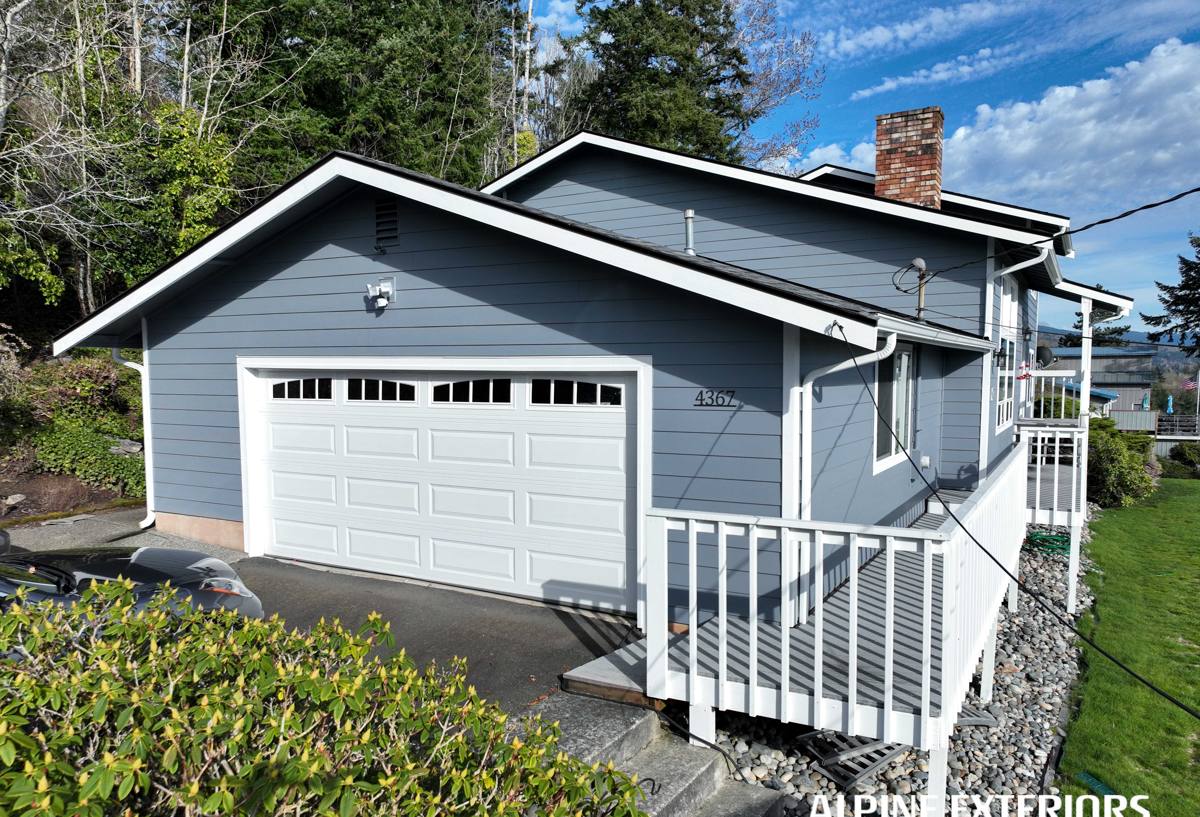
What Salt Air, Rain, and Moss Actually Do to a Deck
Every deck failure we get called out for traces back to one of three things: corrosion, moisture at a connection point, or unmanaged plant growth. Understanding how each one works is the first step to building something that outlasts it.
Fastener and Hardware Corrosion
Salt-tinged, moisture-heavy air accelerates corrosion on standard fasteners and connectors. Screws and nails that would last decades in a dry inland climate can start rusting within a few years here, especially where they're in constant contact with wet wood. Once a fastener rusts, it loses grip strength, and the wood around it stays damp longer because the metal is no longer sealing the hole cleanly. This is a slow, invisible failure — you don't see it until a board lifts or a railing post wiggles.
Ledger Board and Rim Joist Rot
The ledger board — where the deck attaches to the house — is the single most important connection on the entire structure, and it's also the most exposed to water intrusion if it isn't flashed correctly. Driving rain, especially wind-driven rain that hits a house at an angle, pushes water into any gap at that joint. Over years of steady moisture with no dry-out period, the ledger and the rim joist behind it can rot from the inside while the surface still looks fine.
Moss, Algae, and Slip Hazards
A long moss season means more months where deck surfaces stay damp, shaded, and cool enough for moss and algae to take hold, particularly on the north side of a house or under tree canopy. Beyond the slip risk, moss and algae hold moisture against the board surface, which speeds up wood decay and can trap water in the grooves of grooved-edge composite boards if they aren't cleaned periodically.
Choosing the Right Decking Material
There's no single "best" decking material — the right choice depends on budget, how much maintenance a homeowner actually wants to do, and how shaded or exposed the deck site is. Here's how the common options compare for this climate specifically.
| Material | Upfront Cost | Maintenance Needed | How It Handles This Climate |
|---|---|---|---|
| Pressure-treated lumber | Lowest | Annual cleaning and re-sealing | Affordable and strong, but needs consistent upkeep to resist moss and moisture; neglect shows up fast in shaded yards |
| Cedar | Mid-range | Regular sealing/staining, periodic moss treatment | Naturally more rot-resistant than treated lumber, but still an organic material that needs maintenance in damp, shaded spots |
| Capped composite | Highest | Occasional washing, no sealing or staining | Won't rot and resists moss staining better than wood, though moss can still grow on the surface film and needs washing off |
| Uncapped composite | Mid-to-high | Periodic cleaning | More affordable than capped composite but more prone to moisture absorption and surface staining over time in wet climates |
For Nooksack-area properties with a lot of shade or tree cover, we usually steer homeowners toward either a well-maintained cedar deck or a capped composite product — both handle sustained dampness better than uncapped composite or standard treated lumber left unsealed. That said, plenty of well-built treated lumber decks last decades here when the owner keeps up with sealing on a regular schedule. It's a real trade-off between upfront cost and ongoing effort, not a case of one option being objectively correct.
Getting the Structure Right: Footings, Framing, and Flashing
The decking surface is what everyone notices, but the structure underneath is what determines whether the deck is still safe and solid in fifteen years. This is where corners get cut on lower-quality builds, and it's the part a homeowner can't easily inspect themselves once the deck is finished.
Footings and Frost Depth
Footings need to be set below the local frost line and sized appropriately for the soil conditions on the property. Undersized or shallow footings can shift over time with freeze-thaw cycles and saturated soil, leading to a deck that develops a lean or uneven spots at the joints.
Ledger Flashing and Waterproofing
Proper ledger flashing — installed correctly with the house's existing siding or trim, not just caulked over the top — is what keeps water from getting behind the ledger board in the first place. This is one of the most common places we find problems on older decks: flashing that was skipped, installed backward, or sealed with caulk alone instead of proper metal or membrane flashing that sheds water the way house wrap and siding are designed to.
Joist Hangers and Fasteners
We use corrosion-resistant hardware — stainless steel or hot-dip galvanized connectors and fasteners rated for exterior and ground-contact use — throughout the frame, not just on the visible decking. In a climate with year-round moisture and some salt content in the air, this is not an upsell; it's the difference between hardware that lasts the life of the deck and hardware that needs replacing in a decade.
Permits and Whatcom County Code Requirements
Most decks above a certain height or attached to the house require a building permit in Whatcom County, and inspections typically check footing depth, ledger attachment, joist spacing, and guardrail and stair rail compliance. Guardrails are required above a certain deck height, with specific rules on rail height and baluster spacing to prevent a small child from passing through. Skipping the permit process might save time upfront, but it leaves the homeowner without a documented inspection trail — something that matters at resale and, more immediately, means nobody with code expertise ever checked the structural connections that keep the deck safe.
Our Deck Building Process
We approach every Nooksack-area deck project the same structured way:
- Site visit and design. We look at drainage, sun/shade exposure, existing siding condition at the attachment point, and how the deck will actually be used before recommending a layout or material.
- Permitting. We handle the permit application and coordinate the required inspections with the county so the homeowner doesn't have to manage that process.
- Framing and flashing. Footings, ledger attachment, flashing, and framing go in first, with corrosion-resistant hardware throughout — this stage determines the deck's real lifespan.
- Decking, railings, and finish work. Surface material, railings, and stairs go in to code, with attention to board spacing and drainage so water and debris don't sit and hold moisture.
- Final walkthrough. We go over the finished deck with the homeowner, including what maintenance it will need and roughly when.
Living With a Long Moss Season: Maintenance That Actually Matters
No deck in this climate is maintenance-free, even composite. The good news is that the maintenance that matters most is simple and doesn't take much time if it's done on a regular schedule instead of after problems show up.
- Sweep or blow off leaves and debris regularly, especially in fall — trapped debris holds moisture against the boards and feeds moss growth
- Wash the deck surface at least once a year with a deck-safe cleaner (not a high-pressure wash on wood, which can gouge the grain and open it up to water)
- Check the gap between the house and the first deck board for debris buildup, which can trap water against the ledger flashing
- Inspect visible fasteners and connectors annually for rust streaking, which signals a fastener starting to corrode
- Reseal or restain wood decking on the schedule the product calls for — typically every one to two years depending on sun exposure
- Check railings and stair connections for looseness once a year; a wiggling post is often the first sign of a fastener or framing issue
Why a Crew That Already Works Nooksack Matters
Building a deck that holds up here isn't about a secret technique — it's about not skipping the steps that matter in this specific climate: real flashing at the ledger, corrosion-resistant hardware throughout, footings set correctly for local conditions, and a material choice that matches how shaded or exposed the site actually is. A crew that regularly works in Ferndale and the surrounding Whatcom County communities, including Nooksack, has already seen which shortcuts fail here and which details are worth the extra time. That local pattern recognition is worth more than any brand name on the decking itself.
If you're planning a new deck or replacing one that's showing its age, we're happy to come take a look and walk through the options with you. There's no cost and no pressure to get an estimate — just a straightforward look at your property and an honest recommendation, using the form below.