 Ferndale
 Why Nooksack Homes Put Extra Demands on Windows
Nooksack sits in a corner of Whatcom County where three things work against a window's seals, frames, and glass at the same time: salt-laden air drifting in off the Strait, long stretches of driving, wind-pushed rain, and a moss season that keeps everything damp for months. None of these are dramatic on their own, but stacked together year after year, they shorten the useful life of a window faster than homeowners expect. A window that would coast for 20+ years in a dry inland climate can start failing at the seals in half that time here if it wasn't built, or installed, with this climate in mind.
"Energy-efficient" in this context isn't just about a lower heating bill, though that matters. It's about a window assembly that keeps water out, resists the corrosive effects of salt air on hardware and frames, and doesn't trap moisture where mold and rot can take hold behind the trim. A window that's efficient on paper but poorly installed will still fail here — the installation matters as much as the glass package.
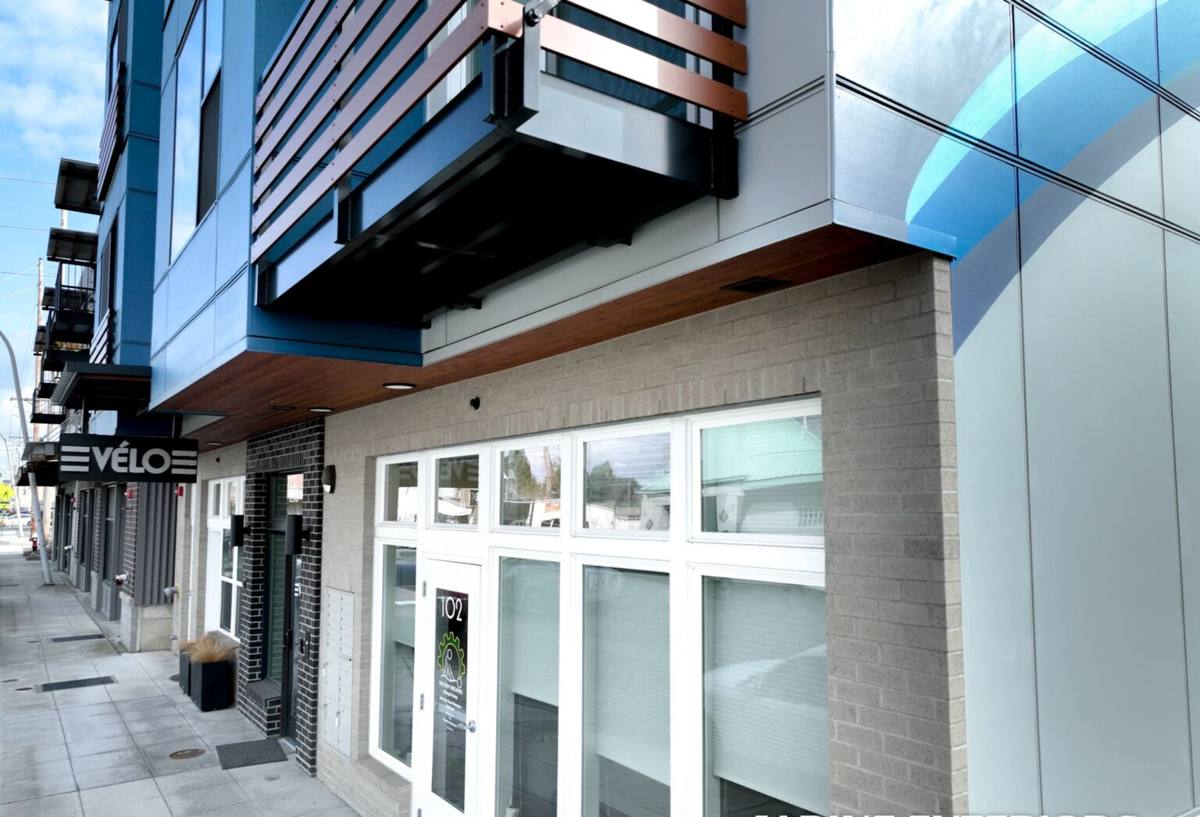
How Salt Air, Rain, and Moss Season Affect Window Performance
Salt Air and Hardware Corrosion
Proximity to the coast means airborne salt settles on exterior surfaces, including window hardware, aluminum cladding, and fasteners. Over time this accelerates corrosion on lower-grade hinges, locks, and cranks, and it can pit unprotected metal trim. It's a slow process, but it's constant, and it's one reason we pay attention to hardware quality and cladding material, not just glass specs, when we recommend a window for this area.
Driving Rain and Wind-Driven Water Intrusion
Whatcom County storms don't just fall straight down — wind pushes rain sideways into siding and window openings. A window can have excellent glass and still leak if the flashing, sill pan, and sealant details around it aren't done correctly. Most of the water damage we find around older windows in this area didn't come through the glass or the sash — it came through gaps in the flashing and trim that let wind-driven rain behind the exterior wall assembly.
Moss Season and Sustained Moisture
The long damp season that grows moss on roofs and north-facing siding also keeps window sills, tracks, and weep holes wet for extended periods. Wood components that aren't properly primed, sealed, or capped stay damp long enough to start rotting from the inside. Vinyl and fiberglass frames sidestep wood rot, but their weep systems and drainage paths still need to be kept clear and correctly installed, or trapped moisture becomes a problem behind the frame instead of in front of it.
Signs Your Current Windows Are Underperforming
- Visible condensation or fogging between the panes (a sign the seal has failed and the insulating gas has escaped)
- Drafts you can feel near the frame even when the window is latched shut
- Soft or discolored wood on the interior sill or exterior trim
- Windows that are difficult to open, close, or lock — often a sign the frame has shifted or swollen
- Noticeably colder rooms near windows during winter storms
- Paint or finish that's peeling or bubbling near the window frame, which usually points to trapped moisture
- Musty smell near the window, especially after a stretch of wet weather
Any one of these is worth a look. Several together usually mean the window assembly — glass, seal, and frame — is past the point where caulk and weatherstripping will fix it.
What "Energy-Efficient" Actually Means for a Window
The term gets used loosely in the trade, so it's worth breaking down what actually drives performance. Three numbers matter most:
| Rating | What It Measures | Why It Matters Here |
|---|---|---|
| U-Factor | How well the window resists heat loss (lower is better) | Keeps heated air inside during our long, wet, cool winters |
| SHGC (Solar Heat Gain Coefficient) | How much solar heat passes through the glass | Less critical here than in sunnier climates, but still affects comfort in south-facing rooms |
| Air Leakage Rating | How much outside air infiltrates around the sash | Directly tied to drafts and to how much wind-driven rain can find its way in |
Double-pane windows with a low-E coating and an argon or krypton gas fill are the standard baseline for this climate. Triple-pane adds further insulation value but comes at a real cost premium and added weight — worth discussing case by case, not a default upgrade for every home.
Frame Material Trade-Offs
| Frame Type | Strengths | Trade-Offs in This Climate |
|---|---|---|
| Vinyl | Low maintenance, good insulating value, resists salt corrosion well | Limited color/finish options; quality varies a lot between manufacturers |
| Fiberglass | Very stable in temperature swings, strong, low maintenance | Higher upfront cost than vinyl |
| Wood (clad or unclad) | Classic appearance, good insulator | Needs consistent maintenance to keep moisture out of exposed wood; more exposure risk in a wet climate |
| Aluminum | Strong, slim sightlines | Poor insulator unless thermally broken; more prone to corrosion near the coast without proper coating |
We don't push one frame material as universally "best." The right choice depends on the home's exposure, the homeowner's maintenance appetite, and budget. For most Nooksack-area homes we lean toward vinyl or fiberglass for the combination of insulating performance and low maintenance in a wet, salt-influenced climate — but a well-maintained clad-wood window can perform fine too.
What a Correct Installation Actually Involves
The window unit itself is maybe half the job. The other half is how it's tied into the wall. This is where most premature failures actually start, and it's the part that's easy for a rushed crew to shortcut.
- Remove the old unit carefully and inspect the rough opening for hidden rot or water damage before anything new goes in.
- Repair the opening — any soft framing or compromised sheathing gets addressed now, not covered up.
- Install a proper sill pan and flashing so any water that does reach the opening drains back out instead of pooling against the framing.
- Set the window level, plumb, and square, shimmed correctly so it operates smoothly and seals evenly.
- Seal and flash the perimeter in the correct shingle-lap order (housewrap over flashing, not under it) so water sheds outward at every layer.
- Insulate the gap between frame and rough opening without over-packing, which can bow the frame and affect operation.
- Finish trim and caulk joints, leaving weep holes and drainage paths clear.
Skip the sill pan or get the flashing lap order backwards, and you've built a window that will eventually leak into the wall no matter how good the glass is. This sequence matters more in a driving-rain climate than almost anywhere else in the country.
Our Process for Nooksack Window Projects
We start with an on-site look at the actual windows and the actual exposure — a window on a south wall facing prevailing storms gets evaluated differently than one tucked under a deep eave. From there:
- We assess each window's condition, including a check for hidden moisture damage around the frame
- We recommend glass, frame, and hardware options suited to the home's exposure and the owner's budget — not a one-size push toward the most expensive option
- We give a written scope covering removal, opening repair (if needed), and installation details
- We install with the flashing and sealing sequence outlined above, on every window, every time
- We walk the finished work with the homeowner before calling the job done
Cost Factors to Expect
| Factor | Impact on Cost |
|---|---|
| Frame material (vinyl vs. fiberglass vs. wood) | Vinyl is typically most affordable; fiberglass and clad-wood run higher |
| Glass package (double vs. triple pane, coatings) | Upgraded glass packages add cost but improve insulation and comfort |
| Number of windows and sizes | Larger openings and specialty shapes cost more per unit |
| Condition of the rough opening | Hidden rot or framing repair adds labor and material beyond the window itself |
| Full-frame replacement vs. insert replacement | Full-frame costs more but is often the right call when trim or flashing is already compromised |
We'd rather walk a homeowner through these variables in person and give an honest, specific number than throw out a broad estimate that doesn't match the actual home.
Why It Matters to Hire a Crew That Already Works This Area
A crew that regularly works Whatcom County homes already knows what driving rain and a long moss season do to a window installation over time — because they've seen the callbacks and the failures on jobs that skipped steps. That translates into flashing details that get done right the first time, frame recommendations that account for salt air instead of ignoring it, and an eye for hidden moisture damage that an out-of-town crew might miss entirely. It also means someone local is available if a question comes up after the install, rather than a company that did one job in the area and moved on.
Get a Straightforward Estimate
If your windows are drafty, fogged, hard to operate, or just original to a home that's due for an upgrade, we're happy to take a look and walk you through honest options for your specific situation — no pressure, no upsell. Use the form below to request a free estimate for your Nooksack-area home.