 Ferndale
 Building New in Nooksack? The Windows Are Where Most Problems Start
If you're building a new home in or around Nooksack, the windows are one of the few components that touch every other trade on the job — framing, weather-resistive barrier, siding, and interior finish all have to line up around them. Get that sequence wrong and you don't find out for a year or two, when water starts showing up somewhere it shouldn't. Get it right, and the windows become one of the most trouble-free parts of the house for decades.
We install new-construction windows for homes throughout Whatcom County, including the Nooksack area east of Ferndale along the river valley. It's a different job than swapping out an old window in an existing wall — new construction gives you one real shot to build the water management right from the studs out, and it's worth doing carefully.
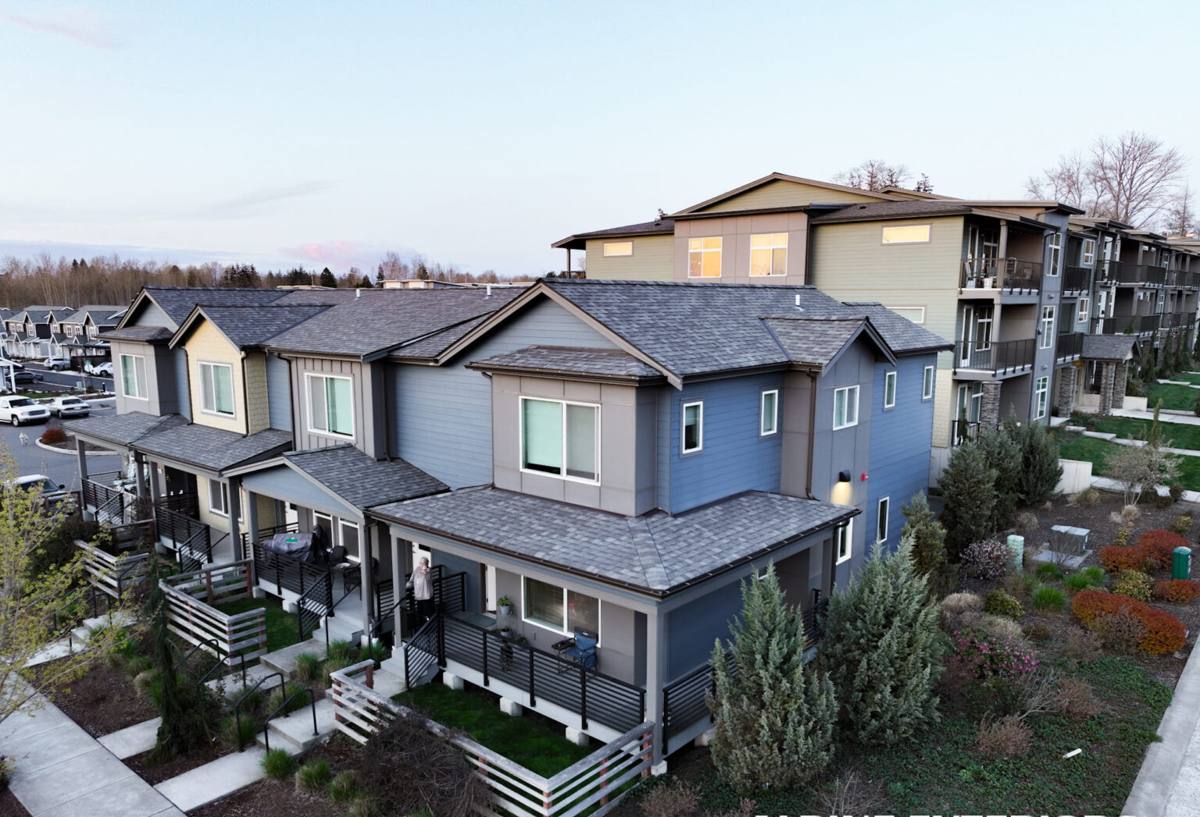
What This Climate Asks of a New Window Install
Whatcom County sits in a wet marine climate, and that shapes how we approach every new-construction window install in the region. Whether a home is closer to the coastal air around Ferndale or set back along the Nooksack River, the same weather patterns move through: long stretches of driving, wind-driven rain in fall and winter, humid air that lingers into a slow-drying spring, and a moss season that can run most of the year on shaded north and east walls. None of that is dramatic on any given day — it's the cumulative exposure that wears on a house.
For new-construction windows specifically, that means:
- Flashing details that shed water outward and downward at every layer, not just at the surface
- A weather-resistive barrier (WRB) that's properly lapped and integrated with the window flange before siding ever goes on
- Window products rated for wind-driven rain, not just a basic air/water rating
- Sealants and tapes rated for our temperature and humidity range, applied in conditions where they'll actually cure properly
- Attention to sill pans and end dams, since water that gets behind a window has to have somewhere to go besides your wall cavity
Driving rain in particular is the detail most new-construction crews underestimate. A window can pass a basic inspection and still let water past the flange in a real Whatcom County storm if the sill pan and flashing aren't layered correctly. That's the failure mode we build our process around avoiding.
Moss and Shaded Exposures
Nooksack's tree cover and river-valley humidity mean shaded elevations stay damp longer after a rain than they would in a drier, more open location. That doesn't just affect siding and roofing — it affects window trim and any wood detailing around the opening. We flash and trim those areas so moisture sheds instead of sitting, which matters more here than it would on a south-facing wall in a drier part of the state.
Why New-Construction Windows Are a Different Job Than Replacement
A lot of homeowners assume window installation is window installation. In new construction, the opening is still just framing — no old window, no old flashing, no compromises to work around. That's an advantage, but only if the crew treats it as one.
| New Construction | Replacement |
|---|---|
| Window has a nail fin, flashed directly to open studs and WRB | Window fits into an existing finished wall, often with a flush-fin or insert approach |
| Full sill pan and flashing sequence is possible and expected | Sill pan work is limited by what's already built |
| Installer coordinates directly with framer, WRB installer, and siding crew | Installer works around existing siding and trim |
| One chance to get water management right before it's covered | Often correcting or working around a prior installer's choices |
Because new construction gives you that one clean shot, the sequencing matters as much as the window itself. A high-end window installed with rushed flashing will leak before a mid-range window installed correctly.
Getting the Water Management Sequence Right
This is the part of the job that doesn't show up in a walkthrough but determines whether the window performs for 20 years or 5. Our sequence, in order:
- Rough opening check — verify the opening is square, level, and sized correctly before anything else happens
- Sill pan installation — a sloped, self-flashing pan under the window that directs any intrusion back outside rather than into the wall cavity
- Window set and shim — the unit goes in plumb, level, and square, shimmed at the manufacturer's specified points, never relying on the flange alone to hold shape
- Flange flashing — flashing tape applied at the sides first, then the head, following a shingle-lap sequence so every layer sheds onto the one below it
- WRB integration — the housewrap is cut and lapped over the flashing correctly, maintaining a continuous drainage plane down to the foundation
- Head flashing — a separate metal or membrane head flashing above the window, so water is directed out and away before it ever reaches the flange
- Sealant at the interior only — we deliberately leave a drainage path at the sill exterior rather than sealing the window fully airtight on all four sides, which is a common mistake that traps water instead of letting it drain
Every one of those steps has to happen before siding goes on. Once the wall is closed up, there's no way to verify any of it without tearing into the finished exterior.
Choosing the Right Window for a Nooksack Build
Frame material and glazing matter, but so does matching the product to how exposed a given elevation is. We walk through this with homeowners and builders rather than defaulting to one product line for the whole house.
| Frame Type | Strengths in This Climate | Trade-offs |
|---|---|---|
| Vinyl | Good moisture resistance, no painting, solid value | Limited color/finish options, can flex on very large openings |
| Fiberglass | Excellent dimensional stability, holds paint well, strong long-term performance in wet/cold swings | Higher upfront cost |
| Wood (clad exterior) | Interior warmth and detailing options | Exposed wood exterior surfaces need real upkeep in a climate this wet — we generally steer builds toward clad or composite exteriors rather than exposed wood on exterior-facing elements |
| Aluminum | Slim sightlines, strong for large glass areas | Poor thermal performance unless thermally broken; can condense in cold snaps |
For most new builds in the Nooksack area, we recommend vinyl or fiberglass for the exterior-facing frame, with glazing packages chosen for our climate rather than a generic national spec — low-E coatings and gas-fill appropriate for our heating-dominated, low-extreme-temperature climate, and a solid air infiltration rating given how much wind-driven rain the walls will see over the life of the house.
A Quick Pre-Install Checklist for Homeowners
- Confirm window U-factor and air infiltration ratings match your local climate zone, not just a national average spec
- Ask whether sill pans are standard on your job or an upcharge — they shouldn't be optional
- Confirm who's responsible for WRB integration: the framer, the window installer, or the siding crew — gaps in responsibility are where leaks happen
- Get the flashing sequence in writing or at least explained, not just "we'll flash it"
- Ask to see the sill and head flashing before siding covers it, even if it's just a photo
Coordinating With Your Builder or GC
On a new build, we're rarely the only trade touching the wall assembly. Framing, house wrap, and siding crews all interact with the window opening, and the order matters. We coordinate directly with the general contractor or builder to make sure:
- Openings are framed to the correct rough dimension before windows are ordered
- WRB is installed in the right sequence relative to our flashing, not applied haphazardly around it
- Siding doesn't go on until flashing has been inspected
- Any changes in window schedule or sizing are caught before the crew shows up, not on install day
This coordination is where a lot of new-construction window problems actually originate — not from a bad window, but from a handoff between trades that nobody owned.
What This Costs and What Drives the Number
Every build is different, but a few factors consistently move the price on a new-construction window package:
| Factor | Why It Matters |
|---|---|
| Frame material | Vinyl is the value option; fiberglass and clad-wood cost more but hold up differently over decades |
| Number and size of openings | Large picture windows and multi-unit combinations cost more per opening than standard operable units |
| Glazing package | Upgraded low-E coatings and gas fills add cost but improve comfort and energy performance |
| Site access and elevation | Upper-story or hard-to-reach openings take more labor time |
| Custom shapes or sizes | Anything outside standard manufacturer sizing adds lead time and cost |
We give straightforward, itemized quotes rather than a single lump number, so you can see what you're actually paying for at each opening.
Why Hiring a Crew That Already Works This Area Matters
A window installer who mostly works drier inland climates or high-volume tract developments elsewhere in the state doesn't necessarily bring the same habits to a Whatcom County build. We work new-construction windows across Ferndale and the surrounding communities, including Nooksack, and the flashing and sequencing habits we use are built around what actually holds up here — driving rain, long wet seasons, and shaded, moss-prone exposures. That's not a marketing point, it's just what the climate requires if you want the windows to still be performing correctly in twenty years instead of five.
We also know the practical realities of building in this area — permitting expectations, typical inspection sequencing, and how local builders usually stage a job — which keeps your window install from becoming the bottleneck on the schedule.
Let's Talk About Your Build
If you're planning a new home in the Nooksack area and want a straight answer on window selection, flashing details, or how we'd coordinate with your builder's schedule, we're happy to walk through it. Use the form below to request a free, no-pressure estimate — no obligation, just a clear look at what your project needs.