 Ferndale
 Storm Damage Roof Repair Built for Nooksack's Weather
Homes in the Nooksack area take a different kind of beating than homes twenty miles inland. You're close enough to the water to catch salt-laden air, far enough into Whatcom County to get the full brunt of Pacific storm systems moving through, and shaded enough by mature conifers that moss and standing moisture are a year-round conversation, not a seasonal one. When a windstorm rips shingles loose or a heavy branch comes down during a winter blow, the repair needs to account for all of that — not just patch the hole and move on.
We work on roofs throughout Ferndale and the surrounding Nooksack-area neighborhoods regularly, which means we're not guessing at how local weather behaves. We know what a roof here looks like after five years of driving rain and moss pressure versus what it looks like after five years in a drier part of the state. That difference matters when you're deciding whether a repair is enough or whether it's covering up a bigger problem.
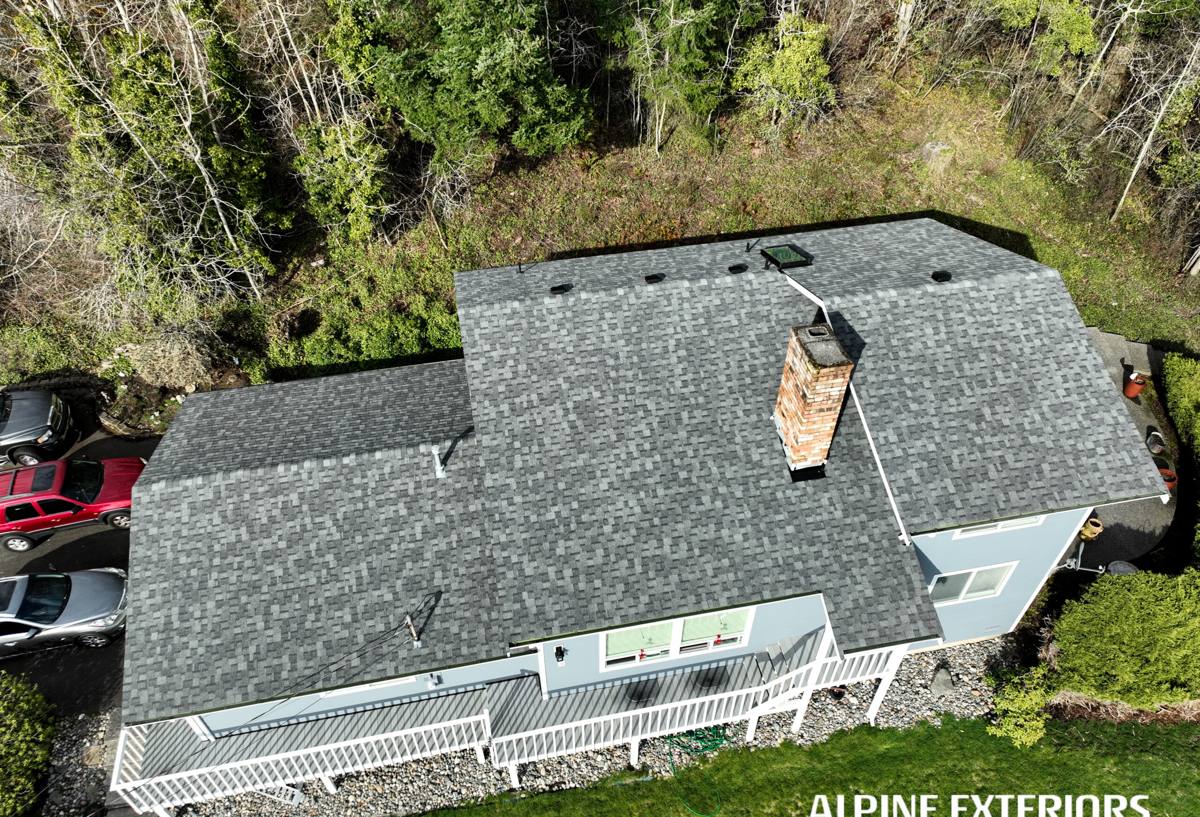
What Storm Damage Actually Looks Like Here
Storm damage in this part of Whatcom County rarely shows up as one dramatic event. It's usually a combination of wind, saturation, and debris working together over the course of a storm season.
Wind and Gusts
Wind events off the Strait and through the Nooksack valley can lift and crease shingles even when nothing visibly falls off the roof. Once a shingle's seal is broken, it doesn't reseal itself — it just waits for the next rain to let water underneath.
Falling Limbs and Debris
Properties with mature trees nearby are common in this area, and storm-driven limb drop is one of the most frequent causes of point damage we see: cracked shingles, dented or torn underlayment, sometimes punctured decking.
Driving Rain and Wind-Driven Moisture
Rain that comes in sideways during a storm finds every weak seam, nail pop, and lifted shingle edge. On a roof that's already carrying moss or organic debris, that water has somewhere to sit instead of running off, which is how small storm damage turns into rot if it's not addressed promptly.
Moss and Long-Term Saturation
Moss isn't storm damage on its own, but a long moss season leaves a roof more vulnerable when a storm does hit — moss holds moisture against the shingle surface, degrades the granule layer, and can lift shingle edges just enough for wind to get underneath.
What a Correct Storm Repair Actually Involves
A storm repair that's done right isn't just "replace what's obviously broken." It's an inspection process that catches what the storm damaged but didn't announce.
- Full roof walk (or careful ground/ladder inspection where a walk isn't safe) — not just the section that looks damaged from the driveway
- Check for lifted, creased, or missing shingles beyond the visibly damaged area
- Inspect flashing around chimneys, vents, and valleys — these are common points where wind and water find a way in
- Check the decking underneath any damaged section for soft spots or moisture staining
- Look at gutters and downspouts — storm debris and moss buildup here can send water back up under the roof edge
- Confirm attic or interior signs of moisture intrusion, especially around penetrations
- Match repair materials to the existing roof as closely as possible, both in product and in age/wear where feasible
Skipping any of these steps is how a homeowner ends up back on the phone six months later with a "new" leak that's actually the same storm event, just showing up somewhere else.
Our Process for Nooksack-Area Storm Repairs
1. Inspection and Honest Assessment
We start by looking at the whole roof, not just the damaged spot. If the repair is straightforward, we'll say so. If we find the storm exposed a bigger issue — old flashing, worn underlayment, a roof that's near the end of its service life — we'll tell you that too, along with what your realistic options are.
2. Clear Explanation Before Any Work
You'll know what we found, what we recommend, and roughly what it involves before we start. No pressure to upsell a full roof replacement when a targeted repair is the honest answer, and no downplaying a problem that needs more than a patch.
3. The Repair Itself
We replace damaged materials properly — correct fastening, correct flashing integration, correct shingle overlap — rather than face-nailing a patch over a problem. A repair that isn't tied into the surrounding roofing system correctly is often the reason storm repairs fail early.
4. Cleanup and Final Check
We clear debris, check gutters and downspouts near the work area, and do a final look to confirm the repair is watertight before we consider the job done.
Repair vs. Replacement: How to Think About It
Not every storm-damaged roof needs to be replaced, and not every roof can be reasonably patched. The table below covers the general factors that push a decision one way or the other — your specific roof may land differently depending on its age and condition.
| Factor | Leans Toward Repair | Leans Toward Replacement |
|---|---|---|
| Roof age | Under roughly 12-15 years | Nearing or past expected shingle lifespan |
| Damage extent | Localized to one section or slope | Spread across multiple areas or slopes |
| Decking condition | Solid, no soft spots found | Soft, stained, or rotted decking present |
| Moss/moisture history | Minor, roof otherwise well-maintained | Long-term moss buildup with granule loss |
| Shingle match availability | Matching material still available | Discontinued product, visible mismatch likely |
If your roof falls into the "repair" column across most of these, a targeted storm repair is usually the right call, and it's the more cost-effective path. If several factors point the other way, we'll walk you through why a repair might just be a short-term fix on a roof that needs more attention.
Why the Salt Air and Moss Season Change the Approach
Two things make roofing work in this part of Whatcom County different from a lot of other regions, and both affect how we approach a storm repair.
Salt air accelerates corrosion on exposed metal — flashing, fasteners, gutter hardware. A storm repair that reuses old, corroding flashing instead of replacing it is a repair that's set up to fail again sooner than it should. We factor material choice and fastener condition into every repair here, not just in new installs.
A long moss season means a roof rarely gets a long dry stretch to fully shed accumulated moisture and debris. That changes how urgently a storm-damaged area needs attention — a lifted shingle that might dry out and reseal itself in a drier climate is more likely to stay wet here, which is why we don't recommend waiting on storm damage once it's identified.
Why Hire a Crew That Already Works This Area
Storm damage repair isn't just a technical skill — it's a familiarity skill. A crew that works Ferndale and the surrounding Nooksack-area neighborhoods regularly already knows:
- Which roof styles and ages are common in the area and how they typically hold up
- How local moss and moisture patterns tend to show up on a roof before a storm even hits
- What flashing and fastener condition usually looks like on a roof exposed to salt air for years
- Realistic timelines for getting a tarp or emergency repair done before the next system rolls through
That local familiarity means fewer surprises during the inspection and a repair plan based on how roofs actually perform here, not a generic checklist.
What to Do Right After a Storm
If you've just had a storm come through and suspect damage, a few practical steps help protect the home until a proper repair happens:
- From the ground, look for obvious signs — displaced shingles, debris on the roof, damaged gutters — without climbing up yourself
- Check the attic and ceilings for any new staining, dampness, or drips
- Photograph visible damage for your records and any insurance conversation
- Avoid walking on a wet or storm-damaged roof; loose or weakened areas aren't always obvious from foot traffic
- Get an inspection scheduled promptly — even minor storm damage tends to get worse with the next rain, not better
If you're dealing with active storm damage on a home in the Nooksack area or elsewhere around Ferndale, we're happy to come take a look and give you a straightforward assessment. Reach out for a free, no-pressure estimate — the form below gets you started.