 Ferndale
 Point Roberts Roofs Work Harder Than Most
Point Roberts is a small peninsula community that sits apart from the rest of Whatcom County — surrounded by water on three sides and reachable by land only by driving through Canada. That geography isn't just a quirk of the map; it shapes what a roof out there has to put up with. Homes get steady exposure to salt-laden marine air, wind that comes off open water with nothing to slow it down, and long stretches of wet weather that turn into an equally long moss season on anything shaded or north-facing. A roof built for a typical inland lot doesn't always hold up the same way here.
None of that means a roof in Point Roberts needs to be exotic or overbuilt. It means the details — fasteners, flashing metal, underlayment, ventilation — need to be chosen and installed with this specific climate in mind, not just installed to a generic spec sheet. That's the difference between a roof that looks fine for a couple of years and one that actually performs for its full lifespan.
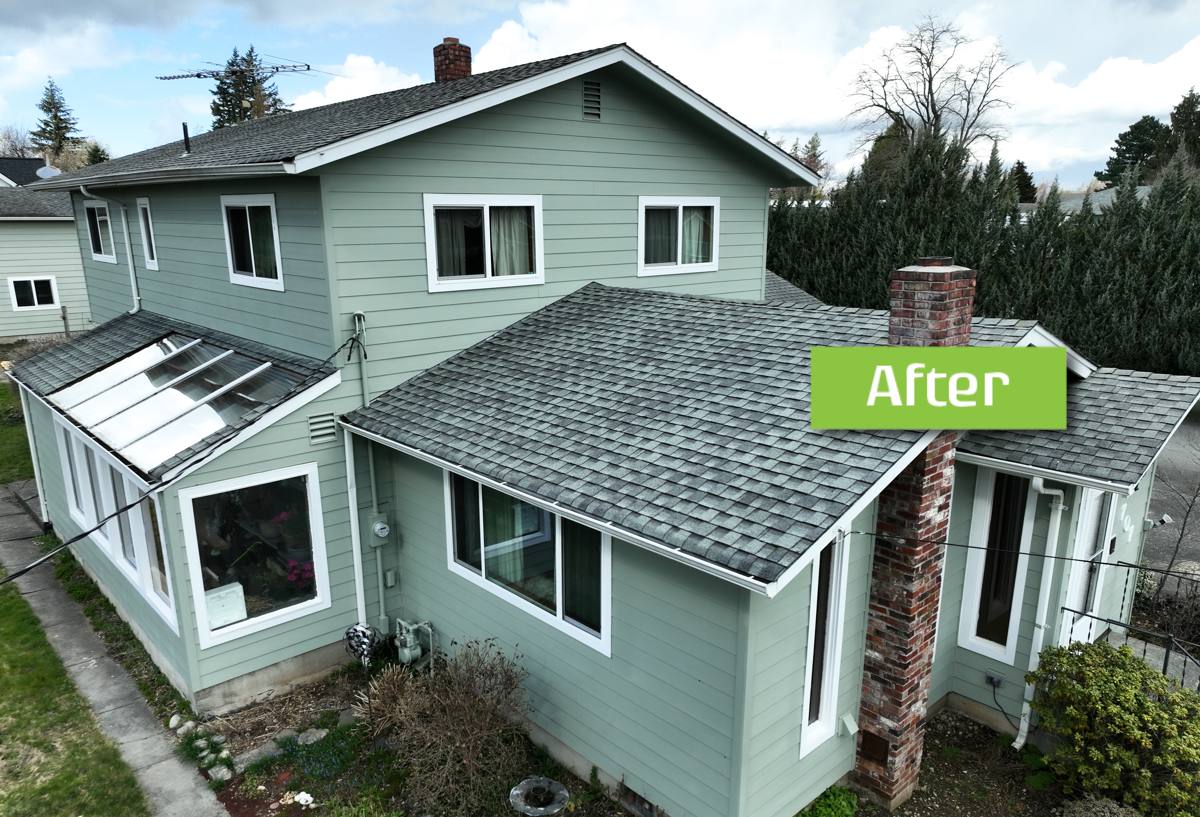
What Salt Air, Driving Rain, and Moss Actually Do to a Roof
Salt air and corrosion
Airborne salt accelerates corrosion on exposed metal — nail heads, flashing, drip edge, vent stacks, and any hardware that isn't rated for coastal exposure. On a lot of roofs the shingles outlast the fasteners and flashing holding them down, which is a slow, hidden way for a roof to fail years before it should.
Driving rain
Wind-driven rain doesn't fall straight down — it gets pushed sideways and upward under laps, around penetrations, and into any gap in the flashing. A roof that would shed water fine in a calm rain can leak in a Point Roberts storm if the underlayment and flashing details weren't built for wind-driven moisture in the first place.
Moss and moisture retention
Shaded, north-facing, and low-slope sections hold moisture longer here than they would further inland, and moss takes hold anywhere organic debris and dampness sit undisturbed. Moss doesn't just look bad — it lifts shingle edges, holds water against the roof deck, and shortens the life of the roofing material underneath it.
What a Correct New Roof Installation Involves
A new roof is more than laying down shingles or panels. Every one of these steps matters, and skipping or rushing any of them is usually where problems start:
Tear-off and deck inspection
The old roofing comes off completely so the deck underneath can actually be inspected — not guessed at. Soft spots, rot, and water-damaged sheathing get found and replaced here, before anything new goes down on top of a compromised deck.
Underlayment and ice-and-water protection
Given how much wind-driven rain this area sees, underlayment choice matters more than it would in a drier climate. Self-adhering ice-and-water membrane at eaves, valleys, and around penetrations gives an extra line of defense in exactly the spots where wind-driven rain and moss-related moisture cause the most damage.
Flashing at every transition
Chimneys, skylights, sidewalls, valleys, and vent penetrations are where most roof leaks actually start — not the open field of shingles. Correct flashing, properly lapped and sealed, is non-negotiable on a coastal roof.
Ventilation
Balanced intake and exhaust ventilation keeps the attic space dry and temperature-regulated, which reduces condensation on the underside of the deck and slows moss regrowth on the outside by keeping the roof surface drier overall.
Material installation to spec
Every roofing material has a manufacturer-specified nailing pattern, exposure, and fastener type. Installing it to that spec — not a shortcut version of it — is what keeps the warranty valid and the roof performing as designed.
Choosing a Roofing Material for This Climate
There's no single "best" roofing material for every home — it depends on your roof's pitch, your budget, and how much long-term maintenance you want to take on. Here's how the common options generally compare for a coastal, moss-prone property:
| Material | Typical Lifespan | Moss & Moisture Behavior | Salt Air / Corrosion Notes | Maintenance Level |
|---|---|---|---|---|
| Architectural Asphalt Shingle | 20–30 years | Moss-resistant granules help, but shaded areas still need periodic cleaning | Corrosion-resistant fasteners and flashing needed regardless of shingle type | Low to moderate |
| Standing Seam Metal | 40+ years | Sheds water and debris quickly, sheds moss growth better than most materials | Coastal-rated finish and fastener package matters — not all metal roofing is spec'd for salt exposure | Low |
| Cedar Shake | 20–30 years with upkeep | Holds moisture more than other options; requires regular treatment to resist moss and rot | Not directly affected by salt air, but moisture retention is the bigger long-term concern here | High |
Our standard on any of these is the same: the material itself is only half the equation. A mid-grade shingle installed with correct flashing, ventilation, and fasteners will outperform a premium material installed without those details.
Fasteners and Flashing Metal: The Detail Most Estimates Skip
It's common for roofing estimates to spec fasteners and flashing generically, without accounting for coastal exposure. Our standard for a Point Roberts installation is corrosion-resistant fasteners and flashing metal rated for marine air, because the alternative — standard-grade hardware that starts corroding years before the roofing material itself wears out — turns into a callback or a premature failure that's entirely avoidable at the install stage. This is a small line-item cost difference with an outsized effect on how long the roof actually lasts.
Why a Crew That Already Works Point Roberts Matters
Point Roberts isn't a quick in-and-out job site the way most towns in Whatcom County are. Because it's only reachable by land through the Canadian border, material delivery, crew scheduling, and even simple things like running back for a forgotten part all take longer and need to be planned for — not discovered mid-project.
- Materials and equipment get staged and ordered in full before the crew crosses, to avoid delays from a mid-job supply run
- Crew scheduling accounts for border wait times so labor days aren't cut short
- Familiarity with how wind and exposure vary across the peninsula informs where extra flashing or fastening attention is worth it
- Local experience means fewer surprises on tear-off — we've seen how roofs in this specific area age and fail, not just how roofs age in general
A crew that's new to the area is figuring these logistics out on your project. A crew based out of Ferndale that already works Point Roberts regularly has already solved them.
Our New Roof Installation Process
- On-site inspection and estimate — we look at the existing roof, deck condition, ventilation, and any problem areas, and give you a written estimate with no pressure to sign on the spot.
- Material selection — we walk through the honest trade-offs between options for your roof's pitch, shading, and budget.
- Permitting and scheduling — we handle the paperwork and build a schedule around weather windows and border logistics.
- Tear-off and deck repair — old roofing comes off, the deck is inspected, and any damaged sheathing is replaced before anything new goes down.
- Installation — underlayment, ice-and-water protection, flashing, ventilation, and the roofing material itself, installed to manufacturer spec.
- Final inspection and cleanup — a full walk-around, magnetic sweep for stray fasteners, and a review of the finished roof with you before we consider the job done.
Cost Factors for a New Roof in Point Roberts
Every roof is priced individually after an on-site look, but these are the main factors that move the number up or down:
| Cost Factor | Why It Matters Here | Effect on Your Project |
|---|---|---|
| Roof size and pitch | Steeper roofs and more complex layouts take longer and need more safety setup | Higher labor cost, longer timeline |
| Tear-off scope | Multiple existing layers or damaged decking add disposal and repair work | Adds cost before new material even goes down |
| Material choice | Asphalt, metal, and cedar have different material and labor costs | Widest single swing in overall price |
| Flashing and fastener spec | Coastal-rated hardware costs more than standard-grade | Modest upfront cost, large effect on long-term durability |
| Access and logistics | Border crossing and delivery staging affect scheduling on this peninsula specifically | Can affect timeline more than price |
Keeping a New Roof Performing Through Moss Season
A correct installation gets you most of the way there, but a small amount of upkeep goes a long way in this climate:
- Trim back overhanging branches so shaded sections of roof get more light and air movement
- Clean gutters at least twice a year — clogged gutters hold moisture against the roof edge
- Have moss growth addressed early in the fall before it has all winter to spread and lift shingle edges
- Check that attic vents stay clear of insulation, debris, or nesting material
- Have flashing and pipe boots checked periodically for cracking or lifted edges
- Deal with small leaks right away — in this climate, a small leak in October is a bigger repair by spring
If you're weighing a new roof for a Point Roberts property, we're happy to come take a look and give you a straightforward, no-pressure estimate — use the form below to get started.