 Ferndale
 Why Point Roberts Roofs Take a Different Kind of Beating
Point Roberts sits out on its own point of land off Boundary Bay, with open water on three sides. That exposure means wind-driven rain and salt-laden air reach roofs here with more force than roofs a few miles inland in Ferndale or Lynden ever see. A roof system that would hold up fine in a sheltered inland yard can start showing wear years earlier out on the point, simply because it's catching more weather, more often.
Add in Whatcom County's long wet season — soaked ground and shaded, damp roof surfaces from fall through spring — and you get two slow, compounding problems: metal components that corrode faster near salt water, and moss that gets a longer window each year to take hold. Storm damage rarely shows up as one dramatic event out here. More often it's a series of wind and rain events that find and widen an existing weak point.
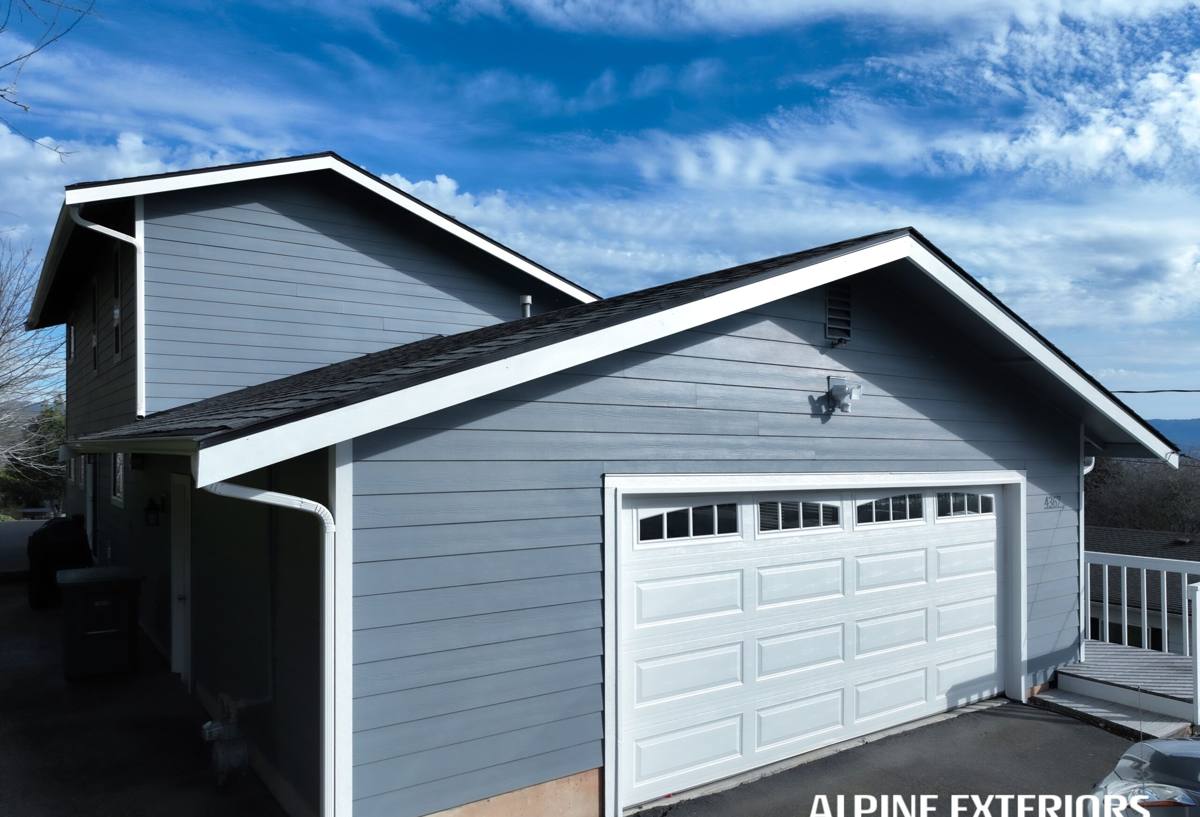
What Counts as Storm Damage (and What Doesn't)
Not every roof problem that shows up after a windstorm is actually storm damage in the insurance or repair sense. Being honest about the difference matters, because it affects whether a repair is a maintenance item you pay for out of pocket or a claim-worthy event.
Signs That Point to an Actual Storm Event
- Shingles or shakes visibly lifted, creased, or torn loose, especially on the windward side of the roof
- A branch strike, puncture, or crushed section from falling debris
- Flashing bent, pulled away, or separated at a valley, chimney, or wall intersection
- Sudden interior leaks or water staining that appeared right after a specific storm
- Granule piles in gutters or downspouts far beyond normal seasonal shedding
Signs That Are Usually Just Age or Neglect
Curling shingle edges across the whole roof, moss mats that have been building for a couple of seasons, and gradual granule loss spread evenly over the surface are wear-and-tear issues, not storm damage — even if you first notice them after a windy week. A straightforward inspection can usually tell the two apart, and we'll say so plainly rather than stretch a maintenance issue into a storm claim.
The Point Roberts Factor: Why Location Changes the Job
Point Roberts is a U.S. exclave — the only way to drive there is through Canada. That single fact changes how storm repair actually works on the ground, in ways that don't apply to most of Whatcom County.
Getting a Crew and Materials to the Job
A contractor who doesn't already work Point Roberts regularly has to plan a border crossing every time — for the initial inspection, for material delivery, and for the repair crew itself. That adds real time to a job that should be measured in days, not weeks, especially when a roof needs a temporary cover right away. A crew that already routes trips out to Point Roberts as part of its regular schedule doesn't lose that time.
Insurance Adjusters and Access
The same logistics apply to insurance adjusters, who may also need extra lead time to schedule a site visit. Having clear photo documentation and a written scope ready before the adjuster's visit keeps the claim moving instead of stalling while everyone waits for another trip out to the point.
What a Correct Storm Repair Actually Involves
A rushed storm repair often just covers the visible hole and calls it done. A correct one treats the visible damage as the starting point for checking everything underneath and around it.
Step One: Stop Further Water Intrusion
If there's an active leak or exposed decking, the first move is a temporary tarp-over or emergency patch — not a permanent fix, but enough to stop water from getting further into the roof deck and attic while a full repair is scheduled. Skipping this step, or letting a "temporary" tarp sit for months, is how a $400 repair turns into a $4,000 one.
Step Two: Check What's Under the Surface
Once the roof is dry enough to work, we pull back the damaged area to look at the decking, underlayment, and any framing underneath. Salt air speeds up corrosion on exposed nails and metal flashing, so a section that looks fine from the shingle side can still have compromised fasteners underneath. This is also where hidden moss damage tends to surface — trapped moisture that's been sitting under a moss mat for a season or two can soften decking well before it ever shows as an interior leak.
Step Three: Match the Existing Roofing
Whenever possible, we match the existing shingle or shake profile, color, and exposure so a repair blends in rather than reading as a visible patch. On older roofs where the exact product is no longer made, we'll say so up front and talk through the closest honest match rather than promising an invisible repair we can't deliver.
Step Four: Rebuild Flashing and Fastening Correctly
Most storm-damage roof leaks trace back to flashing, not the field of the roof itself. Valleys, chimney flashing, and wall step-flashing take the brunt of wind-driven rain, and salt-air corrosion accelerates fastener failure faster here than inland. We rebuild these details to current best practice rather than just re-nailing the old flashing back into place.
Our Process, Start to Finish
- Call or estimate request: tell us what happened and roughly when — a specific storm date helps if you'll be filing a claim.
- Inspection: we look at the whole roof, not just the reported damage area, and document everything with photos.
- Temporary protection if needed: tarp-over or emergency patch to stop further water intrusion.
- Written scope and estimate: a plain-language breakdown of what's damaged, what's wear-and-tear, and what it will cost to fix.
- Insurance coordination if applicable: we work from the same documentation your adjuster will need.
- Repair: scheduled as a single trip out to Point Roberts whenever possible, to keep the job moving.
- Final walk-through: confirming the repair matches the agreed scope before we call it done.
Repair vs. Replace: What Actually Drives the Decision
Storm damage doesn't automatically mean a full re-roof, and a full re-roof isn't always overkill either. The honest answer depends on a handful of factors.
| Factor | Favors Repair | Favors Full Replacement |
|---|---|---|
| Extent of damage | Isolated to one section or slope | Spread across multiple slopes or the whole roof |
| Roof age | Well within expected service life | Already near the end of its expected life |
| Decking condition | Solid, dry, no soft spots | Soft, rotted, or repeatedly wet from trapped moss moisture |
| Material availability | Matching shingle or shake still obtainable | Discontinued product, no honest match possible |
| Flashing condition | Localized corrosion or damage | Widespread salt-air corrosion on fasteners and flashing |
We'll walk you through where your roof falls on that table rather than defaulting to the more expensive answer. A lot of Point Roberts storm calls turn out to be legitimate repairs, not full replacements — but we won't recommend a repair on a roof that's genuinely past its service life just because it's the cheaper conversation to have.
Salt Air and Moss: The Two Slow Threats Behind Most Storm Failures
Salt Air's Effect on Fasteners and Flashing
Salt-laden air corrodes exposed metal — nail heads, flashing edges, gutter fasteners — faster than it would a few miles inland. A roof that's otherwise sound can still fail at these small metal points first, which is exactly where wind-driven rain finds its way in during a storm. This is why we pay close attention to fastener and flashing condition on every Point Roberts inspection, storm-related or not.
Moss Season and Trapped Moisture
Whatcom County's long wet season gives moss a wide window to establish on shaded roof slopes, and once it's there, it holds moisture against the roofing material year-round. That constant dampness softens shingles and decking well before any single storm event, which is often why a roof that "suddenly" leaks after a windstorm was actually already compromised underneath a moss mat that had been building for a season or more. Regular moss removal and treatment is genuinely part of storm-damage prevention here, not a separate cosmetic service.
Working With Your Insurance Claim
If the damage is storm-related and you're filing a claim, documentation is what keeps the process moving. We photograph the damage before any temporary repair, note the approximate date and type of event, and provide a written scope that separates storm damage from any pre-existing wear. That distinction matters to adjusters, and being upfront about it — rather than folding everything into one inflated claim — is what keeps the process credible and moving quickly, which matters more here given the extra scheduling lead time a Point Roberts site visit can require.
Choosing a Crew That Already Works Point Roberts
A contractor's first trip to Point Roberts shouldn't be the day they're standing on your roof. Crews that already route work out to the point understand the border-crossing logistics, know how weather off Boundary Bay behaves differently than weather a few miles inland, and aren't learning salt-air flashing details for the first time on your house.
Before hiring anyone for storm repair, a few questions are worth asking directly:
- Have you done roofing work on Point Roberts before, and how recently?
- Will you inspect the whole roof, or only the section I called about?
- Can you provide a written scope that separates storm damage from pre-existing wear?
- Do you handle temporary protection (tarp-over) if the repair can't happen the same day?
- Are you comfortable coordinating directly with my insurance adjuster if needed?
- What's your realistic timeline given the border crossing, not just a generic estimate?
A crew that answers these plainly, without dodging the logistics question, is one that's actually set up to do the job right rather than squeeze in a single reluctant trip.
If you've got storm damage, a suspicious leak, or just want an honest read on a roof that's been through a rough winter, we're happy to come out and take a look. The estimate is free, there's no pressure to sign anything on the spot, and you'll get a straight answer about what's actually wrong — use the form below to get started.