 Ferndale
 Roof Repair Built for the Lummi Nation Coastline
Homes in and around Lummi Nation sit close to the water, and that changes what a roof has to deal with year after year. Salt-laden air off the bay works into fasteners, flashing, and exposed metal in a way that inland Whatcom County homes don't experience nearly as much. Add in driving rain that comes in sideways during winter storms, plus a moss season that can run eight or nine months out of the year on shaded, north-facing slopes, and you have a roofing environment that punishes shortcuts. A repair that would hold up fine in a drier climate can fail here in a season or two if it's not done with this specific combination of exposures in mind.
We repair roofs in this area regularly, and the patterns are consistent: fastener corrosion faster than the manufacturer's rated lifespan would suggest, moss lifting shingle tabs and holding moisture against the roof deck, and wind-driven rain finding its way through flashing details that were adequate but not built for this level of exposure. Good roof repair here isn't just patching what's visibly broken — it's understanding why that spot failed first.
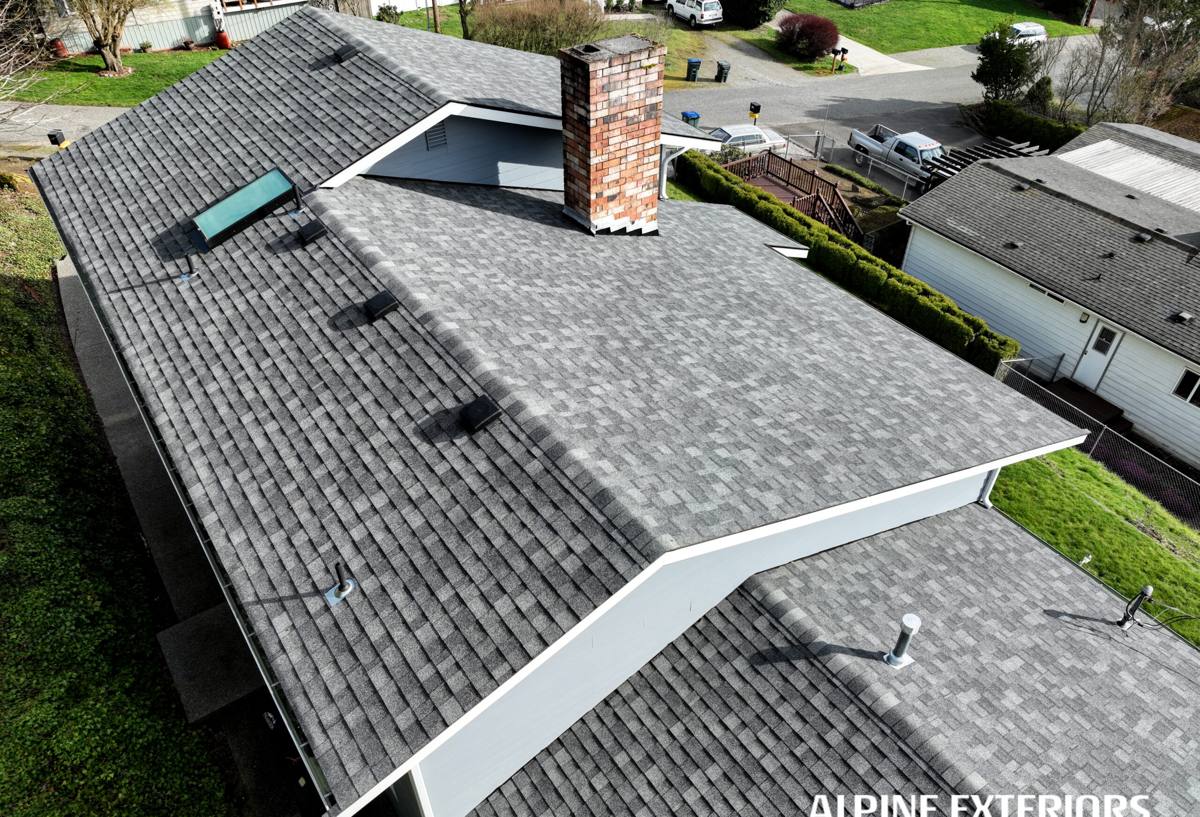
Common Roof Problems We See in Lummi Nation Homes
Salt Air and Metal Fatigue
Nails, flashing, gutter fasteners, and exposed metal edges corrode faster this close to salt water. Once a fastener starts to go, the seal around it goes with it, and that's usually where a leak starts — not in the middle of a shingle, but at a penetration or an edge.
Moss and Trapped Moisture
Moss doesn't just look bad. As it grows, it lifts the edges of shingles and holds water against the roof surface long after a storm has passed. That constant dampness accelerates granule loss on asphalt shingles and can rot the sheathing underneath if it's left unaddressed for a few seasons.
Wind-Driven Rain Intrusion
Storms coming off the water don't just drop rain straight down — they push it sideways and up under laps, ridge caps, and flashing that would keep water out in a calmer climate. Repairs that don't account for this direction of attack tend to leak again within a year or two.
Gutter and Drainage Overload
Heavy, sustained rain events overwhelm gutters and downspouts that are undersized or clogged with debris from nearby trees. Backed-up water finds the path of least resistance, which is often under the first course of shingles at the eave.
What a Correct Roof Repair Actually Involves
A roof repair is only as good as the diagnosis behind it. Before we replace a single shingle or reseal a flashing joint, we're trying to answer one question: why did this spot fail, and will the fix actually address that cause? Chasing the visible leak without answering that question is how the same repair ends up getting redone two years later.
- Tracing the leak path from the interior stain or drip point back to its actual source on the roof, which is often several feet away from where the water shows up inside
- Checking the condition of the roof deck underneath the damaged area, not just the surface material
- Matching replacement shingles, underlayment, and flashing to what's already on the roof as closely as possible
- Rebuilding flashing details — not just caulking over them — at chimneys, vents, skylights, and wall intersections
- Confirming that surrounding fasteners and seals are sound, not just the section that failed
- Clearing moss and debris from the repair area and treating the surface so the problem doesn't recur immediately
Caulk and sealant have a place in roofing, but they're a short-term patch, not a repair. If a flashing detail is failing, the fix is rebuilding that flashing correctly — not layering sealant over a joint that was never installed right in the first place.
Our Roof Repair Process
We keep this straightforward because a roof leak is stressful enough without a confusing process on top of it.
- Inspection. We get on the roof and in the attic where accessible, looking for the actual source of the problem, not just the symptom you're seeing inside.
- Honest assessment. We tell you what we found, what's causing it, and whether a repair is the right call or whether the roof is past the point where repair makes sense. We'd rather lose a repair job than sell you one that won't hold.
- Written estimate. You get a clear scope of work and price before anything happens, with no vague line items.
- The repair. We match materials as closely as possible, rebuild flashing and drainage details correctly, and treat the area for moss where relevant.
- Cleanup and check. Debris and old material are cleared from the property, and we confirm the repair area is sealed and draining properly before we call it done.
Repair or Replace? How We Help You Decide
Not every roof problem needs a full replacement, and not every leak can be permanently solved with a patch. The right call depends on the roof's age, how widespread the damage is, and how many prior repairs it's already had.
| Factor | Repair Usually Makes Sense | Replacement Usually Makes Sense |
|---|---|---|
| Roof age | Well within expected lifespan for the material | At or past the end of its expected service life |
| Damage scope | Isolated to one section, vent, or flashing detail | Widespread moss damage, granule loss, or multiple failed areas |
| Deck condition | Solid, no rot found during inspection | Soft spots or rot found in the sheathing |
| Repair history | First or second repair in this location | Same area has needed repair multiple times already |
| Moss/moisture pattern | Recent, treatable buildup | Long-term moss growth with underlying deck moisture |
We'll walk you through where your roof falls on this list and why, so the decision makes sense to you — not just to us.
Materials and Roofing Types We Work On
Whatcom County's coastal areas have a mix of roofing types, and repair approach differs depending on what's on the house.
Asphalt Composition Shingles
The most common roofing material in the area. Repairs focus on matching shingle profile and color as closely as possible, since sun-faded originals rarely match new material perfectly, and on rebuilding flashing rather than just resealing it.
Metal Roofing
Increasingly common for its durability in wet, salty conditions, but it has its own repair considerations — fastener backing, seam sealant life, and panel expansion. Metal repairs need to account for how the material moves with temperature swings, or a fix that looks solid can work itself loose.
Wood Shake and Shingle
Older homes in the area sometimes still have cedar shake roofing. These require repair techniques specific to wood — weaving in replacement shakes correctly and addressing moss and moisture retention, which is a bigger factor for wood than for asphalt or metal.
Whatever material is on your roof, our standard is the same: repair it the way it should have been built the first time, using materials suited to this climate rather than whatever is cheapest to source.
Ongoing Roof Care in a Moss and Salt Air Climate
A repair holds up longer when it's paired with basic seasonal upkeep. This is what we recommend to homeowners in this area regardless of who did the original repair:
- Have moss and debris cleared from the roof at least once a year, more often on heavily shaded slopes
- Keep gutters and downspouts clear so water isn't backing up under the roof edge during heavy rain
- Trim back branches that overhang the roof — they hold moisture against the surface and drop the organic debris that feeds moss growth
- Walk the attic after major storms, if it's safely accessible, and look for new staining or damp insulation
- Have flashing around chimneys, vents, and skylights checked every couple of years, since these are the first spots to fail in wind-driven rain
- Address small leaks quickly — a slow drip that seems minor is usually evidence of a failure point that will get worse with the next storm
Why Local Experience in Lummi Nation Matters
A roofing crew that mostly works drier, inland climates doesn't always think about salt air corrosion or moss-driven moisture the way they need to. We work this stretch of Whatcom County regularly, which means we already know which failure points show up first on homes exposed to bay winds and prolonged damp shade, and we build repairs to hold up against those specific conditions rather than treating every roof the same. That local familiarity shows up in small decisions — which fasteners we use, how we detail flashing, how aggressively we treat for moss — that add years to a repair's life.
If you're dealing with a leak, storm damage, or a roof that's showing its age, we're happy to take a look and give you a straight answer about what it needs. Reach out for a free, no-pressure estimate using the form below.