 Ferndale
 Roofing Built for Custer's Weather, Not Just Any Weather
Custer sits close enough to the Strait of Georgia and the open water of northern Whatcom County that homes here take a different kind of beating than roofs twenty miles inland. Salt-laden air corrodes exposed metal faster, wind-driven rain finds its way under poorly lapped shingles and flashing, and the long, damp shoulder seasons give moss months at a time to get established on north-facing slopes and shaded valleys. A roof that would hold up fine in a drier part of the state can start failing early out here if it wasn't built with these conditions in mind.
We replace roofs on Custer homes with that reality built into every decision — material selection, ventilation, flashing detail, and moss control — not treated as an afterthought.
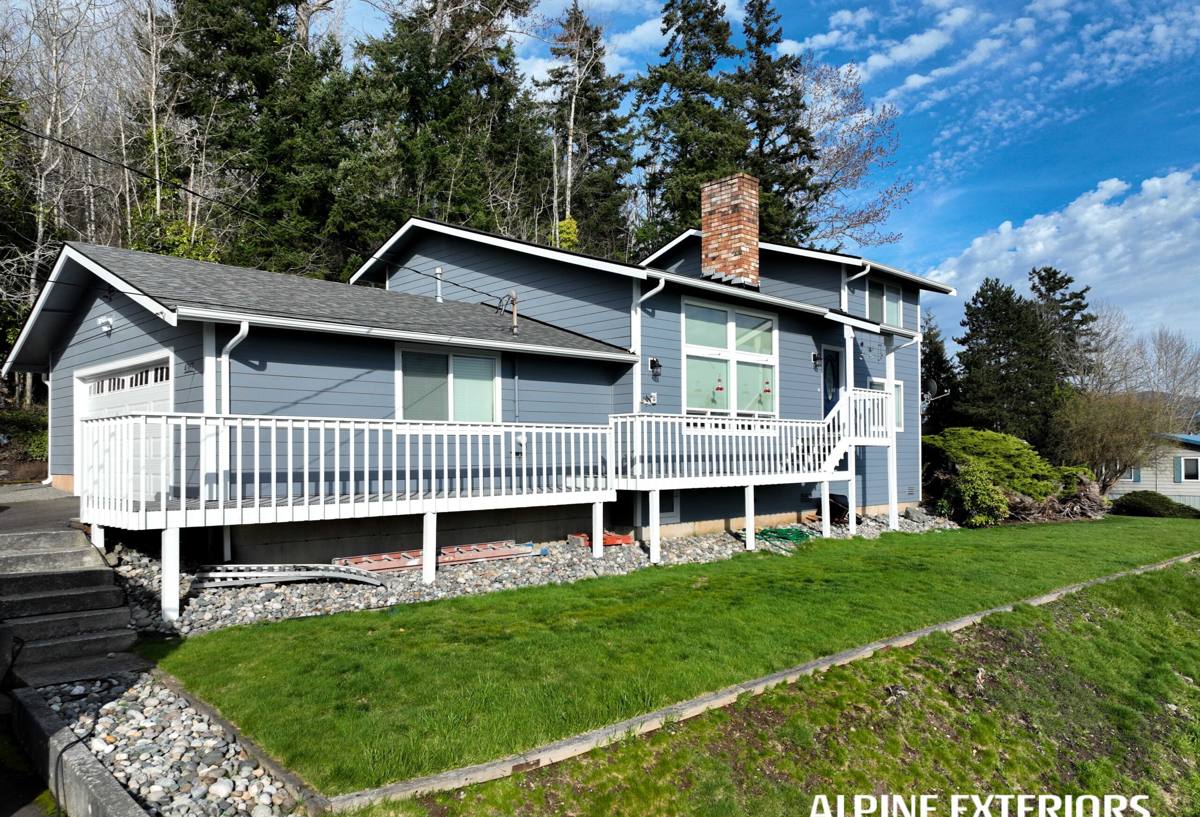
Signs a Custer Roof Needs Replacement, Not Another Repair
Not every roofing problem calls for a full tear-off. But in this climate, certain signs mean patching is just delaying a bigger bill:
- Granule loss heavy enough that you can see bare, shiny patches on shingles from the ground
- Shingles that are curling, cupping, or cracking — usually accelerated by repeated wet-dry cycles
- Soft or spongy spots when walking the roof, which usually means the deck underneath has taken on moisture
- Moss or algae growth that keeps coming back after cleaning, especially on north and east-facing slopes
- Daylight visible through the attic sheathing, or water stains on ceilings that appear after wind-driven rain specifically
- A roof older than 20-25 years for asphalt composition, or one that's already had multiple patch repairs
If your roof is showing one or two of these, a repair might still make sense. If it's showing several, or the roof is past its expected service life, replacement is usually the more honest recommendation — and cheaper in the long run than chasing leaks year after year.
Choosing a Roofing System for This Climate
There's no single "best" roofing material — the right choice depends on your home's exposure, your budget, and how much long-term maintenance you're willing to take on. Here's how the common options compare for a Custer property dealing with salt air and moss pressure:
| Material | Moss/Moisture Behavior | Salt Air Durability | Typical Lifespan |
|---|---|---|---|
| Asphalt composition shingle | Prone to moss on shaded slopes; manageable with proper ventilation and periodic cleaning | Good — not metal, so no corrosion concern | 20-30 years depending on product tier |
| Standing seam metal | Sheds moisture fast; moss struggles to gain a foothold | Requires marine-grade or coated fasteners and panels near open water to resist corrosion | 40-60 years |
| Synthetic/composite shingle | Resists moisture absorption well; less organic material for moss to colonize | Good — synthetic materials don't corrode | 30-50 years |
| Cedar shake | High maintenance — needs regular treatment to resist moss and rot in a wet climate like this | Not affected by salt directly, but wood breaks down faster under constant moisture | 15-30 years with diligent upkeep |
For most Custer homes, asphalt composition and synthetic shingle systems hit the best balance of upfront cost and manageable long-term maintenance. Metal is a strong option for homeowners who want to minimize moss and maintenance over decades, provided the fasteners and flashing are specified correctly for a coastal-influenced environment. We'll walk through the actual trade-offs for your roof and budget rather than pushing one product across the board.
What a Correct Roof Replacement Actually Involves
Tear-Off and Deck Inspection
We remove the old roofing down to the deck rather than layering over it. That's the only way to actually see what's happening underneath — soft sheathing, hidden rot around old flashing, or ventilation gaps that have been trapping moisture for years. Any damaged decking gets replaced before anything new goes down; installing new roofing over a compromised deck just hides the problem for a while.
Underlayment and Water Barrier
In a climate with this much driving rain, underlayment choice matters more than people expect. We use synthetic underlayment across the field of the roof for its tear resistance and consistent moisture barrier, with self-adhering ice-and-water shield at the eaves, valleys, and around every penetration — chimneys, vents, skylights — where wind-driven rain is most likely to force its way under shingles.
Flashing Detail
Most roof leaks trace back to flashing, not the shingles themselves. Every valley, wall intersection, and roof penetration gets new flashing installed correctly rather than reused or caulked over. Given the salt air in this area, we pay particular attention to the corrosion resistance of any exposed metal flashing.
Ventilation
Proper intake and exhaust ventilation keeps the attic space at a stable temperature and moisture level. Without it, moisture gets trapped under the roof deck — which shortens the life of the shingles from underneath and creates ideal conditions for mold and rot, on top of feeding the moss problem from below as well as above.
Our Roof Replacement Process
- On-site assessment — we inspect the existing roof, attic ventilation, and any problem areas before quoting anything
- Written estimate — a clear scope of work and pricing, no vague allowances
- Material selection — we go over the realistic options for your home and budget, explained plainly
- Scheduling — we plan around weather windows, which matters more here than in drier parts of the state
- Tear-off and deck repair — old roofing removed, deck inspected and repaired as needed
- Installation — underlayment, flashing, ventilation, and roofing material installed to manufacturer and code specification
- Cleanup and walkthrough — site cleared of debris and nails, and we walk the finished roof with you
What Affects the Cost of a Custer Roof Replacement
| Factor | How It Affects Price |
|---|---|
| Roof size and pitch | Larger and steeper roofs take more material and labor time |
| Layers of existing roofing | Multiple old layers add tear-off time and disposal cost |
| Deck condition | Rotted or soft sheathing found during tear-off adds repair cost |
| Material choice | Standard asphalt shingle is the most budget-friendly; metal and premium synthetics cost more upfront but less over time |
| Number of penetrations | Chimneys, skylights, and multiple vents each need individual flashing work |
| Access and site conditions | Steep lots, tree cover, or limited equipment access can add labor time |
Because every roof and every home is different, we don't publish blanket prices — but a homeowner shouldn't have to guess either. Our estimates lay out exactly what's driving the number so you can see where the money goes.
Moss and Ventilation: The Long Game in This Climate
A new roof in Custer isn't just about the day it's installed — it's about how it holds up through repeated wet Whatcom County winters and the long moss season that follows. Two things matter most for keeping a roof performing over its full lifespan:
- Ventilation that actually balances — intake at the eaves matched to exhaust at the ridge, sized correctly for the attic volume, not just installed for appearance
- Reducing moss-friendly conditions — trimming back overhanging branches where possible, keeping gutters clear so water isn't sitting against the roof edge, and choosing materials and colors that don't hold moisture as readily on shaded slopes
We'll flag these during the estimate if your property has conditions — heavy tree cover, a consistently shaded north slope — that make moss pressure higher than average.
Why It Matters That We Already Work in Custer
A crew that regularly works Whatcom County knows how this area's rain and salt air actually behave on a roof over time, not just in a manufacturer's spec sheet. That means knowing which flashing details hold up against driving rain off the water, which fastener grades make sense this close to salt air, and how to schedule tear-offs around the region's weather patterns so a roof isn't sitting open when a storm rolls through. It also means we're not guessing at permitting and code requirements for the area — we handle that as a normal part of the job, not a surprise add-on.
After Your New Roof: A Simple Maintenance Checklist
A correctly installed roof still benefits from basic upkeep, especially in a climate that gives moss and moisture every advantage:
- Clear gutters and downspouts at least twice a year so water isn't backing up against the roof edge
- Have moss growth treated or removed before it spreads, rather than waiting until it's heavy
- Trim back tree branches that keep a section of roof shaded and damp longer than the rest
- Walk the attic once a year to check for daylight, staining, or musty odor — early signs of a problem
- Schedule a quick visual inspection after any major windstorm
None of this replaces professional inspection, but it catches small issues before they become roof-replacement-sized ones.
Get a Straight Answer on Your Roof
If you're not sure whether your Custer home needs a repair or a full replacement, the fastest way to find out is a look at the actual roof — not a guess based on age alone. We offer free, no-pressure estimates and will tell you honestly what we find. Use the form below to get started.