 Ferndale
 Roof Replacement Built for Sumas and Ferndale Weather
Homes around Sumas and Ferndale sit at the edge of two different weather patterns — the damp, marine air rolling in off Bellingham Bay and the colder, wetter conditions that settle in near the Canadian border. That combination is hard on roofs. Between the salt-laden air, the driving rain off the Strait, and a moss season that can run eight months out of the year, a roof here works harder than one just about anywhere else in the state. When it's time to replace yours, the goal isn't just to put on new material — it's to put on a roof system that's actually built to handle what Whatcom County throws at it.
We've replaced roofs throughout this stretch of the county long enough to know which failure points show up again and again on Sumas-area and Ferndale homes, and we build every replacement to address them directly rather than just matching what was there before.
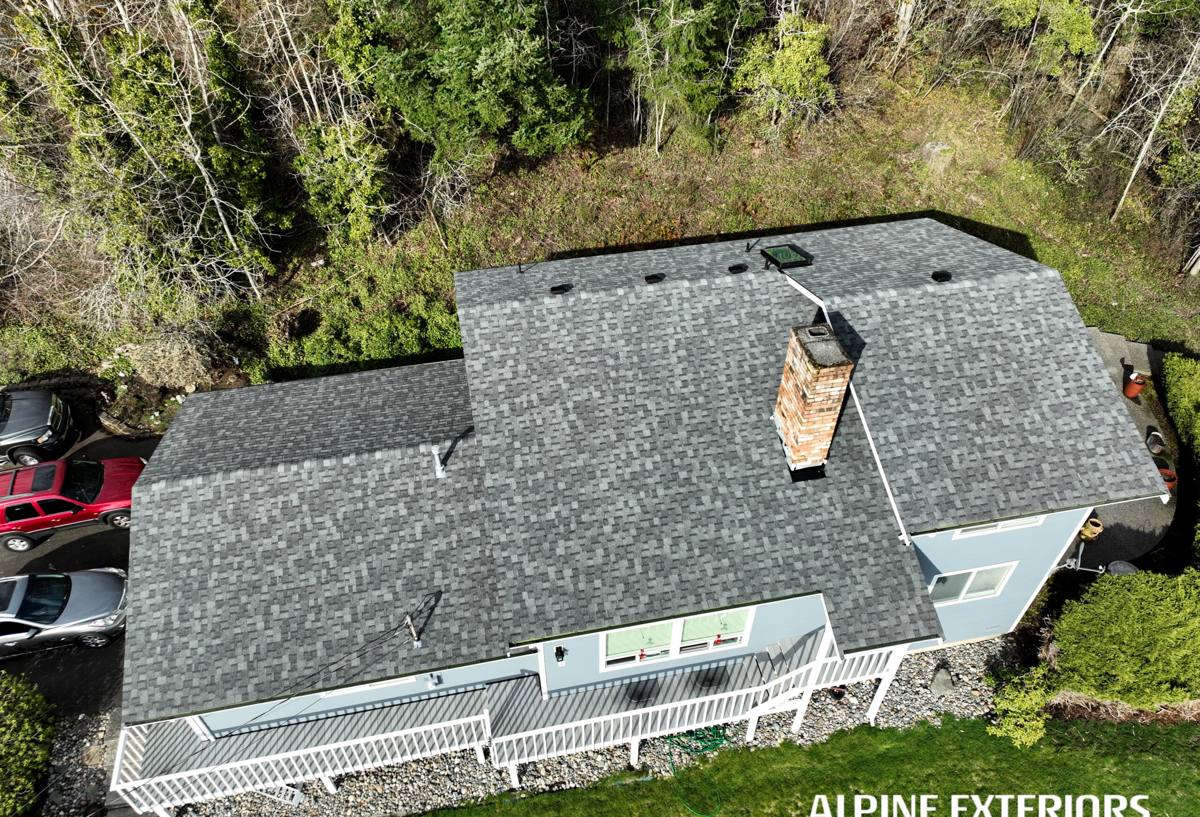
What Whatcom County Climate Does to a Roof
Salt Air and Corrosion
Even well inland from the water, moisture carrying salt content travels on the wind and settles on roofing hardware. Over years, that accelerates corrosion on exposed fasteners, flashing, and any metal components that aren't rated for coastal-adjacent exposure. A roof replacement done with standard-grade hardware in this area tends to show rust streaking and fastener failure well before the shingles themselves are worn out.
Driving Rain and Wind-Driven Moisture
This part of Washington doesn't just get rain — it gets rain pushed sideways by wind, which finds its way into laps, seams, and penetrations that would stay dry in a calmer climate. Roofs here need underlayment and flashing details that assume water will be forced uphill and sideways at some point, not just falling straight down.
Moss and Prolonged Dampness
Ferndale and Sumas both sit in a zone where shaded roof sections can stay damp for days after a storm passes. That's exactly the environment moss needs to establish. Once moss takes hold, it lifts shingle edges, holds moisture against the roof deck, and shortens the life of the roofing material significantly. A replacement is the right time to correct the conditions that let moss get a foothold in the first place — not just install new shingles over the same setup.
Signs a Sumas or Ferndale Roof Needs Replacing, Not Patching
- Granule loss showing up in gutters or at downspout outlets, especially after wind events
- Moss or dark streaking that returns within a season or two of cleaning
- Curling, cupping, or cracked shingles, particularly on south- and west-facing slopes
- Soft spots or sagging noticeable when walking the roof or viewing from the ground
- Daylight visible through the attic decking, or damp insulation after a rain
- Repeated leaks at the same location despite prior patch repairs
- A roof approaching or past the manufacturer's expected service life for this climate
Any one of these on its own might be a repair. Two or more together, especially on a roof past the 15-20 year mark, usually means the underlying materials are failing broadly and a full replacement is the more honest recommendation — patch repairs at that point just delay a bigger repair bill.
What a Correct Roof Replacement Involves Here
Tear-Off and Deck Inspection
We remove the existing roofing down to the deck rather than layering over it. That's the only way to actually see the condition of the sheathing underneath — soft, delaminated, or water-stained decking is common on older roofs in this area and needs to be replaced before anything new goes down. Roofing over a compromised deck just hides the problem for a few more years.
Underlayment Suited to Wind-Driven Rain
Given how often rain here comes in sideways, we use synthetic underlayment with ice-and-water shield reinforcement at the eaves, valleys, and any low-slope transitions — the spots most likely to see water pushed backward under wind pressure.
Flashing and Fastener Selection
Because of the corrosion risk from salt-carrying air, we use flashing and fasteners rated for the exposure this area sees rather than the minimum-spec hardware that might be fine further inland. This is one of the details that's invisible once the roof is finished but determines how long it actually lasts.
Ventilation Correction
Poor attic ventilation traps moisture, which speeds up moss growth on the roof deck and can lead to condensation issues inside the attic itself. Replacement is the point where we correct ventilation problems — adding or upgrading intake and exhaust venting so the roof deck can actually dry out between rain events instead of staying damp.
Material Selection for Moss Resistance
We talk homeowners through shingle options that include algae- and moss-resistant granules, which matters more here than in drier parts of the state. It's not a guarantee moss never returns, but it meaningfully slows regrowth compared to standard shingles.
Roofing Material Comparison for This Climate
| Material | Typical Lifespan Here | Moss/Moisture Behavior | Notes for Sumas & Ferndale |
|---|---|---|---|
| Architectural asphalt shingle | 20-30 years | Good with algae-resistant granules | Most common choice locally; wide style range, reliable performance for the cost |
| 3-tab asphalt shingle | 15-20 years | More prone to moss without added protection | Lower upfront cost but shorter service life in this climate |
| Metal (standing seam) | 40-60 years | Sheds moisture fast, resists moss well | Higher upfront cost; performs very well against driving rain and moss |
| Cedar shake | 20-30 years with upkeep | High moisture retention risk without diligent maintenance | Requires more regular treatment in a damp climate like this one; we're upfront about that maintenance burden before recommending it |
None of these is universally "best" — the right choice depends on budget, roof pitch, and how much ongoing maintenance a homeowner wants to take on. We'll walk through the honest trade-offs for your specific roof rather than pushing one product line.
Our Roof Replacement Process
- On-site assessment — we inspect the current roof, attic, and ventilation, and identify the specific moss, moisture, or wear issues affecting your home
- Written estimate — a clear scope of work and cost breakdown, no vague allowances
- Material selection — we go over options suited to your roof's exposure and your budget
- Tear-off and deck repair — old roofing removed, deck inspected, any damaged sheathing replaced
- Underlayment, flashing, and ventilation work — the details that determine how the roof holds up over time
- New roofing installation — installed to manufacturer specification for full warranty coverage
- Final walkthrough — we review the completed work with you and clean the site thoroughly
Why Hiring a Crew That Already Works Sumas and Ferndale Matters
A roof replacement done by a crew unfamiliar with this specific climate often looks fine going in and fails early because the underlayment, flashing hardware, or ventilation wasn't matched to local conditions. We work this area regularly, which means we already know which slopes hold moss longest, how far wind-driven rain typically pushes under standard flashing details, and where corrosion tends to start on hardware that wasn't rated for the air quality out here. That local knowledge shows up in the details you can't see after the job is done — the fastener grade, the underlayment overlap, the flashing at a tricky valley — which is exactly where a roof either holds up for decades or starts failing in year six.
It also means we're a known, reachable local business if a warranty question or a storm-related concern comes up years down the road, not a crew that worked the area once and moved on.
Planning and Cost Factors
Every roof replacement is priced around the specific job, but a few factors consistently move the cost up or down for homes in this area:
- Roof size and number of slopes/valleys — more complex rooflines take more labor and material
- Extent of deck repair needed once old roofing is removed
- Material choice (asphalt vs. metal vs. cedar, as outlined above)
- Ventilation upgrades required to correct existing moisture problems
- Roof pitch and accessibility
- Removal and disposal of the old roofing material
We provide a detailed written estimate before any work starts, so there's no guessing on scope or price once the job is underway.
Get a Free Estimate
If your roof in the Sumas or Ferndale area is showing moss, granule loss, or age, we're happy to take a look and give you a straightforward, no-pressure assessment of what it actually needs. Fill out the form below to schedule a free estimate.