 Ferndale
 Metal Roofing Built for the Semiahmoo Waterfront
Homes in and around Semiahmoo sit in one of the more demanding roofing environments in Whatcom County. The combination of salt-laden air off the bay, wind-driven rain, and a moss season that can stretch from fall through spring puts real stress on a roof year after year. A roof that would hold up fine a few miles inland can fail early out here if it wasn't specified and installed with these conditions in mind. Metal roofing, done correctly, is one of the strongest answers to that combination — but "metal roofing" covers a wide range of products and installation quality, and not all of it is suited to a coastal setting.
This page is about metal roofing specifically for Semiahmoo properties: what the climate actually does to a roof out here, what a correctly specified and installed metal roof looks like, and why local installation experience matters as much as the material itself.
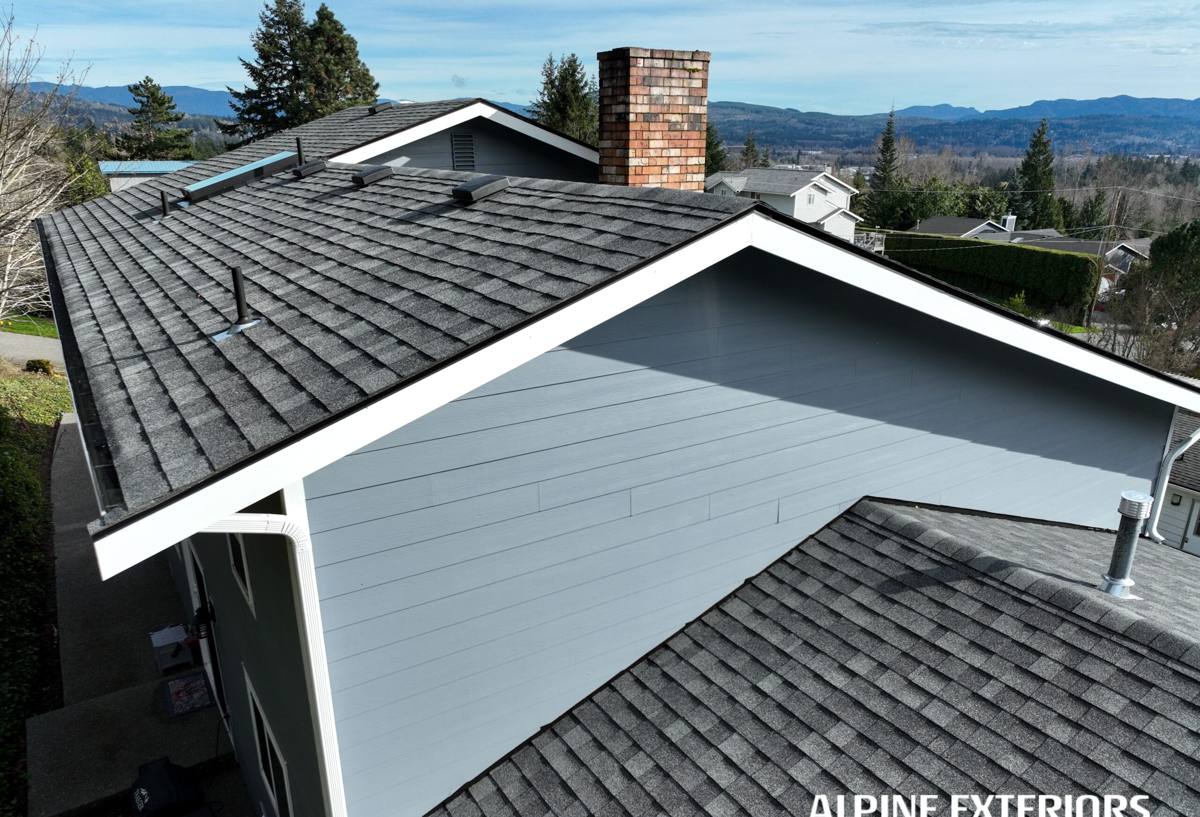
What Salt Air, Rain, and Moss Actually Do to a Roof
Salt Air and Corrosion
Airborne salt from the bay settles on every exterior surface, including the roof. On uncoated or poorly coated metal, that salt accelerates corrosion at fastener heads, cut edges, and panel seams — the exact spots where a roof is most vulnerable to leaks. It also attacks exposed steel flashing, gutters, and any dissimilar metals in contact with each other. A roofing system near Semiahmoo needs coatings and fastener specifications chosen with that exposure in mind, not just a standard inland spec.
Driving, Wind-Driven Rain
Rain here rarely falls straight down. Wind off the water pushes it sideways and up under laps, ridge caps, and flashing details that would shed water fine in a calmer climate. This means underlayment quality, seam design, and flashing at every penetration and edge matter more here than in a sheltered inland lot. Water intrusion problems on coastal roofs are almost always found at a transition point — a valley, a wall-to-roof junction, a vent boot — not in the middle of a plain panel run.
Moss and Prolonged Moisture
Whatcom County's long wet season means roofs stay damp for extended stretches, especially on north-facing slopes and shaded sections near trees. Moss and algae take hold in that moisture and, on some roofing materials, work into the surface and hold water against it. Metal roofing has a real advantage here: moss has nothing to root into on a properly installed metal surface, and the smooth, sloped panel profile sheds water and encourages faster drying than more porous materials. That doesn't mean a metal roof is maintenance-free — debris and organic buildup in valleys and against obstructions still needs to be cleared — but it removes one of the biggest long-term liabilities homeowners deal with in this climate.
Why Metal Roofing Fits This Location
For a Semiahmoo home, metal roofing offers a specific set of advantages that line up directly with the local climate challenges described above:
- Sheds wind-driven rain faster than shingle systems when seams and laps are installed correctly
- Resists moss colonization far better than porous roofing surfaces
- Handles the coastal wind exposure common to open or elevated lots near the water
- Holds up to decades of freeze-thaw and wet-dry cycling without the granule loss or cupping seen on aging shingles
- Comes in coatings and finishes specifically rated for coastal or marine-adjacent exposure
None of these benefits are automatic, though. They depend on choosing the right panel system, the right coating class, and the right fastener and flashing details — and then installing all of it correctly. That's where a lot of metal roofing jobs fall short, even when the material itself was a good choice.
Choosing the Right Metal System for a Coastal Property
Not every metal roofing product is built for salt exposure, and we treat that as a real selection criterion, not an upsell. The table below outlines how common options compare for a Semiahmoo-area home specifically.
| System | Coastal Suitability | Trade-offs to Know |
|---|---|---|
| Standing seam steel, marine-grade coating | Strong choice for direct bay exposure | Higher upfront cost; requires correct panel gauge and clip spacing for wind uplift |
| Standing seam aluminum | Excellent — aluminum doesn't rust | Softer material, needs careful handling during install to avoid denting |
| Exposed-fastener steel panels | Workable with upgraded, gasketed, coated fasteners | More maintenance long-term; fastener seals are the weak point in salt air and need periodic checking |
| Standard galvanized steel (uncoated or basic mill finish) | Not our recommendation this close to the water | Corrodes faster under salt exposure; we won't spec this for waterfront-adjacent lots as our standard practice |
We won't put a homeowner into a system that we know is a poor match for this specific exposure just because it's a lower up-front number. If a client wants a lower-cost option, we'll say plainly where the trade-offs are — added maintenance, shorter realistic service life, more frequent fastener inspection — so the decision is informed rather than assumed.
Coating Class Matters More Here Than Inland
The paint or coating system on a metal roof is what actually stands between the base metal and the salt air. For coastal-adjacent properties, we favor coating specifications built for marine and coastal exposure over standard inland-grade finishes, and we pay attention to cut-edge protection — the raw edges created when panels are trimmed on site are where corrosion typically starts first if they aren't properly treated or sealed.
What a Correct Installation Involves
A metal roof is only as good as the details under and around the panels. On a Semiahmoo job, our process focuses on the parts that actually determine whether the roof performs for decades or develops problems in five years:
Deck and Underlayment
We check the existing roof deck for soundness before anything goes down — soft or water-damaged sheathing gets replaced, not covered over. A high-quality synthetic or self-adhering underlayment goes down next, with extra attention at eaves, valleys, and any low-slope transitions where wind-driven rain is most likely to test the system.
Fastening and Panel Layout
Panel layout accounts for prevailing wind direction and exposure, fastener type and spacing are matched to the coastal environment, and every penetration — vents, stacks, chimneys — gets flashed with a detail built for that specific penetration rather than a generic patch.
Edges, Valleys, and Terminations
Ridge caps, rake edges, and valley metal are where most metal roof leaks actually originate, so these get the most attention on our jobs — proper overlap, correct sealant use (not sealant used to cover up a bad detail), and hemmed or cleated edges where wind uplift is a concern.
Pre-Installation Checklist We Walk Through With Every Semiahmoo Homeowner
- Current deck condition and any needed sheathing repair
- Panel and coating selection matched to salt air exposure
- Ventilation adequacy — trapped moisture under a metal roof causes its own problems
- Valley, flashing, and penetration detailing plan before panels go up
- Fastener type, coating, and gasket spec appropriate for coastal conditions
- Snow and ice considerations for the specific slope and orientation of the roof
- Gutter and drainage capacity for wind-driven rain volumes
Our Process, Start to Finish
We keep the process straightforward and transparent, because a roofing job is disruptive enough without added uncertainty:
- On-site assessment — we inspect the existing roof, deck condition, ventilation, and specific exposure of the property (open water view, tree cover, slope orientation)
- System recommendation — we walk through panel and coating options suited to that specific lot, with honest trade-offs, not a one-size-fits-all pitch
- Written estimate — clear scope, materials, and timeline before any commitment
- Tear-off and deck prep — old roofing removed, deck inspected and repaired as needed
- Underlayment and flashing installation — the part of the job that determines long-term performance
- Panel installation — correct fastening, seam work, and edge detailing for coastal wind and rain exposure
- Final walkthrough — we review the completed roof with the homeowner before considering the job done
Maintenance Realities for a Metal Roof Near the Water
Metal roofing reduces maintenance compared to many alternatives, but "reduced" isn't "none." A few things we tell every Semiahmoo homeowner up front:
- Gutters and valleys should be cleared periodically — organic debris still collects, even though moss won't take root in the panel itself
- Exposed-fastener systems benefit from a periodic fastener check, since gaskets and seals are the component most affected by salt air over time
- Any coating scratches from fallen branches or debris should be touched up promptly to prevent a localized corrosion point
- Annual visual inspection after the winter storm season is a reasonable habit, especially for waterfront-exposed roofs
Why Hiring a Crew That Already Works Semiahmoo Matters
Roofing crews without regular experience in this specific coastal environment tend to under-spec for the exposure — using inland-standard fasteners, skipping cut-edge protection, or missing the flashing details that wind-driven rain actually tests. That's not usually a matter of a crew doing careless work; it's a matter of not routinely accounting for conditions that don't come up on a typical inland job.
A crew that regularly works Ferndale and the surrounding Whatcom County waterfront knows which details get tested hardest by this climate and builds for that from the start — not as an upcharge, but as the baseline standard for a roof going up this close to the water. That local familiarity shows up in the small decisions: which coating class to spec without being asked, where to add extra flashing attention, how to lay out panels for the prevailing wind on a specific lot.
What This Costs to Get Right
Metal roofing costs more upfront than asphalt shingles, and coastal-grade coatings and fasteners add to that further. The honest way to think about it is total cost over the life of the roof: a properly specified and installed metal roof in this environment is a long-service-life investment, while an under-specified system — regardless of material — tends to generate repair costs and shortened service life that erase any upfront savings. We'll walk through real numbers for your specific roof during an estimate rather than quoting a broad range that doesn't reflect your home's actual size, slope, and condition.
If you're weighing a metal roof for a Semiahmoo property, we're happy to take a look and give you a straightforward, no-pressure estimate — including what we'd actually spec for your home's exposure and why. Use the form below to get started.