 Ferndale
 Why Siding Installation in Cordata Is Its Own Job, Not a Generic One
Every siding job in Whatcom County deals with rain. But the Cordata area, sitting in the broader Ferndale corridor between the Salish Sea shoreline and the wooded, low-lying terrain that defines this part of the county, gets a specific combination of stresses: salt-tinged marine air moving in off the water, wind-driven rain that hits walls sideways instead of just falling straight down, and long stretches of gray, damp weather that keep exterior surfaces wet for days at a time. Add tree cover and shaded lots, which are common on residential streets in this area, and you get siding that rarely gets a full dry-out between storms. That combination is exactly what turns a mediocre siding job into a five-year problem instead of a forty-year asset.
This page is about doing that one job right, on this one type of property, in this one part of Whatcom County. Not a general siding overview — the specific decisions that matter when you're installing siding on a Cordata-area home.
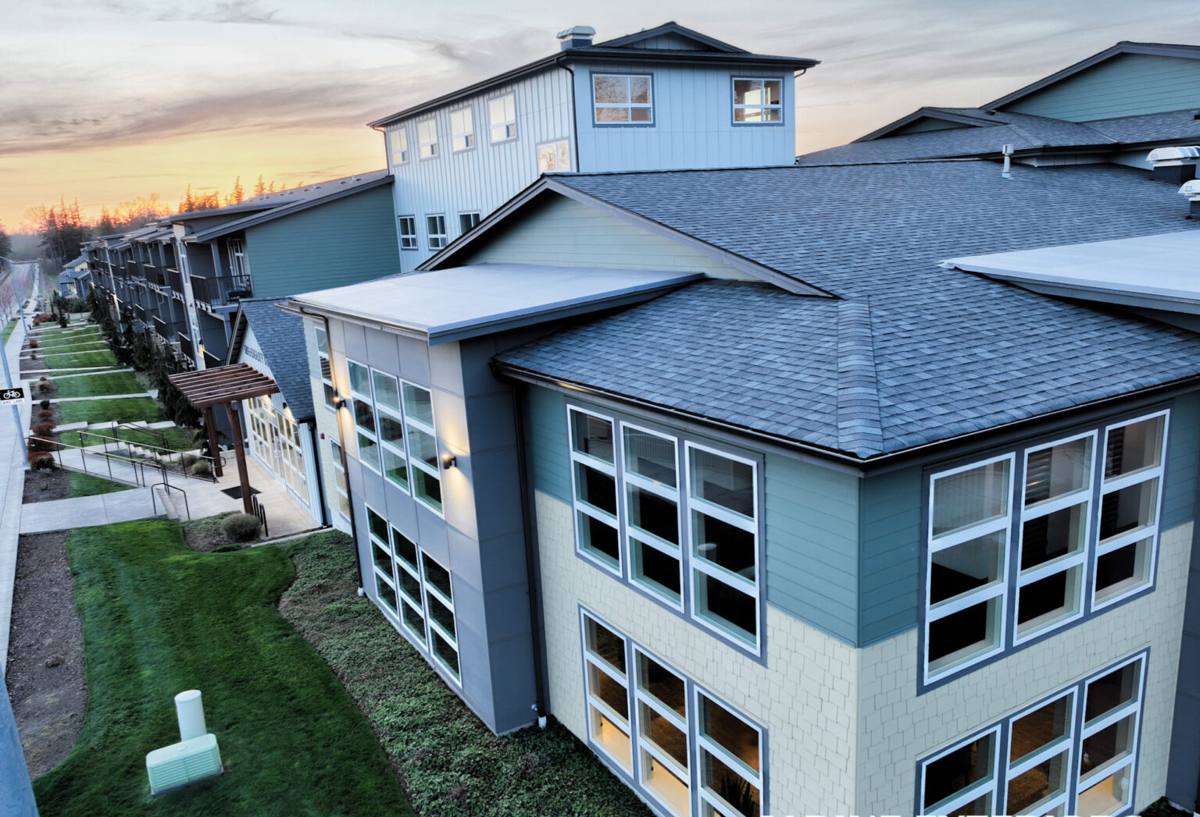
What Cordata Homes Are Actually Up Against
Salt-Influenced Marine Air
Homes near Bellingham Bay and the surrounding Whatcom County shoreline don't get hit with the same corrosive salt spray as an oceanfront property, but the air here still carries enough salt content to accelerate corrosion on fasteners, flashing, and any metal trim that isn't rated for it. Over years, cheap or mismatched fastener choices show up as rust streaks bleeding down the face of the siding — a cosmetic problem that's really a sign the wrong hardware went into the wall.
Driving, Wind-Pushed Rain
Straight-down rain is easy for siding to handle. Wind-driven rain — rain pushed horizontally into a wall by storm winds off the Strait — is what actually tests an installation. It gets forced up under laps, into butt joints, and around window and door openings that aren't flashed correctly. A siding system can look identical to a correctly installed one from the curb and still fail here, because the difference is entirely behind the surface: the water-resistive barrier, the flashing details, and the fastening pattern.
A Long Moss Season
Shaded lots, tree cover, and persistent damp conditions mean moss and algae have a long growing window in this area — often most of the year on north-facing or shaded walls. Moss itself doesn't destroy siding the way rot does, but it holds moisture against the surface far longer than an exposed wall would otherwise stay wet, and it's often the first visible sign that a wall isn't drying out properly between storms.
What a Correct Installation Actually Involves
The visible siding board is the last five percent of the job. The other ninety-five percent — the part nobody sees once it's finished — is what determines whether the siding lasts one decade or four.
- Water-resistive barrier: A continuous, correctly lapped weather barrier behind the siding, with every seam and penetration sealed, not just stapled and left.
- Flashing at every opening: Windows, doors, and any wall penetration need proper head, jamb, and sill flashing integrated with the barrier — this is where most water intrusion actually starts.
- Correct fastening: Fastener type, length, and placement matched to the substrate and to the siding manufacturer's specification — not just "whatever's in the nail gun."
- Proper clearances: Gaps at grade, at roof lines, and at deck ledgers so siding never sits in standing water or trapped moisture.
- Ventilation behind the cladding: A rainscreen gap or drainage plane so any water that does get behind the siding has somewhere to go and can dry out.
Skip any one of these and the siding can still look fine on installation day. The failures show up two, five, or ten years later — which is exactly why so many homeowners inherit a bad installation from a previous owner or a previous contractor and don't find out until the damage is already inside the wall.
Why We Install James Hardie Fiber Cement — Nothing Else
We install one siding system: James Hardie fiber cement. Not vinyl, not LP SmartSide, not Cemplank or Allura, not primed wood or cedar. That's not a marketing preference — it's a standard we hold because of what actually happens to each of those products under the exact conditions described above.
Vinyl expands and contracts with temperature swings, can warp or crack under UV exposure over time, and its seams and J-channels give wind-driven rain a path behind the panel that's harder to seal than a fiber cement lap joint. Wood-based and engineered wood products like LP SmartSide perform well when kept dry, but their long-term durability depends heavily on caulking, paint maintenance, and moisture management — exactly the maintenance burden that a long moss season and persistent damp make harder to stay ahead of. Other fiber cement brands like Cemplank and Allura are legitimate competitors to Hardie, but we've standardized on Hardie specifically for its ColorPlus factory finish and its climate-engineered HZ product lines, which are formulated for Pacific Northwest moisture exposure rather than a one-size-fits-all national spec.
James Hardie fiber cement is non-combustible, doesn't support moss and mildew growth the way wood substrates can, holds its factory finish for years longer than field-applied paint, and comes with a strong transferable warranty when installed to Hardie's own specification — which is the installation standard we follow on every job, including ours in the Cordata area.
How the Main Siding Materials Compare in This Climate
| Material | Moisture Behavior | Maintenance in This Climate | Typical Lifespan Here |
|---|---|---|---|
| James Hardie fiber cement | Dimensionally stable, doesn't rot or swell | Occasional wash; factory finish holds color for years | 30-50+ years with correct install |
| Vinyl | Can warp/crack with temperature swings; seams allow water intrusion | Low, but replacement often needed after storm damage | 15-25 years |
| LP SmartSide / engineered wood | Performs well dry; vulnerable if moisture management fails | Regular caulk and paint upkeep required | 20-30 years with diligent maintenance |
| Cedar / primed wood | Absorbs moisture, prone to rot and moss without upkeep | High — repainting, caulking, moss treatment | 15-25 years, shorter if neglected |
Our Installation Process on Cordata-Area Homes
The steps don't change from house to house, but the attention paid to a few of them changes based on exposure and lot conditions we see when we walk the property.
- On-site assessment: We look at wall orientation relative to prevailing wind and rain, tree cover and shade patterns, existing moisture or moss issues, and the condition of the sheathing underneath the current siding.
- Tear-off and substrate check: Old siding comes off and we inspect the sheathing for rot or water damage before anything new goes up — this is the point where hidden problems get caught, not covered.
- Weather barrier installation: A continuous, correctly lapped water-resistive barrier goes on, with special attention to seams on the walls that take the most wind-driven rain.
- Flashing integration: Every window, door, and penetration gets flashed and integrated with the barrier before siding installation begins.
- Hardie board installation: Installed to James Hardie's fastening and clearance specifications — correct fastener type, correct spacing at grade and roof lines, correct gapping at joints.
- Finish and detail work: Trim, caulking at approved locations only, and a final walk-through covering how the ColorPlus finish holds up and what routine care looks like.
Signs Your Current Siding Isn't Holding Up
If you're deciding whether it's time to replace siding on a Cordata-area home, these are the signs worth taking seriously rather than watching for another season:
- Persistent moss or algae that returns quickly after cleaning, especially on shaded or north-facing walls
- Soft or spongy spots when you press on the siding near the bottom edge or around windows
- Visible rust streaking coming from fastener heads or trim
- Paint that's bubbling, peeling, or failing faster than a normal repaint cycle would suggest
- Gaps opening up at seams, corners, or around window and door trim
- A musty smell or visible staining on interior walls that share an exterior wall with problem siding
Any one of these can be minor. Several together, especially on a wall that faces prevailing wind and rain, usually means water has already gotten past the surface.
Why the Crew Matters as Much as the Material
James Hardie siding installed against spec performs worse than a lesser material installed correctly. The board itself isn't what fails first — flashing details, fastener choice, and clearance gaps are almost always where problems start, and those are entirely dependent on the installer, not the manufacturer.
A crew that regularly works in the Cordata and greater Ferndale area already knows which wall orientations take the worst of the wind-driven rain, how much shade a given lot is likely to hold through the year, and what a marine-influenced climate does to fasteners and trim over a decade. That's not something a crew based somewhere with a drier or milder climate necessarily accounts for by default — it's local, repeated experience with this specific set of conditions.
What Drives Cost on a Cordata Siding Job
Every estimate is specific to the house, but a few factors consistently move the number up or down:
| Factor | Why It Matters |
|---|---|
| Extent of substrate repair needed | Rot or water damage found during tear-off has to be fixed before new siding goes on |
| Number of window/door openings | Each opening needs individual flashing work — more openings means more labor |
| Wall height and access | Two-story walls and difficult access add equipment and labor time |
| Siding profile and finish selection | Lap width, texture, and ColorPlus color selection affect material cost |
| Trim and detail complexity | Homes with more corners, dormers, or architectural detail take longer to finish correctly |
We walk through all of these on-site before giving a number, so the estimate reflects your actual house rather than a generic square-footage guess.
Get a Straight Answer on Your Siding
If you're weighing a siding replacement on a home in the Cordata area, or just want an honest read on whether your current siding still has years left in it, we'll come take a look. The estimate is free, there's no pressure, and you'll get a straight answer about what your walls actually need — use the form below to get started.