 Ferndale
 Siding Built for the Sumas Valley, Not Just "Whatcom County Weather"
Sumas sits low, right where the Sumas River valley runs up against the Canadian border and the flatland gives way to the Fraser Valley on the other side. It's a different exposure than a lot of Whatcom County — the ground is low and flat, fog settles in and sits for hours at a time, and in winter the valley acts like a funnel for cold outflow air pushing down out of the Fraser Valley through what locals know as the Sumas Gap. That combination — standing moisture, long stretches of gray damp, and sharp temperature swings when the wind picks up — is exactly the kind of exposure that punishes siding that isn't engineered for it.
A siding system that looks fine going up can still fail early in a spot like this if it isn't matched to how water, fog, and wind actually move through the valley. That's the starting point for every installation we do in Sumas: not "what siding looks good," but "what siding will still be doing its job in twenty years on this exact site."
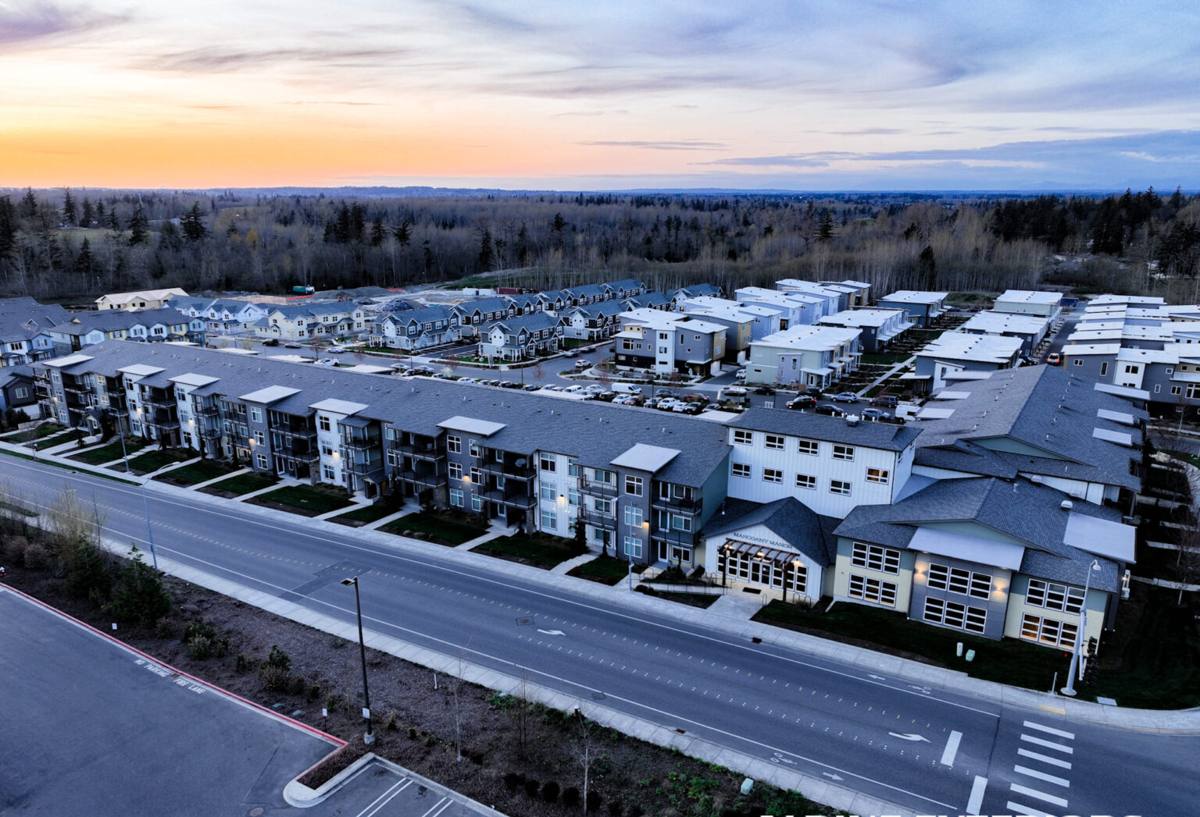
What "Correct" Siding Installation Actually Means
Siding failure almost never starts with the siding material itself. It starts with what's underneath it and how it was put on. In a low, damp valley like Sumas, the installation details matter more than they would in a drier inland climate, because there's less margin for error before trapped moisture becomes rot, mold, or a warranty claim.
The parts you don't see are the parts that matter most
- Weather-resistive barrier: A correctly lapped, sealed house wrap behind the siding, so any moisture that gets past the cladding drains back out instead of soaking into the sheathing.
- Flashing at every penetration: Windows, doors, hose bibs, light fixtures, and vents all need proper flashing and drip caps — these are the spots where the majority of siding-related water damage actually starts.
- Rainscreen or drainage gap: A small air gap behind the siding lets bulk water drain and lets the wall assembly dry, instead of holding moisture against the panel and sheathing.
- Clearances: Proper gap above rooflines, decks, and grade so siding isn't wicking water up from below — a common oversight that shows up as rot at the bottom courses.
- Fastener pattern and caulking: Manufacturer-specified nailing and joint treatment, not a generalized "close enough" approach.
Skip any one of these and the visible siding can still look perfect for a year or two while water quietly does damage behind it. That's the trap with a valley climate like Sumas — problems don't show up fast, they show up late, after they've already gotten expensive.
Why We Install Only James Hardie Fiber Cement
We made a decision a long time ago to install one siding system and install it correctly, rather than offer a menu of products with different weak points. That system is James Hardie fiber cement. We don't install vinyl, LP SmartSide, primed spruce, cedar, or other fiber cement brands — not because those products don't have a place somewhere, but because after years of exterior work in this climate, Hardie is the one we're comfortable standing behind on a Sumas home.
Fiber cement is made from cement, sand, and cellulose fibers, pressed and cured into a dense, stable panel. It doesn't absorb water the way wood-based products can, it won't soften or delaminate from prolonged dampness the way some engineered wood siding can if a seam is compromised, and it's non-combustible — a genuine advantage during the dry, high-wildfire-risk stretches Western Washington now sees most summers, even in a normally wet county like this one.
Two features that matter specifically here
James Hardie's HZ product line is engineered by climate zone — Sumas falls into the wetter, cooler HZ5 category, and the panels, fasteners, and installation specs are built around that reality rather than a one-size-fits-all national spec. And ColorPlus, Hardie's factory-applied finish, is baked on under controlled conditions rather than field-painted on site, which matters a lot in a spot where you can't always get a reliable dry-weather window to paint or caulk correctly outdoors.
Comparing Siding Materials for a Sumas Home
| Factor | James Hardie Fiber Cement | Vinyl | Wood / Engineered Wood |
|---|---|---|---|
| Performance in prolonged valley damp & fog | Dense, moisture-stable, resists softening | Won't absorb water, but seams and panels can warp/buckle with temperature swings | Vulnerable at seams, cut ends, and any coating failure |
| Wind resistance (relevant to Sumas Gap outflow gusts) | Rigid, holds up well when fastened to spec | Can rattle, crack, or blow off in sustained high wind | Generally stable but panel/seam integrity depends on install quality |
| Moss & algae resistance | Dense surface resists organic growth better than porous materials | Resists growth but shows dirt/mildew film readily | More susceptible, especially in shaded, damp areas |
| Fire rating | Non-combustible | Combustible, can melt/deform near heat sources | Combustible unless specially treated |
| Typical lifespan, installed to spec | 30+ years, factory finish often outlasts field-painted alternatives | 20–30 years, more prone to visible fading and warping | 15–25 years, heavily dependent on maintenance |
Our Installation Process, Step by Step
- Site and wall assessment: We look at existing siding, sheathing condition, drainage around the foundation, and anything specific to the lot — low spots, shaded north walls, proximity to standing water or dense landscaping that holds moisture against the house.
- Tear-off and moisture check: Old siding comes off and we inspect the sheathing underneath for soft spots, staining, or rot before anything new goes up. Any damaged sheathing gets repaired or replaced — covering a compromised wall with new siding just hides the problem.
- Weather-resistive barrier installation: A new, properly lapped and sealed house wrap goes on, with attention to every seam and penetration.
- Flashing detail work: Windows, doors, and all penetrations get flashed and sealed per manufacturer spec, so water is directed out and down, never trapped.
- Drainage gap and furring, where called for: Depending on the wall assembly, we build in a drainage plane so the wall can dry.
- Hardie panel installation: HZ5-rated panels installed with the correct fastener type, spacing, and clearances above rooflines, decks, and grade, per James Hardie's published installation guide.
- Trim, caulking, and touch-up: Factory ColorPlus finish means minimal field painting — we use Hardie-matched caulk and touch-up product at cut ends and seams, not generic sealant.
- Final walkthrough: We go over the finished job with the homeowner, including what routine maintenance actually looks like versus what doesn't need to be done.
Signs Your Current Siding Is Losing the Battle
In Sumas, the failures we get called out to look at tend to follow a pattern tied directly to the valley's damp, low-lying conditions:
- Moss and dark streaking building up faster on north- and shaded-side walls, especially anywhere landscaping or fencing blocks airflow and sun.
- Soft or spongy siding near the bottom courses, close to grade or decks — a strong sign moisture is wicking up rather than draining away.
- Bubbling, peeling, or chalky paint on wood-based or field-painted siding, especially after a wet winter followed by a dry spell.
- Gaps or separation at seams and trim from repeated freeze-thaw and wind-driven movement.
- Warped or bowed panels, particularly on walls that catch the outflow wind most directly.
None of these show up overnight. They build slowly over a few wet seasons, which is exactly why the underlying installation quality — not just the surface material — determines how a home ages here.
What Siding Installation Costs in Sumas — The Real Factors
We won't quote a number without seeing the house, but the variables that actually move the price are consistent from job to job.
| Cost Factor | Why It Matters in Sumas |
|---|---|
| Home size and wall complexity | More square footage and more corners, dormers, and trim details mean more labor and material. |
| Tear-off vs. new construction | Removing old siding, disposing of it, and repairing sheathing underneath adds time versus a bare-wall install. |
| Sheathing and framing condition | Valley moisture exposure means some older homes need structural repair discovered only once old siding comes off. |
| Number of stories and access | Taller walls and tight lot lines near neighboring structures require more scaffolding and time. |
| Product line and color | HZ5 panel selection and ColorPlus color choice affect material cost versus a standard primed panel. |
| Trim and accessory scope | Fascia, soffit, and trim replacement alongside the siding changes the total project scope. |
A Hiring Checklist Before You Sign a Contract
Whatcom County has plenty of exterior contractors, but not all of them install to the standard a Sumas home needs. Before hiring anyone for a siding project, it's worth asking:
- Do they carry current Washington state contractor licensing and liability insurance, and will they provide proof?
- Do they install to the manufacturer's written specification for your climate zone (HZ5 in this case), or just "how they usually do it"?
- Will they inspect and repair sheathing before re-siding, or just cover what's already there?
- Do they detail flashing and weather-resistive barrier work in the written scope, not just "new siding installed"?
- Can they explain why they recommend the specific product and finish they're proposing for your home?
- Is the warranty backed by both the manufacturer and the installer, and what does each actually cover?
Why Local Sumas Experience Matters
A crew that only occasionally works this far out in the county will treat Sumas like any other Whatcom County address. A crew that regularly works this specific pocket of the valley knows to plan around the fog and drying windows, knows which walls take the worst of the outflow wind, and knows this ground holds water longer after a storm than most of the surrounding towns. That shapes real decisions on a job site — when to schedule tear-off so sheathing isn't left exposed overnight, how much drainage detail a given wall assembly actually needs, and where moss and algae pressure is going to be worst five years down the road.
It also means we're not learning the area on your project. We've seen how homes in this specific valley age, what fails first, and what holds up — and we build every installation around that, not around a generic regional average.
If you're planning a siding project in Sumas, we're happy to take a look at your home and talk through what it actually needs — no pressure, no obligation. Use the form below to request a free estimate.