 Ferndale
 Siding Repair for Bellingham Homes
Bellingham sits on the bay, and that setting cuts both ways. It's part of what makes the city a good place to live, and it's also exactly why siding here takes a beating that a drier, inland town never sees. Salt-tinged marine air moves through constantly, rain comes in sideways as often as it falls straight down, and shaded or north-facing walls can stay damp enough to grow moss for most of the year. None of that means a home needs a full re-side the moment a problem shows up. Plenty of siding issues in Bellingham are legitimate repairs: a section that took an impact, a corner that's come loose, a spot where caulking failed years ago and finally let water through. This page is specifically about that repair work, not a full replacement pitch.
We're based in Ferndale and work in Bellingham regularly, which matters for repair work more than people expect. A crew that's only in town for one job doesn't have a feel for which walls in this city take the worst of the wind off the bay, or how fast a small gap turns into a rot problem in a climate this consistently wet. We install and repair James Hardie fiber cement siding as our standard, and when a repair calls for matching into a different existing material, we're upfront about what that repair can and can't realistically fix long-term.
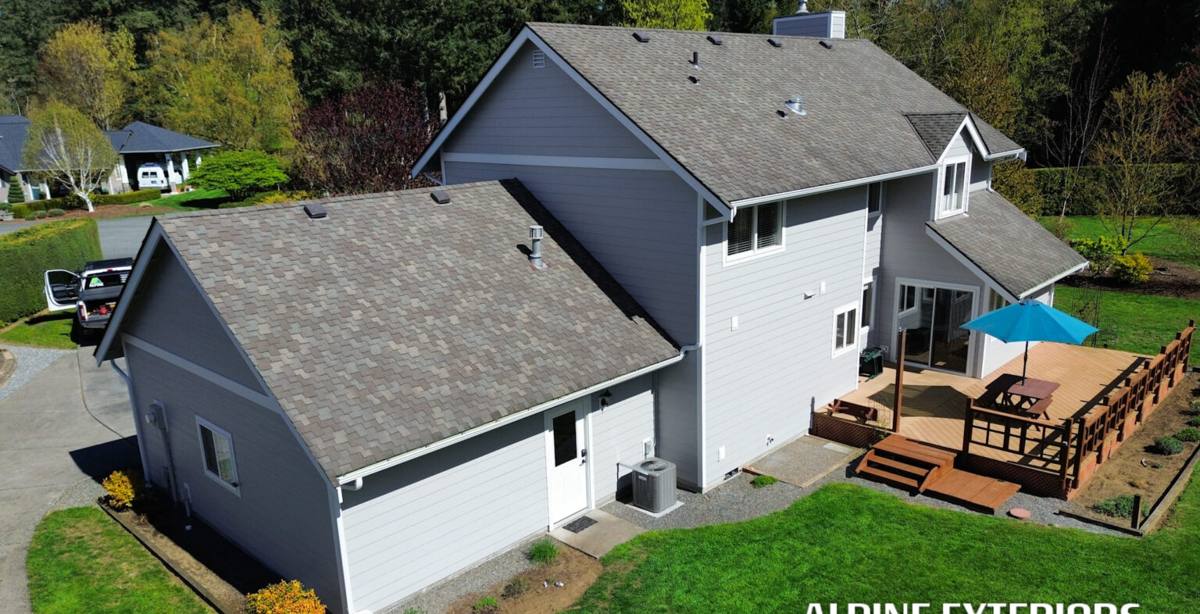
What Bellingham's Climate Does to a Repair Job
Salt Air and Fastener Corrosion
Marine air off Bellingham Bay carries a steady trace of salt, and over years that works on fasteners, flashing, and lower-grade hardware faster than it would in a dry inland climate. A repair that only replaces the visibly damaged board but reuses corroded fasteners or degraded flashing underneath is a repair that's already halfway back to failing. Streaking, rust bleed at nail heads, or a board that's started to pull away from the wall are often signs of this slower, less obvious kind of damage.
Wind-Driven Rain at Seams and Penetrations
Rain that comes in at an angle finds its way into places a straight-down rainfall never would: lap joints, trim seams, corner boards, and anywhere a fastener penetrates the siding. A repair that patches the visible crack but doesn't address how water is actually getting behind the wall in the first place tends to resurface as the same problem within a season or two. Diagnosing the real entry point, not just the spot where damage is visible, is the difference between a repair that holds and one that doesn't.
A Long Moss Season and Hidden Moisture
Bellingham's mild, damp climate keeps shaded and north-facing walls wet enough for moss and mildew to grow across most of the calendar year. That growth does more than look bad — it holds moisture directly against the siding and the wall assembly behind it, which is exactly the condition that leads to rot. It also makes repair diagnosis harder, since moss and staining can mask how far damage actually extends until a board is pulled and the substrate underneath is checked.
Common Repair Issues We See on Bellingham Siding
Every repair call is a little different, but the same handful of problems show up again and again on homes across this city:
- Impact damage from storms, falling branches, or yard equipment, usually isolated to one or two boards
- Rot or soft spots at corner boards, window trim, and anywhere two materials meet
- Failed caulking at seams and penetrations that's let water track behind the siding for months or years
- Boards that have swelled, cupped, or pulled loose from fasteners after repeated wet-season moisture cycles
- Fading, chalking, or peeling on older siding that was field-painted rather than factory-finished
- Pest or woodpecker damage on wood-based products, which opens a direct path for moisture
Repair or Replace? How We Make the Call
Homeowners understandably want a straight answer on whether a problem is a quick fix or the start of a bigger job. We look at a consistent set of factors before recommending either direction, and we'll walk you through our reasoning rather than just handing you a number.
| Factor | Signals a Repair Will Hold | Signals It's Time to Replace |
|---|---|---|
| Extent of damage | Isolated to one or two boards or a single wall section | Spread across multiple walls or recurring in the same areas |
| Age and material type | Existing siding is James Hardie or another material still well within its service life | Existing siding is older, discontinued, or a product known for shorter real-world lifespan |
| Moisture behind the wall | Substrate is dry and sound once the damaged section is opened up | Sheathing or framing shows rot, staining, or softness once opened |
| Repair history | This is the first real repair the wall has needed | The same section has already been patched more than once |
| Cost relative to remaining life | Repair cost is modest against the siding's remaining useful years | Repair cost starts approaching what a partial or full re-side would run |
Most of the time the answer is genuinely a repair, and we'll tell you that plainly. We don't have an incentive to talk every call into a full re-side, and we'd rather earn a homeowner's trust on an honest small job than oversell one.
What a Correct Siding Repair Actually Involves
Diagnosing the Real Entry Point
Before anything gets replaced, we open up the damaged area enough to see what's actually happening behind the siding — whether the sheathing is dry, whether the house wrap is intact, and whether water has been tracking somewhere other than where the visible damage shows up. Patching over a symptom without finding the cause is one of the most common ways a "repair" fails again within a year.
Matching Existing Siding and Color
If your home already has James Hardie siding with a factory ColorPlus finish, matching a repair section is usually straightforward since Hardie maintains a consistent color and profile lineup. Older installations, discontinued colors, or field-painted siding are harder to match exactly, and we'll tell you honestly if a perfect blend isn't realistic so you can decide how much that matters before work starts.
Rebuilding the Water Management, Not Just the Board
A siding repair isn't just swapping a damaged piece for a new one. It means restoring proper lapping, resealing flashing correctly rather than relying on a bead of caulk to cover a gap, and making sure the house wrap behind the repair ties back into the surrounding wall as one continuous barrier. Skipping this step is why some repairs look fine for a season and then fail again in the next round of wind-driven rain.
Repairing Homes That Don't Already Have Hardie Siding
A lot of the repair calls we get in Bellingham are on homes with vinyl, cedar, primed spruce, or engineered wood siding like LP SmartSide, not James Hardie. We'll repair what's there when a targeted repair is the honest answer. But each of those materials has trade-offs that show up specifically during repair work, and we think homeowners deserve to hear them plainly rather than have us just quietly patch and move on.
Vinyl siding gets brittle with age and UV exposure, so a repair section cut from new stock can crack differently than the surrounding panels when temperatures drop, and older vinyl colors are frequently discontinued, which makes an exact match difficult or impossible. Cedar and primed spruce need to be repainted or resealed essentially every time a repair is made, or the new section will weather at a different rate than the rest of the wall and stand out within a year. LP SmartSide's engineered wood core is more sensitive to moisture at cut edges than fiber cement is, which means a repair cut that isn't sealed with real care can become the next failure point rather than a fix. None of this means those products can't be repaired — it means a repair on them comes with more caveats than a repair on Hardie does, and if a home is seeing repeat repair calls on one of these materials, that's usually a sign the underlying product, not the workmanship, is the real issue.
Our Siding Repair Process
- Inspection and moisture check: We look at the visible damage and open it up enough to check the substrate and house wrap underneath before quoting anything.
- Honest scope and recommendation: You get a clear explanation of whether this is a repair, a larger partial replacement, or something bigger, along with the reasoning behind it.
- Material sourcing and color matching: We source matching Hardie product where your home already has it, or the closest realistic match for existing siding, and we tell you upfront if a perfect blend isn't achievable.
- Correct removal and reinstallation: Damaged material comes out, flashing and house wrap get restored properly, and the new section is fastened and lapped to spec, not just tacked into place.
- Final seal and walkthrough: We check the finished repair with you before we consider the job done, so you know exactly what was fixed and why.
Siding Repair Checklist: When to Call in Bellingham
- Soft, spongy, or bubbling siding, especially near the base of a wall or around window and door trim
- Moss or dark staining on shaded walls that returns quickly after cleaning
- Visible cracks, holes, or missing sections after a storm or wind event
- Gaps or separation at seams, corners, or trim joints
- Peeling paint or a section of siding that's visibly a different color or sheen than the rest of the wall
- Rising heating bills that could point to a wall assembly that's no longer sealing properly
Why a Ferndale-Based Crew Matters for Bellingham Repair Work
Being based just up the road in Ferndale means we can respond quickly when a homeowner calls after a storm, without the delay of a crew driving in from farther away. It also means we've spent enough time in Bellingham to know that hillside and bay-facing properties tend to take a different kind of wind and moisture exposure than more sheltered lots further from the water, and that the city's mix of older, established neighborhoods and newer construction means no two repair calls look quite the same. That local familiarity, combined with a genuine supplier relationship for sourcing James Hardie color and profile matches, is what lets us give a straight answer on whether a repair will actually hold rather than guessing from a truck parked out front for the first time.
If you've got a siding problem on your Bellingham home, whether it's storm damage, a soft spot you just noticed, or moss that keeps coming back on one wall, we're happy to take a look and give you an honest read on what it actually needs. Reach out using the form below to schedule a free, no-pressure estimate.