 Ferndale
 Blaine's Coastal Climate Is Rough on Siding
Blaine sits right on the Salish Sea at the far northwest corner of Whatcom County, and that location comes with a specific set of problems for exterior siding. Salt-laden air blows in off the water almost constantly, driving rain arrives sideways more often than straight down, and the shaded, damp stretches of the year give moss and algae months at a time to take hold on north- and west-facing walls. None of this is unique to any one house in Blaine — it's the baseline every home in this part of Whatcom County deals with, and it's exactly why siding here fails differently, and often sooner, than siding in drier inland climates.
Salt air is corrosive to exposed metal fasteners and flashing, and it accelerates the breakdown of coatings and caulking. Wind-driven rain doesn't just wet the surface of a wall — it finds the gaps, seams, and fastener penetrations that a calm rain would never reach, and pushes moisture behind the siding where it can sit against sheathing and framing. Add a moss season that can stretch from fall through spring, and you've got a climate that punishes any weak point in a siding system: a cracked panel, an open seam, a missing bead of caulk, or a piece of trim that was never properly flashed.
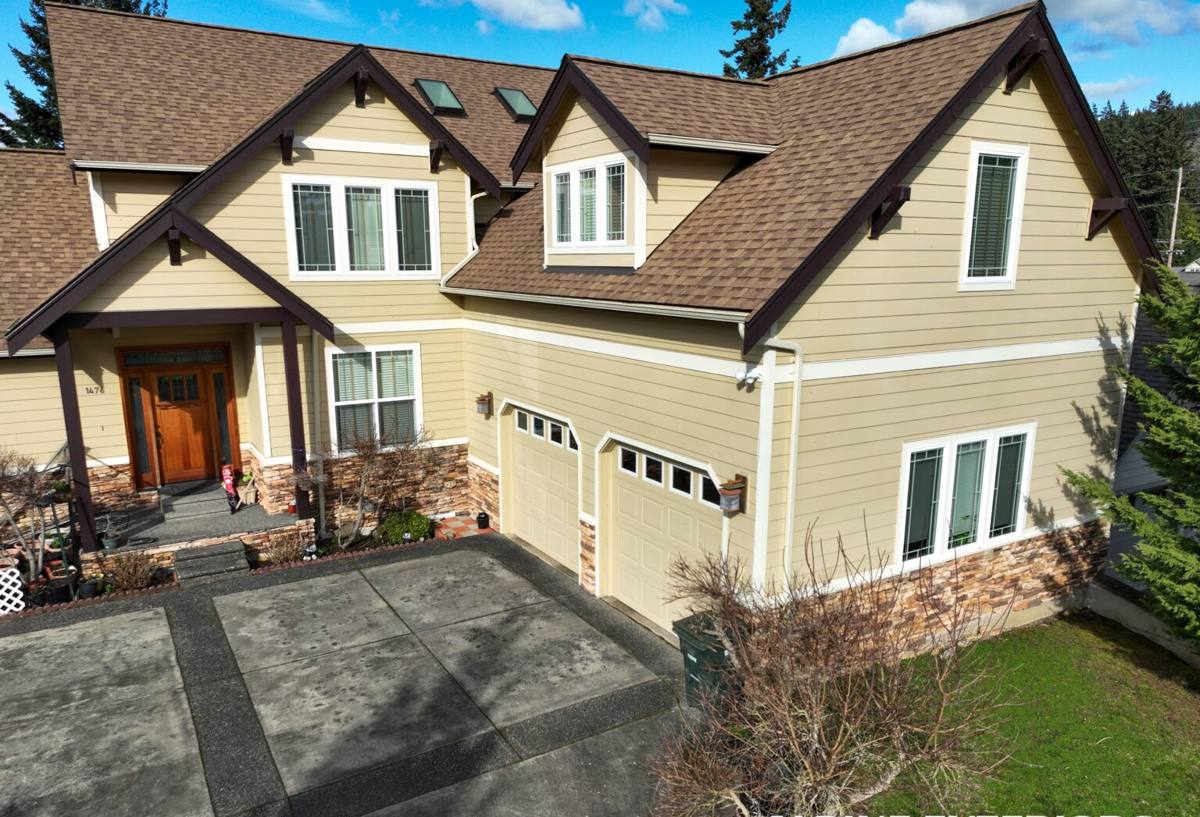
What Repair Actually Means Here
"Siding repair" covers a wide range of work, and in Blaine it usually falls into one of a few categories:
- Replacing cracked, split, or impact-damaged panels or boards
- Re-flashing and re-sealing around windows, doors, and penetrations where water is getting behind the siding
- Addressing rot or soft sheathing found after moisture has been trapped behind damaged siding
- Cleaning and treating moss and algae growth that's holding moisture against the wall
- Patching or replacing sections damaged by failed caulking, loose trim, or corroded fasteners
- Color and texture matching so a repaired section doesn't stand out from the rest of the wall
The tricky part isn't usually the visible damage — it's what's happening behind it. In a coastal climate like Blaine's, by the time you can see a problem on the surface, there's a reasonable chance moisture has already been working on the sheathing or framing underneath for a while. A repair that only addresses the cosmetic issue and ignores what's behind the wall is a repair that will need to be done again, sooner than it should.
Signs Your Siding Needs a Closer Look
Homeowners in Blaine should treat certain warning signs as a reason to call for an inspection rather than wait:
- Visible cracks, splits, or gaps in siding panels or boards, especially on walls that take the brunt of the weather
- Soft or spongy spots when you press on the siding near the bottom of walls or around windows
- Peeling or bubbling paint, which often points to trapped moisture underneath
- Persistent moss, algae, or dark staining that keeps coming back after cleaning
- Visible gaps or separation at seams, corners, or where siding meets trim
- Warping, buckling, or siding that no longer sits flat against the wall
- A musty smell or discoloration on interior walls that share space with an exterior wall showing damage
Any one of these on its own might be minor. Several showing up together, or showing up in the same area repeatedly, usually means water has found a way in and is doing more damage than what's visible from the driveway.
Repair vs. Replace: How We Think About It
Not every damaged section needs a full replacement, and not every repair is worth doing instead of replacing a larger section. We look at a handful of factors before recommending one over the other.
| Factor | Favors Repair | Favors Replacement |
|---|---|---|
| Extent of damage | Isolated to one or two panels/boards | Spread across multiple walls or elevations |
| Underlying sheathing | Dry, solid, no rot found | Soft, rotted, or water-stained sheathing |
| Age of existing siding | Newer, still well within its service life | Old, brittle, or already showing widespread wear |
| Original material | James Hardie or another fiber cement in good condition | Materials we don't install (LP, vinyl, cedar, primed spruce) at end of life |
| Color match | Close match achievable, especially with ColorPlus finishes | Fading or discontinued color makes a seamless patch unlikely |
| Root cause | Isolated impact or fastener failure | Systemic flashing or water-management failure |
We'll always tell you honestly which side of that table your situation falls on. If a targeted repair will hold up in Blaine's weather for years to come, that's what we'll recommend — we don't push replacement on a wall that doesn't need it.
When a "Repair" Is Really a Sign to Replace
If your home is currently sided in LP SmartSide, vinyl, cedar, or primed spruce and it's failing in more than one spot, that's usually a signal worth paying attention to. These materials each have known weak points — engineered wood can swell and delaminate at damaged edges, vinyl can crack and fade in coastal UV and salt exposure, and untreated or primed wood needs consistent maintenance to keep moisture out. A single patch on a wall that's approaching the end of its material's realistic service life often isn't a good use of money. We'll say so plainly rather than sell you a repair we don't think will last.
What a Correct Repair Job Involves
A repair that actually holds up in Blaine's climate isn't just about swapping a damaged board for a new one. It involves:
Finding the Real Source
Before any new material goes on, we trace the damage back to its cause. A cracked panel might be the result of an impact, but it might also be the result of a fastener that was driven wrong, a flashing detail that was never installed correctly, or years of standing water from a gutter that overflows in heavy rain. Replacing the panel without fixing the cause just buys time.
Checking What's Behind the Wall
Once siding is removed from a damaged section, we check the water-resistive barrier, flashing, and sheathing underneath. If there's rot or moisture damage, that gets addressed before anything new goes back up — covering damaged sheathing with new siding is how small problems turn into structural ones.
Proper Flashing and Sealing
Given how much wind-driven rain Blaine sees, correct flashing around windows, doors, and any wall penetrations matters as much as the siding material itself. We rebuild these details to shed water the way they're supposed to, not just caulk over the gap.
Matching Material and Finish
For homes with existing James Hardie siding, we match panel profile, texture, and ColorPlus finish as closely as possible so a repair blends in rather than standing out as an obvious patch. Where an exact factory color match isn't available, we'll tell you that upfront and talk through the options.
Our Repair Process
We keep the process straightforward:
- Inspection. We look at the damaged area and the surrounding siding, and we check behind the surface wherever there's reason to think moisture has gotten in.
- Honest assessment. We tell you what we found, what caused it, and whether a repair or a larger replacement makes more sense — with the reasoning behind that recommendation.
- Written scope and estimate. You get a clear description of the work and a price before anything starts.
- Repair work. Damaged material comes out, any sheathing or water-barrier issues get fixed, and new material goes in correctly flashed and sealed.
- Cleanup and walkthrough. We walk the repaired area with you before we consider the job done.
Why Moss and Algae Treatment Is Part of the Conversation
In a climate with as much shade, moisture, and mild temperature as Blaine sees for much of the year, moss and algae aren't just a cosmetic nuisance. Moss holds moisture against the siding surface far longer than it would otherwise sit there, and on wood-based products that moisture retention can accelerate rot at seams and edges. Part of a proper repair visit includes identifying whether moss or algae growth contributed to the damage, and talking through what it will take to keep it from coming back — appropriate cleaning methods, and in some cases addressing nearby vegetation or shade that's keeping a wall damp longer than it should be.
Why We Only Repair With and Recommend James Hardie
When we're patching or replacing sections of siding, we use James Hardie fiber cement. It's non-combustible, it's engineered for the Pacific Northwest's wet climate through Hardie's HZ5 product line, and its ColorPlus factory finish holds color far better than field-applied paint — which matters a lot when you're trying to match a repair into existing siding years down the road. We don't install LP SmartSide, vinyl, cedar, or primed spruce, and if your existing siding is one of those materials, we'll still repair it when a targeted repair genuinely makes sense — but we'll also be straight with you about that material's long-term limitations in a salt-air, high-rainfall climate like Blaine's, and about James Hardie as the option we'd put on the wall if you're replacing it.
Why a Crew That Already Works in Blaine Matters
Siding repair done right depends on understanding how a specific climate attacks a wall over time. A crew that regularly works Blaine and the surrounding coastal parts of Whatcom County has already seen how salt air corrodes fasteners, how driving rain finds weak flashing details, and how moss builds up on shaded elevations here versus drier inland areas. That local pattern recognition is part of what separates a repair that actually solves the problem from one that just covers it up for a season.
A Few Things to Check Yourself Before You Call
- Walk your home's exterior after a heavy rain and look for any dark, wet-looking streaks or stains
- Press gently on siding near ground level and around window sills to check for soft spots
- Look at north- and west-facing walls for moss or algae buildup that keeps returning
- Check that gutters and downspouts are directing water away from the wall, not overflowing onto it
- Note any cracked, warped, or separated boards or panels, even small ones
If you find anything on that list, it's worth having someone take a proper look before the next round of wet weather makes it worse.
If you're seeing damage, staining, or persistent moss on your Blaine home's siding, we're glad to come take a look and give you a straight answer — repair, replacement, or nothing at all if it doesn't need it. Fill out the form below for a free, no-pressure estimate.