 Ferndale
 Why Siding Repair Looks Different in Nooksack
Nooksack sits inland from Bellingham Bay, out in the flat farmland along the Nooksack River near Sumas and Everson. It's a quieter setting than the coastal parts of Whatcom County, but the underlying weather pattern that wears down siding here isn't all that different: driving rain that comes in sideways more often than straight down, marine-influenced air that pushes inland off the water and carries salt-laden moisture even this far from the coastline, and a moss season that runs long thanks to persistent Pacific Northwest cloud cover and plenty of shaded, tree-lined lots. Add in the general dampness of a river valley and you get a set of conditions that's steady rather than dramatic — which is exactly why siding problems here tend to creep up slowly instead of announcing themselves all at once.
That gradual pattern is part of what makes siding repair tricky to get right. A homeowner notices a stain, a soft spot, or a section that looks a little off, but by the time it's visible from the yard, the problem has usually been developing underneath for a while. This page covers what actually damages siding on a Nooksack home, how a repair should be diagnosed and scoped, and why a crew that already works this part of the county brings something a first-time visitor can't.
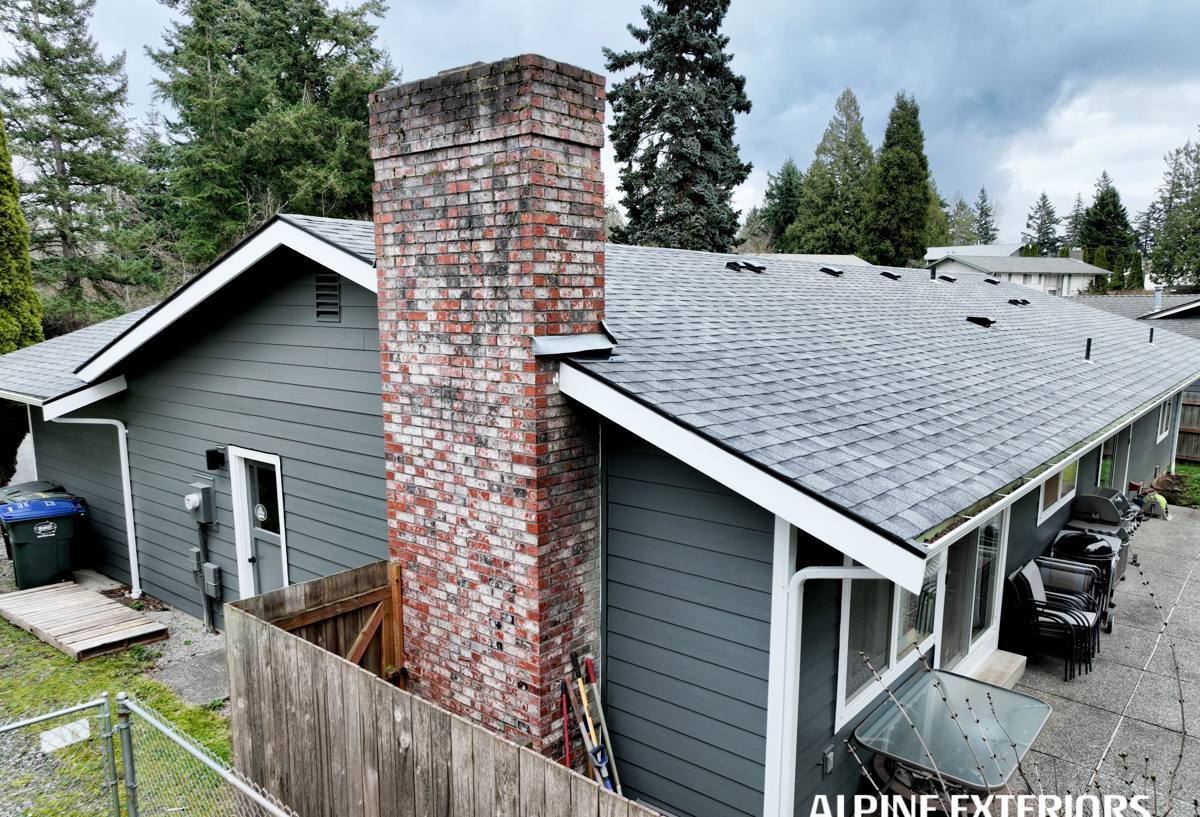
What Actually Damages Siding in This Area
Driving Rain and Wind-Driven Moisture
Storms moving through the Nooksack valley don't always drop rain straight down — wind pushes it sideways into walls, trim, and seams instead of letting it run cleanly off. Siding and flashing that aren't detailed to shed wind-driven rain, rather than just ordinary rainfall, tend to show damage first at panel joints, corners, and anywhere the flashing is doing less work than it should. Over enough seasons, that's where we find the earliest signs of trouble on a repair call.
Marine Air and Slow Metal Corrosion
Even though Nooksack sits well inland, marine air off Bellingham Bay and the broader Salish Sound reaches across the flat farmland of the lowlands, carrying a mild salt content with it. It's a weaker effect than what a home right on the water deals with, but it still shows up over time as slow corrosion on fasteners, flashing, and any exposed metal trim — often before there's any visible sign in the siding itself. A repair job that only looks at the siding surface and ignores the hardware underneath is missing half the picture.
A Long Moss and Mildew Season
Persistent regional dampness, mild temperatures, and generous tree cover on most Nooksack lots add up to a moss and mildew season that stretches across much of the year. It shows up as green or black staining on shaded and north-facing walls first, and it's more than a cosmetic issue — sustained organic growth holds moisture directly against the siding, which is exactly the condition that leads to hidden rot if it isn't cleaned off and addressed.
River Valley Humidity
Being close to the Nooksack River keeps ambient humidity a notch higher than it is on higher, better-drained ground elsewhere in the county. That extra moisture in the air slows how quickly siding and trim dry out after a storm, which matters more than people expect — wood-based products and poorly sealed seams stay wet longer here, and prolonged wetness is the single biggest driver of rot and material failure in any siding system.
Cosmetic Wear vs. Structural Damage
Not every mark on a wall needs the same response, and telling the difference correctly is the whole point of a real repair estimate rather than a guess from the driveway.
| Symptom | Usually Cosmetic | Often Structural |
|---|---|---|
| Chalky or faded finish | Yes — UV and weathering | Only if boards beneath are also soft |
| Moss or algae staining on shaded walls | Yes — surface organic growth | Becomes structural if left untreated for years |
| Hairline cracking at panel seams | Sometimes — sealant wear | Often — if paired with soft trim or gaps |
| Soft or spongy board when pressed | No | Yes — rot or trapped moisture |
| Buckling, bowing, or gaps at the wall | No | Yes — fastening or moisture failure |
| Rust streaking around fasteners | Cosmetic if isolated | Can signal hardware corrosion underneath |
Cosmetic wear affects appearance and can often wait for routine maintenance or a planned repair. Structural damage affects the wall's ability to keep water out and shouldn't be deferred, especially anything involving soft sheathing, separated trim, or a seam that's been open long enough to let water track behind the siding.
How We Diagnose Before We Recommend Anything
A repair estimate that's actually useful starts with a real inspection, not an assumption based on what's visible from ten feet away. On a Nooksack property, that typically includes:
- Pressing and probing suspect areas to check for soft or spongy substrate, not just a visual look at the surface
- Checking seams, corners, and butt joints for gaps where wind-driven rain could be getting behind the siding
- Inspecting fasteners and exposed metal trim for early corrosion, since that damage often shows up before the siding does
- Looking at shaded and north-facing walls specifically for moss, mildew, or staining that's been building over multiple seasons
- Confirming grade clearance, since siding sitting too close to damp ground pulls in moisture from below
- Checking window and door flashing, since a poorly sealed opening is one of the most common hidden sources of siding damage
We walk through what we find honestly — what needs attention now, what can be monitored, and what's genuinely just cosmetic — before we recommend a scope of work.
Repair or Replace: How That Decision Actually Gets Made
Homeowners often assume any siding problem means a full re-side, or the opposite — that a patch will always be cheaper and just as good. Neither holds up consistently on its own. The factors that actually drive the decision:
- What the existing siding is. If the home already has James Hardie siding, most damage is a straightforward repair — we can match panel profile and, in many cases, ColorPlus finish closely enough that a patch doesn't stand out.
- Extent of the damage. A section damaged by impact, a failed seam, or isolated rot around one window is usually repairable. Widespread moisture damage across multiple walls often isn't worth chasing board by board.
- Age and material of what's currently on the wall. Older wood, vinyl, or engineered wood siding nearing the end of its service life is a different conversation than a Hardie repair — patching a product that's already failing broadly just delays a bigger job.
- What's happening underneath. If water has been tracking behind the wall for a while, the sheathing and framing need attention regardless of what goes back on the outside, and that changes the scope significantly.
We'll give you a straight answer on which category your home actually falls into, including when replacement is genuinely the smarter long-term move.
What a Correct Repair Involves
Matching Existing Hardie Siding
We install James Hardie fiber cement exclusively, so when a Nooksack home already has Hardie siding, repair work stays within a system we know thoroughly. Panel profile, reveal, and factory-applied ColorPlus finish all factor into getting a patch to blend in rather than stand out as an obvious repair.
When the Existing Siding Isn't Hardie
If a home has vinyl, LP SmartSide, primed wood, cedar, or another engineered product, an honest repair conversation has to include the limits of that material. We don't install those products, and we'll say plainly whether a patch is worth doing or whether the underlying siding is far enough along that a full re-side with fiber cement is the better use of your money over the next decade.
Fixing the Cause, Not Just the Symptom
A soft board or a stained seam is a symptom. Poor flashing, a gap that's been letting wind-driven rain in for seasons, or grade that sits too close to the wall is usually the cause. A repair that replaces the visible damage without correcting what let the water in tends to fail again in the same spot, often faster the second time.
Structural Elements Get Full Attention
Sheathing, framing, and flashing behind the siding are load-bearing and weather-critical. Repairs to these elements are done to the same standard as new construction — correct fastening, correct flashing lap, and materials sized for what this valley's rain and humidity actually put a wall through — not treated as a lesser scope because it's a repair rather than a full job.
Maintenance That Extends a Repair's Life
- Rinse shaded and north-facing walls periodically to keep moss and algae from building up into a persistent stain
- Keep gutters and downspouts clear so water isn't sheeting down onto siding it wasn't meant to handle
- Trim back landscaping and tree cover that keeps walls damp and shaded longer than they need to be
- Check caulking at seams, trim, and window flashing once a year and touch up before gaps widen
- Address soft spots or staining as soon as you notice them rather than waiting for the next season
- Keep an eye on grade near the foundation so soil or mulch buildup isn't pushing siding clearance too low
Why a Crew That Already Works Nooksack Matters
A contractor based further out can still do competent work here, but a crew that regularly handles siding repair in this part of Whatcom County has already seen how marine air, river valley humidity, and a long moss season play out on real homes over a full year, not just on a spec sheet. That experience shapes practical calls on a repair day — which wall orientations stay wet the longest, where a little extra flashing attention actually pays off, and whether a patch will genuinely hold or is just delaying a bigger job. We work throughout the Ferndale service area, and Nooksack's inland, river-valley setting gets treated as its own case rather than folded into a generic coastal checklist that doesn't quite fit.
What to Expect When You Call Us
- A hands-on inspection of the affected siding, trim, and any related flashing or window details
- An honest read on whether you're looking at a spot repair, a larger patch, or a case for full replacement
- A clear explanation of why we recommend James Hardie fiber cement for homes dealing with this area's moisture and humidity
- A written estimate with no pressure to sign on the spot
If your Nooksack home has a siding problem — a stained section, a soft spot, storm damage, or just something that doesn't look right — we're glad to take a look and tell you plainly what we find. Reach out using the form below to schedule a free, no-pressure estimate.