 Ferndale
 Why Siding Replacement Is a Different Job in Lummi Nation
There's a real difference between patching a few damaged boards and pulling a home's siding down to the sheathing and starting over. A full siding replacement is the bigger decision, and out on the Lummi Nation peninsula it's one that has to account for conditions most Ferndale-area homes only see occasionally: salt-laden air coming straight off the water, wind-driven rain that gets pushed sideways into every seam and joint, and a moss and mildew season that runs long enough to keep shaded walls damp for most of the year. Those three things don't just make a home look weathered faster — they change what a correct replacement actually requires, from the weather-resistive barrier behind the siding to the fastening pattern holding it on.
We install James Hardie fiber cement exclusively, and a full re-side is exactly the kind of project where that choice matters most. When you're already committing to tearing off the old siding and starting clean, it's worth doing once with a material and installation approach built for the exposure this property actually gets.
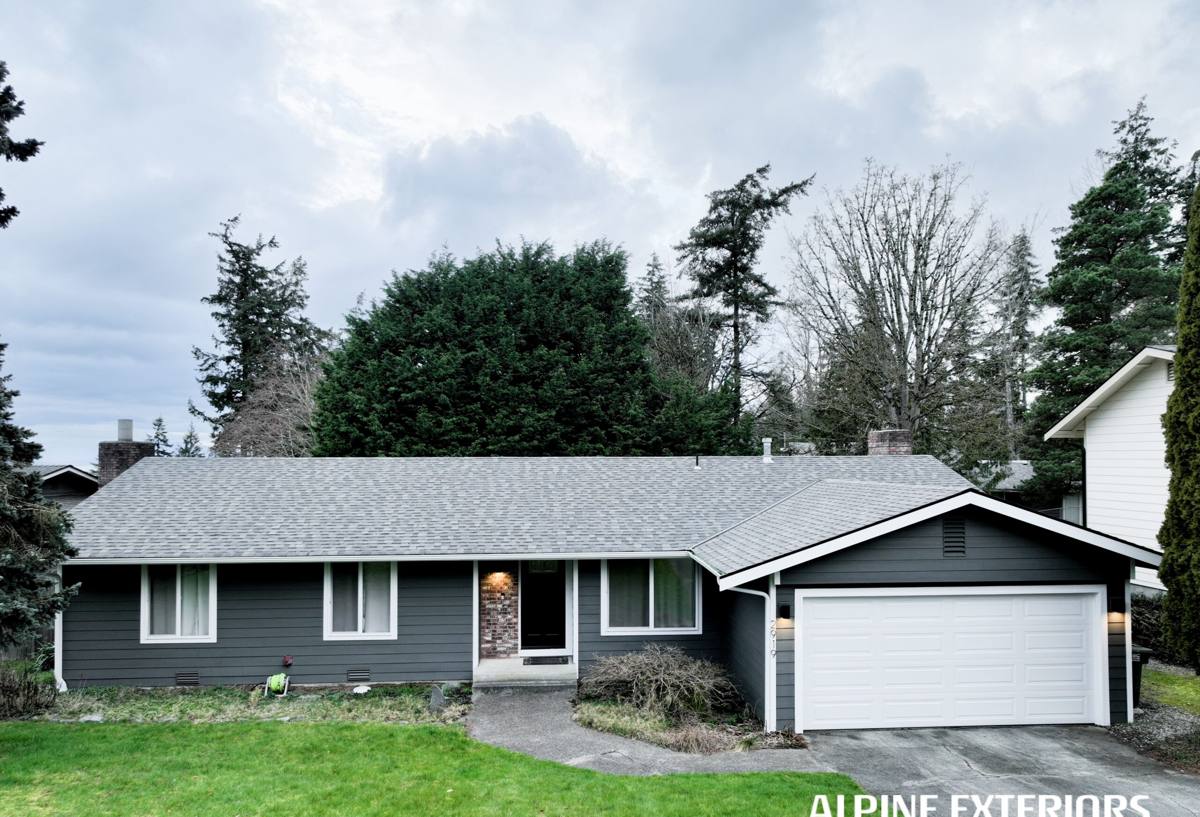
Signs a Lummi Nation Home Needs Replacement, Not a Patch
Not every siding problem calls for a full tear-off. But on a peninsula property that takes more wind and more direct rain than most of the county, small problems tend to turn into bigger ones faster, and it's worth knowing which signs point toward a full replacement conversation rather than a repair.
- Soft, spongy, or delaminating siding across multiple walls rather than one isolated spot
- Moss or dark staining that returns within weeks of cleaning, especially on north-facing or shaded elevations
- Visible gaps, cupping, or warping at butt joints and corners on an older wood-based or engineered wood product
- Paint that's chalking, peeling, or failing across large sections instead of a single weathered board
- Rot or staining showing up at multiple points around windows, trim, or near the foundation line
- A home that's had the same siding patched more than once in the last several years with the problem returning
- Rising energy bills that suggest the wall assembly behind the siding is no longer sealing the way it should
One or two of these on their own might still be a repair. Several at once, especially on a home that's taken years of direct salt and wind exposure, usually means the underlying wall assembly has been compromised longer than the visible damage suggests.
Repair vs. Full Replacement: How We Make the Call
| Situation | Usually a Repair | Usually a Full Replacement |
|---|---|---|
| Storm or impact damage | One or two isolated sections | Widespread damage across several walls |
| Moisture behind siding | Localized, caught early | Long-term, affecting sheathing or framing |
| Siding material | Existing Hardie in good condition elsewhere | Older wood-based, engineered wood, or vinyl nearing end of life |
| Underlying barrier | Weather-resistive barrier still intact | House wrap or flashing failing or missing |
| Age of siding | Well within expected service life | Approaching or past its realistic lifespan |
We'll walk the property, look at what's actually happening behind the siding where we can access it, and tell you honestly which column your home falls into. Patching a home that needs a full re-side just delays the bigger job and lets any hidden moisture keep working on the sheathing underneath.
What Tear-Off Usually Reveals
Once old siding comes off, it's common to find things that weren't visible from the outside: staining or soft sheathing behind a section that looked fine, house wrap that was never properly lapped, or flashing around a window that was caulked instead of built correctly. On a Lummi Nation property that's absorbed years of wind-driven rain, that's more likely than on a sheltered inland lot. We document what we find and talk through it with you before closing the wall back up — sheathing repair or replacement is a real cost variable that's hard to know in advance, which is one reason a firm number usually waits until the old siding is off.
What a Correct Full Replacement Involves
Tear-Off and Substrate Inspection
The old siding, trim, and any failed flashing come off down to the sheathing. This is the point where hidden rot, damaged sheathing, or a compromised weather-resistive barrier gets caught and dealt with — not covered back up with new siding on top of an existing problem.
Weather-Resistive Barrier and Flashing
A new house wrap goes on correctly lapped, shingle-style, so water sheds down and out rather than working its way behind a seam. Flashing at windows, doors, and roof-to-wall transitions gets built to actually direct water away, not patched with a bead of caulk standing in for real flashing detail. On a property that takes as much sideways rain as this one does, this layer matters as much as the siding itself.
Material Selection for the Site
We spec James Hardie's climate-engineered HZ product lines based on the property's actual exposure. A home closer to open water and more directly in the path of wind and salt gets a different spec than one a mile inland and more sheltered, even within the same general area.
Fastening for Wind and Water Exposure
Fastening pattern and spacing get tightened up for higher wind exposure where the site calls for it. Joints are lapped and sealed to spec rather than simply butted together, and clearances from grade, decks, and rooflines are held to the standard that keeps water moving away from the wall instead of collecting against it.
Why We Replace With James Hardie Fiber Cement
We used to install a wider range of products. We narrowed to one system after seeing which materials actually held up to sustained coastal exposure and which ones quietly pushed maintenance problems onto the homeowner a few years down the line. For a full replacement specifically, that decision carries more weight, because you're not just patching what's there — you're choosing what the whole house wears for the next several decades.
- Non-combustible core: fiber cement doesn't feed a fire the way wood-based siding can, which matters for household safety and insurance underwriting.
- Factory-applied ColorPlus finish: baked on under controlled conditions rather than brushed on site, so it holds color and resists salt exposure far longer than field-applied paint.
- Climate-engineered HZ formulations: built specifically for regions with heavy, sustained moisture and freeze-thaw cycling, which fits a Lummi Nation waterfront or near-waterfront lot better than a generic siding spec.
- Dimensional stability: fiber cement doesn't swell, cup, or warp through repeated wet-season moisture cycles the way engineered wood can.
- Strong transferable warranty: real protection backed by the manufacturer, provided the installation follows spec — which is why the installation details above matter as much as the material choice.
We don't install LP SmartSide, vinyl, Cemplank, Allura, primed spruce, or cedar. Each has its place and plenty of satisfied owners elsewhere, but for a full replacement on a property with this kind of sustained wind, salt, and moisture exposure, we'd rather stand behind one system we trust completely than offer a cheaper option and hope it holds up.
Our Replacement Process, Start to Finish
- Walk-through and estimate: we look at the siding, trim, and any related roofing, window, or deck connections, and give you a written estimate with no pressure to sign that day.
- Scheduling and prep: we plan around weather where possible and protect landscaping, walkways, and anything near the work area before tear-off starts.
- Tear-off and inspection: old siding and trim come off, and we document any sheathing, framing, or moisture issues we find before closing the wall back up.
- Barrier and flashing installation: new house wrap and flashing go in correctly lapped and sealed, sized to the property's actual exposure.
- Siding and trim installation: James Hardie siding and trim go on to spec, with fastening and clearances set for this site's wind and water exposure.
- Final walk-through and cleanup: we go over the finished work with you, clean up the site, and answer any questions about care or warranty registration.
Cost Factors in a Lummi Nation Siding Replacement
| Factor | What It Affects | Why It Matters Here |
|---|---|---|
| Sheathing or framing condition under old siding | Repair scope before new siding goes on | Wind-driven rain over the years increases the odds of hidden moisture damage on exposed lots |
| Home size and wall complexity | Material and labor volume | More corners, dormers, and trim details mean more flashing and cutting |
| Distance from open water | Wind and salt exposure level | Closer lots often call for tighter fastening specs and a higher HZ product tier |
| Site access | Labor time and staging | Peninsula and waterfront lots can have limited access, steep grades, or tight staging areas |
| Trim and detail package | Material selection and labor | Corner boards, window trim, and fascia detail all add scope beyond flat wall panels |
Exact numbers depend on what tear-off actually reveals and the specific footprint of the home, which is why we give a real estimate after walking the property rather than quoting off a flat per-square-foot rate.
Timeline and What to Expect During the Job
A full re-side is a bigger disruption than a repair, and it's fair to know what that looks like going in. Scaffolding or ladders will be up around the house for the duration, work areas near doors and windows may be temporarily blocked, and there will be noise and debris during tear-off. We coordinate scheduling to keep exposed wall sections covered against Whatcom County's wetter stretches of weather, and we walk you through the sequence before work starts so there aren't surprises partway through. Most full replacements run from several days to a couple of weeks depending on home size, trim complexity, and what tear-off reveals underneath.
Why a Local Crew Matters for This Kind of Job
A full siding replacement leaves less room for guesswork than a repair does, because the whole wall assembly gets rebuilt from the sheathing out. A crew that already works Lummi Nation and the surrounding peninsula knows which wall orientations hold moisture longest, where the wind-driven rain actually gets in on a site like this, and which fastening and flashing details are worth the extra time so the homeowner isn't back on the phone after the next winter storm. That local, hands-on experience is different from simply following a manufacturer's install manual — it's knowing how this specific stretch of coastline behaves over a full year and building the wall accordingly.
If your Lummi Nation home's siding is past patching, or you're just not sure yet which side of that line you're on, we're glad to take a look and give you an honest answer either way. Reach out using the form below to schedule a free, no-pressure estimate.