 Ferndale
 Storm Damage in Lynden: What Whatcom County Weather Does to a Roof
Lynden sits in the Nooksack Valley, and that geography shapes what your roof deals with every year. Fall and winter storms push in off the Strait of Georgia and funnel through Whatcom County with strong, gusty wind, and by the time that weather reaches Lynden it's usually carrying heavy, sideways rain rather than the light drizzle people picture when they think of the Pacific Northwest. Add in a long, wet moss season and the salt-laden marine air that moves through the valley, and you've got three separate things working against your shingles and flashing at the same time, not just one.
Wind and driving rain
Wind that comes straight down doesn't hurt a roof much. Wind that comes in at an angle, gusting and shifting direction the way it does during a Whatcom County storm, gets up under shingle tabs, lifts flashing edges, and drives rain sideways into any gap that's even slightly open. That's why storm damage here is often less about a dramatic hole in the roof and more about a lifted shingle corner or a flashing seam that starts letting water in during the next heavy rain, weeks after the wind event that caused it.
Moss, shade, and a roof that never fully dries
Lynden's mix of farmland, mature trees, and a climate that stays damp from October through May means roofs here rarely get a long stretch to dry out completely. Moss and algae take hold on north-facing slopes and shaded valleys, and once established they hold moisture against the shingle surface and work into the granule layer. A storm that would be minor on a dry, well-maintained roof can do real damage on a roof that's already been softened by months of trapped moisture, which is why storm repair here always has to account for the roof's condition going into the storm, not just the damage from the event itself.
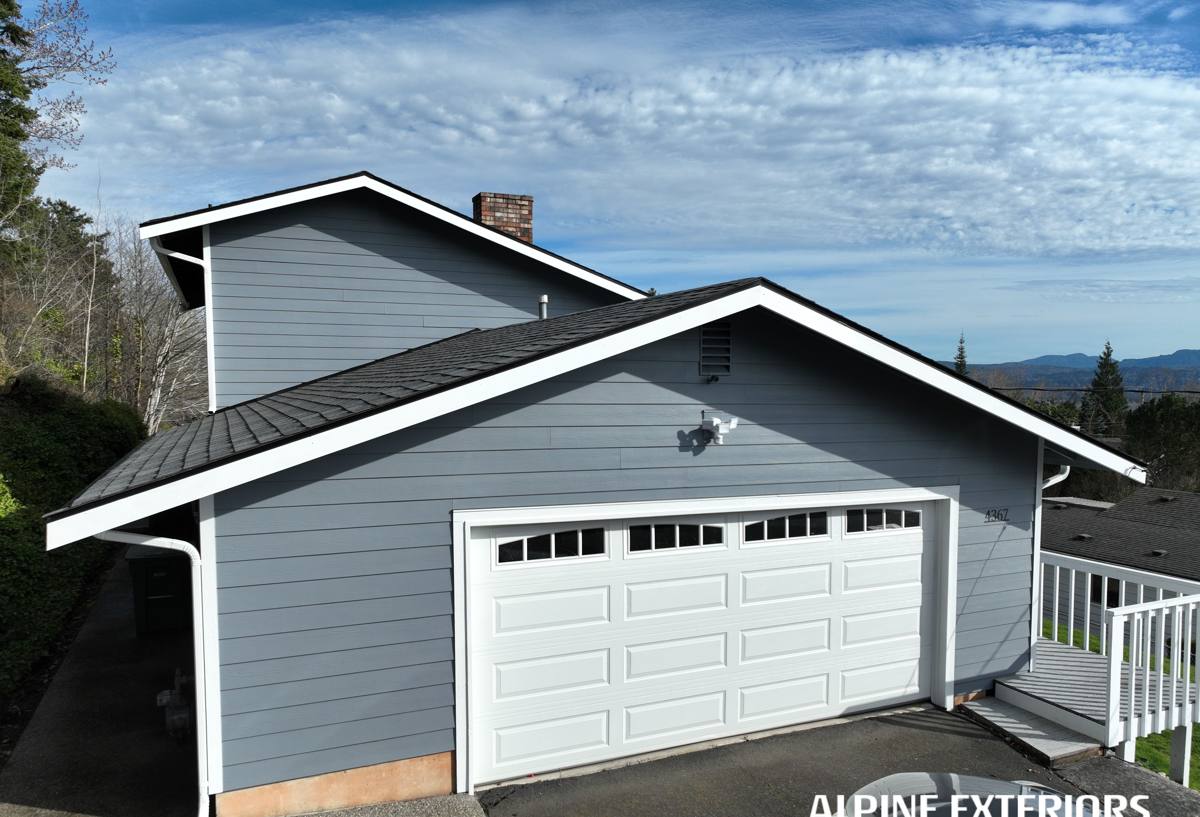
Signs Your Roof Took Storm Damage
Some storm damage is obvious. A lot of it isn't, especially from the ground. After any significant wind or rain event, it's worth checking for:
- Shingles that look curled, cracked, or missing entirely, especially on the side of the roof that faced the wind
- Granules collecting in gutters or at the base of downspouts
- Bent, lifted, or missing flashing around chimneys, vents, and skylights
- New or worsening water stains on ceilings or in the attic
- Dented or dinged gutters, vents, or siding, which often means the roof took the same impact
- Tree limbs or debris resting on the roof, even if they didn't visibly break anything
- Soft or spongy spots when walking the roof, a sign water has already reached the decking
Any one of these on its own might be minor. Two or three together usually means it's time for a real inspection, not a quick look from the driveway.
What to Do Right After a Storm
The first 24 to 48 hours after storm damage matter. If there's an active leak or an opening in the roof, covering it properly stops a repairable problem from turning into a decking or insulation replacement. We use tarping and temporary flashing that's actually secured to the roof structure, not just weighted down, because a loose tarp in the next windstorm can do more damage than the original problem. Emergency mitigation isn't the fix, but it buys time to do the repair correctly instead of rushing it.
Doing the Repair Right, Not Just Fast
Reading the whole slope, not just the obvious spot
A single missing shingle is rarely the only thing wind damage left behind. We check the full slope that faced the storm, including the shingles around the visible damage, because wind uplift often loosens the seal on neighboring shingles without tearing them off outright. Repairing just the one obvious spot and leaving weakened shingles next to it is how a homeowner ends up calling about a "new" leak six months later that's really the same storm.
Flashing, valleys, and the leaks you can't see from the ground
Roof valleys, chimney flashing, and vent boots take the brunt of driving rain because water concentrates there. After a storm, we check these areas specifically, since a flashing leak can send water traveling well away from the actual opening before it shows up as a stain inside the house. Getting the repair right means tracing the leak to its actual source, not just patching where the ceiling stain appeared.
Checking the decking underneath
If water reached the roof deck, the plywood or OSB underneath can delaminate or soften, and shingles laid over compromised decking won't hold a seal no matter how well they're installed. Any time there's evidence of an active leak, we check the decking before closing the roof back up, and we'll tell you plainly if a section needs to be replaced rather than covered over.
Choosing Materials for Lynden's Climate
Storm repairs are also a chance to think about whether the roofing material on the house is actually suited to Whatcom County's weather, especially if this isn't the first storm to cause damage in the same area. Here's how the common options compare for a moss-prone, wind-exposed, rain-heavy climate like Lynden's.
| Material | Wind Resistance | Moss Resistance | Typical Lifespan Here | Repair Considerations |
|---|---|---|---|---|
| Standard asphalt composition shingle | Good when properly nailed and sealed | Moderate; needs periodic cleaning | 18-25 years | Easiest to match and repair in sections |
| Impact-rated (Class 4) asphalt shingle | Very good | Moderate; same care as standard | 25-30 years | Higher upfront cost, often insurance discounts available |
| Metal panel roofing | Excellent | Low moss buildup, sheds moisture fast | 40-50+ years | Repairs require panel-matched materials and a metal-experienced crew |
| Cedar shake | Fair; individual shakes can lift in high wind | High risk without regular treatment | 20-30 years with upkeep | Labor-intensive repairs, ongoing moss maintenance required |
For most Lynden homes doing a storm repair, we're matching the existing material rather than switching systems outright. But if a roof has taken repeated wind or moss damage, it's a fair conversation to have about whether the next full roof should be a step up in wind rating or a lower-maintenance material, and we'll give you a straight answer based on the roof in front of us, not a sales pitch for whatever we happen to be pushing that month.
What Affects the Cost of a Storm Repair
Every storm repair estimate in Lynden comes down to a handful of factors, and it helps to know them going in so an estimate makes sense rather than feeling like a black box.
- How much of the roof is affected — a few displaced shingles cost far less to fix than a section that took a direct hit from a falling limb or lost shingles across an entire slope
- Whether the decking was compromised — sheathing replacement adds materials and labor that a surface-level shingle repair doesn't require, but skipping it when it's needed just means a repeat call later
- How easy it is to match the existing shingle — discontinued colors or older shingle lines sometimes mean a slightly visible patch, or a conversation about reshingling the full slope for a clean match
- Roof pitch and accessibility — steep roofs and roofs with limited ground access near the damage take longer to work safely, which affects labor time
- Whether a permit is required — most single-slope shingle repairs in Lynden don't need one, but larger repairs involving structural or decking work may, and we handle that step rather than leaving it on you
We break all of this out in the written estimate so you can see what's driving the number, not just a total at the bottom.
Working With Your Insurance Company
Most storm damage repairs in Lynden go through homeowners insurance, and the process goes smoother when the documentation is solid from the start. We photograph the damage before any repair work begins, note the likely cause and date of the storm, and provide a written estimate that itemizes materials and labor the way adjusters expect to see it. We're not a public adjuster and won't claim to be one, but we can walk you through what's typically covered, what usually isn't, and where our estimate might differ from an adjuster's initial number so you're not caught off guard.
Be cautious of anyone who shows up unsolicited after a storm offering to "handle everything with insurance" for free. A legitimate local contractor gives you a real inspection and a real estimate whether or not you end up filing a claim.
Our Process, Start to Finish
- Initial call and, if needed, same-day or next-day emergency tarping
- Full roof inspection, including the slope that faced the storm and any interior evidence of leaking
- Written estimate that separates storm-related repairs from any pre-existing wear
- Insurance documentation provided if you're filing a claim
- Repair scheduled and completed, with decking replacement if water reached the sheathing
- Final walkthrough so you can see exactly what was done
Why a Crew That Already Works in Lynden Matters
After a widespread storm, out-of-area crews and traveling repair outfits show up in Whatcom County looking for quick work, and some of them are gone before a warranty issue would ever surface. A local crew has a reputation in Lynden to protect and is still around the following year if a repair needs a follow-up visit. We also know the practical side of working here: how Whatcom County and City of Lynden permitting works for roof repairs, which material suppliers can get matching shingles quickly, and how the area's moss and moisture patterns tend to show up on different roof orientations. That local knowledge shortens the time between your call and a roof that's actually fixed.
If your roof took damage in a recent storm, or you're just not sure whether what you're seeing is storm-related or ordinary wear, we're glad to take a look. Fill out the form below for a free, no-pressure estimate — we'll tell you honestly what needs fixing and what can wait.