 Ferndale
 Building New in Sudden Valley Means Getting the Windows Right the First Time
When you're building new, windows only get installed once with the framing wide open and the weather barrier exposed. There's no second chance to fix a bad sill flashing detail after the siding and trim go on. For homes going up in Sudden Valley and the surrounding Whatcom County area, that first install has to account for salt-laden air, long stretches of driving rain, and a moss season that can stretch from fall into spring. Windows that aren't flashed and sealed correctly for this climate don't usually fail in year one — they fail quietly, over several winters, as water finds its way behind the trim.
This page covers what a correct new-construction window install actually involves in this area, what to look for in the materials and glass, and how our process is built around the realities of building here rather than a generic installation checklist.
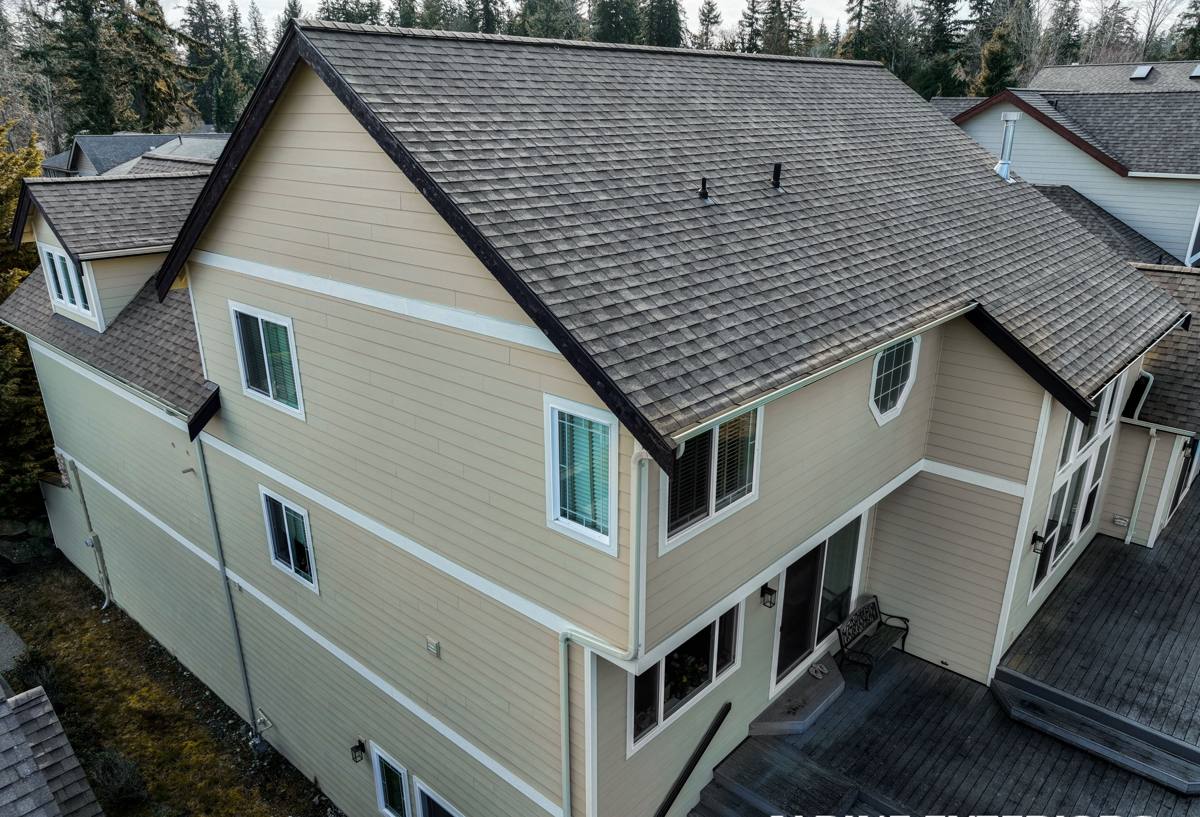
What This Climate Actually Does to a New Window Opening
Three conditions matter most for a new build in this part of Whatcom County:
- Salt air — proximity to the Sound and bay waters means airborne salt accelerates corrosion on exposed fasteners, uncoated flashing, and cheap window hardware over time.
- Driving rain — wind-driven storms push water sideways into wall assemblies, not just straight down. A window opening has to shed water even when rain is hitting it at an angle.
- A long moss season — shaded, damp conditions for much of the year keep trim, sills, and siding wet longer than they'd stay wet in a drier climate, which means any flashing mistake has more time to do damage before anyone notices.
None of this means new construction here is harder than anywhere else — it means the details that get skipped in drier climates (back-dammed sill pans, proper flashing sequencing, corrosion-resistant fasteners) aren't optional here. They're the difference between a window opening that stays dry for decades and one that starts showing rot behind the casing in five to eight years.
New-Construction Windows vs. Replacement Windows — Why the Install Method Is Different
New-construction windows have a nailing fin around the frame that gets fastened directly to the sheathing before siding goes on. That's the whole point of doing it during framing: the window becomes fully integrated with the weather-resistive barrier (WRB) and flashing system, rather than sealed into an existing opening after the fact like a replacement window would be.
Done correctly, this integration is more weathertight than almost any retrofit approach — but it depends entirely on sequence. Flashing tape, WRB, and window fin all have to lap in the right order (shingle-style, so water always sheds outward and downward) or the assembly works against itself. This is the stage where a rushed or inexperienced install creates problems that won't surface until the drywall's long since painted.
Where Mistakes Actually Happen
In our experience, the failure points aren't usually the window unit itself — most manufacturers build a solid product. The failure points are:
- Sill pans installed flat instead of sloped, with no back dam, so water pools instead of draining out
- Flashing tape applied out of sequence, so water gets directed behind the WRB instead of over it
- Incompatible flashing tape and WRB chemistries that don't bond, especially common when trades mix products from different manufacturers
- Fasteners or flashing metals that aren't corrosion-resistant, which matters more here given salt exposure
Choosing a Frame Material for a Whatcom County New Build
There's no single "best" window material — the right choice depends on your budget, the size of your openings, and how much maintenance you want to take on. Here's how the common options compare for a new build in this climate:
| Material | Upfront Cost | Maintenance | Best Fit |
|---|---|---|---|
| Vinyl | Lowest | Minimal — occasional cleaning | Most new builds; strong value and performance for the price |
| Fiberglass | Mid to higher | Low | Larger openings, taller walls, or where dimensional stability under temperature swings matters more |
| Wood-clad | Highest | Higher — exterior clad still needs inspection, interior wood needs finishing/upkeep | Homeowners prioritizing interior wood appearance who accept the added maintenance |
We'll be direct about wood-clad windows in a climate like this: the exterior cladding protects the wood from weather, but any breach in that cladding — a scratch, a poorly sealed joint — gives moisture a path into a wood substrate in a region that stays damp for months at a time. That's not a defect in the product; it's a maintenance commitment we want you to walk in with eyes open about. Vinyl and fiberglass simply ask less of you over the life of the window.
Glass Packages: What Actually Matters Here
In a marine climate, the glass package decision is less about extreme heat or cold and more about condensation control, air infiltration, and consistent comfort near the glass on cold, wet days. For new construction we're typically looking at:
- Dual-pane, low-E coated glass as the baseline — this is standard for meeting Washington State Energy Code requirements on new builds
- Argon gas fill between panes for improved insulating performance without added bulk
- Warm-edge spacers to reduce condensation risk at the glass edge, which matters in a climate where interior humidity plus cold glass is a common combination
Triple-pane glass is available and does offer a performance bump, but for most homes here the added cost doesn't pencil out the way it might in a colder inland climate — dual-pane low-E with argon covers the vast majority of new builds well. We'll walk through the actual numbers for your project rather than upselling a package you don't need.
Our New-Construction Window Process
The process is the same whether it's one window or a full house of openings — consistency is what keeps a new build weathertight.
- Rough opening verification — confirming every opening matches the window schedule before units arrive, so nothing gets forced or shimmed excessively on install day
- Sill pan flashing — sloped and back-dammed so any water that does get past the window has a way out, not a place to sit
- Sequenced flashing tape — jambs, then head, integrated with the WRB in proper shingle-lap order so water always moves outward and down
- Window set and fastening — set per manufacturer instructions (this matters for keeping the manufacturer's warranty intact, not just for the physical install)
- Interior air sealing — low-expansion foam or backer rod and sealant around the frame, avoiding gaps that let conditioned air and moisture move through the wall cavity
- Exterior trim and sealant — casing installed and sealed with an exterior-grade, paintable sealant rated for this climate's UV and moisture exposure
What a New Build in Sudden Valley Costs to Factor In
Every project is different, but these are the main variables that move the number:
| Cost Factor | Why It Matters |
|---|---|
| Number and size of openings | More window area means more material and more flashing detail work |
| Frame material | Vinyl, fiberglass, and wood-clad sit at different price points, as shown above |
| Glass package | Low-E coatings, argon fill, and spacer type each add incrementally to unit cost |
| Building height and access | Multi-story installs or hard-to-reach openings add labor time |
| Trim and casing detail | Simple trim vs. custom exterior casing changes both material and labor |
| Coordination with framing schedule | Installing on a tight, well-coordinated dry-in schedule is more efficient than working around delays |
We'll always give you a written estimate broken down by these factors rather than a single lump number, so you know what you're actually paying for.
Working With Your Builder and Timeline
New-construction window installation happens at a specific point in the build sequence — after framing and WRB, before siding closes everything in. That means our schedule has to sync with your builder's, not the other way around. We coordinate directly with general contractors and framers on timing, confirm rough openings before the windows are even ordered, and stay flexible on scheduling as a build's timeline shifts, which it almost always does at some point.
If you're the homeowner managing your own build rather than working through a GC, we're used to that too — we'll walk you through what needs to happen before we're on site and what your framer needs to have ready.
Checklist: What to Confirm Before Windows Go In
- Rough openings match the approved window schedule and manufacturer's specs
- WRB (house wrap) is installed and properly lapped before flashing begins
- Flashing tape is chemically compatible with the WRB and sealants being used
- Sill pans are specified with a back dam and slight outward slope
- Egress requirements are met for any bedroom windows per code
- Glazing specs meet Washington State Energy Code requirements for the project
- Installation will follow manufacturer instructions to preserve the product warranty
Why a Crew That Already Works This Area Makes a Difference
A window install that looks fine on install day and one that's still dry in fifteen years often come down to details that aren't visible once trim goes on — flashing sequence, fastener choice, sealant compatibility. A crew that regularly works new construction around Sudden Valley and the rest of Whatcom County has already worked through how this specific climate treats those details: which fasteners hold up against salt air over time, how much slope a sill pan actually needs given how much driving rain this area gets, and how to keep moss and moisture from working their way into trim joints over a damp, shaded season that runs longer here than in most of the state.
We also know the local building department's inspection expectations and the energy code requirements that apply to new builds in this county, which keeps your project moving without avoidable delays.
If you're planning new-construction windows for a build in Sudden Valley, we'd be glad to take a look at your plans and walk the site with your builder. Reach out for a free, no-pressure estimate using the form below.