 Ferndale
 Roofing in Sudden Valley Means Building for the Climate, Not Just the House
Sudden Valley sits in the kind of setting that makes Whatcom County beautiful and makes roofs work harder: mature tree canopy, a lake nearby, hills that funnel wind and rain, and long stretches of the year where a roof rarely gets a chance to fully dry out. A new roof installation here isn't just about swapping old shingles for new ones. It's about choosing materials and installation details that hold up to driving rain, resist moss in shaded areas, and shed moisture instead of trapping it under tree cover.
We install roofs across Whatcom County, and the homes around Sudden Valley get a specific kind of wear pattern compared to open, sunny lots closer to town. If your roof is showing its age, understanding why matters just as much as knowing when to replace it.
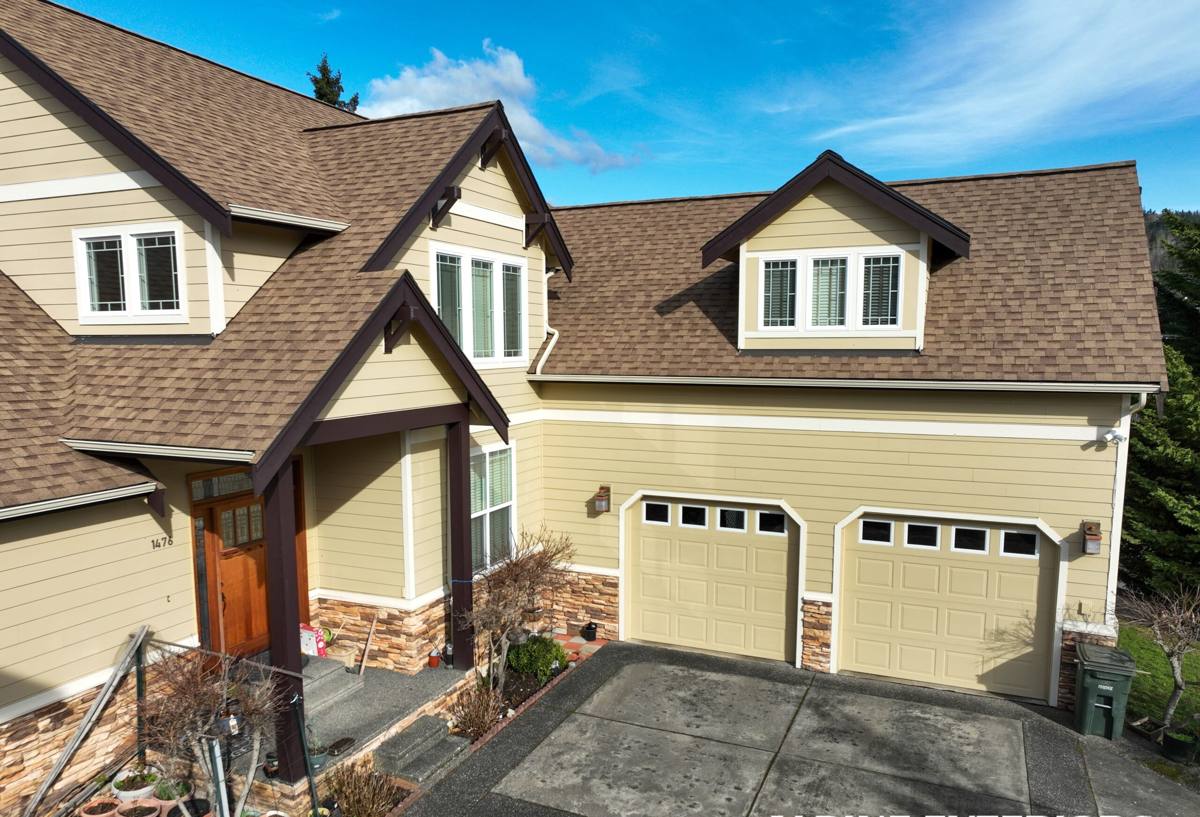
Why Roofs Age Faster in This Part of the County
Moisture That Doesn't Go Away Quickly
The marine air that moves through Whatcom County carries persistent moisture, and the driving, wind-blown rain typical of fall and winter storms doesn't just fall straight down — it gets pushed sideways under shingle edges, into valleys, and around flashing that isn't sealed correctly. Add the humidity that sits over a lake environment, and roofs here spend more days damp than roofs in drier inland parts of the state.
Shade, Tree Cover, and Moss
Wooded lots are one of the reasons people love living around Sudden Valley, but shade is moss's best friend. North-facing slopes and roof sections shaded by tall firs and cedars can stay damp for days after a storm, giving moss and algae time to establish. Once moss takes hold, it lifts shingle edges, holds water against the roof deck, and accelerates rot in ways that are easy to underestimate from the ground.
Salt-Tinged Air and Metal Fasteners
Even away from the immediate shoreline, the marine air common across Whatcom County carries trace salt that speeds up corrosion on exposed metal — nails, flashing, and fasteners that aren't rated for coastal-adjacent exposure. Over a decade or two, that slow corrosion is a common hidden cause of leaks that show up long before the shingles themselves are worn out.
Signs a Sudden Valley Home Needs a New Roof, Not Another Repair
Repairs make sense when a roof has years of life left and the damage is isolated. A full replacement makes sense when the underlying materials — decking, underlayment, flashing — are failing in more than one place. Here's what we look for during an inspection:
- Moss or algae covering more than a small patch, especially on shaded slopes
- Granule loss heavy enough that you can see bare, shiny patches on asphalt shingles
- Shingles that are curling, cracking, or lifting at the edges
- Soft spots or noticeable sag when walking the roof or viewing it from a ladder
- Daylight visible through the roof deck from inside the attic
- Water stains on interior ceilings or attic insulation that's damp or matted
- A roof that's 20-25+ years old, regardless of how it looks from the street
- Flashing around chimneys, skylights, or valleys that's rusted, loose, or missing sealant
If you're seeing two or more of these, it's worth getting a straight answer on whether repair or replacement is the better investment before winter storms find every weak spot.
What a Correct Roof Installation Actually Involves
Tear-Off and Deck Inspection
We remove the old roofing down to the deck rather than layering over it. That's the only way to find soft, rotted, or delaminated sheathing — a common discovery on homes with a history of moss or slow leaks — and replace only the sections that need it, not the whole deck unnecessarily.
Underlayment and Ice-and-Water Protection
Given how much of the year this region spends wet, we don't treat underlayment as an afterthought. Self-adhering ice-and-water membrane goes in valleys, around penetrations, and along eaves, with synthetic underlayment across the field. This is the layer that saves a roof when wind-driven rain gets under the shingles during a storm.
Flashing and Valleys Done Right
Most leaks we get called out for don't come from the shingles — they come from flashing that was reused, undersized, or poorly sealed around chimneys, skylights, sidewalls, and valleys. New flashing, properly lapped and sealed with the underlayment, is a non-negotiable part of every installation we do.
Ventilation That Matches the House
A roof deck that can't breathe stays damp longer, which feeds moss growth and shortens shingle life from underneath. We check intake at the eaves and exhaust at the ridge and correct any imbalance as part of the installation, not as a separate upsell later.
Choosing the Right Roofing Material for This Climate
There's no single "best" roofing material — there's a best material for your budget, your roof's slope and shade exposure, and how much upkeep you want to do. Here's how the common options stack up for a shaded, wet-climate lot like the ones common around Sudden Valley:
| Material | Moss & Moisture Behavior | Maintenance | Typical Lifespan |
|---|---|---|---|
| Architectural asphalt shingle | Good with algae-resistant granules; still needs periodic cleaning in heavy shade | Low to moderate | 25-30 years |
| Standing seam metal | Sheds moisture fast, very moss-resistant on steeper slopes | Low | 40-50+ years |
| Cedar shake/shingle | Attractive but naturally more moisture-absorbent; requires diligent upkeep in shaded, damp settings | High | 20-30 years with upkeep |
| Composite/synthetic shingle | Engineered for moisture resistance, holds up well in shade | Low | 30-50 years |
We're honest with clients about wood shake in particular: it can look great, but on a heavily shaded, damp lot it demands more frequent cleaning and treatment to avoid the same moss and rot issues we're trying to solve with a new roof in the first place. For most Sudden Valley homes under tree cover, an algae-resistant architectural shingle or a metal roof gives the best balance of appearance, low maintenance, and long-term performance.
Our Process, Start to Finish
- On-site inspection. We walk the roof and the attic, not just look from the driveway, and check for the specific wear patterns common to shaded, lake-adjacent lots.
- Written estimate. A clear scope of work and pricing — no vague allowances, no pressure to decide on the spot.
- Material selection. We walk through the trade-offs in the table above based on your roof's shade exposure, slope, and budget.
- Permitting. We handle the permit process required for the job so you don't have to track it down yourself.
- Tear-off and deck repair. Old material removed, deck inspected, any soft or rotted sheathing replaced.
- Underlayment, flashing, and installation. Built in the order described above, with attention to valleys, penetrations, and ventilation.
- Cleanup and magnetic sweep. Debris and stray fasteners cleared from the yard and driveway before we leave.
- Final walkthrough. We go over the finished roof with you and explain what maintenance, if any, it needs going forward.
Access, Terrain, and Working Around a Wooded, Hilly Lot
Many properties in and around Sudden Valley sit on sloped lots with mature trees close to the house, which changes how a roofing job gets staged compared to a flat, open lot. Equipment placement, safe tie-off points, and protecting landscaping during tear-off all take more planning on a wooded, hilly site. A crew that's used to this terrain moves through it efficiently; a crew that isn't will spend extra time — and your money — figuring it out on the fly.
Why Local Experience Around Sudden Valley Matters
Any licensed roofer can install shingles on a flat, sunny roof. Fewer have real experience with the specific combination of shade, moisture, and terrain that defines this part of Whatcom County. We know which slopes on a shaded lot need extra ice-and-water protection before we even get on the roof, which valley designs collect the most debris under tree cover, and how to sequence a tear-off around a wooded lot without turning your yard into a mess. That experience shows up in fewer callbacks and a roof that's built for how this specific area actually behaves in the weather, not a generic installation dropped onto a difficult site.
Get a Straight Answer on Your Roof
If your roof is showing moss, granule loss, or its age, the smartest first step is an honest inspection — not a sales pitch. We'll tell you plainly whether you need a full replacement or whether a repair will hold. Reach out for a free, no-pressure estimate using the form below, and we'll walk your roof and give you a clear picture of what it needs.