 Ferndale
 Window Replacement for Semiahmoo Homes
Semiahmoo sits out on a narrow spit reaching into Semiahmoo Bay, just south of the Canadian border near Blaine, and that setting puts homes here in one of the more exposed spots we work in across Whatcom County. Wind comes off open water on more than one side of the spit, salt-laden air is a daily condition rather than an occasional one, and the same storms that push driving rain across the rest of the county hit harder on a piece of land with almost no windbreak. Windows are usually the first part of a house's exterior to show what that exposure is doing, because a window opening has more seams, more hardware, and more places for water and salt air to work their way in than almost any other part of the wall.
We handle window replacement, along with siding, roofing, and decks, for homes throughout this stretch of Whatcom County, and on Semiahmoo properties specifically we treat installation and flashing detail as being just as important as the window unit itself. A quality window installed with rushed flashing will leak here faster than almost anywhere else we work. A well-chosen window installed correctly, with hardware and flashing specified for this level of exposure, holds up the way it's supposed to for decades instead of years.
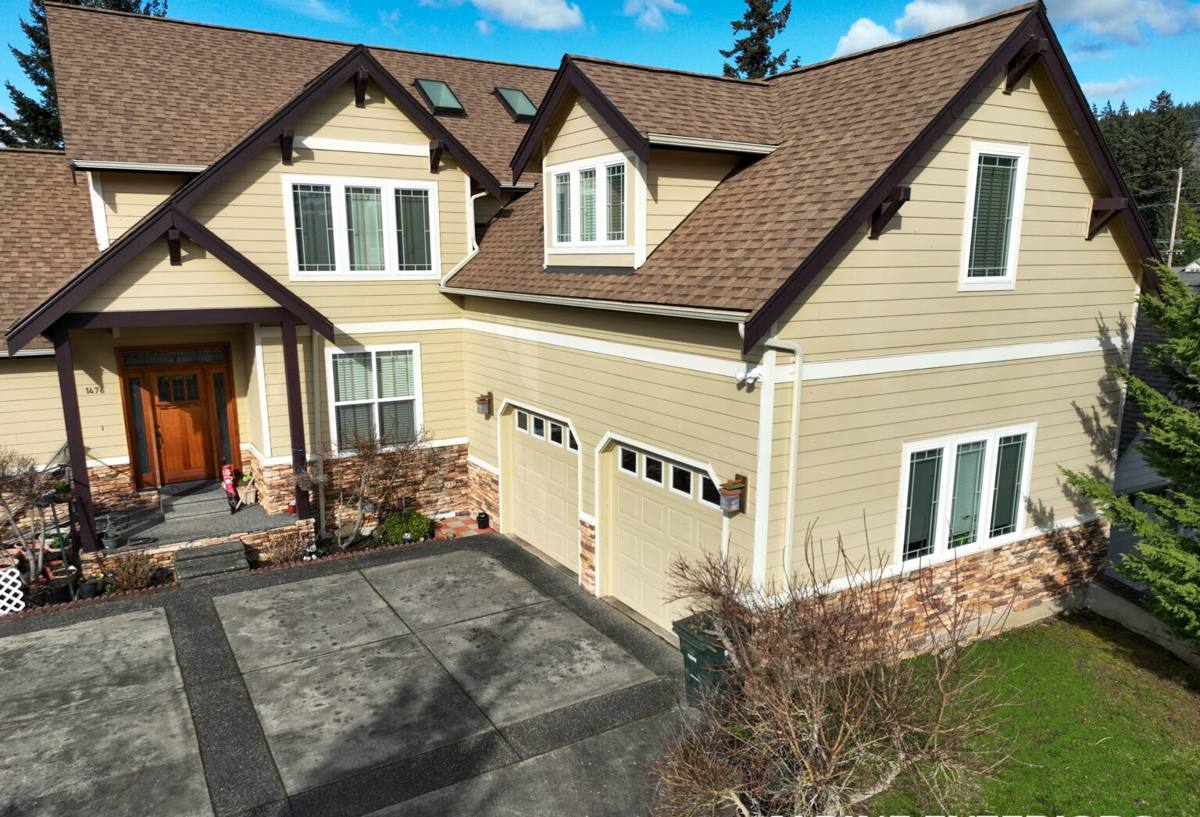
What Semiahmoo's Exposure Does to Windows
Wind Off the Water
A spit exposed to open water on more than one side doesn't get the windbreak that a home set back in town or behind a treeline gets. Wind loads on windows here run higher than the county average, and that matters for more than comfort — it's what pushes rain sideways into gaps that would stay dry on a sheltered lot, and it's what puts the most stress on hardware, seals, and the flashing tying a window into the surrounding wall.
Salt Air and Corrosion
Being this close to open saltwater means salt-laden air reaches exterior surfaces on a regular basis, not just after a storm. Lower-grade hardware, fasteners, and frame components corrode noticeably faster under that kind of exposure than they would even a few miles inland. Pitting on hinges and locks, stiff or seized cranks, and finish that fails early are common signs of a window system that wasn't specified for a waterfront site.
Driving Rain With Nowhere to Hide
Storms moving through the Strait of Georgia and across the Salish Sea push rain sideways into Semiahmoo's exposed walls rather than letting it fall straight down and run off cleanly. Wind-driven rain finds gaps around window flashing that would never get tested on a calmer inland property. On a spit with open water close on more than one side, that pattern shows up more often and with more force than in most of the rest of the county.
A Long Moss and Mildew Season
Persistent dampness and mild temperatures support a moss and mildew season that runs long across Whatcom County, and it shows up first on window sills, trim, and framing in shaded spots or under eaves with poor drainage. On older wood-framed windows or painted wood trim, sustained organic growth holds moisture directly against the material, and that's often exactly where hidden rot gets its start.
Condensation and Temperature Swings
Cold, damp winters combined with heated interiors create real condensation pressure on window glass in this climate, and waterfront exposure doesn't make that any easier. Older single-pane windows or double-pane units with a failed seal show it plainly — fogging trapped between panes, water pooling on interior sills, or persistent moisture that a dehumidifier can't fully keep up with.
Signs a Semiahmoo Home Needs Window Attention
- Fogging or visible moisture trapped between the panes of a double-pane window
- Corroded, pitted, or stiff hardware on locks, hinges, or cranks
- Drafts near the frame even when the window is fully closed and locked
- Soft, discolored, or visibly rotted sill and trim material
- Paint or finish failing faster on wind- and water-facing walls than on sheltered ones
- Visible gaps or daylight where the frame meets the surrounding siding
Replacement vs. Repair: How We Make the Call
Not every window on a Semiahmoo property needs full replacement, and we don't default to recommending it. A window with a failed seal but a sound frame and working hardware is often a fair repair or reglaze candidate. A window with corroded hardware that's spread into the frame, or wood framing that's gone soft, usually isn't — at that point the labor spent patching it keeps adding up while the underlying problem keeps getting worse.
| Condition | Repair Often Makes Sense | Replacement Usually Makes Sense |
|---|---|---|
| Fogged glass, sound frame and hardware | Yes — reglaze or seal replacement | Only if the frame is also compromised |
| Corroded or seized hardware, sound frame | Yes — hardware swap | Not on its own |
| Soft or rotted sill or frame material | Rarely a lasting fix | Yes |
| Persistent leaking despite recent sealing | Sometimes, if flashing is the actual cause | Yes, if the unit itself is failing |
| Single-pane glass on a wind-exposed wall | Short-term fix at best | Yes, for real comfort and energy gains |
Window Flashing: The Detail That Determines Long-Term Performance
We spend more time talking about flashing than about window brands, because on a site this exposed, flashing is what separates a window that stays dry for decades from one that starts leaking within a couple of wet seasons. Correct installation means the flashing laps in the right order with the surrounding weather-resistive barrier and siding, water is directed out and away from the rough opening rather than trapped behind it, and every seam is sealed with materials rated for sustained wind and moisture exposure. That's standard practice on every window we install, not an upgrade a homeowner has to ask for separately.
Where Rushed Installs Fail First on the Spit
On repair calls in this area, the source of a leak is rarely the window unit itself failing — it's flashing that was never lapped correctly, or caulk used as a substitute for proper flashing instead of a supplement to it. Caulk alone breaks down under UV and repeated wetting faster here than in a calmer setting, and it was never meant to be the only line of defense against wind-driven rain in the first place.
Frame Materials and Glazing for a Waterfront Property
Frame material and hardware grade matter more on a Semiahmoo property than almost anywhere else we work, because sustained wind and salt exposure will find the weak point in a system that wasn't built for it. We walk homeowners through the honest trade-offs for their specific home rather than pushing one option as the only right answer.
| Frame Material | How It Handles This Exposure | Trade-Offs |
|---|---|---|
| Vinyl | Resists rot and corrosion well; performs reliably in a wet, mild coastal climate | Fewer color options; can flex more on larger units under high wind load |
| Fiberglass | Dimensionally stable across temperature swings; a strong match for wind-exposed walls | Higher upfront cost than vinyl |
| Wood-clad, exterior-protected | Can perform well as long as the exterior cladding stays intact and sealed | Any break in the cladding exposes the wood core to this climate's moisture and salt air |
| Aluminum | Strong, with slim sightlines for larger openings | Conducts heat and cold readily; needs a thermal break and marine-grade hardware to hold up here |
Beyond frame material, glazing and hardware grade carry real weight on a home like this. A double or triple-pane unit with a quality low-E coating cuts down on both heat loss and the interior condensation that this climate encourages. Corrosion-resistant hardware — the locks, hinges, and cranks — is worth specifying deliberately here rather than accepting whatever ships standard, since salt air is what wears those components out first. And a manufacturer warranty only protects the parts of the job it actually covers; we stand behind our installation work separately from the product warranty that comes with the window itself.
How Windows Fit Into the Rest of the Building Envelope
Windows don't fail in isolation, especially on a wind-exposed property. A window replaced without attention to the surrounding siding, trim, and drainage plane can look fine for a season or two and still leak, because water that gets past a poorly integrated window travels into the wall assembly instead of staying visible where it's easy to spot. We handle siding, roofing, windows, and decks as one connected system, which means the same crew doing the window flashing understands exactly how it needs to tie into the siding and wall assembly around it.
Our Process, Start to Finish
- On-site assessment — we check frame condition, seal integrity, hardware function, and how the existing flashing ties into the siding around each opening
- Honest recommendation — repair, reglaze, or full replacement, explained window by window rather than as a blanket answer
- Frame and glazing selection — matched to the wind and salt exposure of your specific elevation, not a one-size default
- Ordering and lead time — a realistic timeline in writing before you commit to a schedule
- Removal and opening prep — the old unit comes out carefully, with any hidden rot or flashing damage addressed before the new window goes in
- Installation and flashing — the new unit is set, shimmed, and flashed to a sequence built for wind-driven rain, not a mild-climate default
- Trim and finish — exterior trim integrated cleanly to match the surrounding siding
A Checklist Before Hiring for Window Work in Semiahmoo
- Ask specifically how they handle flashing integration with the existing siding, not just which window brand they sell
- Confirm current Washington contractor licensing and active liability insurance
- Ask whether hardware and glazing are specified differently for wind- and water-facing walls versus sheltered ones
- Get a written scope that separates the manufacturer's product warranty from the contractor's installation warranty
- Ask about realistic lead times, since window orders for this region can run several weeks depending on size and configuration
Why a Local Semiahmoo Crew Matters
A contractor who works this specific stretch of coastline regularly already knows how wind off the bay and sustained salt exposure behave on real homes here, not just what a manufacturer's installation sheet assumes for an average site. That shows up in the decisions that don't come up in a sales pitch — how much lap a flashing detail gets on a wind-facing wall, whether caulk alone is ever treated as adequate sealing, which hardware grade gets specified for a spit-front elevation versus a more sheltered one. Those are the choices that decide whether a window installation is still performing cleanly after fifteen winters on the water or showing corrosion and drafts after five.
If your Semiahmoo home has windows that are fogging, drafty, hard to operate, or just showing their age faster than you'd expect, it's worth having someone look at the actual openings before you start pricing units. We offer free, no-pressure estimates for window replacement in Semiahmoo and the surrounding area — use the form below to get a time on the schedule.