 Ferndale
 Asphalt Shingle Roofing for Custer Homes
Custer sits in the open agricultural flatland north of Ferndale, close enough to the Salish Sea and the Strait of Georgia that marine air, wind, and long stretches of rain reach it even though the community itself isn't right on the water. That combination puts real, sustained stress on a roof — more than a homeowner moving here from a drier inland climate might expect. Asphalt shingle roofing remains the most practical, cost-effective choice for the vast majority of homes in this area, but only when it's specified and installed with this specific climate in mind. A shingle roof built the same way you'd build one in eastern Washington or a sheltered inland valley won't hold up the same way out here.
We work on roofs throughout this stretch of Whatcom County regularly, and Custer's flat, open terrain gives it its own particular exposure pattern — one worth understanding before you sign off on a replacement or repair.
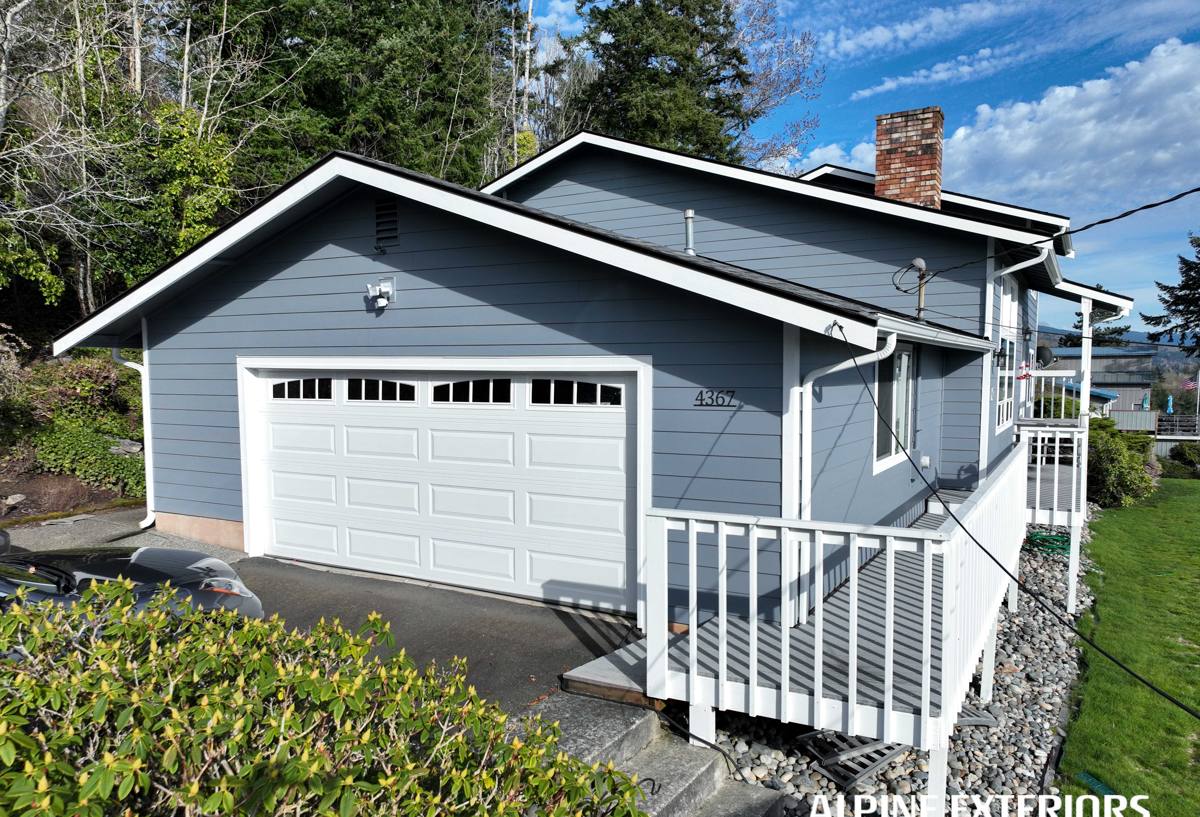
What Custer's Climate Does to a Roof
Marine Air Carried Inland
Custer doesn't take the direct salt spray a waterfront property on Birch Bay or Drayton Harbor deals with, but it's close enough to the Salish Sea that salt-tinged marine air still reaches it, especially during winter storms blowing off the water. Over years, that air accelerates corrosion on lower-grade fasteners, flashing metal, and roof hardware. A roof built with standard-grade nails and thin flashing metal can start showing rust streaks and weakened fasteners well before a comparable roof would in a drier, inland part of the state.
Wind-Driven Rain Over Open Ground
The flat, open farmland around Custer offers almost no wind break. Storms rolling in off the water push rain sideways and sometimes upward into roof edges, valleys, and shingle laps, rather than letting it fall straight down and run off cleanly. A shingle roof that's only built to shed rain falling vertically will let water work its way up under shingle tabs and through poorly lapped underlayment during a real wind event. This is one of the most common ways roofs in this part of Whatcom County actually fail — not from age alone, but from wind-driven rain finding a gap that a calmer climate never would have exposed.
A Moss Season That Runs Long
Mild temperatures and near-constant dampness through fall, winter, and spring give moss and algae a long growth window across Whatcom County, and shaded or north-facing roof slopes in Custer are no exception. Left alone, moss holds moisture directly against the shingle surface, which shortens shingle life and can work its way under tabs and into fastener holes over time. It's not just an appearance issue — a mossy roof is a roof that's staying wetter, longer, than it should.
What a Correct Asphalt Shingle Roof Actually Includes
Shingles get most of the attention, but the materials and details underneath them are what actually determine whether a roof holds up here. We treat these as standard on every installation, not optional upgrades.
Underlayment and a Water Barrier That's Actually Worth Something
Old-style felt underlayment tears easily and absorbs water rather than shedding it. We use synthetic underlayment as the standard base layer, with a self-adhered ice-and-water barrier at eaves, valleys, and other vulnerable spots — the places wind-driven rain is most likely to test the roof. That extra layer of self-adhered membrane is inexpensive relative to the whole job and it's one of the details that matters most in a climate like this one.
Ventilation That Protects the Roof From Underneath
A roof takes moisture from above and, if it's poorly ventilated, from below as well. Warm, moist attic air that can't escape properly condenses against the underside of the roof deck, which accelerates rot and gives moss and mildew a head start from the inside out. Balanced intake and exhaust ventilation isn't a cosmetic add-on — it directly extends how long the shingles and the deck underneath them actually last.
Flashing at Valleys, Chimneys, and Penetrations
Most roof leaks in this climate don't start in the open field of the roof — they start at a valley, a chimney, a vent pipe, or a wall intersection where two roof planes or materials meet. Flashing at these points needs to be sized, lapped, and sealed correctly for wind-driven rain, not just straight-down rain. It's detail work that takes more time than a rushed install allows for, and it's usually the first thing we check when we're called out to diagnose an existing leak.
Choosing the Right Shingle for a Custer Roof
Shingle products vary a lot in wind rating, algae resistance, and expected service life, and the right choice depends on the roof's exposure, slope, and how long the homeowner plans to stay in the home. We walk through these trade-offs honestly rather than defaulting to whatever's cheapest or easiest to install.
| Shingle Type | Typical Wind Rating | Best Fit for Custer |
|---|---|---|
| 3-tab shingles | Lower — generally not built for sustained high wind exposure | Budget-limited projects on well-sheltered, lower-slope roofs only |
| Architectural (laminate) shingles | Higher — built with a heavier, multi-layer construction | The standard recommendation for most Custer homes given open, wind-exposed terrain |
| Algae-resistant shingles | Same as base product, with added copper or zinc granules | Worth the modest upcharge on any shaded or north-facing slope, which is most roofs here at some point in the day |
| Impact-resistant (Class 4) shingles | Higher, with added resistance to hail and debris impact | An option worth discussing rather than a default — value depends on the specific property and insurance considerations |
For most Custer homes, we recommend a quality architectural shingle with algae-resistant granules as the baseline, upgraded further only where the roof's exposure, pitch, or a homeowner's specific priorities call for it. That's a judgment we make in person, on the roof, not off a generic price sheet.
Our Process, Start to Finish
- An on-site inspection of the existing roof, checking deck condition, ventilation, flashing, and shingle wear before quoting anything
- A written estimate that spells out tear-off scope, underlayment type, flashing detail, and shingle product — not a one-line number
- An honest read on whether a repair makes sense or the roof is genuinely due for replacement
- Tear-off and deck inspection, with any soft or rotted decking replaced before new material goes down
- Installation of underlayment, ice-and-water barrier, flashing, ventilation, and shingles to spec — not shortcuts to save labor time
- A final walkthrough and full cleanup, including a magnetic nail sweep of the property
Signs Your Custer Roof Needs Attention
- Shingles that are cupping, curling, or missing granules, especially on south- or west-facing slopes that take the most sun and wind
- Moss or dark streaking building up on shaded or north-facing slopes
- Daylight, water stains, or drafts visible in the attic, particularly near valleys or chimneys
- Granules collecting in gutters, which usually signals shingles are past their effective service life
- Soft spots or noticeable sag anywhere across the roof deck
- Rusted or lifting flashing around chimneys, vents, or roof-to-wall intersections
Roof Maintenance That Actually Matters in This Climate
A shingle roof in Custer isn't maintenance-free, even a well-installed one. Keeping gutters and valleys clear of debris prevents standing water from sitting against shingle edges longer than it should. Moss should be removed carefully — physically, with the right technique, rather than pressure-washed, which can strip granules and shorten shingle life faster than the moss itself would. And an occasional visual check from the ground after a hard wind event, looking for lifted or missing shingles, catches small problems before they become a leak that's already reached the deck. None of this replaces a proper inspection every few years, but it's the difference between a roof that reaches its full expected life and one that doesn't.
Why a Crew That Already Works Custer Matters
A roofing crew that works this part of Whatcom County regularly has already seen how open, wind-exposed terrain and a long moss season behave on real roofs here over time — not just how a shingle performs on a manufacturer's spec sheet. That experience shows up in practical decisions on install day: how much lap a valley gets, whether a slope's exposure calls for extra flashing attention, and which fastening pattern actually holds up when a winter storm comes through with real wind behind the rain. Custer's flat, open exposure is different from a more sheltered in-town lot closer to downtown Ferndale, and a crew with hands-on local experience treats that difference as something that changes the job, not as a detail to skip past.
If your Custer home needs a roof inspection, a repair, or a full replacement — or you just want an honest second opinion on a bid you've already received — we're glad to take a look. Reach out using the form below to schedule a free, no-pressure estimate.