 Ferndale
 Windows Built for What Bellingham Weather Actually Does to a House
Bellingham sits close enough to the water that salt-laden air is a real factor in how exterior materials age, and Whatcom County's weather pattern doesn't do windows any favors either. Long stretches of driving rain, wind off the bay, and a moss season that can run most of the year all put steady pressure on window frames, seals, and glazing. Add in the temperature swings between damp winters and warmer summer afternoons, and it's easy to see why windows that were fine ten or fifteen years ago start working against you — fogging between the panes, sticking in their tracks, or letting cold air creep in around the frame.
Energy-efficient windows aren't just about a lower heating bill, though that's a real benefit. In this climate, "energy-efficient" and "well-sealed against moisture" go hand in hand. A window that's doing its job right is keeping conditioned air in, keeping wind-driven rain and humid outside air out, and doing both without relying on caulk and hope. That's the standard we install to.
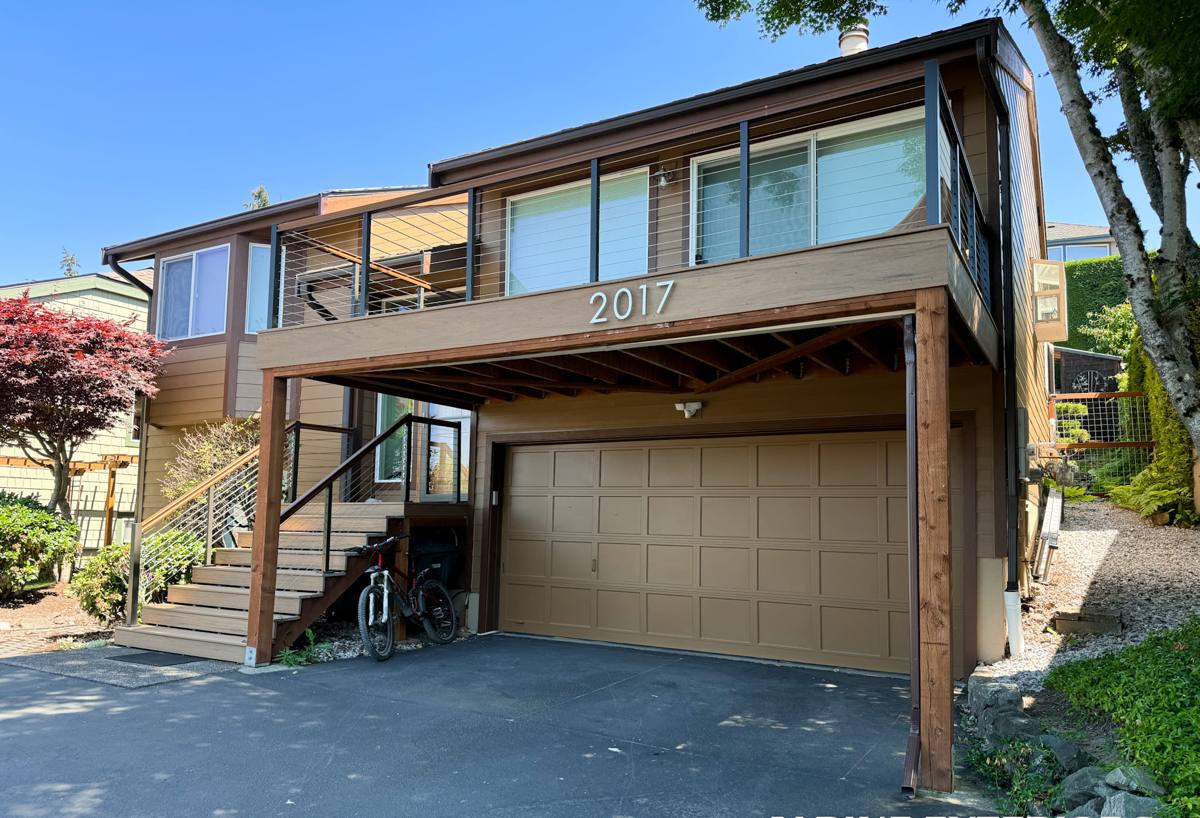
What "Energy-Efficient" Actually Means, Not Just a Sticker on the Glass
Every new window comes with an NFRC label listing performance numbers, but most homeowners have never had someone walk them through what those numbers mean for a house in this specific climate. Two ratings matter most here:
- U-Factor — measures how well the window resists heat loss. Lower is better. This is the number that matters most for a Whatcom County winter.
- Solar Heat Gain Coefficient (SHGC) — measures how much solar heat passes through the glass. In our mild, often overcast climate, this matters less than it would in a sunnier region, but it still affects comfort on the west- and south-facing sides of a house.
Beyond the label, the actual construction of the window determines how it holds up here:
Glazing and Gas Fill
Double-pane glass with a low-E coating and an argon gas fill is the practical baseline for this region — it balances performance and cost well. Triple-pane glass offers a modest additional efficiency gain but comes at real added cost and weight, and for most Bellingham-area homes it isn't necessary to hit a comfortable, efficient result. We'll walk through whether it makes sense for your specific house rather than defaulting to the upsell.
Spacers and Seals
The spacer between the panes of glass is one of the most overlooked parts of a window, and it's often the first thing to fail in a coastal-influenced climate. Warm-edge spacer technology reduces condensation at the edge of the glass and holds its seal longer under repeated wet-dry cycling — which is exactly what our weather delivers all year.
Frame Material: What Actually Holds Up Near the Water
Frame choice matters as much as the glass package, especially with salt air and sustained moisture in the mix. Here's how the common options compare for a Bellingham-area installation:
| Frame Material | Moisture & Salt Air Behavior | Maintenance | Typical Lifespan |
|---|---|---|---|
| Vinyl | Won't corrode or rot; performs well in coastal air | Low — occasional cleaning | 20–30+ years |
| Fiberglass | Excellent stability in wet, salt-influenced climates; expands/contracts minimally | Low | 30+ years |
| Wood-clad | Attractive, but the wood core is vulnerable if the exterior cladding or seals are ever compromised | Higher — finish and seal upkeep | Varies with maintenance |
| Aluminum | Conducts heat and cold readily; can corrode over time in salt air unless properly finished | Moderate | Varies |
We don't install every material on this list. Our standard recommendation for this area is vinyl or fiberglass, because both resist the specific combination of salt exposure, sustained moisture, and freeze-thaw cycling that Whatcom County homes deal with, without the long-term maintenance burden that wood-clad or bare aluminum frames carry near the coast. If you specifically want a wood-clad look, we'll have an honest conversation about the upkeep it requires here before you commit to it.
Signs Your Current Windows Are Working Against You
Not every window problem is obvious from across the room. Some of the most costly issues show up gradually. Watch for:
- Visible fog or moisture trapped between the panes (a failed seal — the window is no longer insulating as designed)
- Drafts you can feel near the frame, even with the window fully latched
- Windows that are difficult to open, close, or lock — often a sign the frame has shifted or swollen
- Soft or discolored trim or sill material around the window opening
- Visible moss or dark streaking building up on or around the frame
- A noticeable difference in room temperature near the window compared to the rest of the house
- Rising heating costs without a clear explanation elsewhere in the home
Any one of these on its own isn't necessarily an emergency, but a few of them together usually means the windows are past the point where sealing or minor repair will fix the underlying issue.
What a Correct Installation Actually Involves
The window itself only does half the job — installation is where most long-term failures actually start, especially in a climate that sends wind-driven rain straight at a wall for days at a time. A correct install includes:
Opening Prep and Moisture Management
Before a new window ever goes in, the opening needs to be checked for hidden rot or water damage from the old unit, and properly flashed so that any water that does reach the opening drains back out instead of behind the siding. This step is invisible once the job is done, which is exactly why it's the step that gets skipped by installers trying to move fast.
Air Sealing, Not Just Caulking
A bead of exterior caulk is not an air seal. Proper installation uses backer rod and sealant sized correctly for the gap, along with interior air sealing, so the window performs at or near its rated U-Factor instead of leaking air around a technically "installed" frame.
Level, Plumb, and Square
A window that's slightly out of square will bind, won't latch fully, and will wear out its own seals faster than one installed correctly. This is a fit-and-finish detail that shows up as a nuisance in year one and a performance problem by year five.
Our Process for a Bellingham-Area Window Project
- On-site assessment — we look at your current windows, the condition of the openings, and how the house is oriented to wind and weather exposure.
- Honest recommendation — frame material, glazing package, and scope, based on what your house actually needs, not a one-size package.
- Accurate measurement and ordering — precise measurements matter more here than in a drier climate, since a poor fit is an invitation for water intrusion.
- Installation with proper flashing and sealing — the moisture-management details covered above, done the same way on every opening.
- Final check and cleanup — every window operates smoothly, seals correctly, and the site is left clean.
We keep the process straightforward and communicate clearly at each step, because the last thing a homeowner needs mid-project is uncertainty about what's happening to their house.
Cost Factors for Bellingham-Area Window Projects
Every house is different, so we won't quote a number without seeing the job, but these are the main factors that move the price up or down:
| Factor | Effect on Cost |
|---|---|
| Window size and quantity | Larger openings and whole-house projects cost more per project but often less per unit |
| Frame material | Vinyl is typically the most cost-effective; fiberglass and wood-clad cost more |
| Glazing package | Standard double-pane low-E costs less than upgraded coatings or triple-pane glass |
| Condition of the existing opening | Hidden rot or damage found during removal adds repair cost, but prevents a bigger problem later |
| Installation complexity | Second-story access, unusual shapes, or structural changes add labor time |
As a general guide, homeowners in this area often budget somewhere in the low thousands per window installed once frame, glass, and labor are factored in, with the total project cost scaling with how many windows are being replaced and what package is chosen. We'll give you a firm, itemized number after the on-site assessment — not a rough guess over the phone.
Why It Matters to Hire a Crew That Already Works This Area
Window installation isn't a one-size-fits-all trade. A crew that mostly works drier inland climates may not think twice about flashing details or spacer technology that matter a great deal once you're dealing with sustained coastal moisture and a moss season that lasts most of the year. A crew that already works in and around Bellingham and greater Whatcom County knows what this weather does to a poorly sealed window, because we've seen the callbacks from jobs that skipped the details.
Local also means accountability. We're not driving in from out of the area for one job and moving on — we're a name homeowners in this community can find again next year if a question comes up. That matters when you're trusting someone with an opening cut into the side of your house.
Maintaining Your New Windows in This Climate
Even a well-installed, energy-efficient window benefits from a little seasonal attention here:
- Rinse frames and tracks periodically to clear salt residue and organic buildup before it takes hold
- Keep an eye on exterior caulking and sealant lines once a year, especially after a hard winter
- Clear moss or debris from nearby sills, trim, and drainage paths so water keeps moving away from the frame
- Operate locks and hardware occasionally through the off-season so mechanisms don't stiffen up
None of this is intensive — it's the kind of five-minute check that keeps a properly installed window performing well for decades instead of just the first few years.
Ready to Talk About Your Windows?
If your windows are drafty, fogged, sticking, or just old enough that you're wondering whether it's time, we're happy to take a look and give you a straight answer — including if the honest answer is that repair, not full replacement, makes more sense right now. Reach out below for a free, no-pressure estimate on energy-efficient window installation for your Bellingham-area home.