 Ferndale
 Bellingham Roofs Take a Different Kind of Beating
A roof in Bellingham doesn't fail the same way a roof does in a drier climate. It's not usually one dramatic event — it's the accumulation of small, repeated hits: wind gusts pulling at shingle edges, salt-laden air off Bellingham Bay working into metal fasteners and flashing, and a moss season that can run from early fall through late spring in a wet year. By the time a homeowner notices a stain on the ceiling, the underlying damage has often been building for months.
Storm damage repair in this part of Whatcom County has to account for all three of those factors at once, not just patch the visible hole. A repair that only addresses the spot where water is coming through, without looking at why the roof let go there in the first place, tends to fail again in the next storm cycle.
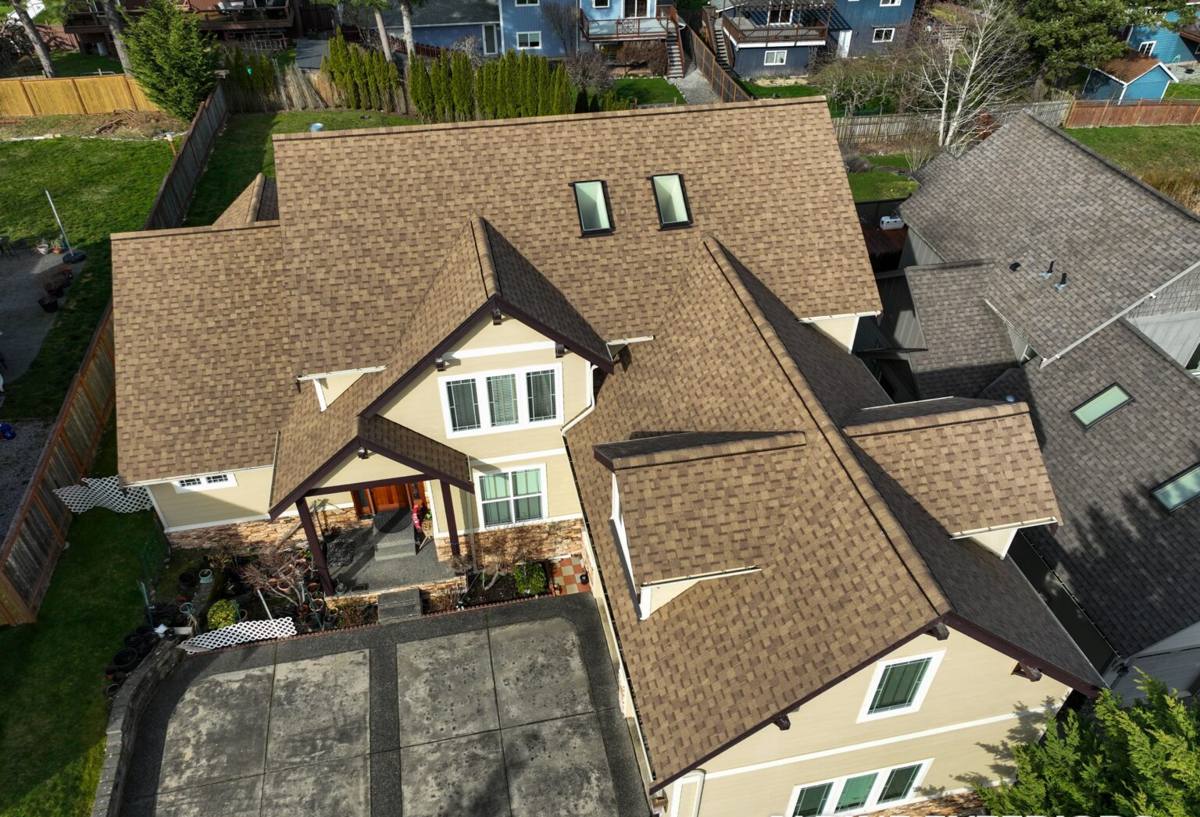
What "Storm Damage" Actually Looks Like Here
When we get called out after a windstorm or a heavy rain event in the Bellingham area, the damage usually falls into a handful of categories. Recognizing which one you're dealing with matters, because it changes both the urgency and the correct fix.
Wind-Lifted or Torn Shingles
Sustained wind off the water can work under shingle tabs that have already lost some of their sealant bond, especially on older roofs. Once a few tabs lift, the ones around them are exposed to wind uplift they weren't designed to handle alone, and the damage spreads outward from the original weak point.
Moss-Driven Rot and Granule Loss
Long moss season isn't just cosmetic. Moss holds moisture directly against the roofing surface for weeks at a time, which accelerates granule loss on asphalt shingles and can lead to soft, rotting sheathing underneath if it's gone unaddressed for a few seasons. A storm often just finishes the job moss started.
Flashing and Fastener Failure
Salt air is hard on exposed metal — flashing around chimneys, vent boots, and roof-to-wall transitions. Corroded or loosened flashing is one of the most common sources of "mystery leaks" that only show up during driving rain, because that's the only time water is being pushed sideways into a gap that's dry the rest of the time.
Debris and Impact Damage
Branch strikes and wind-blown debris cause more localized, obvious damage — punctures, cracked shingles, dented flashing — that's usually easier to diagnose but still needs to be checked against the surrounding roof for related wear.
What a Correct Repair Actually Involves
A storm damage repair done right is more than swapping out the shingles that are visibly missing or cracked. Here's what we check on every repair call, regardless of how small the visible damage looks.
Full-Slope Inspection, Not Just the Damaged Spot
We look at the entire slope the damage occurred on, plus adjacent slopes and valleys. Wind and water damage rarely stay confined to one shingle — if the storm was strong enough to cause the damage you called about, it was strong enough to stress everything around it too.
Underlayment and Decking Check
If water has been getting in for any length of time, we check the underlayment and the wood decking underneath for soft spots or delamination before we close anything back up. Reshingling over damp or rotting decking is a repair that looks fine for a season and then fails again.
Matching Materials, Not Just Compatible Ones
Where possible we match existing shingle profile, color, and weight so the repair doesn't stand out as an obvious patch — and more importantly so the repaired section weathers at the same rate as the rest of the roof. Mismatched granule types can age visibly differently within a year or two.
Flashing Rebuilt, Not Just Resealed
Caulking over failed flashing is a short-term fix. When flashing has corroded or pulled loose, we replace it and re-integrate it properly with the underlayment and shingle courses so water is shed the way the system was designed to shed it, not just sealed shut.
Repair or Replace? How We Help You Decide
Not every storm-damaged roof needs a full replacement, and not every roof that "just needs a patch" is actually a good candidate for one. The honest answer depends on the roof's age, how widespread the damage is, and what condition the decking is in underneath.
| Factor | Leans Toward Repair | Leans Toward Replacement |
|---|---|---|
| Roof age | Under 12–15 years, asphalt shingle | Nearing or past manufacturer's expected service life |
| Extent of damage | Isolated to one slope or feature | Multiple slopes, widespread granule loss |
| Decking condition | Solid, no soft spots found | Soft, delaminated, or rotted sheathing present |
| History of moss/moisture | Recently treated, minimal buildup | Years of untreated moss and trapped moisture |
| Prior repairs | First repair on this roof | Multiple past patches in different areas |
We'll always give you our honest read on which side of that table your roof falls on, and explain the reasoning — not just a number.
Our Process, Start to Finish
Storm damage repair moves faster than a planned project, but that doesn't mean it should be rushed or informal. Here's how we typically handle a call in the Bellingham area.
- Initial assessment: We inspect the roof, document what we find, and give you a straight explanation of what happened and what it will take to fix it.
- Temporary protection: If there's active water intrusion, we get the roof weathertight first — tarping or temporary sealing — before scheduling the permanent repair.
- Repair plan and estimate: You get a clear scope of work and cost range in writing before anything is finalized.
- The repair itself: Matching materials, proper flashing integration, and a check of the surrounding roof area, not just the original damage point.
- Final walkthrough: We show you what was done and flag anything else worth keeping an eye on, even if it doesn't need attention yet.
Insurance Claims: What to Know Before You Call Your Adjuster
Many storm damage repairs in this area go through homeowner's insurance, and a few basics make that process go smoother. Document the damage with photos as soon as it's safe to do so, and avoid making permanent repairs before the adjuster has seen the damage if you can safely delay — temporary protection to stop further water intrusion is different from a full repair and is generally fine to do right away.
We're happy to provide a written inspection report you can hand to your insurance company describing what we found and what repair it requires. We don't handle the claim itself, but a clear, honest scope of work from a local contractor tends to move claims along faster than a vague description.
Preventing the Next Storm From Doing the Same Damage
Once a repair is done, a little seasonal attention goes a long way toward keeping the next windstorm or moss season from causing a repeat call. This is the same checklist we walk homeowners through after a repair.
- Clear moss buildup before it accumulates for multiple seasons, not after it's already thick and holding moisture
- Check and clean gutters before the fall rains start, so water isn't backing up under the roof edge
- Have flashing around chimneys and vents inspected every couple of years — it's the first thing salt air degrades
- Trim back branches that overhang the roofline, especially ones that could reach the roof in high wind
- After any significant windstorm, do a visual check from the ground for lifted or missing shingles rather than waiting for a leak to show up inside
Why Local Experience in Bellingham and Whatcom County Matters
A roofer who mostly works drier inland climates will diagnose this kind of damage differently than a crew that works Bellingham and Ferndale roofs regularly. We know which flashing details tend to fail first in salt air, how long moss typically takes to become a structural problem versus a cosmetic one in this climate, and which shingle products actually hold up to the wind exposure this area sees off the water. That local pattern recognition is the difference between a repair that solves the problem and one that just buys you a season.
If you've got storm damage, a suspicious leak, or just want a second opinion on a repair another company quoted, we're glad to take a look. Fill out the form below for a free, no-pressure estimate — we'll tell you honestly whether it's a repair or something bigger, and why.