 Ferndale
 Roofing on an Island in the Salish Sea
Lummi Island sits out in the water with nothing between it and the weather. That's part of the appeal of living there, but it also means the roof over your head works harder than a roof in town. Salt-laden air moves off the water and settles on every exposed surface, wind-driven rain gets pushed sideways into flashing and fascia that a sheltered roof would never see, and the shade from evergreens combined with damp air gives moss months at a time to get established. A roof that would last two comfortable decades in a drier, more sheltered part of Whatcom County can show real wear on Lummi Island well before that, if it wasn't built for these conditions in the first place.
We replace roofs on Lummi Island as part of our regular service area out of Ferndale, and the approach we use here is shaped by what actually fails on island homes: fasteners and flashing that corrode faster near salt air, underlayment that's asked to do more work because wind-driven rain finds every gap, and moss that isn't just cosmetic — it lifts shingles and holds moisture against the roof deck. This page is about what a roof replacement should include on Lummi Island specifically, not a generic overview of roofing.
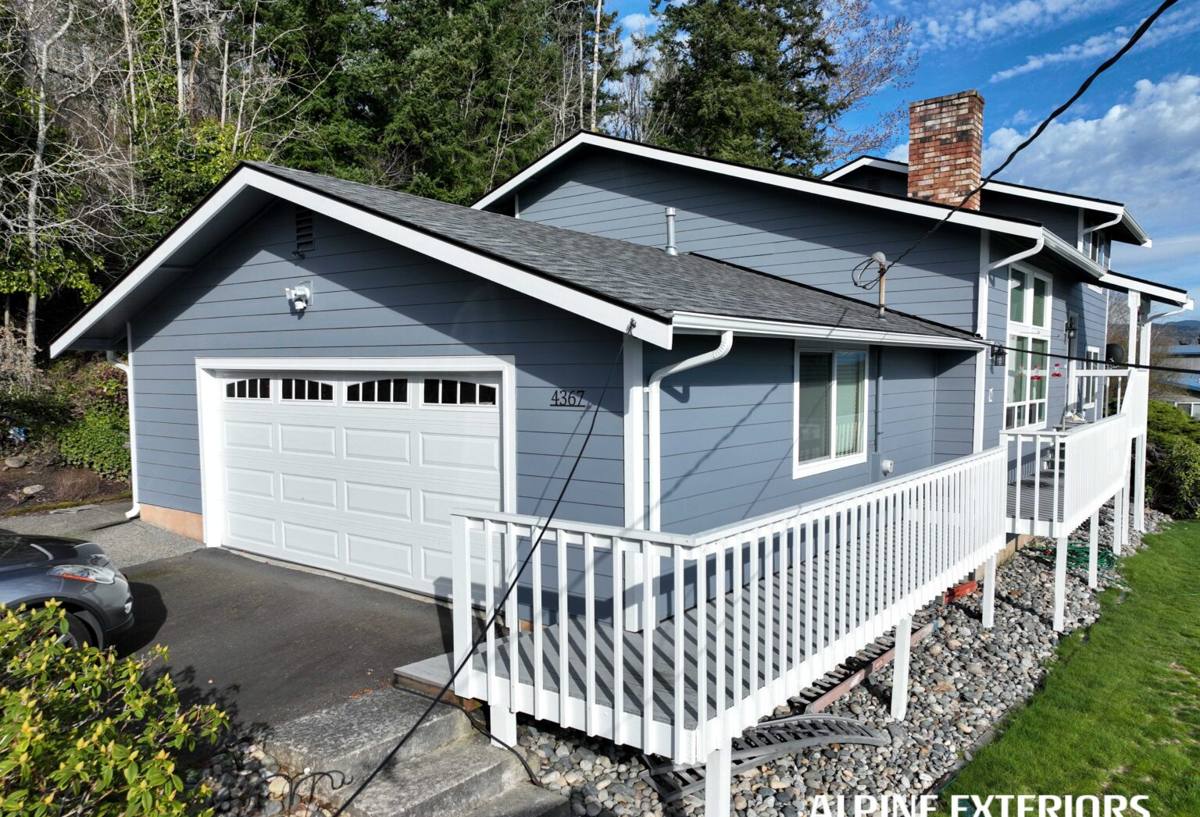
Signs a Lummi Island Roof Is Due for Replacement
What you can see from the ground or the attic
Most roofs give warning before they leak. On the island, we typically see these signs a little earlier than we would on a mainland roof of the same age, because of the added exposure to salt air and moisture.
- Granules collecting in gutters or at downspout outlets, indicating the shingle surface is wearing thin
- Shingles that are curling, cupping, or have lifted edges — often on the windward side facing the water
- Moss or algae streaking that keeps returning within a season or two of cleaning
- Rusted or corroded fasteners, flashing, or vent caps visible from the ground
- Soft spots, sagging, or visible deflection along the roofline
- Daylight visible through the roof deck from inside the attic
- Water stains on interior ceilings, especially near chimneys, skylights, or wall-roof intersections
- Higher heating bills, which can point to a compromised or wet insulation layer under a failing roof
Any one of these on its own doesn't automatically mean full replacement — some are repairable. But when several show up together, or when a roof is already past its expected service life, patching starts to cost more over time than doing the job right once.
Why island exposure accelerates the timeline
Salt air is mildly corrosive to metal, full stop. Nail heads, drip edge, step flashing, and vent flashing are all metal, and on a roof facing open water they take on that exposure every day, not just during storms. Combined with the moisture that driving rain pushes under shingle edges and into laps that would stay dry on a more sheltered roof, the flashing details are usually the first thing to fail — often years before the shingle field itself is actually worn out. That's why a proper island roof replacement puts as much attention into flashing material and detailing as it does into the shingles themselves.
What a Correct Roof Replacement Involves Here
Full tear-off and deck inspection
We don't recommend roofing over an existing layer on Lummi Island. A second layer traps moisture against the old roofing, hides deck damage, and voids most manufacturer warranties outright. A full tear-off lets us see the actual condition of the roof deck — sheathing that's been holding moisture under an old roof for years often needs partial or full replacement before new material goes down, and that's not something you can responsibly guess at from the outside.
Underlayment built for wind-driven rain
Standard felt underlayment is fine in a lot of the country. On an island roof catching rain that's being pushed sideways by wind off the water, we lean toward synthetic underlayment with taped or sealed seams, plus self-adhered ice-and-water membrane at the eaves, valleys, and any roof-to-wall intersection — the places wind-driven rain actually finds its way in. This is a small material cost difference and a meaningful difference in how the roof performs during the wet months.
Flashing that won't corrode out first
Because flashing is usually the first failure point on a salt-air roof, we use corrosion-resistant flashing metals and fasteners rather than the cheapest available option, and we pay close attention to step flashing at walls and chimneys, valley flashing, and vent boot flashing — all points where a small gap becomes a real leak over a few winters.
Ventilation that matches the house
A roof deck that can't breathe holds moisture, and holding moisture is exactly what accelerates rot, moss growth, and shingle failure from underneath. Balanced intake and exhaust ventilation — soffit vents paired with ridge or roof vents sized correctly for the attic space — is part of doing this job right, not an upsell.
Material Choices for Lummi Island Conditions
There's no single "best" roofing material for every home — it depends on your roof's exposure, your budget, and how the house is built. Here's how the common options compare for island conditions specifically.
| Material | Salt air / corrosion behavior | Moss resistance | Typical lifespan here |
|---|---|---|---|
| Architectural asphalt shingle | Good with corrosion-resistant fasteners and flashing | Moderate; benefits from algae-resistant granules | 20–25 years |
| Standing seam metal | Excellent when properly coated and fastened | Very good — sheds moss more easily due to slick surface | 40+ years |
| Composite / synthetic shake | Good; doesn't rust, but check fastener spec | Good | 30–40 years |
| Cedar shake | Requires more upkeep in humid, shaded conditions | Poor without regular treatment; holds moisture | 20–30 years with maintenance |
We don't push cedar shake on shaded, damp Lummi Island lots as a first recommendation. It's a real, attractive product, but it needs consistent maintenance to resist moss and moisture in exactly the conditions the island provides year-round, and that upkeep burden is worth knowing about upfront rather than discovering after the fact. If you already have cedar and want to keep the look, we'll talk through what that maintenance commitment actually looks like so you can decide with real information.
Cost Factors for an Island Roof Replacement
Every roof is priced on its own specifics, but these are the variables that most affect the final number on Lummi Island jobs.
| Factor | Why it matters here |
|---|---|
| Roof size and pitch | Steeper roofs take longer and need more fall-protection setup |
| Deck condition | Rot or soft sheathing found at tear-off adds material and labor |
| Material selection | Metal and composite cost more upfront than asphalt but need less upkeep |
| Flashing and detail work | Complex rooflines, chimneys, and valleys add labor time |
| Access and logistics | Ferry scheduling and site access can affect delivery and crew timing |
| Ventilation upgrades | Adding or correcting intake/exhaust venting is often done at replacement time |
We'll walk your roof, give you a written scope, and explain exactly what's driving the number before you commit to anything — no pressure, no vague allowances.
Moss: More Than a Cosmetic Problem
Moss season around Ferndale and the islands runs long, and shaded, north-facing, or tree-covered roof sections on Lummi Island can stay damp enough for moss to take hold for much of the year. The problem isn't just how it looks. Moss holds water against the shingle surface, works its way under shingle edges as it grows, and can physically lift shingle tabs over time, which opens the door for water intrusion that wouldn't otherwise happen. A roof replacement is the right time to address moss at the source — proper ventilation to reduce the moisture moss depends on, algae-resistant shingle granules where asphalt is used, and, where the tree cover allows it, recommending some canopy trimming so the roof gets more sun and airflow.
Our Process, Start to Finish
- On-site assessment. We walk the roof and attic, check the deck where accessible, and note flashing, ventilation, and moss conditions specific to your property.
- Written estimate. You get a clear scope of work and price — what's included, what materials, and why, in plain language.
- Scheduling around island logistics. We plan material delivery and crew timing around ferry access so the job isn't held up mid-way.
- Tear-off and deck inspection. Old roofing comes off, the deck gets inspected, and any needed sheathing repair is priced and approved before we cover it up.
- Underlayment, flashing, and ventilation installed correctly. This is the part of the job that determines how the roof performs in wind-driven rain, not just how it looks when it's new.
- Final roofing material installed to manufacturer spec. Correct nailing pattern, exposure, and fastening — the details that keep a warranty valid.
- Cleanup and magnetic sweep. Site cleared of debris and stray fasteners before we call it done.
- Walkthrough. We go over the finished roof with you and answer any questions before we consider the job complete.
Why a Crew That Already Works Lummi Island Matters
A ferry crossing changes how a roofing job needs to be planned. Material deliveries, crew scheduling, and even something as simple as a forgotten tool run all take longer than they would on the mainland, and a crew that hasn't accounted for that ahead of time can end up with a job that drags out over extra days — which on an active tear-off means extra days your roof deck is exposed to Whatcom County weather. We build ferry timing into the schedule from the start, plan deliveries so materials arrive when the crew is ready for them, and treat the exposed-deck window as something to minimize, not something to figure out as we go.
There's also a practical trust factor. Homeowners on the island are often not on-site every hour of a project, whether because of work, travel logistics, or simply not wanting to hover over a job. Working with a crew that has a track record in the area and communicates clearly about progress matters more here than it might for a job you can watch from your kitchen window.
Protecting the Roof After Replacement
A correctly installed roof still benefits from basic upkeep, especially in this climate. A few habits go a long way toward getting the full service life out of a new roof on Lummi Island.
- Clean gutters at least twice a year so water isn't backing up under the eaves
- Have moss growth addressed before it spreads, rather than waiting for a full treatment later
- Trim back tree limbs that shade the roof or drop debris onto it
- Do a visual check after major windstorms for lifted shingles or displaced flashing
- Schedule a roof inspection every few years, even without visible problems, so small issues get caught early
None of this requires a big time commitment, but skipping it is how a well-installed roof ends up needing attention sooner than it should.
Get a Straight Answer on Your Roof
If you're not sure whether your Lummi Island roof needs replacement or just repair, that's a fair question to bring to us before you decide anything. We'll take a look, tell you honestly what we see, and lay out your options with real numbers — no pressure, no exaggerated urgency. Use the form below to request a free estimate and we'll get in touch to schedule a time that works around your island access.