 Ferndale
 Why Birch Bay Roofs Wear Differently Than Inland Roofs
Birch Bay sits close enough to the water that its roofs live a different life than a roof five or ten miles inland in Ferndale. The same asphalt shingle, the same flashing detail, the same underlayment — all of it ages faster out here. It's not one dramatic event that causes most of the roof repair calls we get in Birch Bay. It's the slow, steady combination of salt-laden air, wind-driven rain coming off the water, and a moss season that runs longer than most homeowners expect. A roof repair done without accounting for those three things tends to fail again within a year or two. Done right, it holds.
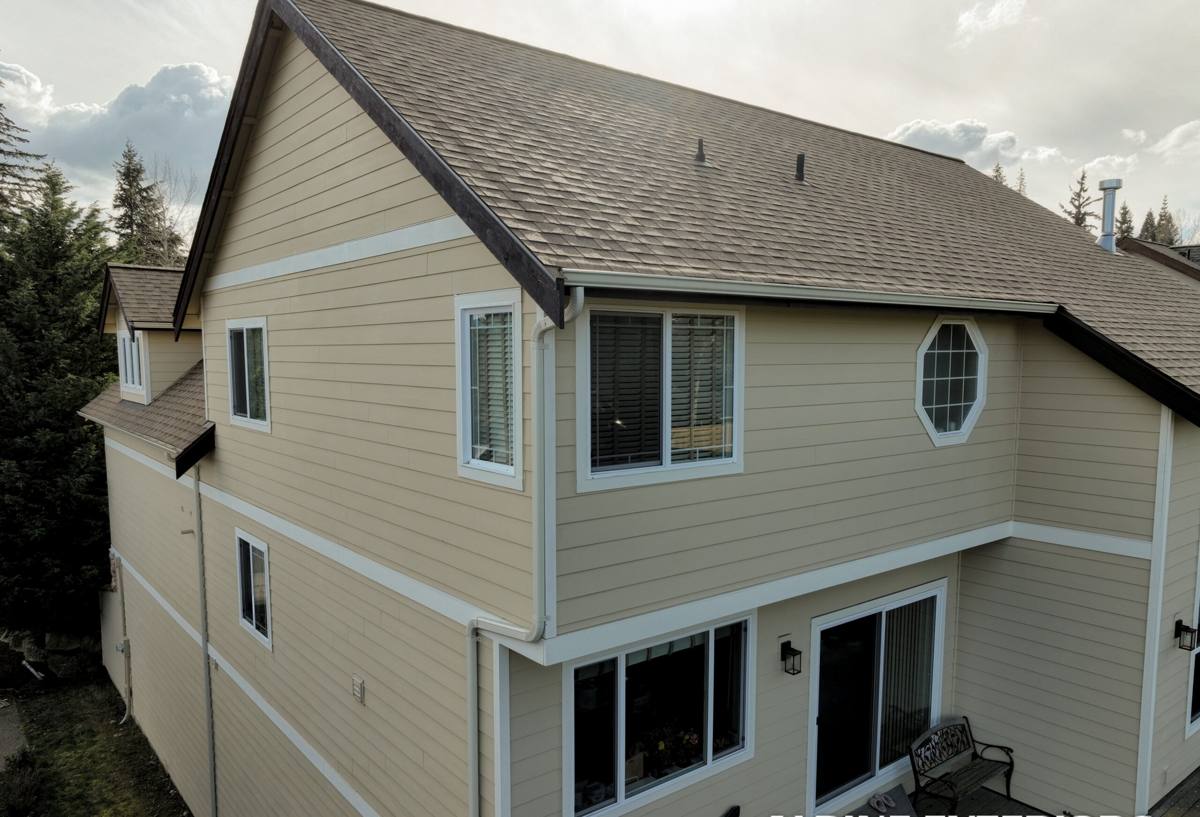
What Salt Air, Rain, and Moss Actually Do to a Roof
Salt Air and Corrosion
Salt in the air doesn't just affect boats and railings. It settles on metal roofing components — nail heads, flashing, drip edge, exposed fasteners on ridge vents and pipe boots — and speeds up corrosion. A fastener that would last decades inland can start rusting, weeping stains down the shingle below it, or backing out of the deck years sooner near the bay. Once a fastener corrodes and loosens, water has a path in, even if the shingle above it looks fine from the ground.
Wind-Driven Rain
Rain that falls straight down is easy for a roof to shed. Rain that's being pushed sideways by wind off open water is a different problem — it finds its way up under shingle edges, into valleys, and around flashing that would otherwise be adequate. This is why so many Birch Bay leaks show up at transitions: chimney flashing, skylight curbs, roof-to-wall junctions where a roof meets a dormer or an add-on. Those are the spots where wind-driven rain tests a roof hardest, and where a repair needs to actually address the flashing, not just caulk over the symptom.
A Long Moss Season
Whatcom County's mild, wet climate keeps roofs damp for long stretches of the year, and Birch Bay's tree cover and shaded north-facing slopes make it worse. Moss doesn't just look bad — it holds moisture directly against the shingle surface, lifts shingle edges as it grows and spreads under the mat, and holds water on the roof deck far longer than a clean surface would. Left alone, a moss-covered slope ages faster than the rest of the roof and starts leaking well before the shingles are otherwise due for replacement.
Signs a Birch Bay Roof Needs Repair
Most roof problems give warning signs before they become an active leak inside the house. Catching them early is almost always cheaper and less disruptive than waiting.
- Granules collecting in gutters or at downspout discharge points
- Dark streaking or thick moss growth on north-facing or shaded slopes
- Curling, cupping, or cracked shingles, especially on the side of the roof facing the water
- Rust staining running down from nail heads, flashing, or vent boots
- Soft or discolored ceiling spots, especially near chimneys, skylights, or where a roofline changes
- Daylight visible through the attic roof deck or soffit area
- Flashing that looks lifted, cracked, or separated from the roof surface
- Cracked or dried-out rubber pipe boots around vent stacks
Any one of these on its own doesn't necessarily mean a full replacement. It usually means it's time for someone to get on the roof and take a real look before the next storm.
What a Proper Roof Repair Actually Involves
Diagnosing the Real Leak Path
Water rarely leaks straight down from where it enters. It can travel along the underlayment or roof deck for several feet before showing up as a stain on a ceiling. A repair that only patches the spot where the stain appears often misses the actual entry point, which is why the same leak sometimes "comes back" after a quick fix. A proper repair starts by tracing the water back to where it's actually getting in — checking flashing, valleys, and shingle courses upslope from the visible damage.
Flashing Details Matter Most
Given how much of Birch Bay's roof damage starts at transitions, flashing work is usually the part of the repair that actually determines whether it holds. That means step flashing at walls and dormers, proper counterflashing at chimneys, correctly lapped valley metal, and pipe boots sized and sealed to shed wind-driven rain rather than just block a straight-down drip. Corroded or undersized flashing gets replaced, not caulked over — caulk is a short-term patch, not a repair.
Matching Materials, Not Just Patching
A repair should blend into the surrounding roof and use materials rated for the coastal exposure, including corrosion-resistant fasteners and flashing where the original installation used standard hardware. A patch that uses mismatched shingles or basic fasteners in a salt-air environment is a repair that's already counting down to its next repair.
Common Birch Bay Roof Repairs
| Issue | Typical Cause Near the Bay | What the Repair Involves |
|---|---|---|
| Leak at chimney or skylight | Corroded or wind-driven-rain-damaged flashing | Remove and replace flashing/counterflashing, reseal correctly |
| Moss-damaged shingles | Extended damp season, shaded roof slopes | Moss removal, damaged shingle replacement, treatment to slow regrowth |
| Rusting nail heads or vent stacks | Salt air corrosion | Replace with corrosion-resistant fasteners and boots, patch surrounding shingles |
| Valley leak | Debris buildup, undersized or aged valley metal | Clear debris, replace valley metal, reset adjoining shingle courses |
| Wind-lifted or missing shingles | Exposed position, storm gusts off the water | Reset or replace shingles, check and reinforce surrounding fastening |
| Soft roof deck sections | Long-term moisture intrusion from an undetected leak | Cut out and replace affected decking before reroofing that section |
Moss Treatment and Prevention
Removing moss is only half the job. Scraping it off a shingle without a follow-up plan just means it grows back within a season or two, especially on shaded slopes in Birch Bay's wetter months. A proper approach removes existing growth carefully — moss should be knocked loose and cleared rather than pressure-washed off, which can strip granules and shorten shingle life — then applies a treatment suited to the roofing material to slow regrowth. Keeping gutters and valleys clear of debris and, where practical, trimming back overhanging branches also cuts down on how much moisture and organic material sits on the roof surface between visits.
Repair or Replace? How We Help You Decide
Not every roof problem in Birch Bay needs a full replacement, and we're not going to tell a homeowner they need one when a targeted repair will genuinely hold. The honest factors we weigh are the age of the roofing material relative to its expected lifespan, how widespread the damage is versus isolated to one area, whether the roof deck underneath is sound, and how many previous repairs have already been done in the same spots. A roof with one bad valley and otherwise healthy shingles is a repair. A roof where moss, corrosion, and wind damage show up across multiple slopes, or where the deck itself has gone soft, is usually past the point where another patch makes financial sense. We'll tell you which situation you're in and why, in plain terms.
Our Roof Repair Process
Inspection and Diagnosis
We get on the roof — not just look from the ground — to trace leaks back to their actual source and check flashing, valleys, and fastener condition across the whole roof, not just the reported problem area.
A Clear, Written Estimate
You get a written scope that explains what's being repaired and why, including any flashing or material upgrades needed for the coastal exposure, before any work starts.
The Repair Itself
We replace what actually needs replacing — flashing, shingles, fasteners, deck sections — using materials suited to Birch Bay's conditions rather than the cheapest match available.
Cleanup and Walkthrough
We clear debris, magnet-sweep for stray fasteners, and walk the completed repair with you so you know exactly what was done.
Why Local Experience in Birch Bay Matters
A roofer who mostly works well inland doesn't always think to swap in corrosion-resistant fasteners, or know which slopes in a bay-adjacent neighborhood hold moss the longest, or recognize wind-driven rain damage patterns at a glance. A crew that already works Birch Bay and the surrounding Whatcom County coastline has seen how these roofs actually fail over time, not just how they're supposed to perform on paper. That local pattern recognition is often the difference between a repair that lasts and one you're calling about again next winter.
If you're noticing granules in the gutters, moss creeping across a slope, or a stain that showed up after the last windstorm, we're happy to take a look. Fill out the form below for a free, no-pressure estimate — we'll tell you honestly whether it's a repair or something bigger.