 Ferndale
 Why Blaine's Climate Wears Out Windows Faster Than Most Places
Blaine sits right on the water, close enough to Semiahmoo Bay and Drayton Harbor that salt-laden air is a daily fact of life, not an occasional event. Add in the driving, wind-pushed rain that comes off the Strait of Georgia and the long gray stretch of fall through spring when moss and algae get a foothold on anything that stays damp, and you have three separate forces working against a window at the same time: corrosion, water intrusion, and organic growth. A window built and installed for a drier inland climate simply doesn't hold up the same way here.
Most of what we see going wrong in Blaine homes isn't the glass itself — it's the frame, the seals, and the flashing detail around the opening. Salt air accelerates corrosion on hardware and lesser-grade metal components. Wind-driven rain finds any gap in the flashing and gets behind the trim, where it sits and rots before anyone notices. And a north-facing or shaded elevation that never fully dries out becomes a moss and mildew magnet, especially on wood trim and older vinyl that's lost its factory finish.
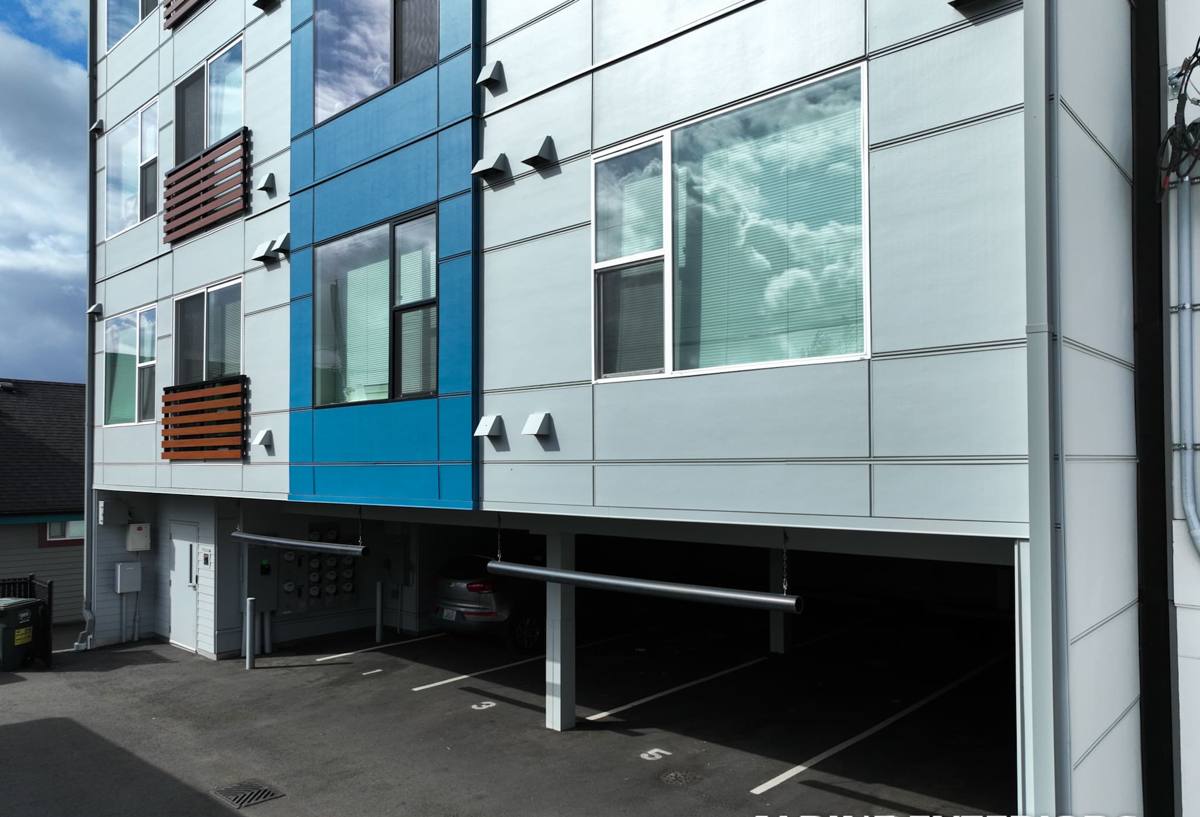
What "Energy-Efficient" Actually Means for a Coastal Whatcom County Home
Energy efficiency in a window isn't one number — it's a combination of ratings, and the right combination depends on which way your house faces and how exposed it is to weather.
U-Factor: How Well the Window Stops Heat Loss
U-factor measures heat transfer through the whole window unit — glass, frame, and spacer. Lower is better. In our marine climate, where winters are mild but damp and heating runs steadily for months, a solid U-factor matters more for comfort and condensation control than for dramatic heating bill swings.
SHGC: Solar Heat Gain Coefficient
This measures how much solar heat passes through the glass. Blaine doesn't get intense summer sun compared to inland climates, so we're less focused on blocking heat gain and more focused on balancing it — enough SHGC to pick up free warmth on clear days without turning a south-facing room into a greenhouse.
Air Leakage and the Marine Layer
A window with a poor air infiltration rating doesn't just waste energy — in a house that sits in near-constant humidity, it also lets in the moist air that feeds condensation on interior surfaces and, over time, mold at the sill. This is one of the most overlooked factors in window selection here, and it's often more important than the headline energy-efficiency number.
Signs Your Current Windows Are Already Costing You
Homeowners often wait until a window is visibly failing before calling anyone. By then, moisture has usually already worked its way into the wall assembly. Watch for these signs:
- Fogging or a permanent haze between the panes (failed seal on a double-pane unit)
- Visible moss, algae, or dark staining on the frame, especially on shaded or north-facing walls
- Soft or discolored trim and sill wood, or paint that keeps bubbling no matter how often it's redone
- Noticeable draft or a cold band of air near the window even when it's fully latched
- Hardware that's corroded, stiff, or won't lock properly — common with salt exposure on older metal components
- Interior condensation that collects on the glass or sill most mornings in fall and winter
- A jump in heating costs without any other explanation
Frame Materials: What Holds Up Near the Water
Every frame material has trade-offs. In a coastal, high-moss environment, some of those trade-offs matter a lot more than they would fifty miles inland.
| Frame Material | Coastal Performance | Maintenance Burden | Best Fit |
|---|---|---|---|
| Vinyl (quality-grade) | Won't corrode; handles moisture well; UV-stable options hold color | Low — occasional cleaning | Most Blaine homes, budget-conscious replacements |
| Fiberglass | Excellent — dimensionally stable in temperature swings, doesn't corrode or rot | Low | Higher-exposure walls, long-term ownership |
| Aluminum | Conducts cold and can pit or corrode near salt air unless properly coated | Moderate to high | Limited use; we recommend it selectively, if at all, for direct waterfront exposure |
| Wood / wood-clad | Beautiful but vulnerable — exterior wood needs consistent upkeep in this moisture load | High | Homeowners committed to regular maintenance, often interior-only wood species |
Our standard recommendation for most Blaine replacements is a quality vinyl or fiberglass unit with a factory-applied finish rated for coastal or marine exposure. We're not against wood or aluminum on principle — they have real advantages in the right application — but we're upfront that both carry a higher maintenance commitment in this specific climate, and we'd rather you know that before you buy than find out three winters in.
Installation Details That Matter More Than the Window Brand
A high-end window installed with a mediocre flashing detail will fail before a mid-grade window installed correctly. This is the part of the job that's invisible once the trim goes back on, which is exactly why it deserves the most attention.
Flashing and Water Management
Every opening needs a continuous drainage path so that any water that does get past the exterior cladding is directed back out, not into the wall cavity. This means correctly lapped flashing tape, a sill pan under the rough opening, and integration with the existing weather-resistive barrier — not just caulk at the trim line.
Sealant Selection and Placement
Caulk is not a substitute for flashing — it's a secondary line of defense, and the wrong sealant in the wrong place can actually trap moisture instead of shedding it. We use sealants rated for the temperature swings and UV exposure our siding sees, applied only where they belong in the water-management sequence.
Fastening and Air Sealing
Proper shimming and fastening keep the frame square so the sash operates and seals correctly for years, not just on install day. Low-expansion foam or backer rod and sealant at the interior gap stops the air leakage that drives both energy loss and interior condensation.
How We Approach an Energy-Efficient Window Job in Blaine
1. On-Site Assessment
We look at each opening individually — sun exposure, wind exposure, existing water damage, and how the current window was flashed. Two windows on the same house can need different solutions depending on which direction they face.
2. Product Selection Based on Exposure, Not Just Budget
We walk through frame material, glass package, and hardware options against what that specific wall actually deals with, so you're not over-buying protection you don't need or under-buying it where you do.
3. Removal and Opening Prep
Old units come out carefully so we can inspect the rough opening and sheathing underneath. If we find rot or prior water damage, we address it before the new window goes in — installing a good window over a compromised opening just hides the problem for another few years.
4. Correct Flashing and Sealing Sequence
This is the step described above, done in the right order every time, regardless of how routine the job looks.
5. Interior and Exterior Finish
Trim, caulking, and touch-up are finished to match the surrounding siding and interior casing, and we walk the job with you before we call it done.
Why Hiring a Crew That Already Works Blaine Matters
A contractor who mostly works drier, inland areas may not think twice about a flashing detail or sealant choice that's perfectly fine there but inadequate for direct salt air and wind-driven rain. We work throughout Ferndale and Whatcom County, including Blaine, and we size up every window job against what this specific coastline does to a house over the years — not against a generic installation manual. That local pattern recognition is often the difference between a window that's still performing well in ten years and one that needs attention again in three.
What Drives Cost on a Blaine Window Project
| Factor | Why It Matters Here |
|---|---|
| Frame material | Fiberglass and higher-grade vinyl cost more up front but reduce long-term maintenance in salt air |
| Number and size of openings | More openings and larger units mean more material and labor, straightforward but worth planning for whole-house vs. phased replacement |
| Condition of the existing opening | Hidden rot or old water damage found during removal adds repair scope before the new window goes in |
| Exposure of the wall | West- and water-facing walls often justify a higher-spec unit than a sheltered elevation |
| Glass package | Upgraded low-E coatings and gas fills add cost but pay back in comfort and condensation control |
We give straightforward, itemized pricing so you can see exactly where the money is going and where you have room to phase the project if the whole house doesn't need to happen at once.
Living With Your New Windows: Maintenance in a Salt-Air, Moss-Prone Climate
Even a well-installed, quality window benefits from a little seasonal attention here:
- Rinse frames and glass periodically to clear salt residue, especially on wind-exposed elevations
- Check and clear weep holes so condensation and rain can drain rather than pool in the frame
- Look at shaded or north-facing units each fall for early moss or algae growth and clean it off before it stains or holds moisture
- Re-caulk or touch up exterior sealant if you notice cracking or gaps, rather than waiting for a leak
- Operate locking hardware a few times a season so it doesn't seize up from disuse and moisture
If you're weighing whether it's time to replace aging windows or want a second opinion on a quote you've already received, we're happy to take a look and give you a straight answer. Reach out for a free, no-pressure estimate using the form below, and we'll walk the house with you before recommending anything.