 Ferndale
 New-Construction Windows in Blaine — Why the Local Climate Changes the Job
Blaine sits right on the water, at the northern edge of Whatcom County where the Strait of Georgia meets the mainland. That location is part of what makes it a great place to build, and part of what makes the window install harder to get right. Salt-laden air off the water, wind-driven rain that comes in sideways during winter storms, and long stretches of damp, shaded weather that keep moss growing on north walls year-round all put more stress on a window opening than you'd see on a build fifty miles inland. We're a Ferndale-based crew that works new construction across Whatcom County, including Blaine, so this isn't theoretical for us — it's the site condition we plan around on every job out there.
New-construction window installation is a different trade than swapping out an old window in an existing wall. It happens earlier in the build, it's tied directly into the weather-resistive barrier and framing, and mistakes made here don't show up as a drafty room — they show up two or three winters later as rot inside a wall that looked fine from outside. Getting it right the first time matters more here than almost anywhere else in the county.
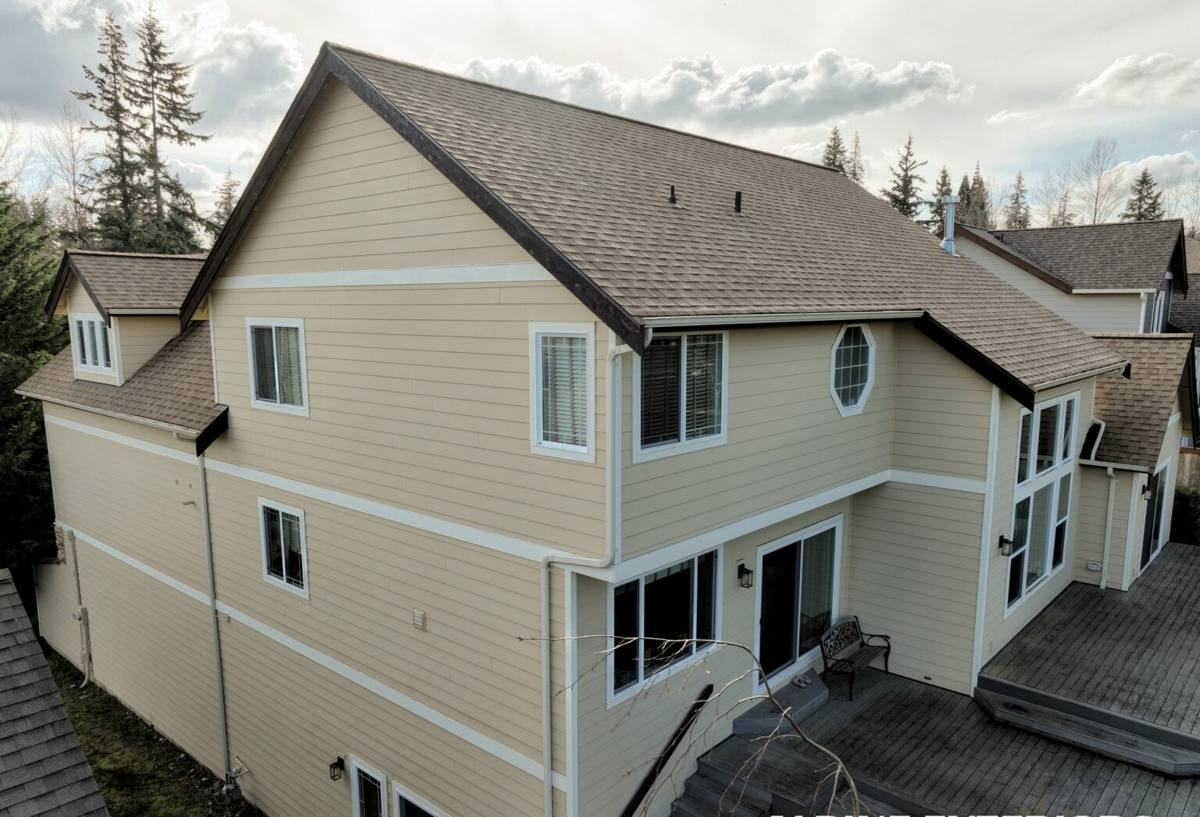
What "New Construction" Actually Means for Window Installation
New Construction vs. Replacement
A new-construction window has a nailing fin (sometimes called a nail fin) around its perimeter. That fin gets fastened directly to the wall sheathing before the siding goes on, and it becomes part of the wall's water-management system, working together with the weather-resistive barrier (WRB) and flashing tape. A replacement or retrofit window, by contrast, gets set into an existing opening without disturbing the exterior finish — it relies on the old frame and trim for weatherproofing instead of tying into the wall assembly itself. The two jobs use different products, different sequencing, and different skills. New construction gives you one real shot at building the water-management detail correctly, because once the siding closes it up, that flashing is buried.
Why Install Sequence Matters More Than the Window Itself
A high-end window installed out of sequence will leak. A mid-grade window installed in the correct order — sill pan first, WRB lapped over the flanges shingle-style, tape run in the right direction so every layer sheds water downhill onto the layer below it — will perform for decades. On a coastal site like Blaine, where wind pressure pushes rain into gaps that would stay dry on a calmer inland lot, sequence is the difference between a window opening that sheds water and one that slowly feeds it into the wall cavity.
What Blaine's Climate Demands From a New-Construction Window Install
Salt Air and Corrosion
Airborne salt accelerates corrosion on fasteners, flashing metal, and hardware — especially on homes with direct exposure toward the water. On these builds we pay attention to fastener and flashing metal compatibility so we're not creating galvanic corrosion between dissimilar metals, and we lean toward hardware and finishes with better corrosion resistance on exposed elevations. It's a small detail that's easy to skip and expensive to fix once it's behind the siding.
Wind-Driven Rain
Storms coming off the Strait of Georgia don't just drop rain straight down — they drive it sideways into the wall. That kind of exposure finds every shortcut in a window install: a missing sill pan, tape run in the wrong lap order, a bead of caulk asked to do the job that proper flashing should be doing. On exposed elevations in Blaine, we treat the sill pan, head flashing, and WRB integration as non-negotiable, not optional upgrades.
Moss, Shade, and Persistent Dampness
Moss doesn't attack a window directly, but it's a good indicator of how long a wall assembly stays wet — north- and west-facing walls in shaded, low-airflow spots hold moisture longer through Whatcom County's long gray season. That means any weakness in the drainage plane or flashing detail has more time to do damage before it dries out again. On a site with heavy moss growth, correct flashing and a properly lapped WRB aren't just best practice — they're what keeps a small installation gap from turning into a slow leak nobody notices until the siding or trim starts to fail.
Choosing the Right Window Material for a Blaine New Build
We don't push one brand or material on every job. The right choice depends on the home's exposure, the budget, and how much upkeep the owner wants to take on. Here's how the common options actually compare for a coastal Whatcom County build, in plain terms:
| Material | Coastal/Moisture Behavior | Upkeep | Typical Fit |
|---|---|---|---|
| Vinyl | Won't rot or corrode; performs well in salt air | Low — no painting or sealing needed | Most Blaine new builds; strong value for the exposure |
| Fiberglass | Very stable in wet, temperature-swinging coastal conditions | Low | Larger openings or homes wanting a narrower-frame look, higher budget |
| Wood-clad (exterior-clad) | Good if the cladding and flashing details are done correctly; interior wood needs the exterior to stay sealed | Moderate — depends on clad material and sealant maintenance | Homeowners who want a wood interior look and are willing to maintain it |
| Aluminum | Conducts cold and can corrode without a marine-grade finish | Moderate to high near salt air | Generally not our first recommendation on direct-exposure elevations here |
None of these is automatically wrong — the point is matching the material's real-world moisture behavior to the specific wall it's going into, not defaulting to whatever's cheapest or whatever a catalog features first.
Energy Performance and Code for Whatcom County New Construction
Washington's state energy code sets minimum performance requirements for new-construction windows, and those numbers get checked at inspection — this isn't optional paperwork, it's part of getting the certificate of occupancy. In our marine climate, air-sealing and water management matter at least as much as solar heat gain; Blaine doesn't get the intense summer sun that drives glazing choices in hotter parts of the state, so the bigger performance question is usually how tight and how well-sealed the installed unit is, not how much heat it blocks. Bedroom windows also have to meet egress size and sill-height requirements, which is worth confirming during the design phase, not after framing is already up. We coordinate window selection with these requirements up front so nothing gets flagged at inspection.
Our New-Construction Window Process on Blaine Jobs
The process itself isn't unusual — the discipline in following it on every single opening, on every elevation, is what actually protects the house. Here's the sequence we follow:
- Verify rough openings are square, correctly sized, and the sheathing and WRB are in good condition before any window shows up on site.
- Install a sloped sill pan flashing at the base of the opening so any water that gets past the window drains back outward, not into the wall.
- Set the window plumb, level, and square, and fasten it per the manufacturer's schedule — shimming as needed so the frame isn't racked or bowed.
- Integrate the nailing fin with the WRB in the correct shingle-lap order: sides first, then the head flashing lapped over the top of the side flanges, so water always sheds down and out.
- Seal and back-rod the interior and exterior per the window manufacturer's installation instructions — not generic caulk-and-hope.
- Do a final check of operation, weep holes, and drainage before the siding crew closes the wall up.
Coordinating with Builders and Other Trades
On a new build, window installation sits in the middle of the schedule — framing and WRB have to be ready before we start, and siding, trim, and interior finish are all waiting on us to finish correctly. In Blaine specifically, we also try to avoid setting windows during the wettest stretches of the winter when it's harder to keep an open wall dry, and we coordinate closely with the general contractor on inspection timing so the flashing and WRB integration can be verified before it's covered up. Working the same coastal jobs repeatedly means we already know which local inspectors want to see what, and we plan for it instead of guessing.
Why a Ferndale Crew That Already Works Blaine Matters
Anyone can install a window on a calm, dry day. The real test is how it performs during a January wind-driven rainstorm off the water three years later. A crew that regularly works Blaine's coastal exposure has already seen where standard details fall short on this kind of site, and adjusts for it — heavier attention to sill pans and head flashing on water-facing elevations, corrosion-aware fastener choices, and no shortcuts on WRB lap order just because a wall "probably" won't see much weather. Being based in Ferndale also means we're not driving in from out of the area for callbacks or punch-list items — we're already working this part of the county.
If you're vetting a contractor for new-construction window work anywhere near the water, here's a short list worth going through before you sign anything:
- Ask to see the sill pan and flashing detail before the window is set, not just the finished exterior.
- Confirm they're licensed and bonded to work in Washington, and ask for references from other coastal or waterfront builds.
- Ask specifically how they sequence the WRB, tape, and flashing — a confident, specific answer is a good sign; a vague one isn't.
- Check that window sizing and glazing meet Washington State Energy Code and egress requirements before the order is placed, not after.
- Ask how fastener and flashing metals are chosen for corrosion resistance on exposed elevations.
If you're building in Blaine and want a straight answer on what a correct new-construction window install looks like for your lot's exposure, we're happy to walk the plans with you. Reach out for a free, no-pressure estimate using the form below.