 Ferndale
 Composite Decking in Custer: Built for What This Corner of Whatcom County Throws at It
Custer sits close enough to the water and open farmland north of Ferndale that decks here take a different kind of beating than decks twenty miles inland. You get salt-laden air rolling in off the bay, long stretches of driving rain through fall and winter, and a moss season that seems to start earlier and last longer every year. A deck that's just "good lumber, nailed down right" in Spokane or even Bellingham proper doesn't always hold up the same way out here. Composite decking, installed correctly for this specific environment, is one of the few systems that shrugs off all three problems at once instead of fighting a losing battle against one of them.
This page is about composite decking specifically for Custer homes — what the local climate demands, what a correct installation actually involves, and why the details matter more here than they would somewhere drier and further from the water.
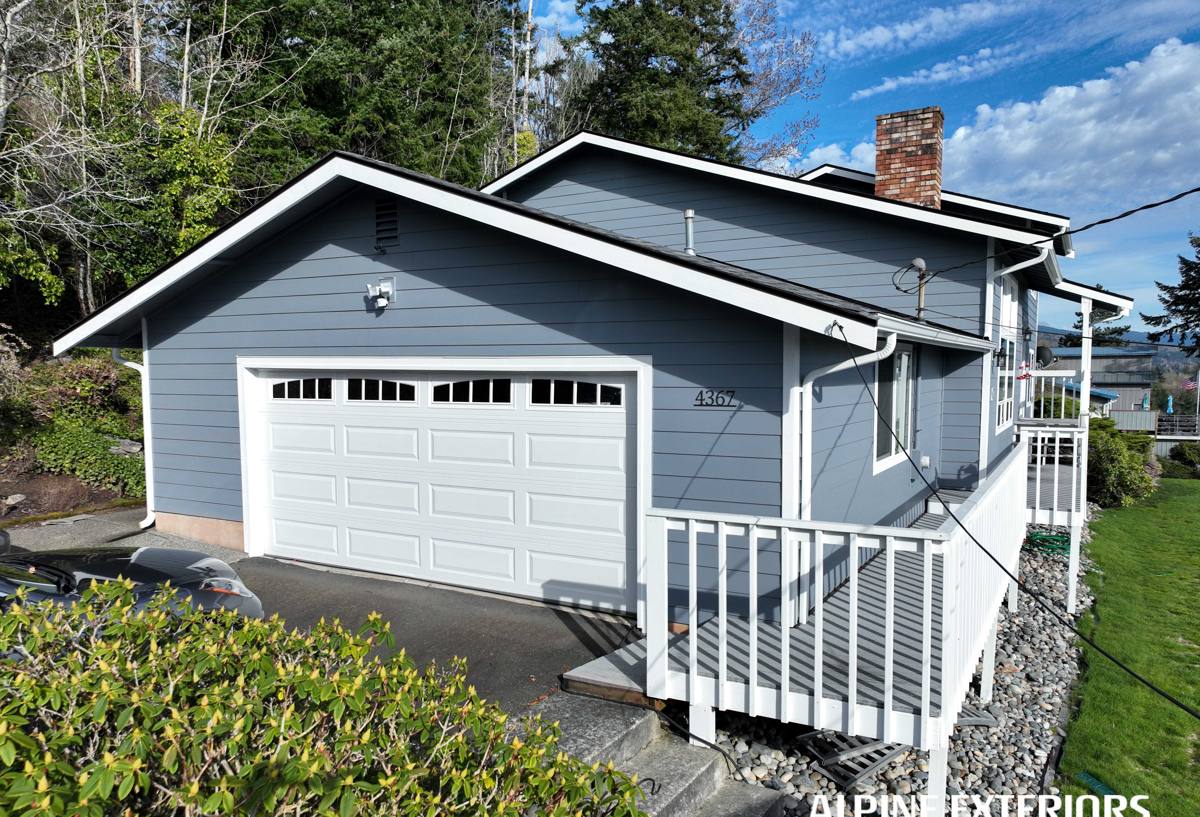
What Custer's Climate Actually Does to a Deck
Salt Air
Proximity to marine air means metal fasteners, brackets, and hardware corrode faster than they would inland. Untreated or low-grade fasteners can start staining and weakening within a few seasons. This matters more for composite decking than most homeowners expect, because the boards themselves may be nearly maintenance-free, but the hidden hardware holding them down isn't automatically immune just because the decking is.
Driving Rain
Whatcom County's rain doesn't just fall straight down — wind-driven rain gets pushed sideways under railings, into board gaps, and against ledger boards where the deck meets the house. Water finds the weak point. If flashing, ledger attachment, or board spacing is done wrong, that's where rot and hidden damage start, composite decking or not.
Moss and Sustained Dampness
Long, cool, wet stretches without much drying sun are exactly what moss and algae need to get established. On traditional wood decking, that moss holds moisture against the board surface, which accelerates rot underneath a surface that still looks fine on top. Composite decking doesn't feed moss the way wood does, but it isn't moss-proof either — the surface texture, drainage underneath, and how the deck is oriented to sun and airflow all affect how much you'll be dealing with over the years.
Why Composite Makes Sense for This Specific Area
We install a range of decking materials across our service area, and we're honest about trade-offs rather than pushing one product on everyone. But for Custer specifically — given the salt exposure, rain volume, and moss pressure — composite has real, practical advantages:
- No annual staining or sealing to keep water out, which matters when the wet season is long and dry windows for maintenance are short
- Consistent moisture resistance across the board, not dependent on a coating that wears thin at high-traffic spots
- Won't splinter, cup, or check the way lumber does after repeated wet-dry cycling
- Color and surface texture engineered to resist mold and algae growth better than bare wood fiber
- Manufacturer warranties (typically 25-50 years depending on the product line) that cover fading, staining, and structural performance — something wood decking simply doesn't offer
The trade-off is upfront cost and the fact that composite is less forgiving of poor substructure work — it won't "breathe" or dry out mistakes the way wood sometimes can. That's exactly why the installation details below matter as much as the material choice itself.
What a Correct Composite Deck Installation Involves Here
Substructure First
Composite boards are only as good as what's underneath them. In a high-moisture area like Custer, we pay particular attention to joist spacing (often tighter than the manufacturer's bare minimum, especially for boards installed at an angle or in high-traffic areas), proper ventilation underneath the deck so trapped moisture has somewhere to go, and pressure-treated or otherwise moisture-resistant framing lumber throughout.
Ledger and Flashing
Where the deck attaches to the house is the single most common failure point we see on older decks in this area, composite or wood. Correct flashing — installed so water sheds away from the house rather than behind the ledger board — is non-negotiable given how much wind-driven rain this area gets.
Fastening Hardware
Given the salt air, we use corrosion-resistant, coated or stainless fasteners and hidden fastener systems rated for coastal or marine-adjacent exposure. This is a small line-item cost that prevents a much bigger problem five or ten years down the road — rusting hardware that stains the decking and eventually loosens.
Drainage and Grading
Proper slope away from the house and clear paths for water to exit under the deck reduce the standing moisture that feeds moss and mildew. On lower or shaded lots, this sometimes means adjusting the substructure height or adding drainage details that a standard install would skip.
Board Spacing and Airflow
Composite boards need consistent gapping for expansion, drainage, and airflow. Too tight, and water and debris get trapped between boards, which is exactly the damp, dark condition moss prefers. Too loose, and the deck feels sloppy underfoot and collects debris. We set spacing based on the specific product's expansion rating and the deck's sun/shade exposure.
Comparing Decking Approaches for Custer Homes
| Factor | Composite Decking | Pressure-Treated Wood | Cedar |
|---|---|---|---|
| Maintenance in this climate | Low — occasional wash-off, no sealing required | High — annual sealing/staining to fight rot and moss | Moderate-high — periodic sealing, more prone to graying and splitting |
| Moss/algae resistance | Good, especially with textured/capped boards | Poor without regular treatment | Fair, but softens with age |
| Salt air / hardware corrosion risk | Low if marine-grade fasteners are used | Moderate — same fastener concerns apply | Moderate |
| Upfront cost | Higher | Lowest | Mid-range |
| Typical warranty | 25-50 years (material) | Limited, treatment-dependent | Limited or none |
| Feel underfoot | Consistent, some products run warmer in direct sun | Natural but variable with wear | Natural, softens with age |
None of these is universally "best" — it depends on budget, how much upkeep you want to do, and how exposed the deck's location is. We'll walk through the honest trade-offs for your specific lot during an estimate rather than assume composite is automatically right for every situation.
Our Process for a Custer Composite Deck Project
- On-site assessment — we look at sun/shade exposure, drainage patterns, proximity to salt air, existing substructure condition if this is a rebuild, and how the deck ties into the house
- Material and layout discussion — board style, color, railing system, and layout, with honest pros and cons for your specific site conditions
- Written estimate — clear scope, materials, and price before any work starts
- Substructure build or repair — framing, ledger flashing, joist spacing, and drainage details set up correctly the first time
- Composite installation — board fastening, spacing, and finishing with hardware rated for this area's exposure
- Final walkthrough — we go over care basics (there isn't much) and answer any questions before we consider the job done
Signs Your Current Deck Might Need Attention
- Soft, spongy spots underfoot, especially near the house or stair stringers
- Persistent moss or dark staining that comes back within weeks of cleaning
- Rust streaks running from fastener heads or brackets
- Gaps or separation where the deck meets the house siding or ledger board
- Boards that stay damp long after the rest of the yard has dried out
- Railings that feel loose or have visible fastener corrosion
Any of these can point to a substructure or moisture problem that's worth addressing before it spreads — sometimes that means a repair, sometimes it means the deck has reached the point where a full rebuild in composite makes more sense than patching wood indefinitely.
Why Hire a Crew That Already Works This Area
Decking crews that mostly work drier, inland areas sometimes under-build for what Custer's combination of salt exposure, rain volume, and moss pressure actually requires — because in their usual conditions, it simply isn't necessary. We work siding and exterior projects throughout Ferndale and the surrounding Whatcom County communities, including Custer, so the fastener grade, flashing details, and drainage planning described above aren't upsells — they're just what holds up out here. Getting those details right the first time is a lot cheaper than fixing a deck that failed early because it was built to a generic spec.
Get a Straightforward Estimate
If you're weighing composite decking for a home in Custer — whether it's a new deck, a replacement for an aging wood deck, or a repair that's turned into "maybe it's time to just redo it" — we're happy to come take a look and give you a clear, no-pressure estimate. Use the form below to get started.