 Ferndale
 Decks in the Cordata Area Wear Differently Than Decks Inland
If you own a home in or near Cordata, you already know the weather here isn't like the weather thirty miles east. Whatcom County sits close enough to the water that homes catch salt-laden air, long stretches of driving rain off the Sound, and a moss season that can run from October clear through April. A deck built the same way you'd build one in Spokane or Yakima will not hold up the same way out here — the wood, the fasteners, and even the gaps between boards all need to be sized for constant moisture, not occasional moisture.
That's the core problem we see on repair calls in this area: decks that were built correctly for a drier climate, or built to a builder-grade spec that assumed a few rainy weeks a year instead of a few rainy months. The lumber is fine. The layout is fine. But the details that keep water moving instead of pooling were never quite right, and after a few winters that catches up with the structure.
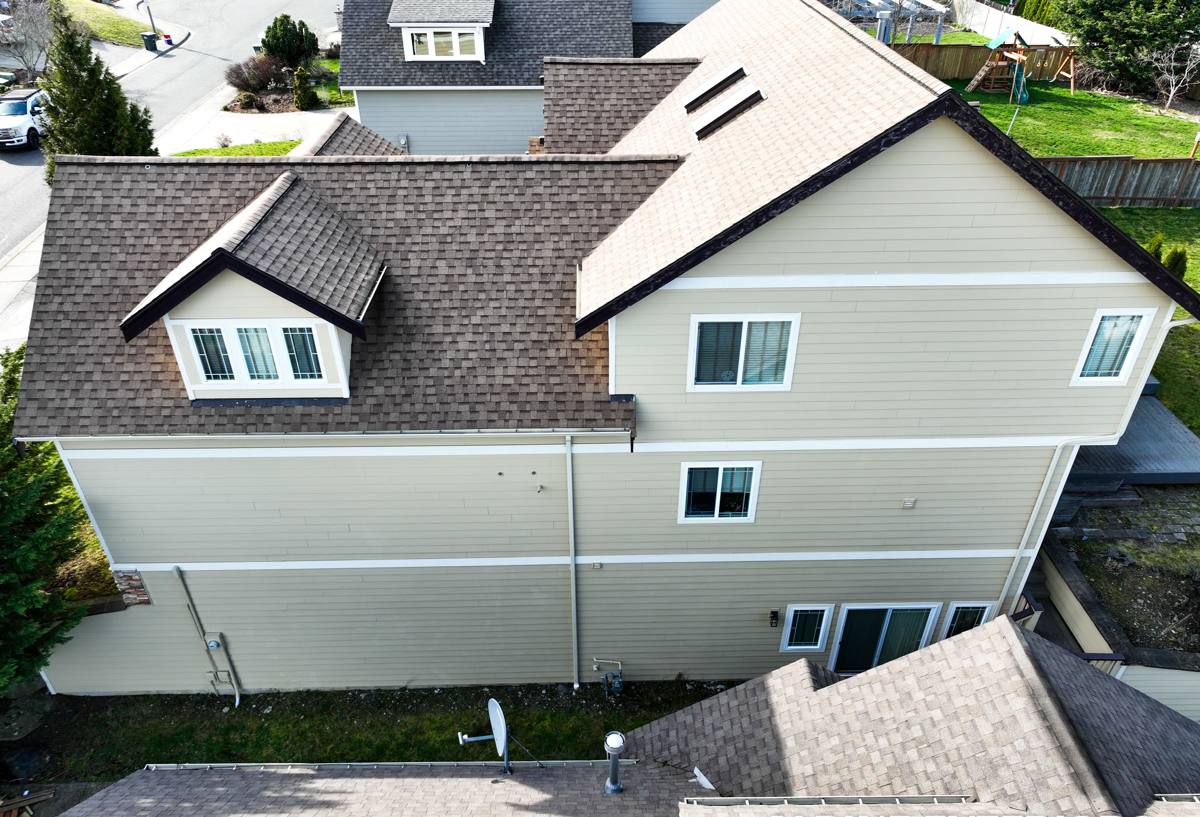
How the Local Climate Actually Attacks a Deck
Constant Moisture, Not Just Rain
The bigger issue isn't the rain itself — it's how long things stay wet afterward. Overcast, humid stretches mean a deck board that gets soaked on a Tuesday might not fully dry out until the following week. Wood that stays damp for days at a time is exactly the environment rot fungi need to take hold, especially where boards touch joists, where fasteners penetrate the wood, and anywhere debris collects and holds water against the surface.
Moss and Organic Growth
Moss doesn't just look bad — it holds moisture directly against the decking surface and, on stairs and ramps, turns into a genuine slip hazard. Left alone through a full wet season, a mossy deck surface stays saturated far longer than a clean one, which accelerates surface wear and can start softening boards from the top down, not just from underneath.
Salt Air and Metal Fasteners
Homes closer to the water deal with an added factor: airborne salt accelerates corrosion on lower-grade screws, nails, and joist hardware. Once a fastener starts rusting, it loses holding strength and can stain the wood around it, which is often the first visible sign that something underneath needs a closer look.
Signs Your Deck Needs Repair — Not Replacement
Most decks we're called out to don't need to be torn out and rebuilt. They need targeted repair to the parts that actually failed, while the sound structure around them stays in place. Here's what tells us which category a deck falls into:
- Soft or spongy spots underfoot on specific boards, rather than the whole deck
- Rust streaks bleeding out from screw heads or nail holes
- A railing that flexes or wiggles when you lean on it
- Gaps opening up where the deck meets the house (ledger board area)
- Stair stringers that feel bouncy or uneven compared to when the deck was new
- Green or black staining that doesn't wash off with a deck cleaner
- Visible daylight or gapping between boards that used to sit tight
If most of what you're seeing is isolated to a handful of boards, a railing section, or the stairs, repair is usually the right call. Full replacement becomes the honest recommendation when the framing itself — the joists, beams, or ledger connection — has been compromised, because no amount of surface repair fixes a structural problem underneath.
What a Correct Deck Repair Actually Involves
Start With the Structure, Not the Surface
A repair that only replaces the boards you can see, without checking what's underneath, is a repair that gets redone in two or three years. We check the ledger board connection to the house first, since that's the single point holding the deck to the structure and the place most prone to hidden rot from years of water running down the siding behind it. We also check joist hangers and the joists themselves for soft wood, since surface boards can look fine while sitting on framing that's already failing.
Decking Surface and Fasteners
Once the framing is confirmed sound, we replace individual boards where needed, matching spacing and fastening so the repair doesn't stand out as a patch job. Fastener choice matters more here than in drier regions — stainless or high-grade coated deck screws hold up far better against corrosion than standard exterior screws, and we won't cut that corner even though it costs a bit more up front.
Rails, Stairs, and Guard Posts
Railings and stair stringers take a different kind of abuse — repeated flexing, foot traffic, and hand contact that wears finishes faster than flat decking does. We re-secure or replace loose posts, tighten or rebuild wobbly rail sections, and check that guard rail height and baluster spacing still meet code, since older decks in this area were sometimes built before current spacing requirements.
Flashing and Water Management
This is the step that gets skipped most often on budget repairs, and it's the one that matters most in a climate like ours. Proper flashing at the ledger board, and drip-edge details anywhere decking meets the house or a roofline, keeps water from tracking behind the repair and starting the same rot cycle over again a few years later.
Repair vs. Replace: How We Help You Decide
| Factor | Points Toward Repair | Points Toward Replacement |
|---|---|---|
| Framing condition | Joists and ledger are solid, dry, probe firm | Joists or ledger show soft wood or rot |
| Extent of damage | Isolated boards, one rail section, stairs | Widespread rot across most of the deck |
| Deck age | Newer deck with a localized problem | Deck is decades old and near end of service life |
| Code compliance | Railings and spacing already meet current code | Structure predates current code by a wide margin |
| Cost outlook | Repair cost is a fraction of full rebuild | Repair costs start approaching rebuild cost |
As a rough guide, a localized repair — a section of boards, a rail run, a set of stair treads — is often in the range of a few hundred to a couple thousand dollars depending on scope. A structural rebuild involving the ledger, framing, or a full resurface climbs into a much larger range. We'll give you an honest number after an actual look at the deck, not a guess over the phone.
Our Process for Cordata-Area Deck Repairs
- On-site inspection. We check the surface, the framing underneath, the ledger connection, and the railings — not just whatever board prompted the call.
- Straight assessment. We tell you what's actually wrong, what's cosmetic versus structural, and whether repair or replacement makes more sense for your situation.
- Written estimate. Scope and price in plain terms before any work starts, so there are no surprises on the invoice.
- Repair work. Framing repairs first if needed, then decking, then rails and stairs, with proper flashing and fasteners at every connection point.
- Final walkthrough. We check the repair with you before we consider the job finished.
Materials We Use, and Why
Pressure-treated lumber is still the standard for framing in this climate — it's rated for ground and moisture contact and holds up well when properly flashed and fastened. For decking surfaces, we'll work with cedar, treated lumber, or composite boards depending on your budget and how much upkeep you want going forward. Cedar looks great and is naturally rot-resistant, but it does need periodic sealing to keep that resistance up in a wet climate. Composite costs more upfront but needs far less annual maintenance, which is worth factoring in given how long our wet season runs. We'll walk you through the honest trade-offs for your specific deck rather than pushing whichever material is easiest for us to install.
Living With a Deck in a Wet Climate
Even a freshly repaired deck needs some seasonal attention out here to keep it from ending up back on a repair list in a few years. A little maintenance goes a long way:
- Sweep leaves and debris off the surface regularly, especially in fall — trapped debris holds moisture against the wood
- Treat moss growth before it establishes rather than after, since removal gets harder and can leave surface damage
- Check that gaps between boards haven't closed up with swelling or debris, which blocks proper drainage
- Inspect fasteners once a year for rust staining, especially near the water in higher salt-exposure spots
- Reseal cedar or wood decking on the manufacturer's recommended schedule, not just when it looks dry
- Keep gutters and downspouts near the deck clear so runoff isn't dumping directly onto or under the structure
Why It Matters to Hire a Crew That Already Works This Area
Deck repair advice that works in a dry climate can be the wrong advice here. A crew that hasn't worked Whatcom County homes before might not think twice about standard fasteners, might skip flashing details that don't matter much inland, or might not recognize early rot patterns that show up differently in a place with this much sustained moisture. We work on homes throughout Ferndale and the surrounding Cordata area regularly, so we're not guessing at how the local climate behaves — we're building and repairing for it every week. That familiarity is also why we can usually tell you on the spot whether something is a quick fix or a bigger structural issue, instead of needing to research it after the fact.
If your deck has a soft spot, a wobbly rail, or just isn't holding up the way it used to, we're happy to come take a look and give you a straight, no-pressure estimate — use the form below to get started.