 Ferndale
 Building Decks for Semiahmoo's Coastal Conditions
Semiahmoo sits right where the land meets Semiahmoo Bay, and that waterfront location shapes almost every decision that goes into a deck out there. Homes in this part of Whatcom County deal with salt-laden air blowing in off the water, long stretches of driving rain through fall and winter, and a moss season that can run from October clear into May. A deck built the same way you'd build one twenty miles inland, away from the salt air, tends to show its age fast here — fasteners corrode sooner, wood surfaces stay damp longer, and moss gets a foothold in board gaps before the homeowner even notices.
We build decks in Semiahmoo the way the site actually demands, not the way a generic spec sheet says to. That means paying close attention to fastener selection, drainage, ventilation under the deck, and material choices that hold up to salt exposure without turning into a maintenance chore. This page walks through what that looks like in practice.
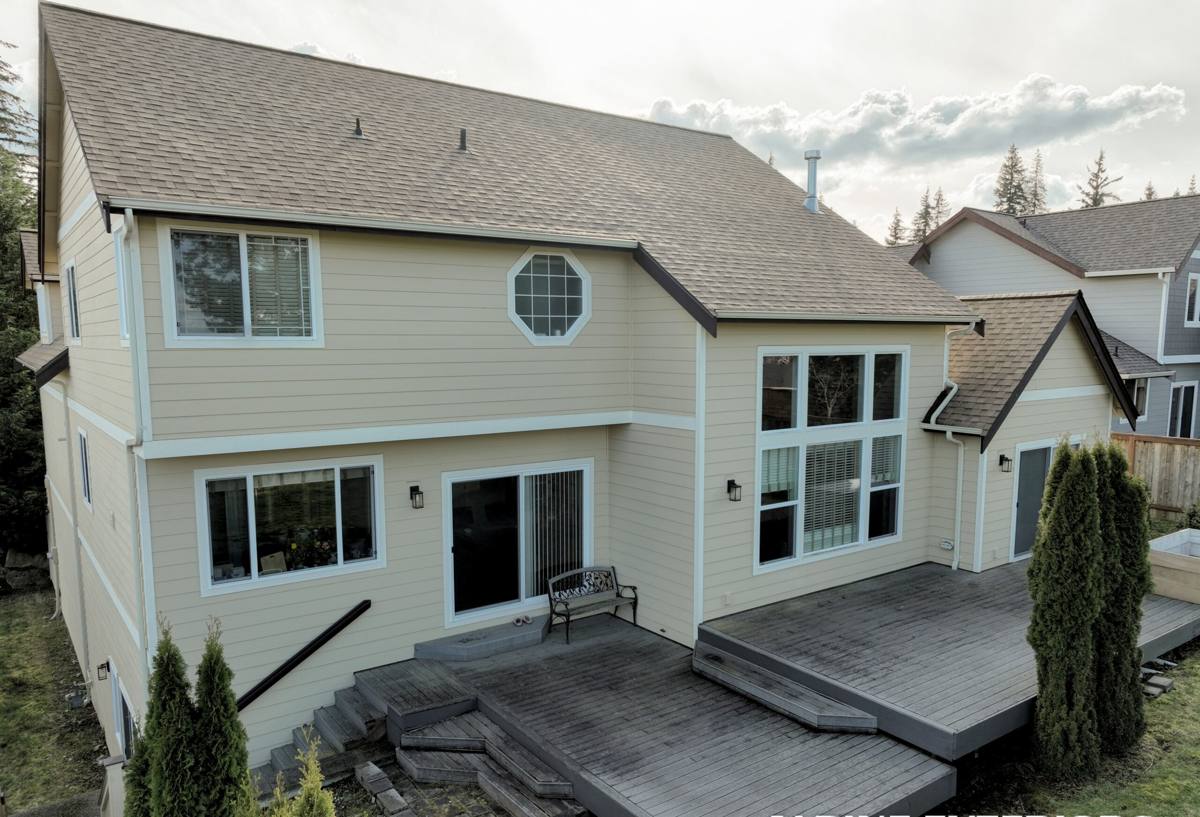
What Salt Air and Coastal Moisture Do to a Deck
Salt air is corrosive to metal, full stop. Standard hot-dip galvanized fasteners and hardware that would last decades in a drier, inland part of Whatcom County can start showing rust streaks and pitting within a few seasons in a spot like Semiahmoo, especially on decks with an open view toward the bay. Once a fastener starts to corrode, it loses holding strength, and rust stains bleed into the surrounding wood or composite — a cosmetic problem that also signals a structural one underneath.
Moisture is the other half of the equation. Driving rain off the water doesn't just fall straight down — wind pushes it sideways into railings, fascia boards, and ledger connections that a calmer inland site would never see wet in the same way. Combined with our marine-layer humidity and short winter daylight, boards that don't get a chance to dry out between storms become the perfect surface for moss, algae, and mildew to take hold.
Why This Matters More Here Than a Few Miles Inland
We build and repair decks across Whatcom County, and the difference between a coastal build like Semiahmoo and a build a few miles inland is real — not marketing talk. Corrosion-resistant hardware, tighter attention to ledger flashing, and drainage planning that assumes near-constant winter dampness aren't upgrades out here; they're the baseline for a deck that's still solid in ten years.
Choosing the Right Materials for a Semiahmoo Deck
There's no single "best" decking material for every home — it depends on budget, how much upkeep you want to take on, and how close you are to the water. Here's how the common options stack up for a coastal Whatcom County property.
| Material | Salt Air Performance | Maintenance | Typical Lifespan |
|---|---|---|---|
| Cedar (western red) | Naturally rot- and insect-resistant; needs sealing to handle salt spray long-term | Refinish/reseal every 2-3 years | 15-25 years with upkeep |
| Pressure-treated fir/pine | Adequate if properly sealed; end cuts and fastener points are vulnerable | Stain/seal every 1-2 years, sooner near the water | 10-20 years |
| Composite decking | Strong — doesn't absorb moisture or corrode; check board venting for moss | Periodic washing, no staining/sealing | 25-30+ years |
| PVC/cellular decking | Excellent — fully moisture-resistant, no wood fibers to feed mold | Occasional washing | 25-30+ years |
For homeowners right along the bay, we lean toward steering clients away from raw pressure-treated lumber left unsealed, or toward composite/PVC when budget allows — not because treated wood is a bad product, but because the maintenance burden of keeping it sealed against near-constant salt spray is steep, and a missed year of resealing shows up fast as graying, cupping, or moss growth in board gaps. That's our professional standard for this specific location, not a knock on the material itself.
Hardware, Fasteners, and Structural Connections
The structure underneath the decking is where corrosion does the real damage, and it's invisible until it isn't. For Semiahmoo builds we use:
- Stainless steel or heavy-duty coated fasteners rated for coastal/marine exposure, not standard interior-grade hardware
- Corrosion-resistant joist hangers and structural connectors at every load-bearing point
- Proper ledger board flashing where the deck ties into the house, to keep wind-driven rain from working behind the siding
- Hot-dip galvanized or stainless post bases that keep support posts off standing water
Cutting corners on hardware is the single most common reason we see older decks fail structurally in salt-air locations well before the decking surface itself wears out. It's also the least visible corner to cut, which is exactly why it matters.
Drainage and Airflow: Fighting the Moss Season
Whatcom County's moss season is long, and a deck with poor airflow underneath becomes a moss and mildew trap regardless of what material sits on top. A few design choices make a real difference:
Board Spacing and Under-Deck Ventilation
Proper gapping between boards lets water shed through instead of pooling on the surface, and keeping the space underneath a deck open to airflow — rather than boxed in tight to the ground — lets everything dry out between rain events instead of staying damp for weeks.
Grading and Runoff
We check that the ground beneath and around a deck sheds water away from posts and footings rather than letting it pool. Standing water at the base of support posts is a slow, steady path to rot and corrosion that homeowners often don't notice until a post starts to feel soft.
Sun Exposure and Tree Cover
Decks tucked under tree cover or on a shaded north side of the house hold moisture longer and grow moss faster. We factor that into material recommendations and, where practical, into railing and skirting design that doesn't trap moisture against the deck frame.
Our Deck-Building Process
Whether it's a full custom build or a rebuild of an existing deck, our process for Semiahmoo properties follows the same core steps:
- On-site assessment — we look at sun/shade exposure, distance from the water, existing drainage, and how the deck will tie into the house
- Design and material selection — sized to your space and budget, with material trade-offs explained honestly up front
- Permitting — we handle the permit process with Whatcom County or the applicable local jurisdiction where required
- Site prep and footings — footings set to proper depth and location, with attention to drainage around each post
- Framing with corrosion-resistant hardware — structural connections built for coastal exposure, not standard interior-grade parts
- Decking installation — proper board spacing, fastening method appropriate to the material, and attention to ledger flashing
- Railings and finish work — code-compliant railing height and spacing, finished to match the home
- Final walkthrough — we go over maintenance expectations specific to your material choice and location
Repairs and Rebuilds: Signs a Semiahmoo Deck Needs Attention
Not every project is a new build — a lot of what we do in this area is assessing and repairing decks that have taken a beating from salt air and rain over the years. Watch for:
- Rust staining bleeding out from fastener heads or hardware
- Soft or spongy spots in decking boards, especially near the ledger or post bases
- Persistent moss or algae growth that returns quickly after cleaning
- Gaps or movement where the deck ledger meets the house
- Railing posts that feel loose or wobble under light pressure
- Green or black staining on the underside of boards, signaling trapped moisture
Some of these are cosmetic fixes; others are structural and shouldn't wait. If you're seeing any of the structural signs — soft spots, loose railing posts, ledger movement — that's worth a look sooner rather than later, since coastal moisture problems tend to accelerate once they start.
Cost Factors for a Semiahmoo Deck Project
Every project is different, but the factors that move the price up or down are consistent: size and shape of the deck, material choice (treated wood at the low end, PVC/composite at the higher end), height above grade and the footing work that requires, railing style, and any structural work needed to tie into an existing house safely. We give straightforward, itemized estimates so you can see where the money goes and make an informed call on material trade-offs — including the long-term maintenance cost difference between a cheaper material that needs sealing every year or two and a pricier one that doesn't.
Why Local Experience in Semiahmoo Matters
A deck contractor who mostly works inland can still build you a deck, but they may not default to marine-grade hardware, they may not think twice about ledger flashing in a spot that takes wind-driven rain sideways, and they may not flag moss-prone shading until it's already a problem. We work throughout Whatcom County, including the coastal communities around Ferndale and Semiahmoo, and we build with the salt air and moisture exposure factored in from the first conversation — not as an afterthought once something starts corroding.
If you're planning a new deck or need an honest look at one that's showing its age, we're happy to come take a look. Reach out for a free, no-pressure estimate using the form below.