 Ferndale
 Deck Repair Built for Kendall's Conditions
Kendall sits in the wooded, foothill stretch of Whatcom County along the Nooksack River corridor, and that setting shapes what happens to a deck out here. Heavier tree cover than you'll find closer to town means more shade, more standing moisture, and a longer moss season than a deck gets in an open, sunny yard. Combine that with the driving rain that rolls through the county for much of the year, and you have conditions that work steadily on wood, fasteners, and framing whether the deck sees daily use or not. A deck that looks fine from the yard can be hiding real problems underneath, and in our experience the homes that wait the longest to address it end up facing a full rebuild instead of a repair.
This page covers deck repair specifically — not new construction — for homes in and around Kendall. If your deck is structurally sound but showing wear, rot, or damage in specific spots, repair is very often the right call, and it costs a fraction of replacement.
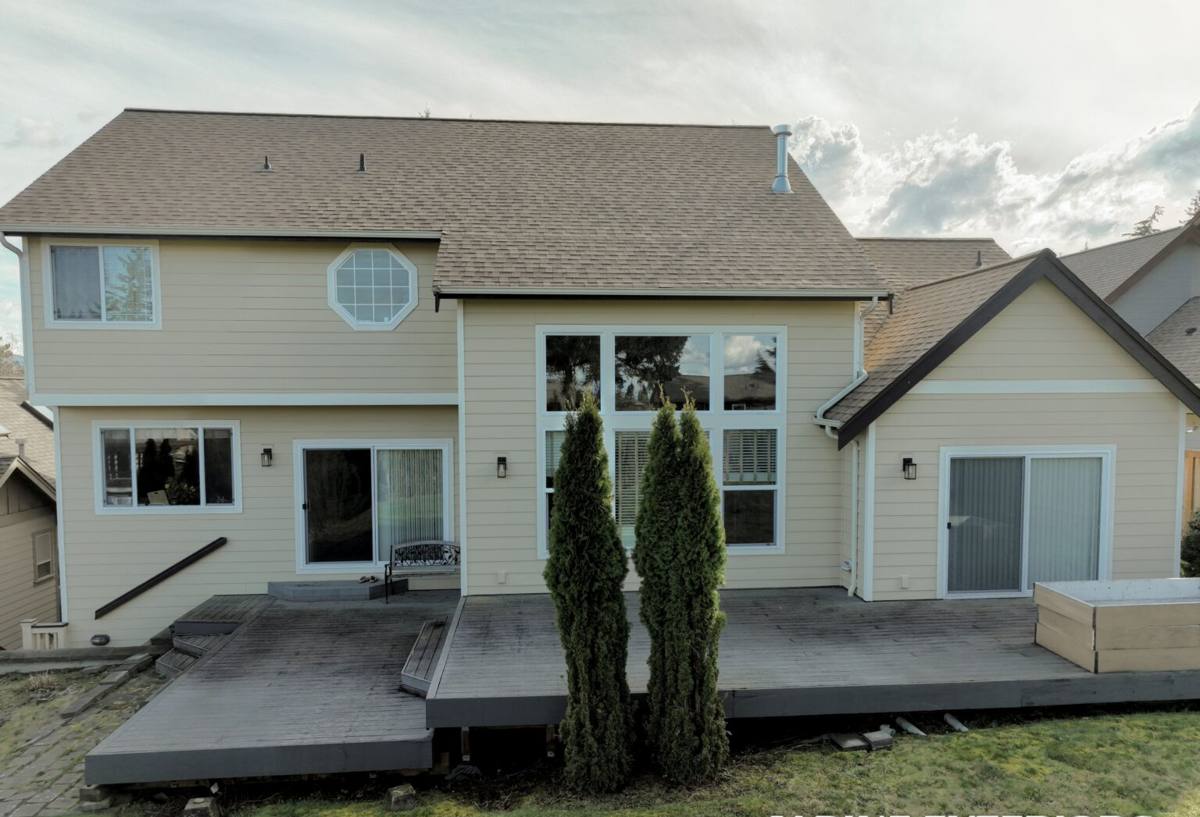
What Kendall's Climate Does to a Deck
Shade and Moisture Retention
Decks tucked under or near trees dry out slower after rain than decks in open sun. That extra drying time is exactly what wood-decay fungi need to get established. It shows up first as soft spots, discoloration, or a slightly spongy feel underfoot in board sections that never quite dry between storms.
Moss and Organic Growth
A long moss season isn't just cosmetic. Moss and algae hold moisture against the deck surface, and on painted or sealed boards that moisture gets trapped rather than evaporating. Left alone through a wet fall and winter, moss-covered boards deteriorate faster than clean ones, and moss on stairs or ramps becomes a genuine slip hazard.
Driving Rain and Wind-Driven Water
Whatcom County's storms often come with wind, which pushes rain sideways into ledger connections, stair stringers, and any spot where the deck meets the house. These are the joints most decks actually fail at — not the open field of decking, but the transitions where water gets forced into a gap.
Freeze-Thaw Cycling
Kendall's inland, slightly higher-elevation setting means a few more freeze-thaw cycles each winter than you'd see right on the coast. Water that's worked into a crack or a fastener hole expands when it freezes, widening the damage a little more each cycle.
Signs Your Deck Needs Repair
Most deck problems give some warning before they become safety issues. Walk your deck and check for the following:
- Boards that flex, bounce, or feel soft underfoot, especially near the house or in shaded corners
- Railings or posts that wiggle when pushed, even slightly
- Visible gaps, cracking, or splintering along board edges
- Rust streaks running from screw or nail heads
- Moss or algae buildup that returns quickly after cleaning
- Dark staining or a musty smell near the ledger board where the deck attaches to the house
- Stair stringers that feel uneven or steps that have started to sag
- Gaps opening up between the deck and the house siding or foundation
Any one of these on its own might just need a targeted fix. Several together, especially near the ledger or main support posts, usually means it's time for a closer structural look before anyone uses the deck heavily.
Common Repairs We Handle in Kendall
Ledger Board and Flashing Repair
The ledger board — where the deck bolts to the house — is the single most safety-critical connection on most decks, and it's also the one most exposed to wind-driven rain. Older decks, or decks built without proper flashing, often have water intrusion here long before it's visible from outside. We address this by removing affected boards, drying and repairing the framing, and installing correct flashing before anything goes back together.
Post Base and Footing Repair
Posts that sit in or near standing water, or that were never properly isolated from ground contact, rot from the base up. We replace compromised post bases, correct drainage where it's contributing to the problem, and reset posts on proper hardware rather than burying them in soil.
Decking Board Replacement
Individual boards with rot, splitting, or cupping get pulled and replaced without tearing into a sound structure underneath. Matching new boards to weathered ones is part of doing this well — we account for how the surrounding wood has aged so repairs don't stand out.
Railing and Guard Repair
Loose or rotted railing posts are a fall hazard, not just a cosmetic issue. We rebuild these to current structural standards, not just to match what was there before, since older railings are frequently under-built by today's code.
Stair Repair
Stringers and treads take constant foot traffic plus all the same moisture exposure as the rest of the deck. Sagging or uneven stairs get shored up or rebuilt at the stringer level, not just patched at the surface.
Repair vs. Replace: How We Decide
Not every deck problem calls for a full rebuild, and we don't default to recommending one. The table below covers the factors that actually drive that decision.
| Factor | Favors Repair | Favors Replacement |
|---|---|---|
| Main framing condition | Solid, joists and beams intact | Widespread rot in joists or beams |
| Ledger board | Sound or single-point issue | Extensive rot at house connection |
| Age of structure | Under 15-20 years, built to reasonable standard | Original construction quality was poor or very old |
| Extent of damage | Isolated to a few boards, posts, or rail sections | Spread across most of the deck surface |
| Code compliance | Minor gaps addressable in repair | Structure well outside current safety standards |
| Typical cost range | Several hundred to a few thousand dollars | A significant multiple of a repair project |
We give a straight answer either way. If repair genuinely solves the problem, we say so — there's no reason to sell a rebuild a deck doesn't need. If the framing is compromised, we'll explain exactly why and what that means for safety, not just for appearance.
Our Deck Repair Process
- On-site inspection. We check the deck surface, but more importantly we get underneath it — probing the ledger, posts, and framing where the real damage usually hides.
- Written scope and estimate. You get a clear description of what's actually wrong, what we're going to do about it, and what it costs, before any work starts.
- Removal of compromised material. Rotted or damaged wood comes out completely — we don't cover over a problem with new boards on top of bad framing.
- Structural repair. Framing, posts, and ledger connections get repaired to a standard that will actually hold up to another Whatcom County winter, with correct flashing and hardware.
- Surface and finish work. New boards, railings, or stair components are matched and finished to blend with the rest of the deck as closely as the materials allow.
- Final walkthrough. We show you exactly what was done and what to watch for going forward.
Materials and Fasteners We Use
Repair quality comes down to details that don't show once the job is finished. We use pressure-treated framing lumber rated for ground contact where posts meet grade, stainless or coated fasteners suited to treated lumber (mismatched hardware is a common cause of early fastener corrosion in wet climates), and proper self-adhering flashing tape at ledger and post connections rather than caulk alone. For visible decking and railing material — whether that's replacing in-kind with wood or transitioning a repaired section to composite — we'll walk through the tradeoffs with you: wood costs less up front and repairs easily but needs regular maintenance in this climate, while composite costs more initially and resists moss and moisture damage but is less forgiving to patch invisibly if it's damaged later. Neither is wrong; it depends on your deck, your budget, and how much upkeep you want to do.
Why Hire a Crew That Already Works in Kendall
A lot of deck problems in this area come down to the same handful of root causes — under-flashed ledgers, posts set without proper drainage, shaded sections that never get enough sun to dry out. A crew that repairs decks around Kendall and greater Ferndale regularly recognizes those patterns fast, instead of treating each deck as a first-time guess. That matters for both the inspection and the fix: knowing what tends to fail here means less time spent finding the actual problem and a repair that's built for the conditions that caused the damage in the first place, not a generic patch.
It also matters for permitting and code questions specific to Whatcom County, and for simply being reachable if a repair needs a follow-up visit after the next wet season. We're not traveling in from out of the area for a one-time job.
After the Repair: Keeping It That Way
A repaired deck still needs seasonal attention in this climate, especially with the shade and moss pressure common around Kendall properties. A few habits go a long way:
- Clear leaves and debris from between boards before fall rains set in — trapped debris holds moisture against the wood
- Treat moss growth early rather than letting it establish through a full wet season
- Check railings and stair connections for looseness once or twice a year
- Reseal or refinish wood decking on the schedule the product calls for, not just when it visibly needs it
- Keep an eye on the ledger area after major storms, since that's the connection most exposed to driving rain
If you're noticing soft spots, a wobbly railing, or a deck that just doesn't feel as solid as it used to, we're happy to take a look. Reach out for a free, no-pressure estimate using the form below — we'll tell you honestly what your deck needs, whether that's a targeted repair or something more.