 Ferndale
 Windows Built for Bellingham's Weather, Not Just Its Views
Bellingham sits close enough to the water that salt air is a real factor in how windows age, and far enough into the Pacific Northwest rain belt that driving rain and long wet winters are just part of the deal. Add in Whatcom County's moss season — months at a stretch where north- and west-facing walls barely dry out — and you've got a climate that's harder on window components than most manufacturers' warranty language assumes. We're a Ferndale-based crew that works Bellingham regularly, and we approach custom windows here differently than a crew that installs the same product in Spokane or Sacramento.
"Custom" doesn't mean fancy shapes or exotic materials by default. It means the window is sized, flashed, and specified for the actual opening and the actual wall assembly it's going into — which matters a lot more on an older Bellingham home with settled framing or non-standard rough openings than it does in a new tract house with square, factory-fresh openings.
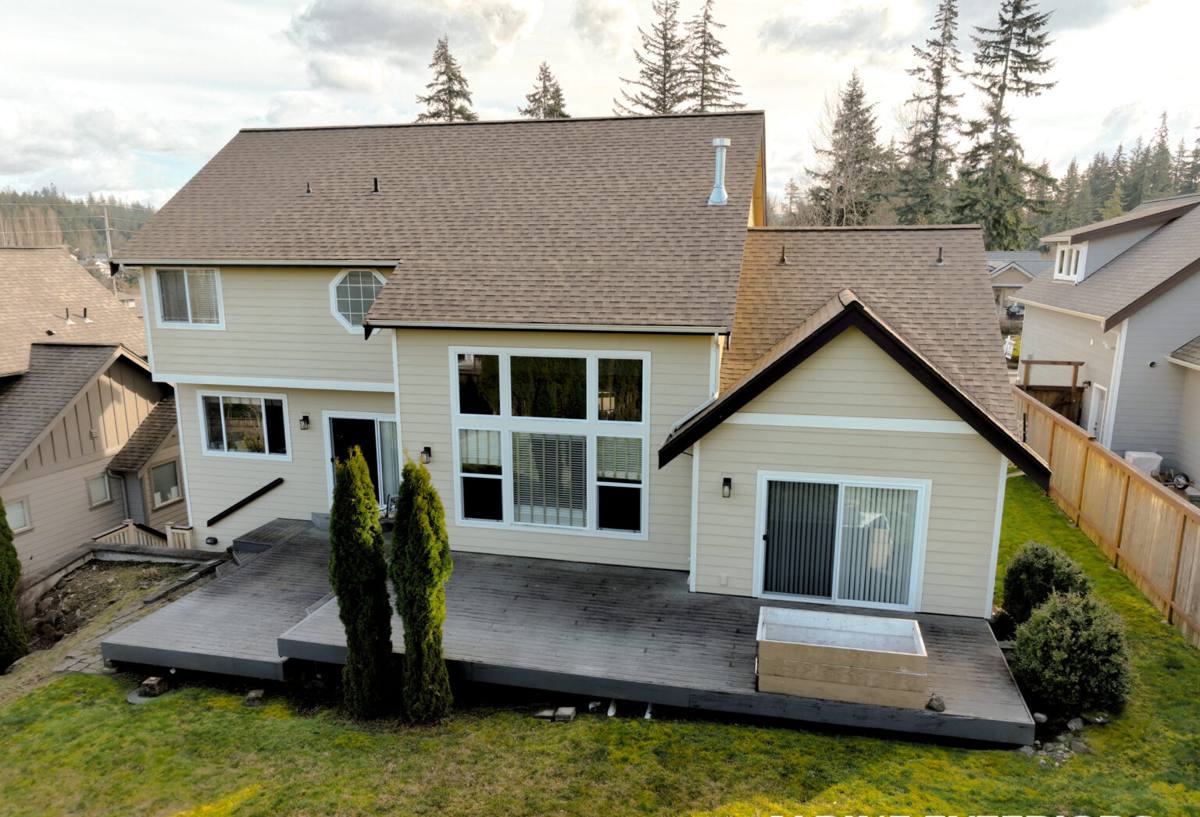
What Bellingham Homes Actually Need From a Window
Before we talk product, it helps to know what's working against a window here:
- Wind-driven rain: storms off the Strait push rain sideways into wall assemblies, not just straight down — flashing and sill pan detail matter more than caulk quality.
- Salt-laden air: proximity to Bellingham Bay accelerates corrosion on unprotected fasteners, hardware, and some aluminum components.
- Moss and organic growth: shaded, north-facing walls stay damp for weeks at a time, which is hard on wood trim and any sealant that isn't holding up its end.
- Temperature swings: not extreme by national standards, but enough seasonal expansion and contraction to open up poorly-installed joints over a few years.
None of this means you need exotic materials. It means the installation details — flashing, sill pans, sealant selection, and fastener choice — carry more weight here than in a drier climate, and cutting corners on those details shows up as a callback in two or three winters, not immediately.
Why "Custom" Matters More on Older Bellingham Homes
A lot of Bellingham's housing stock predates modern window sizing standards. Openings have settled, been re-trimmed over the years, or were framed to dimensions that don't match anything on a big-box shelf. Forcing a stock-size replacement window into an opening that's slightly out of square usually means shimming unevenly, over-relying on caulk to fill gaps, or trimming the opening in ways that weaken the original framing. A properly custom-sized window is built to the opening you actually have, which means a tighter, more predictable seal and less dependence on sealant doing work it shouldn't have to do.
Materials: What We Recommend and Why
We don't push one material as the answer for every home — the right call depends on the wall assembly, sun exposure, and your maintenance appetite. Here's how the common options hold up in this climate specifically:
| Material | Performance in Local Climate | Maintenance | Trade-offs |
|---|---|---|---|
| Vinyl | Good moisture and corrosion resistance; won't rot or rust | Low — occasional cleaning | Limited color/finish options; can't be painted long-term |
| Fiberglass | Excellent — dimensionally stable through wet/dry and hot/cold cycles | Low | Higher upfront cost than vinyl |
| Wood-clad | Good if the cladding and flashing are done right; interior wood needs a dry, well-sealed exterior | Moderate to high — exterior cladding protects the wood, but any breach needs prompt attention | Best look for period-correct homes; highest install sensitivity |
| Aluminum | Fair — conducts cold and can corrode faster near the bay without a good finish | Moderate | Slim sightlines, but not our default recommendation this close to salt air |
For most Bellingham homes, we steer toward vinyl or fiberglass for straightforward replacements, and wood-clad when a homeowner wants a specific historic or architectural look and is willing to stay on top of exterior maintenance. We'll walk through the honest trade-offs for your specific home rather than defaulting to whatever's easiest to install.
Glass and Performance Specs That Actually Matter Here
Whatcom County's climate doesn't demand the extreme cold-climate glass packages you'd see in the mountains or the upper Midwest, but a few specs are worth getting right:
- Low-E coatings: help with both winter heat retention and summer solar gain — worthwhile on nearly every elevation here.
- Double-pane, argon-filled: standard baseline for this climate; triple-pane is rarely necessary unless you're chasing very specific energy goals or dealing with road noise.
- Low condensation-resistant framing: interior condensation on cold, damp mornings is common in this climate — good spacer systems and frame design reduce it noticeably.
- U-factor and SHGC balance: we look at which direction a window faces before recommending a glass package — a west-facing window near the water wants different glass than a shaded north wall.
The Installation Details That Prevent Callbacks
Most window failures we get called out to fix in this area aren't product failures — they're installation shortcuts that don't show up until the wall's been wet a few winters in a row. The parts that actually keep water out:
Sill Pan Flashing
A proper sill pan catches any water that makes it past the window and directs it back outside instead of into the wall cavity. On a driving-rain coast like this one, skipping this step — or improvising it with caulk alone — is where a lot of hidden rot starts.
Weather-Resistive Barrier Integration
The window's flashing needs to integrate correctly with the house wrap or building paper already on the wall, shingle-lapped so water sheds outward and down, never trapped behind the flashing.
Fastener and Hardware Selection
Given the salt air off Bellingham Bay, we use corrosion-resistant fasteners and hardware rather than whatever ships standard with a given window line — a small cost difference that avoids streaking and hardware failure down the road.
Sealant as Backup, Not Primary Defense
Good sealant matters, but it should be the second line of defense behind correct flashing and pan detail — not the only thing standing between your wall cavity and the weather.
Our Process, Start to Finish
- On-site assessment: we look at your existing openings, wall assembly, and any signs of past moisture issues before recommending anything.
- Material and glass selection: honest walkthrough of the trade-offs above, matched to your budget and how much upkeep you want to take on.
- Precise measurement: custom units are ordered to the actual opening, not a nominal stock size.
- Removal and prep: old units come out carefully, and we inspect the framing and sheathing underneath for hidden rot or damage before anything new goes in.
- Flashing and sill pan installation: the step that determines whether the window performs for 20 years or 5.
- Window setting and shimming: leveled, plumbed, and shimmed evenly so the frame isn't under stress that will show up as operation problems later.
- Interior and exterior finish: trim, sealant, and touch-up to match the home.
- Walkthrough: we show you how the new windows operate and answer any questions before we consider the job done.
What a Bellingham Job Typically Involves — Cost Factors
We don't quote sight-unseen, but here's what actually moves the price on a custom window job in this area:
| Factor | Why It Matters |
|---|---|
| Number and size of openings | Larger and more numerous units mean more material and labor |
| Material choice | Vinyl, fiberglass, and wood-clad carry different unit costs |
| Framing condition | Hidden rot or out-of-square openings found during removal adds repair time |
| Access and story height | Second-story or hard-to-reach openings take longer and need more setup |
| Custom shapes or sizes | Non-standard geometry (arched, oversized, odd angles) costs more than standard rectangular units |
| Trim and finish work | Matching existing interior/exterior trim adds labor beyond the window unit itself |
We give a firm, itemized quote after we've actually seen the openings — not a phone estimate that changes once we're on-site.
Why a Local Bellingham Crew Makes a Difference
A crew that regularly works Bellingham and the surrounding Whatcom County area knows which details this climate punishes and which corners get away with being cut elsewhere but won't here. We're not learning the local weather pattern on your house. Being based in Ferndale means we're a short drive away for the walkthrough, the install, and if something ever needs a look afterward — no scheduling a crew from out of the area and waiting weeks for a callback.
What to Look For When Hiring for Custom Window Work
- Willingness to do an in-person assessment before quoting — not a price over the phone
- Clear explanation of flashing and sill pan detail, not just brand and glass talk
- Local references or a track record of jobs in this specific climate zone
- Proper licensing and insurance, verifiable before work starts
- A written scope that specifies material, glass package, and flashing method — not just "replace windows"
If you're weighing custom windows for a Bellingham home, we're happy to come take a look, walk the openings with you, and give you a straight answer on what's needed and what it'll cost — no pressure, no sales script. Request a free estimate through the form below.