 Ferndale
 Why Decks Take a Beating in Lynden and Ferndale
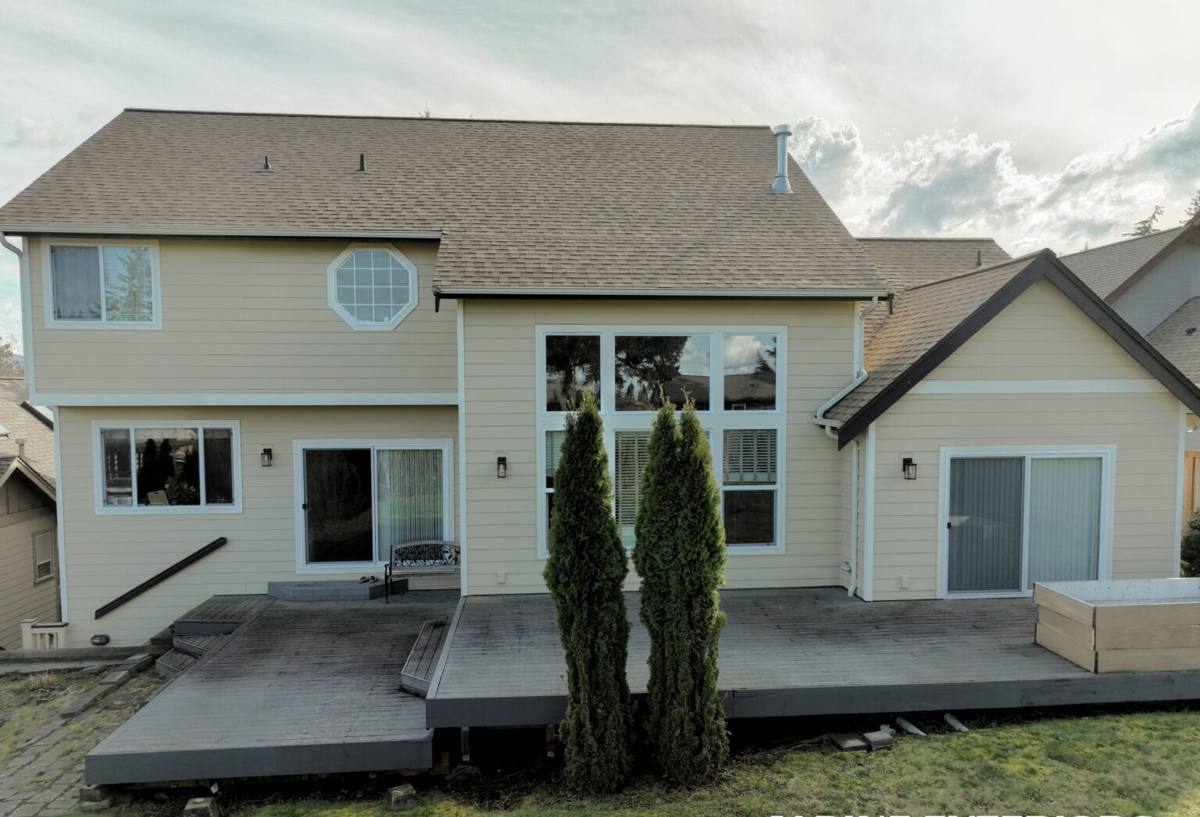
A deck in Whatcom County lives a harder life than the same deck built in a dry climate. Driving rain off the water pushes moisture sideways into ledger boards and railing joints, not just straight down onto the surface. Salt air carried inland corrodes unprotected fasteners and hardware faster than most homeowners expect, working on screw heads and joist hangers long before it's visible on the decking itself. And the moss season here isn't a few weeks in spring — it's a good chunk of the year, coating any shaded or poorly drained surface in a slick green film that hides rot underneath it. None of this means you can't have a good deck in Lynden. It means the deck has to be built differently than a stock plan out of a home center catalog, with attention to drainage, fasteners, and airflow that a drier-climate build can skip.
What a Correct Deck Build Looks Like Here
Footings and Framing That Won't Move
Everything starts underground. Footings need to bear below your local frost depth, not just be poured deep enough to "seem solid" — your permit reviewer will check this, and so should you. In Lynden's mix of rural and in-town lots, soil conditions vary block to block: heavier clay in some areas holds water longer around a footing, which matters when you're deciding footing size and whether drainage rock belongs in the hole. Framing lumber should be rated for ground contact where it's within a few inches of soil or mulch, and joists should be sized for the actual span and load, not the minimum that happens to fit the lumber on the truck.
Ledger Attachment and Flashing
The single most common failure point on decks attached to a house isn't the decking — it's the ledger board where the deck meets the wall. If that connection isn't flashed correctly, water gets behind it and starts rotting the house's rim joist and sheathing from the inside, often for years before anyone notices. A correct ledger detail includes proper flashing that sheds water out and away from the wall, lag bolts or through-bolts sized for the load (not just nails), and a gap or flashing detail that keeps water from sitting between the ledger and the siding. This is exactly the kind of connection where "driving rain" isn't a marketing phrase — it's the actual weather pattern the detail has to hold up against.
Choosing Decking Material for This Climate
There's no single "best" decking material — there's a best material for your budget, your maintenance appetite, and how much shade and moss exposure the deck gets. Here's how the common options actually compare in a wet, moss-prone climate like ours:
| Material | How it handles our climate | Maintenance | Typical lifespan |
|---|---|---|---|
| Pressure-treated lumber | Good rot resistance if properly sealed and kept off standing water; least forgiving of skipped maintenance | Annual cleaning, re-sealing every 1-2 years | 15-20 years with upkeep |
| Cedar | Naturally moisture- and insect-resistant, but greys and can grow moss quickly if not cleaned and oiled | Cleaning and oil/stain every 1-2 years | 15-20 years with upkeep |
| Composite / capped composite | Doesn't rot or splinter; capped boards resist moss staining much better than wood, though grooved boards can still trap moisture and debris | Periodic washing, no sealing required | 25-30+ years |
| PVC decking | Fully synthetic, essentially immune to rot and moisture absorption; best moss and mildew resistance of the group | Occasional washing | 25-30+ years |
We're honest with clients about trade-offs rather than pushing one product. Composite and PVC cost more up front but make sense on shaded, low-airflow lots where moss and algae are a constant fight. Cedar or treated lumber can be the right call on a sunnier, well-drained site where the homeowner is willing to do yearly upkeep and wants a natural look. What we won't do is install any decking product against the manufacturer's own moisture and ventilation requirements just to save a step — that's how warranties get voided and boards start failing early.
Fasteners, Hardware, and Salt Air
Hardware is where a lot of decks quietly fail. Standard zinc-coated screws and joist hangers hold up fine in a dry inland climate, but salt-laden air moving through Whatcom County corrodes them faster, especially at joints where two metals meet or where a fastener head is exposed to weather. We use stainless steel or heavy-duty coated fasteners rated for ground contact and exterior exposure, along with hangers and connectors rated for the same conditions. It costs more than a box of generic deck screws, but it's the difference between hardware that's still sound in fifteen years and hardware that's rusting and staining the decking around it in five.
Railings, Stairs, and Code Compliance
Any deck of meaningful height needs a code-compliant guard system: a minimum height, baluster spacing tight enough that a small child can't slip through, and a graspable handrail on stairs of a certain rise. These aren't optional style choices — they're inspected, and for good reason. Stair stringers need to be sized for the actual run and treated or capped against ground moisture, since stairs sit closer to grade and take more splash-back from rain than the deck surface above them. Depending on whether your lot is inside Lynden's city limits or in unincorporated Whatcom County, your permit goes through a different building department, but the underlying code requirements are consistent either way.
Drainage and Fighting the Moss Season
Moss doesn't grow because a deck is old — it grows because moisture and organic debris (leaves, needles, dust) sit somewhere long enough to build a film for spores to take hold in. A well-built deck fights this on purpose:
- Board gaps sized for drainage, not just appearance, so water actually sheds through instead of pooling on the surface
- Joist tape or flashing on top of joists so water that does get through the gaps doesn't sit directly on bare wood
- Enough clearance and airflow underneath the deck so the underside can dry out between rain events instead of staying damp for weeks
- Decking run in a direction and layout that avoids creating low spots or dead zones where leaves collect
- Stair and rail post bases detailed so water doesn't pool at the base of a post, which is one of the first places rot shows up
None of this eliminates moss entirely in a climate that stays damp for months at a time — it reduces how fast it comes back and how much damage it does underneath before you see it on top.
Our Deck Building Process in Lynden
- On-site walkthrough to look at the house connection point, grade, drainage, and sun/shade exposure specific to your lot
- Material and layout discussion, with honest trade-offs on decking type, railing style, and budget
- Permit drawings and submission to the correct jurisdiction (City of Lynden or Whatcom County, depending on your address)
- Footings and framing, built to span, load, and frost-depth requirements — not shortcuts
- Ledger flashing, joist protection, and hardware installed to the standard described above
- Decking, railing, and stair installation with attention to drainage layout and code-compliant guards
- Final walkthrough with you and, where required, the building inspector
Deck Maintenance Checklist for Whatcom County Homes
A correctly built deck still needs seasonal attention in this climate. A short list we give clients:
- Sweep leaves and debris off the deck surface regularly through fall, not just once at the end of the season
- Check and clear gaps between boards where debris can build up and hold moisture against the wood
- Wash the deck surface at least once a year to knock back early moss and algae before it establishes
- Reseal or re-stain wood decking on the schedule the product calls for — skipping a year is when moss and graying accelerate
- Walk the railing posts and stair stringers each spring, checking for soft spots or movement at the base
- Confirm gutters and downspouts near the deck are directing water away rather than onto or under it
Why Hire a Crew That Already Works in Lynden
A deck builder who only works in drier parts of the state will still build you something that looks right on the day it's finished. The difference shows up two or three winters later, in the ledger flashing that wasn't detailed for driving rain, the fasteners that started rusting because they weren't rated for salt air, or the shaded corner where nobody planned for drainage and moss took over by the second year. Working regularly in Lynden and the surrounding Ferndale area means knowing which permit office to file with, what inspectors here actually check, and which details matter most given how wet this region stays for most of the year. It's not a different set of tools — it's building the same deck with the local climate accounted for from the footings up.
If you're planning a new deck or replacing one that hasn't held up, we're happy to walk your property, talk through material options honestly, and put together a free, no-pressure estimate using the form below.