 Ferndale
 Deck Replacement Built for Bellingham's Weather, Not Against It
A deck in Bellingham lives a harder life than the same deck would in most of the country. It sits under a marine layer for months at a time, catches salt-tinged air off Bellingham Bay, gets pounded by driving rain that comes in sideways off the water, and then spends the darker months growing moss on anything that stays damp longer than a day or two. If you're looking at a deck that's gone soft, spongy, or just tired-looking, the fix isn't always "replace it exactly as it was." It's replacing it in a way that actually accounts for where it sits.
We're Ferndale Siding, and while our name says siding, deck replacement is a service we do regularly for homeowners across Whatcom County, including Bellingham. We're already working in these neighborhoods, we know what the weather does to exterior wood and composite over a full Pacific Northwest year, and we build decks to hold up to that — not to a generic national spec.
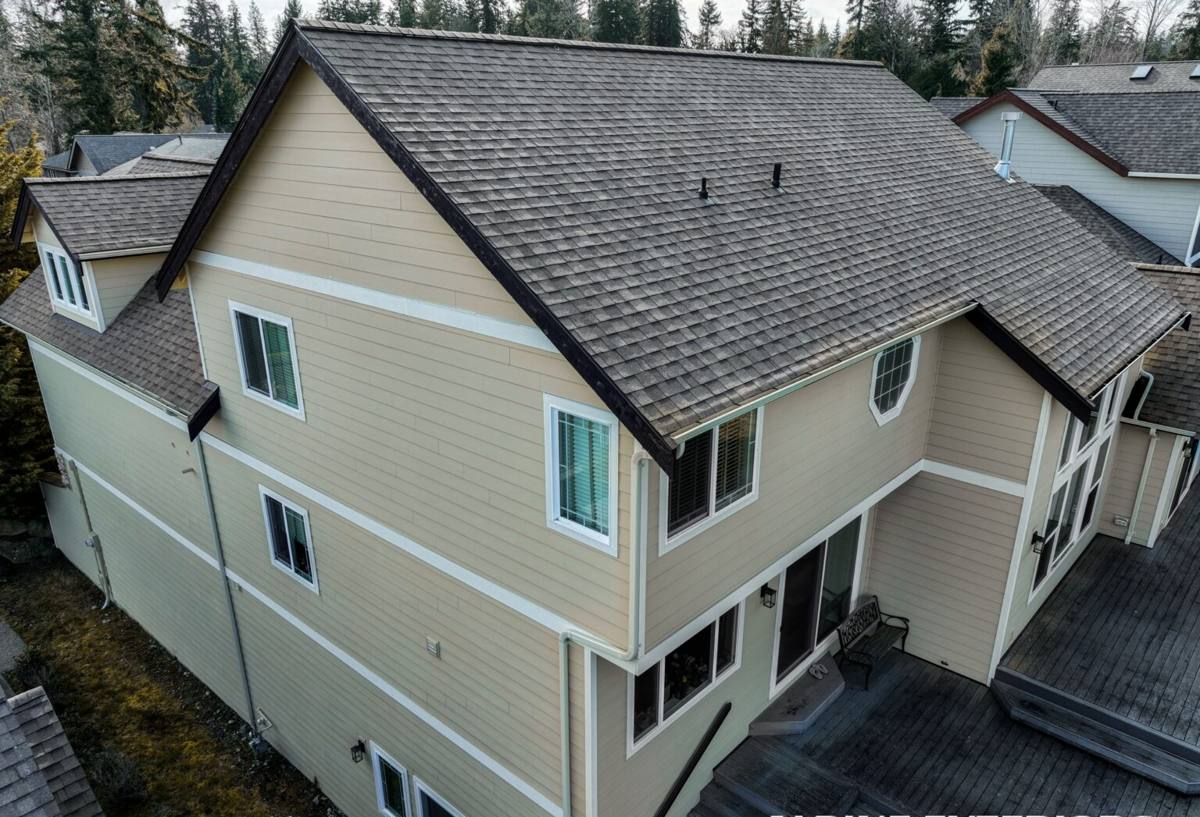
What Whatcom County Weather Actually Does to a Deck
Most deck failures around here aren't dramatic. They're slow. Understanding the mechanism helps explain why replacement — and not another round of patching — is often the right call.
Moisture that never fully leaves
Bellingham gets a long stretch of low clouds, drizzle, and fog, especially from fall through spring. Wood decking that doesn't get a real chance to dry out between rain events stays damp at the board-to-joist connections and inside any end-grain that isn't sealed. That's where rot starts — quietly, underneath, long before the surface looks bad.
Salt air and hardware corrosion
Proximity to the Bay means airborne salt reaches decks that aren't right on the water too. Salt accelerates corrosion in fasteners, joist hangers, and any exposed metal connectors. A deck can look structurally fine on top while its hardware is quietly failing underneath — which is exactly the kind of problem you don't want to discover the hard way.
Moss, algae, and the slip hazard nobody plans for
Shaded decks, north-facing decks, and anything under trees can grow moss for a good chunk of the year. Beyond looking neglected, moss holds moisture against the wood and turns boards genuinely slippery — a real fall risk on stairs and near doorways.
UV and temperature swings
Bellingham doesn't get brutal heat, but summer sun combined with the wet months creates a cycle of swelling and drying that opens up checking (surface cracks) in wood over time, especially on decking that wasn't finished on all six sides during the original build.
Signs Your Deck Needs Replacement, Not Repair
- Soft or spongy spots when you walk across the deck, especially near the house or stair landings
- Fasteners that are rusted, backing out, or leaving dark streaks down the boards
- Visible gaps opening up between deck boards and the ledger board where it meets the house
- Joists or the ledger board that feel damp or show fungal staining when you look underneath
- Railings that wobble or posts that have movement at the base
- Persistent moss or algae that comes back within weeks of cleaning
- A deck older than 15-20 years that's never had the substructure inspected
If you're only seeing one or two of these and the framing underneath is solid, a repair might still make sense. Once the substructure itself is compromised — rotted joists, a failing ledger connection, corroded hardware throughout — replacement is almost always more cost-effective than chasing repairs on a structure that's failing from the inside out.
What a Correct Deck Replacement Actually Involves
A lot of deck work in wet climates fails because it skips the parts nobody sees. Here's what we treat as non-negotiable on every replacement.
The ledger board connection
This is where the deck attaches to the house, and it's the single most common failure point in our climate. It needs proper flashing that directs water away from the house framing, not just caulk and hope. We flash it correctly every time, because a failed ledger connection can mean rot working its way into the house itself, not just the deck.
Joists, hangers, and fasteners rated for the exposure
Given the salt air off the Bay and the sheer number of wet days per year, we use corrosion-resistant hardware and fasteners rated for exterior and coastal-influenced exposure. Standard interior-grade hardware is a false economy here — it corrodes faster than the wood around it fails, and then you're dealing with a structural problem instead of a cosmetic one.
Drainage and airflow underneath
A deck that can't shed water and dry out underneath will always struggle in this climate, no matter what decking material sits on top. Proper joist spacing, ground clearance, and where applicable, drainage detailing keep moisture from pooling against the structure.
Board spacing and orientation
Boards spaced correctly for expansion and contraction, run in a direction that sheds water off the surface rather than channeling it toward the house, make a real difference in how a deck ages here.
Decking Material Options for This Climate
There's no single "best" decking material — there's a best fit for your budget, your maintenance appetite, and how much sun or shade your deck gets. Here's how the common options actually compare under Bellingham conditions.
| Material | Moisture/Moss Behavior | Maintenance | Typical Lifespan Here |
|---|---|---|---|
| Pressure-treated wood | Prone to moss and staining if not sealed regularly; needs to dry between rains | Annual cleaning, re-sealing every 1-2 years | 15-20 years with upkeep |
| Cedar | Naturally more rot-resistant, still needs sealing to prevent graying and moisture uptake | Re-sealing every 1-2 years | 20-25 years with upkeep |
| Composite decking | Won't rot, but low-quality composites can still hold surface moss if not cleaned | Occasional washing, no sealing needed | 25-30+ years, manufacturer-warrantied |
| PVC decking | Fully moisture-resistant, least prone to moss retention | Lowest maintenance of the group | 25-30+ years, manufacturer-warrantied |
We install all of these depending on what a homeowner wants. Our honest take: in a climate this wet, we lean toward recommending composite or PVC decking for anyone who wants to minimize the sealing-and-scrubbing cycle, and we're upfront that wood decking, while often the lower upfront cost, comes with a real annual maintenance commitment if you want it to last. Neither choice is wrong — it depends on what you're willing to do every fall before the rains set in.
Our Deck Replacement Process
- On-site assessment. We look at the full structure — decking, joists, ledger connection, posts, and footings — not just the surface. This tells us whether replacement is actually needed and what's driving the deterioration.
- Straightforward proposal. You get a clear scope: what's being replaced, what material options fit your budget, and what the framing and hardware upgrades will look like. No vague allowances that turn into surprise change orders.
- Tear-out and structural inspection. Once the old decking is off, we inspect the joists, ledger, and posts directly. If something under the surface needs attention that wasn't visible during the initial walk, we tell you before we proceed, not after.
- Ledger flashing and structural work. This is the step that determines whether the new deck actually lasts. We flash the ledger properly and address any framing or footing issues found during tear-out.
- Decking installation. Boards go down with correct spacing and fastening for your chosen material, following manufacturer specs for anything under warranty.
- Railings, stairs, and finish work. Code-compliant railings and stairs, finished to match the rest of the build.
- Final walkthrough. We walk the deck with you, point out any care or maintenance specifics for the material you chose, and make sure you're clear on what upkeep (if any) is expected.
Deck Replacement vs. Repair: A Quick Cost-Factor Comparison
| Factor | Repair Makes Sense When... | Replacement Makes Sense When... |
|---|---|---|
| Substructure condition | Joists and ledger are sound; issue is isolated to a few boards | Rot or hardware corrosion is found in multiple structural points |
| Age of deck | Under 10-15 years old, built to current code | Older than 15-20 years, or built before current flashing/hardware standards |
| Scope of damage | Localized soft spots or a damaged railing section | Widespread softness, staining, or movement across the deck |
| Long-term cost | One-time fix resolves the issue for years | Repeated repairs are adding up and structural risk remains |
Why Hire a Crew That Already Works in Bellingham and Ferndale
Deck construction here isn't just a matter of following a generic building guide. It's knowing how the ledger connection needs to be handled given how much rain this area sees, which hardware actually holds up against salt air over a decade instead of two years, and how much drainage and airflow a deck needs underneath to keep moss and rot from creeping back in. We build decks in this climate regularly — it's not an occasional side job for us. That means fewer surprises on your project and a deck that's built for the conditions it will actually face, not a best guess based on a manual written for a drier region.
We also know the permitting and inspection expectations that apply to deck work in Whatcom County, so your project moves through that process without avoidable delays.
Maintaining Your New Deck Through the Wet Season
- Sweep leaves and debris off the deck regularly in fall — trapped organic matter holds moisture and feeds moss growth
- Clean wood decking with a deck-safe cleaner at least once a year, ideally before the wet season sets in
- Re-seal wood decking on the schedule recommended for your specific wood species — don't wait until it's visibly gray and dry
- Check railings and stair connections annually for any movement or loosening
- Keep gutters and downspouts near the deck clear so runoff isn't draining directly onto or under it
- For composite or PVC decking, an occasional rinse is usually all that's needed — resist the urge to pressure-wash at high settings, which can damage the surface
Get a Straightforward Look at Your Deck
If your deck is showing any of the warning signs above, or you just want an honest opinion on whether repair or replacement makes more sense for your situation, we're happy to take a look. We'll give you a clear assessment of the structure, walk you through material options that fit your budget and maintenance preferences, and give you a straightforward estimate — no pressure, no upsell. Fill out the form below to get started.