 Ferndale
 Board & Batten in a Whatcom County Coastal Neighborhood
Board and batten has a long history on homes near the water in this part of Washington. The vertical lines read as farmhouse, craftsman, or modern depending on the trim and color choices around it, which is part of why it keeps showing up on remodels and new builds alike in Fairhaven. But the same reasons this profile looks good here — tall proportions, strong shadow lines, a simple honest material palette — also mean it has to be built correctly for a marine climate, or it will fail faster than a lap-sided house right next door.
This page is about that one job in that one place: board and batten siding, installed on homes in and around Fairhaven, done to hold up against salt-laden air, sideways rain off the water, and the long gray stretch of moss season that Whatcom County gets every year.
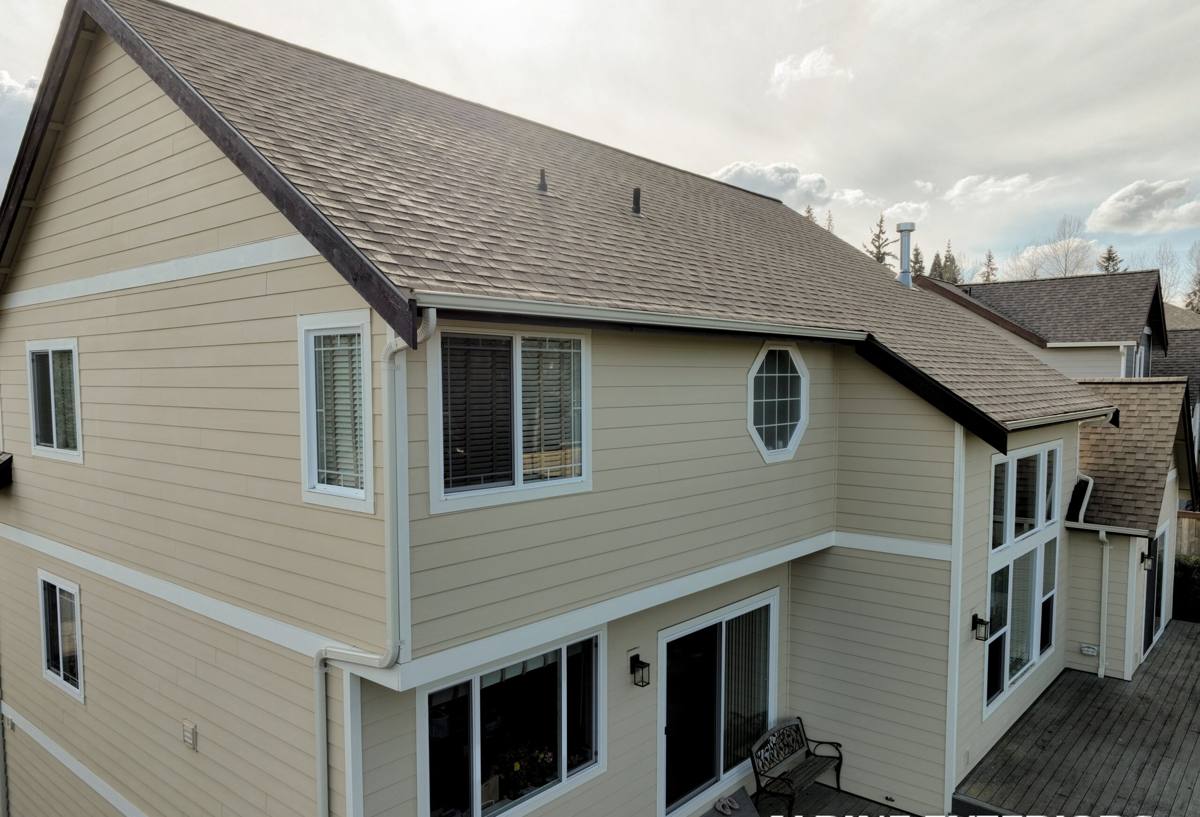
What Fairhaven's Climate Actually Does to This Siding Profile
Board and batten is more exposed to weather stress than flat lap siding in a few specific ways, and homeowners considering it in this area should understand them before signing off on a bid.
Salt Air
Proximity to salt water accelerates corrosion on anything metal — fasteners, flashing, trim caps — faster than it would inland. On a board and batten wall, every batten strip is fastened through the field of the panel below it, which means there are simply more fastener penetrations per square foot than most other siding profiles. If those fasteners aren't corrosion-resistant and properly set, this is where a marine-climate job starts failing first: rust streaks, loosened battens, and eventually water finding its way behind the wall.
Driving Rain
Wind-driven rain off the water doesn't fall straight down — it gets pushed sideways and upward under laps and behind trim. Board and batten depends on the vertical battens shedding water down and away from the seams underneath them. If the batten spacing, fastening pattern, or underlying water-resistive barrier isn't right, driving rain finds the seams instead of running past them.
Moss and Sustained Moisture
Long wet, mild winters mean siding here stays damp for extended stretches rather than getting quick, hard rain followed by fast drying. That sustained moisture is exactly the environment moss, algae, and mildew need to take hold, especially on north-facing walls and anywhere shaded by mature trees. A siding material that absorbs and holds water gives moss more to grow on and stays softer underneath as it does.
None of this means board and batten is a bad choice for a Fairhaven home — it means the material and the installation both have to be matched to what this climate actually does, not just to what a spec sheet says on paper.
Why We Only Install James Hardie for This Profile
We get asked about vinyl board and batten, LP SmartSide, and primed wood versions of this look. We don't install any of them, and we'd rather explain why than dodge the question.
- Vinyl board and batten is lightweight and low-cost, but it's plastic — it expands and contracts more with temperature swings than fiber cement, it can warp or crack in impacts, and it doesn't hold paint if a homeowner ever wants to change the color down the road.
- Engineered wood (LP SmartSide) performs reasonably in drier climates but is a wood-strand product at its core. In a sustained-moisture coastal climate like this one, any breach in the factory coating or field-cut edge sealing gives moisture a wood substrate to swell and eventually rot.
- Primed spruce or cedar board and batten is the traditional look, but real wood in salt air and long wet winters means an ongoing maintenance cycle of caulking, repainting, and watching for rot at end grain and fastener heads — indefinitely, for as long as you own the house.
James Hardie fiber cement doesn't have those weaknesses. It's non-combustible, it doesn't swell or rot the way wood-based products can, and it's engineered specifically for high-moisture climate zones like this one under Hardie's HZ5 product line. The factory-applied ColorPlus finish is baked on under controlled conditions rather than field-painted, which means better adhesion and a longer color life in salt air and UV than a job-site paint job typically gets. That's the whole reason we standardized on one manufacturer instead of offering a menu of options — we'd rather install one product correctly, every time, than install several products with different failure points.
What a Correct Board & Batten Installation Involves
The board and batten look can be built two different ways, and the difference matters more than most homeowners realize when they're comparing bids.
Panel-and-Batten System
Wide vertical fiber cement panels go up first, with a water-resistive barrier and properly lapped flashing underneath, then narrower batten strips are fastened over the panel seams. This is the version we build. Every seam, corner, and penetration gets flashed and sealed as part of the install, not patched afterward with caulk.
Fastening and Spacing
Batten spacing has to match the panel width and follow the manufacturer's engineering specs — not just look even from the sidewalk. Fasteners have to land in solid backing, at the correct depth, with corrosion-resistant fasteners appropriate for a coastal environment. Overdriven or underdriven fasteners are one of the most common defects we find on board and batten jobs that were rushed.
Corners, Trim, and Penetrations
Outside corners, window and door trim, and any wall penetration (vents, hose bibs, light fixtures) are where water intrusion actually starts on a board and batten wall. Correct flashing and sealant detailing at these points matters more than the field of the wall itself.
- Water-resistive barrier installed and lapped correctly before any siding goes up
- Panel seams and corners flashed, not just caulked
- Batten spacing and fastening pattern following manufacturer engineering, not eyeballed
- Corrosion-resistant fasteners rated for coastal/marine exposure
- All trim, window, and penetration details sealed as part of the install sequence
- Factory-finished ColorPlus panels handled and cut to avoid exposing raw edges without touch-up sealer
Board & Batten vs. Other Common Siding Profiles
| Profile | Look | Coastal Climate Notes |
|---|---|---|
| Board & Batten (Hardie fiber cement) | Bold vertical lines, farmhouse/craftsman | More fastener/seam points than lap siding; performs well when flashed correctly |
| Lap Siding (Hardie fiber cement) | Traditional horizontal shadow lines | Fewer vertical seams; slightly more forgiving install, though still needs correct flashing |
| Shingle/Shake Panel | Textured, cottage style | More surface texture holds moisture and moss longer in shaded areas |
| Vinyl Board & Batten | Similar visual, plastic material | Expands/contracts more, can't be repainted, more prone to impact cracking |
Our Process on a Fairhaven Job
- Walk the exterior with you — we look at sun exposure, wind direction relative to the water, existing moss or moisture staining, and any current siding failures before we talk about product.
- Check the sheathing and water barrier underneath — on a re-side, what's behind the old siding tells us as much as what's on the surface. We don't cover up rot or a compromised barrier.
- Detail the plan for battens, corners, and trim — spacing, fastening pattern, and flashing details are decided and documented before installation starts, not improvised on site.
- Install to manufacturer spec — barrier, flashing, panels, battens, trim, in that order, with corrosion-resistant fasteners throughout.
- Final walkthrough — we go over the finished wall with you, including how ColorPlus finish holds up and what (if any) maintenance to expect.
Cost Factors for Board & Batten in This Area
Every Fairhaven home is different, so we won't quote a number without seeing the house, but these are the factors that actually move a board and batten estimate up or down:
| Factor | Why It Matters |
|---|---|
| Existing wall condition | Rotted sheathing or a failed water barrier found during tear-off adds repair scope |
| Wall height and complexity | Multi-story walls, dormers, and cut-up facades take more labor per square foot |
| Batten spacing/pattern chosen | Tighter batten spacing means more material and more fastening labor |
| Trim and corner detailing | Custom trim packages and window surrounds add time beyond the flat wall area |
| Access and site conditions | Tight lots, mature landscaping, or waterfront exposure can affect scaffolding and staging |
Living With Board & Batten Once It's Installed
Fiber cement board and batten is low-maintenance compared to wood or vinyl alternatives, but "low-maintenance" isn't "no-maintenance" in this climate. A short annual routine keeps a correctly installed wall performing for decades:
- Rinse the exterior once or twice a year, focusing on shaded and north-facing walls where moss takes hold first
- Keep gutters clear so overflow doesn't run down the wall face repeatedly
- Trim back landscaping that keeps a wall section shaded and damp
- Watch caulk lines at trim and penetrations for cracking and have them refreshed before they open up
- Address any impact damage or loose battens promptly rather than letting water get behind the panel
Why a Crew That Already Works Fairhaven Matters
Board and batten done wrong doesn't usually announce itself right away — it shows up a few winters later as a loose batten, a rust streak below a fastener, or moss creeping across a north wall faster than it should. A crew that already installs siding around Fairhaven and the rest of Whatcom County has already seen which details matter most in this specific exposure: how far the wind carries salt spray inland on this stretch of coast, which wall orientations hold moisture longest through a Pacific Northwest winter, and how the local building department expects water-resistive barriers and flashing to be detailed. That's knowledge you don't get from a spec sheet, and it's the difference between a board and batten wall that looks good for one summer and one that still looks good in fifteen years.
If you're weighing board and batten for a home in Fairhaven, we're glad to walk the exterior with you, look at what's there now, and give you a straight answer on what it would take to do it right — no pressure, no obligation. Reach out below for a free estimate.