 Ferndale
 Semiahmoo Is a Different Kind of Job Than Inland Ferndale
Semiahmoo sits out on the water, caught between open salt water and Drayton Harbor, which means it takes weather that inland Whatcom County homes simply don't see. Wind-driven rain comes off the water sideways instead of straight down. Salt spray rides that wind onto siding, trim, and fasteners year-round, not just during storms. And because the air stays damp and shaded on many lots close to the shoreline, moss and algae get a long head start every fall and don't fully let go until well into spring.
None of that is exotic information to anyone who's lived out there a few winters. But it matters a great deal when you're choosing a siding material and a contractor, because a product or an install that's "fine" fifteen miles inland can fail years early on a waterfront lot. We treat Semiahmoo jobs differently from the start — different fastener choices, different flashing details, different attention to how water actually moves across a wall in that environment.
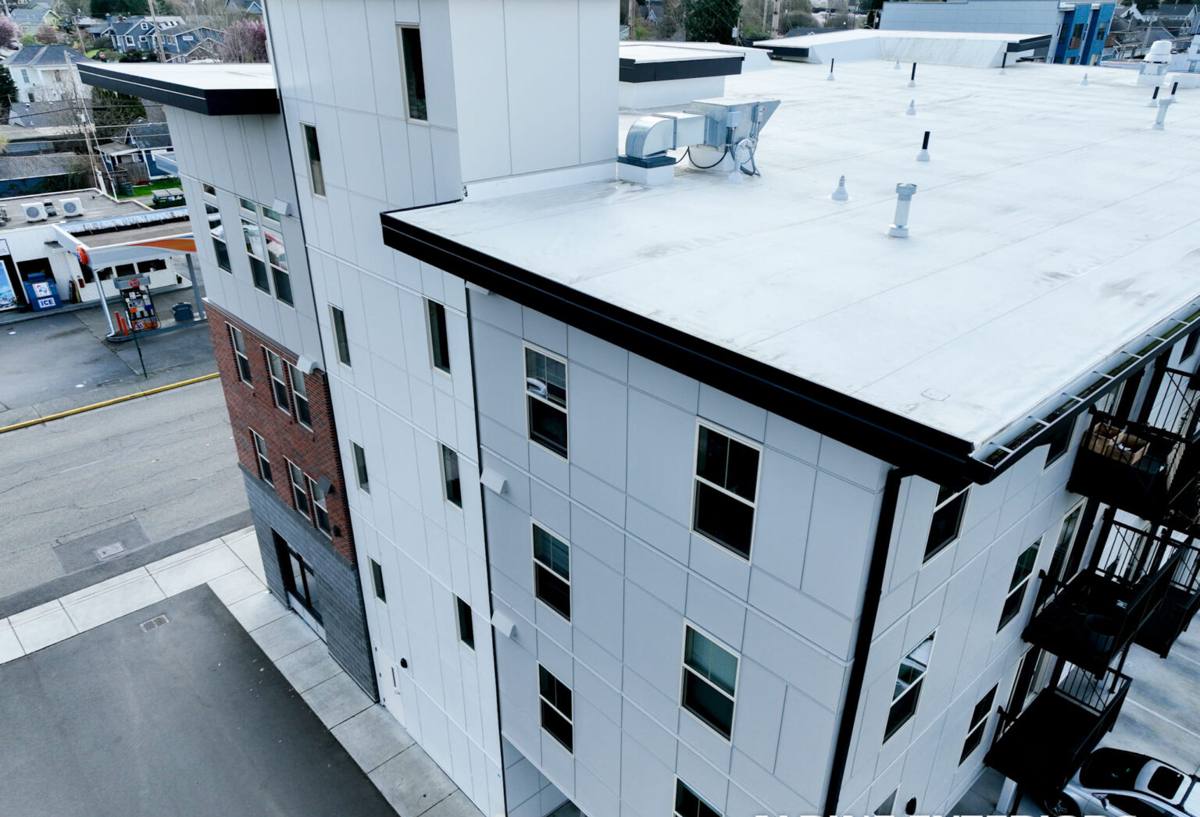
What Salt Air, Rain, and Moss Actually Do to Siding
It helps to be specific about the failure modes we're guarding against, because each one points to a different fix:
- Salt air corrodes exposed fasteners and unprotected metal flashing faster than it does a few miles inland. It also accelerates the breakdown of paint films that aren't built to shed it.
- Driving, wind-blown rain gets pushed into laps, seams, and butt joints that would stay dry in a calmer setting. Any gap in the water-management plan behind the siding shows up as staining, rot, or mold on the sheathing before it ever shows on the surface.
- Extended moss and algae season keeps siding surfaces damp longer, which is hard on any material that can absorb moisture, and it's cosmetically rough on paint jobs that weren't formulated to resist mildew growth.
Put together, this is exactly the environment fiber cement was engineered for — but only when the product is right and the installation respects those conditions. A good product installed carelessly will still fail here, and it'll fail faster than it would inland.
Why We Only Install James Hardie Fiber Cement
We standardized on James Hardie products for every job we do, including out in Semiahmoo, for reasons that are especially relevant on the water:
Non-combustible, dimensionally stable material
Fiber cement doesn't swell, cup, or delaminate the way wood-based siding can when it's exposed to repeated wetting and drying cycles. On a lot that gets soaked by driving rain and then dried by salt wind, that dimensional stability is what keeps seams tight and paint intact over the long run.
ColorPlus factory finish
Hardie's ColorPlus finish is baked on in a controlled factory process, with more UV and moisture resistance built in than a field-applied coat typically achieves. In a moss-and-algae climate, a finish that resists mildew growth and holds its color without chalking is worth more than it sounds like on paper — it's the difference between a house that still looks clean at year eight and one that needs a wash-and-repaint by year four.
HZ5 engineering for the Pacific Northwest
Hardie's HZ5 product line is engineered for climates like ours — freeze-thaw cycling, sustained moisture, and coastal exposure. It's not a generic siding pulled off the same line as what ships to Arizona; it's formulated for the weather Whatcom County actually gets.
We don't install LP SmartSide, vinyl, Cemplank, Allura, or bare cedar, and that's a deliberate standard, not an oversight. Each of those products has legitimate strengths, but on a waterfront job the trade-offs — moisture sensitivity, seam behavior, coating durability, or long-term maintenance load — are exactly the weaknesses that salt air and driving rain expose fastest. We'd rather turn down a job than install something we know won't hold up here.
Fiber Cement vs. Other Siding Materials in a Coastal Environment
| Material | Behavior in Salt Air / Driving Rain | Moss & Algae Resistance | Long-Term Maintenance |
|---|---|---|---|
| James Hardie fiber cement (HZ5) | Dimensionally stable, doesn't absorb and swell like wood | ColorPlus finish resists mildew growth | Occasional wash; repaint interval measured in decades, not years |
| Vinyl | Can warp or become brittle under UV and temperature swings; seams can loosen | Surface can stain and hold algae in shaded, damp spots | Low upkeep but limited lifespan and repair options when damaged |
| LP SmartSide (engineered wood) | Wood-based core is more moisture-sensitive at cut edges and seams | Requires diligent caulking and paint maintenance to resist moisture intrusion | Shorter realistic repaint cycle in a wet, salty climate |
| Bare or primed cedar | Natural material moves with moisture; needs consistent sealing | Prone to graying, mildew, and moss without regular treatment | Highest ongoing maintenance of the group |
This isn't a knock on every other product on the market — it's why our crews only carry Hardie material on the truck. We'd rather stand behind one system we trust in this climate than install several and hope each one performs.
What a Correct Installation Involves Out Here
The material is only half the equation. On a Semiahmoo property, installation details carry more weight than they would on a sheltered inland lot:
- Rainscreen gap: A drainage gap behind the siding lets any water that gets past the surface drain and dry out instead of sitting against the sheathing.
- Flashing at every penetration: Windows, doors, hose bibs, and vents all get properly lapped flashing, not just caulk — caulk is a backup, not a water-management plan.
- Corrosion-resistant fasteners: In a salt-air environment, fastener selection matters more than usual; we use fasteners rated for the exposure, not whatever's cheapest.
- Correct fastener spacing and clearance: Hardie's installation instructions specify minimum clearances from grade, roof lines, and decks — those clearances exist specifically to keep siding out of standing moisture.
- Factory-finished cut edges sealed: Every field cut gets touched up so the ColorPlus protection isn't compromised at the edge.
- Joint treatment built for movement: Butt joints and trim transitions are detailed to shed water rather than trap it against the wall.
Skip any one of these and you can end up with siding that looks fine from the street for a couple of years while moisture works on the wall behind it. That's the failure mode we see most often when we're asked to look at someone else's installation.
Our Process for a Semiahmoo Project
1. Walk the property and read the exposure
We look at which walls take the worst of the wind and rain, where shade keeps siding damp longer, and where the existing water management — flashing, gutters, grading — is already falling short.
2. Check what's behind the current siding
Especially on older homes, we want to know the condition of the sheathing and framing before we close the wall back up. Any rot or moisture damage gets addressed, not covered over.
3. Install with the details above as the standard, not the exception
Rainscreen, flashing, fastener choice, and clearances aren't optional add-ons we upsell — they're how we install fiber cement siding on every coastal job.
4. Walk the finished job with the homeowner
We go over what maintenance actually looks like going forward, so there are no surprises about what the siding needs from you and what it doesn't.
Maintenance Semiahmoo Homeowners Should Actually Expect
One of the real advantages of correctly installed Hardie siding in this climate is how little it asks of you. That said, "low-maintenance" isn't "no-maintenance":
- Rinse the siding once or twice a year, more often on shaded or north-facing walls where moss tends to collect.
- Keep gutters clear so overflow doesn't run down the wall face during heavy rain.
- Trim back vegetation and keep mulch beds from holding moisture against the bottom courses.
- Have caulking at trim and penetrations checked every few years and refreshed if it's cracking or pulling away.
- Watch for any siding that's been struck or damaged — fiber cement holds up well to weather, but impact damage should be repaired promptly to keep water out.
What Fiber Cement Siding Typically Costs to Factor In
| Cost Factor | Why It Matters on a Coastal Job |
|---|---|
| Home size and wall complexity | More corners, penetrations, and trim details mean more flashing and labor time |
| Condition of existing sheathing | Moisture damage found during tear-off adds repair scope before new siding goes on |
| Product line and profile | Lap width, texture, and trim selections affect material cost |
| Access and site conditions | Waterfront lots can have tighter access or exposure that affects scaffolding and scheduling |
| Paint/color selection | Factory ColorPlus finish vs. field-painted options affects both cost and long-term durability |
We won't quote a number without seeing the house — every one of these variables changes the estimate, and a fair price depends on an actual walk of the property, not a guess over the phone.
Why It Matters That We Already Work This Area
A crew that mostly works inland can still do a technically correct install and still get it wrong for Semiahmoo, simply because they're not used to designing for this level of wind-driven rain and salt exposure. Knowing to prioritize a rainscreen gap, choosing fasteners rated for salt air, and setting clearances with a wet, shaded lot in mind aren't things you improvise on the day of the job — they're decisions made before the first board goes up, based on having done this exposure before.
As a Ferndale-based crew serving Whatcom County, we've worked enough coastal and waterfront properties around here to know that a siding job that looks the same as an inland job on paper needs to be built differently in the field. That's the standard we hold every Semiahmoo project to.
If you're planning a siding project on your Semiahmoo home, we're happy to walk the property, look at what your walls are actually dealing with, and put together a straightforward, no-pressure estimate — just fill out the form below.