 Ferndale
 Why Marietta's Location Makes Siding Choice Matter
Marietta sits close enough to Bellingham Bay and the Strait of Georgia that homes here deal with a version of coastal weather most of Whatcom County doesn't get quite as directly: salt-tinged air off the water, wind-driven rain that hits siding sideways instead of straight down, and a wet season that runs long enough for moss and algae to get a real foothold on north-facing walls. None of that is exotic or extreme, but it's consistent, year after year, and siding material that isn't built for it shows the wear early — usually starting at the bottom courses, the trim joints, and anywhere water is allowed to sit instead of shed.
We install James Hardie fiber cement siding exclusively, and Marietta is one of the neighborhoods where that decision shows its value most clearly. Fiber cement doesn't absorb moisture the way wood-based products do, it doesn't corrode from salt exposure, and its factory finish is built to hold color and resist the mildew and moss growth that damp, shaded siding invites. This page covers what that looks like in practice for a Marietta home — what the climate actually asks of your siding, what a correct Hardie install involves, and how our process works from first look to final walk-through.
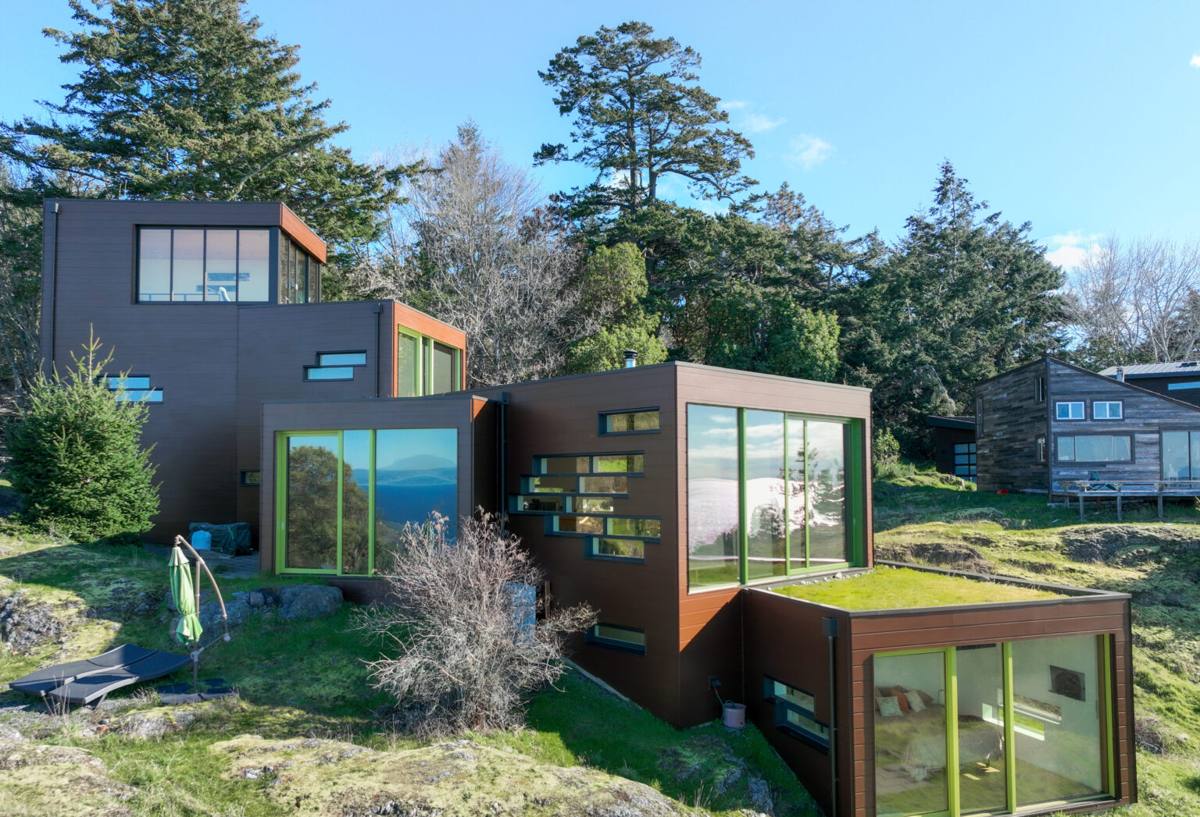
What Salt Air, Driving Rain, and Moss Season Actually Do to Siding
Salt Air
Salt-laden air doesn't just affect homes right on the waterfront — it travels on prevailing winds and settles on siding, trim, and fasteners well inland from the shoreline. Over years, it accelerates corrosion on unprotected metal fasteners and trim pieces, and it can dull or chalk lesser paint finishes faster than the same product would fade a few miles inland. The fix isn't complicated, but it does mean using the right fastener material and a finish that's engineered to hold up, not just a standard exterior paint job.
Driving Rain
Whatcom County storms coming off the water often push rain sideways rather than straight down, which means siding here takes on more wind-driven moisture at seams, laps, and butt joints than siding in calmer inland areas. If those joints aren't flashed, caulked, and lapped correctly, water finds its way behind the siding — and once it's behind the cladding, it's working on your sheathing and framing, not just the visible surface. This is a place where installation quality matters as much as the product itself.
Moss Season
Whatcom County's wet season stretches long, and shaded, north- and east-facing walls in tree-covered lots — common throughout Marietta — stay damp for extended stretches. That's exactly the environment moss, algae, and mildew need to establish themselves on a wall surface. Materials that hold surface moisture, or finishes that aren't mildew-resistant, will show green and black staining years before a properly finished fiber cement wall does.
Quick Reference: Climate Stress and What It Requires
| Climate Factor | What It Does to Siding | What the Siding Needs |
|---|---|---|
| Salt air off the water | Accelerated fastener corrosion, faster finish chalking | Corrosion-resistant fasteners, factory-baked finish |
| Wind-driven rain | Moisture pushed into laps, joints, and seams | Correct flashing, lapping, and sealant details |
| Long moss/algae season | Surface staining and growth on shaded walls | Non-porous, mildew-resistant surface material |
| Freeze-thaw swings | Stress on materials that expand/contract with moisture | Dimensionally stable material, not moisture-reactive |
Why James Hardie Fits This Environment
We stopped installing vinyl, LP SmartSide, and other wood-composite sidings because in an environment like Marietta's, their weak points are the exact conditions this climate produces most reliably. Vinyl can warp and become brittle with sun and temperature swings, and it doesn't hold up structurally against sustained wind-driven rain at the seams the way a properly lapped fiber cement panel does. Wood-based composite sidings are more vulnerable to moisture intrusion at cut edges and joints — and once moisture gets into a wood-fiber product, it doesn't dry out and recover the way fiber cement does.
James Hardie's fiber cement is cement, sand, and cellulose fiber — it doesn't rot, it isn't a food source for the mold and algae that thrive in a wet coastal climate, and it holds its shape and dimensions whether it's soaked or dry. That's the baseline case for fiber cement anywhere in Western Washington. For Marietta specifically, two things matter more:
- HZ10 engineered product line: Hardie's HZ10 formulation is built specifically for the wetter, harsher climate zones — including Pacific Northwest coastal conditions — with enhanced moisture and freeze-thaw resistance built into the material itself, not just the finish.
- ColorPlus factory finish: a baked-on, multi-coat finish applied under controlled conditions, which resists fading, chalking, and mildew growth far better than field-applied paint — and it comes with its own finish warranty separate from the substrate warranty.
What a Correct Installation Involves
The material is only half the equation. Fiber cement siding installed without attention to local conditions can still fail early — not because the product is wrong, but because the details were rushed. On a Marietta home, we pay particular attention to:
Water Management Behind the Siding
Correct installation starts with a weather-resistant barrier and rainscreen or drainage plane behind the siding panels, so any moisture that does get past the surface has somewhere to go instead of sitting against the sheathing. This is standard Hardie best practice everywhere, but it's non-negotiable in a wind-driven-rain environment like this one.
Flashing and Joint Details
Every horizontal joint, window and door opening, and trim transition is a potential entry point for wind-driven rain. Z-flashing at horizontal joints, correct head flashing at openings, and properly sealed (not just caulked-over) butt joints are what keep water on the outside of the wall assembly.
Fastener Selection
In a salt-air environment, fastener material matters more than it does further inland. We use fasteners rated for the exposure, driven to Hardie's specified depth and spacing — over-driven or under-driven fasteners are one of the most common causes of early siding problems, and it's an easy detail to get wrong if a crew isn't used to fiber cement's specific installation requirements.
Clearances and Ventilation
Proper clearance from grade, roofing, and decking surfaces keeps the bottom edge of the siding from sitting in standing water or snow. In shaded, tree-covered lots common around Marietta, we also think about how a wall will dry out between rain events — ventilation and drainage detailing matter more where sun exposure is limited.
Our Process for a Marietta Project
- On-site assessment: we walk the home, check current siding condition, look at exposure direction (which walls take the worst weather), drainage at grade, and any moisture damage already present.
- Product and color selection: we help you choose the right Hardie line and ColorPlus finish for your home's exposure and your preferences — north-facing, shaded walls sometimes warrant different finish choices than sun-exposed walls.
- Prep and removal: old siding comes off, sheathing is inspected for hidden moisture damage before anything new goes up — this step catches problems that would otherwise get sealed behind new siding.
- Weather barrier and drainage plane installation: the water management layer goes in correctly before a single piece of Hardie board is hung.
- Installation to Hardie spec: correct fasteners, flashing, joint treatment, and clearances throughout — not just on the visible high-traffic elevations.
- Final walk-through: we go over the completed work with you, including care and maintenance specific to your home's exposure.
Why a Crew That Already Works Marietta Matters
Installation quality is the single biggest variable in how long any siding job lasts — and a crew that's worked this specific area already knows things a first-timer has to learn on your house. We know which elevations in this part of Ferndale take the worst wind-driven rain, what grade and drainage conditions tend to look like on Marietta lots, and how much shade a given orientation typically gets through a Whatcom County winter. That local pattern recognition shows up in small decisions — where to add extra flashing attention, which walls warrant a mildew-resistant finish priority, how tight to run clearances — that a generic install wouldn't necessarily catch.
It also means we're not learning fiber cement's installation requirements on your project. James Hardie siding is not difficult to install correctly, but it does have specific requirements — fastener spacing, joint treatment, cutting and edge-sealing practices — that differ from what a crew used to vinyl or wood siding might default to. We install Hardie exclusively, which means every job we run reinforces the same correct process instead of switching between different products' different rules.
What This Costs and What Drives the Number
Every Marietta home is different in size, wall complexity, current siding condition, and product/color selection, so we don't post blanket pricing — but here's what actually moves the cost on a real estimate:
| Cost Factor | Why It Matters |
|---|---|
| Home size and wall area | More square footage of siding and trim to remove and install |
| Number of stories and roof lines | Affects access, scaffolding, and labor time |
| Existing siding condition | Hidden sheathing damage adds repair scope before new siding goes on |
| Product line and finish | Different Hardie lines (lap, panel, shingle-style) and ColorPlus finishes carry different material costs |
| Trim and detail complexity | Homes with more windows, corners, and architectural detail take more labor per square foot |
We give a firm number after seeing the actual home, not before.
Signs Your Marietta Home's Siding Needs Attention
- Green or black staining that returns quickly after cleaning, especially on shaded walls
- Soft or spongy spots when you press on the siding, particularly near the bottom courses or under windows
- Visible warping, buckling, or gaps opening up at seams and joints
- Paint or finish that's chalking, peeling, or fading unevenly
- Rust streaking from fasteners or trim pieces
- Rising energy bills with no other explanation, which can point to a compromised weather barrier
Any one of these on its own isn't necessarily an emergency, but they're worth having looked at before the next wet season adds to the damage.
Ready for a Straight Answer on Your Siding
If you're weighing a siding replacement or repair on a Marietta home, we're happy to come take a look, tell you honestly what condition your current siding is in, and walk you through what a correct James Hardie install would involve for your specific house and exposure. The estimate is free, there's no pressure, and you'll get a straight answer either way — use the form below to get started.