 Ferndale
 Kendall's Climate Is Harder on Siding Than It Looks
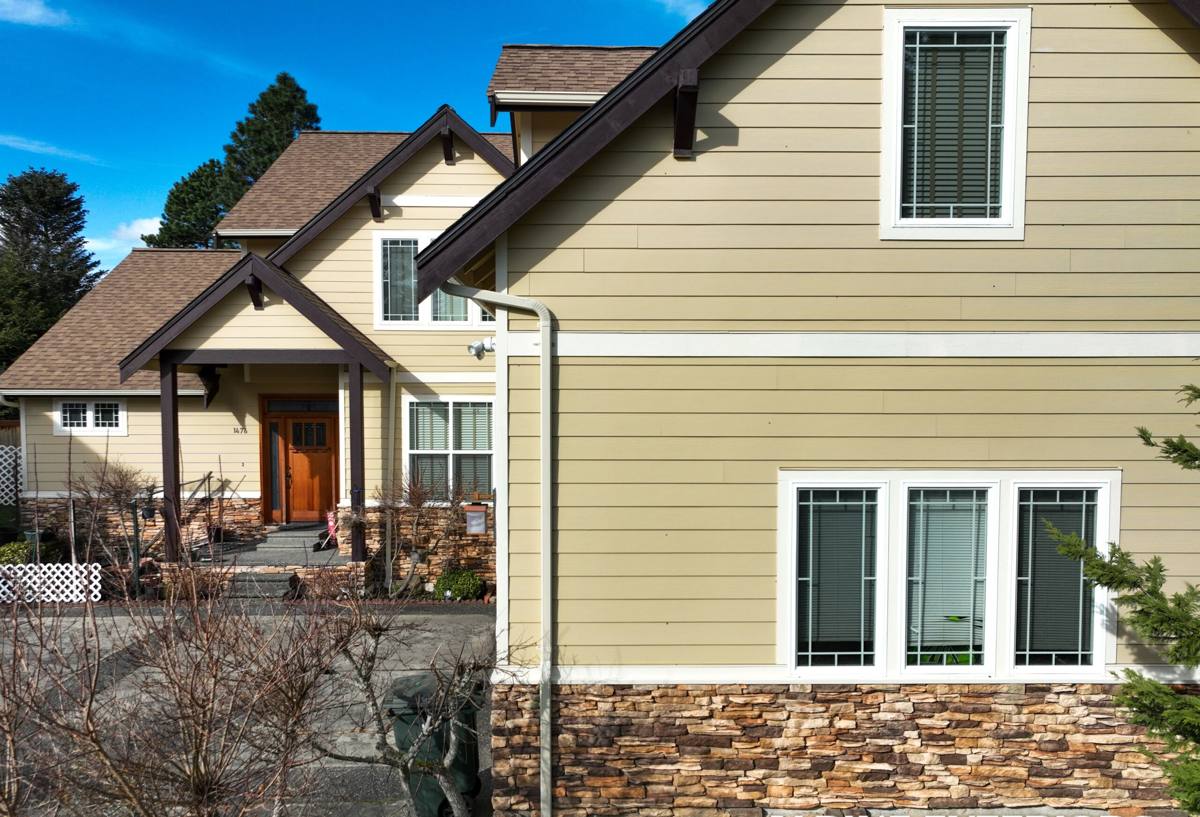
Kendall sits back from the coast, tucked toward the foothills along the Nooksack River corridor, and that setting changes what siding has to deal with compared to a home closer to Bellingham Bay. Homes here trade some of the direct salt exposure that coastal Whatcom County properties see for something just as punishing in its own way: heavy tree cover, more shade, and rain that lingers instead of drying off in an afternoon breeze. Add in the driving rain that comes through this part of Washington most of the fall, winter, and spring, and you have siding that spends a large share of the year damp.
That combination — shade, moisture, and a long moss season — is exactly the environment where the wrong siding choice or a sloppy installation shows its weaknesses first. Wood-based products swell and soften. Seams that weren't flashed correctly wick water behind the cladding where it can't dry out. And any product with a painted-on finish instead of a factory-cured one starts showing wear years before it should, especially on the shaded, north-facing walls that are common on wooded Kendall lots.
What Kendall Homes Actually Need From Their Siding
Before talking about products or process, it helps to be specific about what "good siding" needs to do for a home in this part of Whatcom County:
- Shed driving rain without letting water track sideways under laps and around trim
- Resist moisture absorption at cut edges, especially where trim and butt joints meet
- Hold its finish in low-sun, high-shade conditions where mildew and moss get a head start
- Survive freeze-thaw cycling during the occasional hard winter without cracking
- Stay dimensionally stable through wet winters and drier summers so caulk lines and paint don't fail early
None of that is exotic — it's just what a wet, tree-shaded, semi-rural Pacific Northwest climate demands. The problem is that a lot of siding products, and a lot of installations, are built for an easier climate than this one.
Why We Install James Hardie Fiber Cement and Nothing Else
We standardized our entire company on James Hardie fiber cement siding. We don't install vinyl, LP SmartSide, primed wood, or other fiber cement brands, and we're upfront about why: in a climate like Kendall's, the differences between products aren't marketing points, they're the difference between a wall that stays dry and one that doesn't.
How Hardie Compares to the Alternatives
| Factor | James Hardie Fiber Cement | Vinyl | Wood-Based / LP-Style Siding |
|---|---|---|---|
| Moisture behavior | Doesn't rot; engineered for wet climates | Doesn't rot, but expands/contracts and can gap, letting water track behind it | Engineered wood core can swell or delaminate if moisture gets to cut edges or seams |
| Finish durability | Factory-baked ColorPlus finish, resists fading and moisture staining | Color molded in but fades over time; can look chalky in a few years | Field-painted or factory-primed; repainting is on the homeowner's schedule, not the product's |
| Moss/mildew resistance | Non-organic material, doesn't feed growth the way wood fiber can | Doesn't feed growth but traps moisture behind panels in shaded areas | Wood fiber content can support moss and mildew growth if finish is compromised |
| Fire resistance | Non-combustible | Melts/deforms under heat | Combustible, treated only at the surface |
| Long-term structure | Stable, doesn't warp or buckle | Can warp or buckle with heat/cold cycling | Can swell, sag, or delaminate at damaged edges |
Vinyl and engineered wood products aren't garbage — they work fine in plenty of climates and budgets. But we've made a professional call: in Whatcom County's wet, shaded, moss-prone conditions, we'd rather put our name behind one product we trust completely than offer four we'd have to caveat.
The Hardie Product Lines That Fit Kendall's Setting
James Hardie makes climate-specific product lines, and for this part of Washington that means their HZ5 line, engineered for wetter, harsher weather zones rather than the drier HZ10 formulation sold in the Southwest. We spec HZ5 as standard on Kendall jobs. Within that line, homeowners typically choose between:
- HardiePlank lap siding — the most common choice, available in several exposure widths and textures (smooth or cedar-grain)
- HardiePanel vertical siding — often used as an accent on gables or paired with lap siding for a mixed look
- HardieTrim — matching trim boards that hold up to the same moisture exposure as the field siding, instead of mismatched wood trim that fails first
ColorPlus factory finish is worth calling out specifically for wooded lots: because it's baked on at the factory rather than field-applied, it holds color and sheds mildew staining more consistently on the shaded, slow-to-dry walls that are common where a house sits under fir or cedar cover.
What a Correct Installation Actually Involves
Product choice only gets you halfway. Fiber cement siding fails early almost exclusively because of installation mistakes, not material defects — and in a high-moisture climate those mistakes surface faster than they would somewhere dry. A correct job includes:
Behind the Siding
A weather-resistive barrier installed and lapped correctly, with rainscreen or drainage matting where the wall assembly calls for it, so any moisture that does get past the cladding has somewhere to go instead of sitting against the sheathing.
At Every Penetration
Proper flashing at windows, doors, and any wall penetration — this is the single most common failure point we find on re-sides, and it's invisible until water damage shows up years later.
Fastening and Clearances
Correct nailing pattern and depth (per Hardie's fastening specs, not generic siding practice), proper joint spacing, and the ground and roof clearances Hardie's install guide requires — skipping these voids the warranty even if the product itself is fine.
Caulking and Sealant
Sealant only where Hardie's instructions call for it — over-caulking traps moisture just as badly as under-caulking lets it in.
Our Process on a Kendall Job
- On-site assessment — we look at existing siding and sheathing condition, sun/shade exposure on each wall, tree cover, drainage around the foundation, and any moisture or moss already present
- Tear-off and inspection — we remove the old siding down to the sheathing and check for rot or hidden water damage before anything new goes on; problems found here get addressed, not covered up
- Weather barrier and drainage plane — installed to current best practice for the wall assembly, not just "whatever was there before"
- Flashing — every window, door, and penetration detailed before siding starts
- Hardie installation — fastened, spaced, and clearanced to manufacturer spec
- Trim and caulk — HardieTrim and sealant applied per spec, not by habit
- Final walkthrough — we go over the finished job with the homeowner before calling it done
Problem Signs We See Most Often on Kendall Homes
Because we work this area regularly, certain patterns show up over and over on older homes:
- Green-black staining on north- and east-facing walls where sun rarely reaches
- Soft or delaminating siding near ground level, usually tied to poor drainage or missing clearance from grade
- Caulk failure at trim joints where seasonal wood movement outpaced the sealant
- Paint peeling in sheets on older wood siding, usually starting at the shaded, tree-covered side of the house first
None of these are unusual for a wet, shaded climate — they're just what happens when siding and installation weren't matched to the conditions the house actually sits in.
What It Costs, and What Drives the Number
Every home is different, but the factors that move a Kendall siding project's cost are consistent:
| Factor | Why It Matters |
|---|---|
| Home size and wall complexity | More corners, gables, and dormers mean more cutting, trim, and labor time |
| Existing wall condition | Rotten sheathing found during tear-off adds repair scope before new siding can go on |
| Siding profile and trim selection | Wider reveals, vertical accents, and trim detailing add material and labor |
| Site access | Steep lots, long driveways, and dense tree cover common in Kendall can affect staging and scaffolding time |
| Color and finish | ColorPlus factory finishes cost more upfront than field-painted primed siding but skip the repainting cycle |
We give honest, itemized estimates rather than a single number pulled from a square-footage rule of thumb — the condition of what's underneath the old siding matters as much as the new material.
Why Hiring a Crew That Already Works Kendall Matters
Kendall isn't downtown Bellingham — lots here tend to be larger, more wooded, and further from a contractor's home base, which affects everything from material staging to how a crew reads a site's drainage and sun exposure. A crew that regularly works this area already understands how tree cover changes drying time, how the local rain pattern behaves through the fall and winter, and how to plan a job around a rural driveway or septic system instead of guessing on-site. That familiarity shows up in fewer surprises mid-project and a finished install that's actually built for how this specific area behaves, not a generic install repeated the same way everywhere.
If you're planning a siding project in Kendall, we're happy to come take a look and walk you through what your home specifically needs — no pressure, no hard sell. Request a free estimate using the form below.