 Ferndale
 Asphalt Shingle Roofing Built for Lummi Island's Climate
Lummi Island sits out in the salt air and open wind off Hale Passage and the Strait of Georgia, which means the roofs out here take a different kind of beating than roofs just a few miles inland in Ferndale. Salt-laden air accelerates the breakdown of asphalt shingle granules and metal flashing over time. Driving rain off the water finds every weak seam, lap, and fastener. And the shaded, moisture-heavy stretches of the island grow moss faster than most homeowners expect, sometimes within a couple of years of a new roof going on. None of this means asphalt shingles are the wrong choice for an island home — they're still one of the most practical, cost-effective roofing systems available — but it does mean the installation details matter more here than they do in a dry climate.
This page is about one job, done right, in one place: asphalt shingle roofing for homes on Lummi Island, installed and maintained by a crew that already works the Whatcom County coastline and understands what salt air and moss season actually do to a roof over the years.
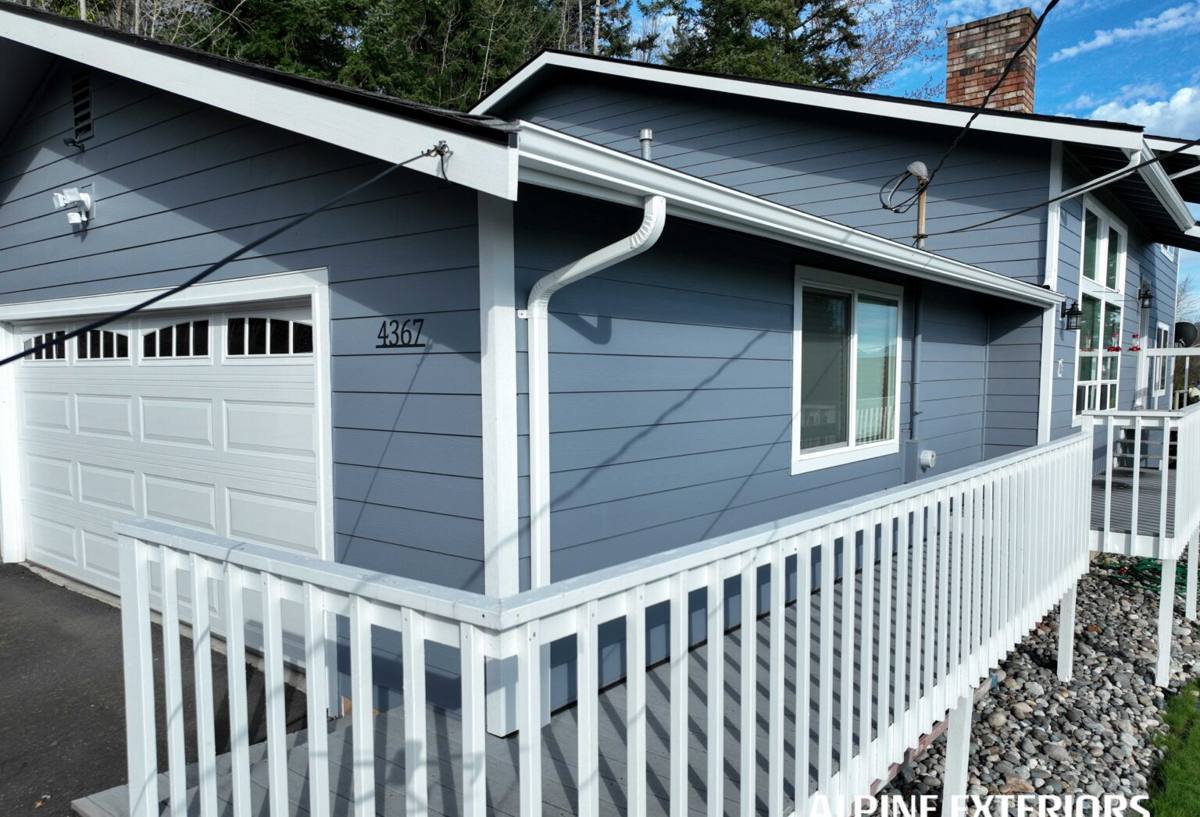
What Coastal Exposure Does to a Shingle Roof
Homeowners who move to Lummi Island from inland areas are sometimes surprised at how much faster their roof shows wear compared to a similar house in town. A few things are working against the roof out here at the same time:
- Salt air corrosion — exposed nail heads, drip edge, valley metal, and vent flashing corrode faster near open water, which is often where a roof leak actually starts, not the shingles themselves.
- Wind-driven rain — rain that comes in sideways off the water can work its way under shingle tabs and around penetrations that would stay dry in a calmer inland setting.
- Moss and algae growth — shaded roof slopes, tree cover, and the region's long damp stretch from fall through spring create ideal conditions for moss to take hold in the granule layer.
- Temperature swings — shingles expand and contract with daily temperature and moisture changes, and repeated cycling stresses seams and fastener holes over the life of the roof.
None of this is a reason to avoid asphalt shingles. It's a reason to install them with the right underlayment, flashing, and fastening details from the start, and to stay ahead of moss before it undermines the granule layer.
What a Correct Asphalt Shingle Job Looks Like Here
Underlayment and Water Management
On a coastal roof, the underlayment is doing more work than people assume. We use synthetic or self-adhered underlayment at eaves, valleys, and around every roof penetration, so that if wind-driven rain ever does get past the shingle layer, it still has a second line of defense before it reaches the deck. Ice-and-water shield style membrane at valleys and low-slope transitions is standard practice for us on island homes, not an upsell.
Flashing and Fasteners
Flashing failure, not shingle failure, is the most common cause of leaks we find on older coastal roofs. We use corrosion-resistant flashing at chimneys, skylights, sidewalls, and valleys, and we fasten with the manufacturer's specified nail pattern — enough nails, in the right spots, driven correctly. Under-nailing or over-driving nails is one of the most common shortcuts that shows up as blow-offs a few winters later, and it's exactly the kind of detail that's invisible until a storm finds it.
Ventilation
A roof that can't breathe traps moisture in the attic, which shortens the life of the shingles from underneath and contributes to the kind of humidity that helps moss and mildew take hold. We check intake and exhaust ventilation as part of every roofing job, not as an afterthought.
Why a Crew That Already Works Lummi Island Matters
Lummi Island is reached by ferry, and that one fact changes how a roofing project has to be planned. Material deliveries, crew scheduling, dumpster or debris hauling, and even something as simple as running back for a forgotten part all have to work around the ferry schedule instead of a quick truck run down the street. A crew that hasn't worked the island before often underestimates this and either runs late or cuts corners to stay on schedule.
We plan island jobs differently: materials are staged and confirmed before the crew and equipment cross over, the work day is built around ferry timing rather than fighting it, and debris removal is scheduled so it doesn't sit around waiting for another crossing. That kind of planning isn't glamorous, but it's the difference between a job that runs smoothly and one that drags on for weeks longer than it should.
Our Process for an Island Roofing Job
- On-site inspection — we walk the roof, check the decking condition, look at existing flashing and ventilation, and assess moss or algae staining before quoting anything.
- Written estimate — a clear scope of work, materials, and timeline, planned around ferry logistics so there are no surprise delays.
- Tear-off and deck check — old roofing is removed and the deck is inspected for soft spots or rot before anything new goes down. Any deck repairs are called out before, not discovered halfway through.
- Underlayment, flashing, and shingle install — installed to manufacturer spec, with extra attention to valleys, penetrations, and eaves given the coastal exposure.
- Cleanup and haul-off — site is cleaned, nails are magnet-swept, and debris is removed on a schedule that accounts for the ferry rather than left sitting.
- Final walkthrough — we go over the finished roof with the homeowner before calling the job done.
Shingle Options and How They Hold Up to Salt Air
Not every asphalt shingle product handles coastal exposure the same way. The table below is a general comparison to help frame the conversation — your exact options and pricing depend on the specific product lines available at the time of your project.
| Shingle Type | Typical Lifespan | Coastal / Moss Considerations |
|---|---|---|
| 3-Tab Asphalt | 15–20 years | Lower upfront cost; flatter profile can show wind stress sooner in exposed, gusty spots. |
| Architectural (Laminate) Asphalt | 25–30 years | Thicker, heavier construction generally holds up better to wind-driven rain and impact. |
| Algae-Resistant (AR) Shingles | Same as base product | Granules treated with copper or zinc compounds slow algae and moss growth on shaded slopes. |
| Premium/Designer Laminate | 30+ years | Highest wind ratings and thickness; best fit for the most exposed, water-facing roof slopes. |
For most island homes, we lean toward architectural shingles with algae-resistant granules as the practical middle ground — better wind performance than a basic 3-tab, and slower moss and algae buildup on the shaded north- and tree-covered slopes that tend to hold moisture longest.
Why We're Careful About Which Products We Recommend
Some lower-tier shingle products are more sensitive to installation conditions — temperature at install, exact nail placement, or sealant strip activation — and that sensitivity matters more in a wind-and-salt environment where there's less room for error. We recommend products and installation methods that hold up under this specific exposure, not just whatever is cheapest to install, because a roof that has to be redone in twelve years costs more than one that lasts twenty-five.
Moss, Algae, and Ongoing Roof Care
Even a well-installed roof on Lummi Island will grow moss eventually if it has shaded or tree-covered slopes — that's the nature of the climate, not a sign of a bad install. What matters is staying ahead of it:
- Keep gutters and valleys clear of needles and debris where moss tends to start.
- Trim back overhanging branches to let more light and airflow reach shaded slopes.
- Have moss removed by soft-washing or manual methods rather than aggressive pressure washing, which can strip granules and shorten shingle life.
- Catch small areas of moss early — a light growth is a maintenance task, a heavy mat that's been growing for years can trap moisture against the shingle and shorten its remaining life.
- Have your roof looked at after major windstorms, since wind-driven rain and gusts off the water are what typically expose a weak spot first.
What Affects the Cost of an Island Roofing Job
| Factor | Why It Matters |
|---|---|
| Roof size and pitch | More square footage and steeper slopes mean more material and labor time. |
| Number of layers to remove | Tear-off of an existing roof adds labor and disposal cost versus a bare deck. |
| Deck condition | Soft or rotted decking found during tear-off needs repair before new shingles go down. |
| Shingle tier selected | 3-tab, standard architectural, and premium laminate products carry different material costs. |
| Flashing and ventilation work | Upgrading old or corroded flashing and adding proper ventilation adds to scope but reduces future leak risk. |
| Ferry and logistics | Material staging and crossing schedules are factored into project timelines for island jobs. |
We give a written, itemized estimate before any work starts so you know exactly what you're paying for and why, rather than a single lump-sum number with no explanation behind it.
What to Look for When Hiring a Roofing Crew for Lummi Island
Whether you call us or someone else, these are the things worth checking before you sign a contract for island work:
- Do they carry current Washington State contractor licensing and liability insurance, and will they show you proof?
- Have they worked on Lummi Island or similarly exposed waterfront property before, and can they explain how that changes their approach?
- Do they inspect and address flashing and ventilation, or just replace shingles and call it done?
- Is the estimate written and itemized, or a vague verbal number?
- Do they have a clear plan for material delivery and debris removal that accounts for the ferry schedule?
- Will they document deck condition and any repairs found during tear-off before proceeding?
A roof is one of the more expensive things you'll maintain on a home, and on the island the cost of a rushed or poorly planned job compounds — both in the labor to redo it and in the extra logistics of getting a crew back out to fix it later.
Get an Honest Look at Your Roof
If your Lummi Island home needs a new asphalt shingle roof, or you're not sure whether what you're seeing is normal wear or something that needs attention now, we're happy to come take a look. We offer free, no-pressure estimates and will give you a straight answer about what your roof actually needs — use the form below to get started.