 Ferndale
 Lummi Island sits just off the mainland in Whatcom County, reachable only by a short ferry crossing, and that one fact changes more about a window installation project than most homeowners expect going in. It's not just the marine climate, though that's part of it — full water exposure on every side of the island means salt air, wind-driven rain, and a moss season that runs longer here than it does a few miles inland in Ferndale. It's also the logistics. Every window, every tool, every load of debris, and every crew member has to make the same ferry crossing the homeowner does, and that reality shapes scheduling, material ordering, and how a job gets planned from the first estimate.
We treat Lummi Island window installation as its own category of work, not a smaller version of a mainland job. The climate demands more attention to flashing and sealant detail than a sheltered inland property would need, and the island's access constraints reward a crew that plans ahead and gets it right in as few trips as possible. Both of those things matter more here than almost anywhere else we work in the county.
Why Window Installation Looks Different on Lummi Island
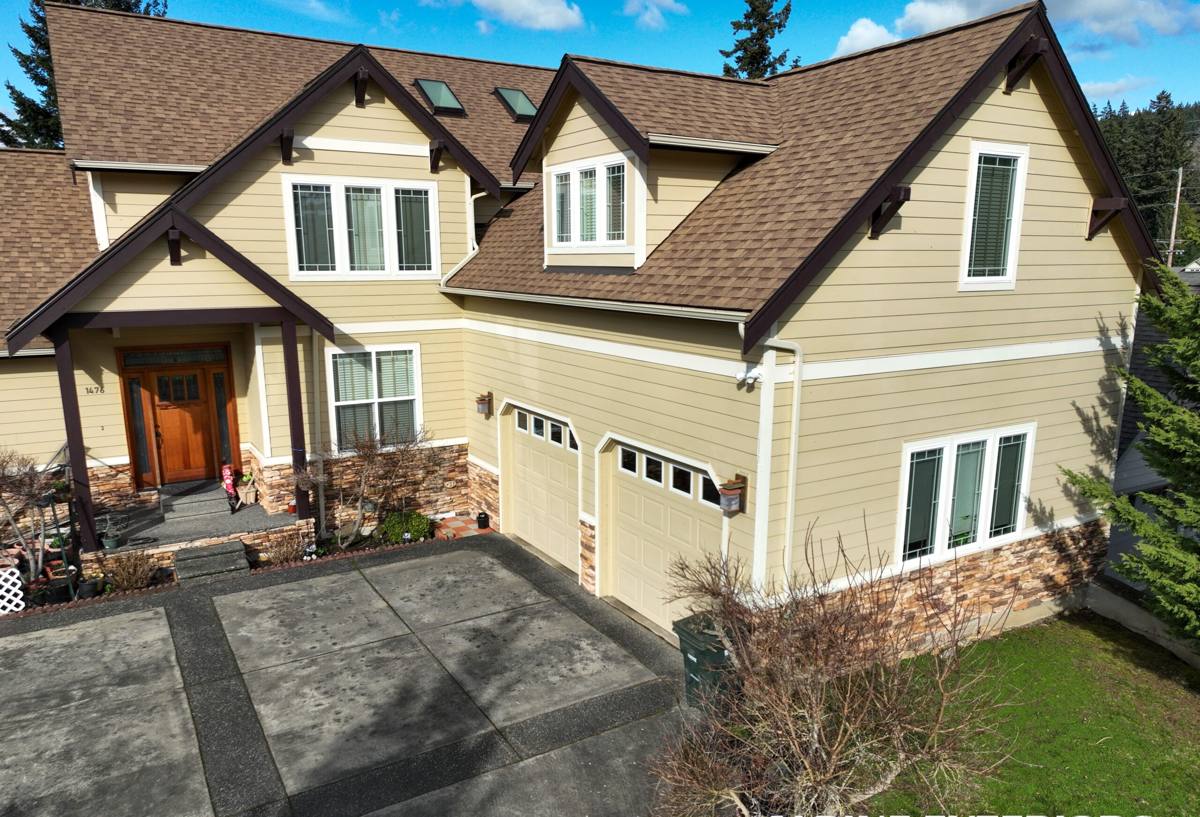
Housing on the island tends to fall into two broad categories, and each one presents its own window challenges. A good share of the older homes started life as modest cabins or seasonal cottages, built decades ago to whatever window sizes and framing practices were common at the time — long before today's energy codes and manufacturer standard sizes existed. Alongside those, there's a steady amount of newer construction and remodeling aimed at making the most of water views, which tends to bring in larger fixed units, sliders, and window walls that put more glass and more perimeter into the exterior envelope.
A Mix of Old Cabins and New View Homes
Neither category is unusual for us, but they call for different approaches. An older cabin window opening often needs careful field measurement and sometimes minor reframing before a new unit will fit cleanly, since it was never built to a manufacturer's standard dimensions. A newer view-oriented home usually means larger units with more glass area, which raises the stakes on structural support, water management, and how well the unit is sealed against wind load coming straight off open water.
The Climate Factor: Salt Air, Driving Rain, and a Long Moss Season
Being surrounded by water on every side puts Lummi Island homes in a more demanding environment than most of Whatcom County sees, including much of Ferndale itself. The same three conditions come up again and again in the work we do out here, and each one has a direct effect on how a window installation needs to be handled.
Salt Air With Nowhere to Hide
An island has no inland buffer — salt-laden air moves across the whole property from whichever direction the wind is blowing that day. That accelerates corrosion in lower-grade fasteners, hinges, and hardware, and it breaks down site-applied finishes faster than a drier, more sheltered setting would. Frame materials, hardware, and sealants that would hold up fine a few miles inland can show their age early out here if they weren't chosen with that exposure in mind.
Wind-Driven Rain From Every Direction
Without a mainland windbreak, storms push rain sideways into window openings more consistently than they would on a sheltered lot. That's a tougher test for flashing and sealant than a simple rainfall total suggests, because the water isn't just falling on the window — it's being driven into every seam and lap joint from whatever angle the wind happens to be coming from that day. A window that's flashed correctly handles that without issue. One that isn't will eventually show it, usually as a soft spot in the trim or a stain on the interior sill.
A Moss Season That Runs Most of the Year
Shade, tree cover, and near-constant moisture on parts of the island keep moss and mildew active for most of the year, especially on north-facing walls and window trim that doesn't get much direct sun. That growth isn't just cosmetic — sustained moss and mildew hold moisture against trim and sheathing, and that's the same condition that leads to rot around a window opening if it isn't caught early.
The Ferry Factor: Why Working This Island Takes Real Planning
Climate is only half of what makes Lummi Island window work different. The other half is that every part of the job depends on a ferry crossing with limited capacity, and that reshapes how a project has to be planned from the estimate forward.
Material Ordering and Lead Time
Custom or special-order windows already take weeks to arrive from the manufacturer, and on an island job, we build in extra buffer so a unit isn't sitting half-staged waiting on a ferry slot. We measure carefully and confirm orders before committing to an install date, because a wrong measurement here doesn't just mean a delay — it means another crossing, another load, and lost time for everyone involved.
One Trip, Done Right
A callback for a mainland job means a short drive back. A callback on Lummi Island means coordinating another ferry crossing for the crew, the tools, and often the replacement materials. That reality pushes us to over-prepare rather than under-prepare — bringing the right fasteners, sealants, flashing tape, and backup materials on the first trip, and sequencing the work so a full day's crossing produces a finished, correctly sealed window rather than a job that needs a return visit to fix something that should have been caught the first time.
Insert Replacement vs. Full-Frame Installation
Which approach makes sense for a given window depends on the condition of the existing frame and opening, and that decision matters even more on an island job where a mid-project change of plan costs an extra crossing.
| Factor | Insert (Pocket) Replacement | Full-Frame Installation |
|---|---|---|
| Best used when | Existing frame is sound, square, and free of rot | Frame is damaged, out of square, or being resized |
| Speed | Faster, less disruption to interior and exterior trim | Slower, involves removing trim and siding around the opening |
| Access to hidden damage | Limited — rot behind the old frame may go undetected | Full — sheathing and framing are exposed and can be repaired |
| Flashing renewal | Relies partly on the existing flashing already in place | Entire flashing system is replaced and integrated with house wrap |
| Fit for older island cabins | Fine if the original opening is still in good condition | Often necessary where age, moisture, or reframing is a factor |
On a property that's taken years of salt air and driving rain, we'll open up a sample section before committing either way. If the substrate underneath is compromised, an insert replacement over hidden rot just seals the problem in rather than solving it.
What a Correct Window Installation Job Involves Here
The window unit itself is rarely what fails first on a well-installed job. It's almost always a detail around the opening — the flashing sequence, the sill pan, or how the new unit ties into the house wrap — and those details carry more weight on a job site this exposed to wind and water.
- Careful removal of the old unit with attention to what's revealed underneath — rot, moisture staining, or insect damage that needs addressing before the new window goes in
- A sloped sill pan that directs any water that gets past the window back out, not into the wall cavity
- A correct flashing sequence — sill, jambs, then head — integrated with the house wrap so water sheds down and out rather than behind the assembly
- Proper shimming and fastening so the frame stays square and doesn't rack or bind over time
- Low-expansion foam or backer rod and sealant at the perimeter, sized and applied correctly rather than relying on caulk alone to do the whole job
- Exterior trim and flashing details sealed against wind-driven rain specifically, not just a standard rainfall assumption
None of this is unusual technique — it's the same fundamentals used on any correctly installed window. What changes on Lummi Island is how little margin there is for skipping a step. A gap that might go unnoticed for years on a sheltered inland wall gets tested by wind-driven rain here far sooner.
Signs Your Windows Need Attention
A few warning signs come up often enough on island homes that they're worth checking for directly, especially heading into the wetter months.
- Soft, spongy, or discolored trim around the window frame, inside or out
- Drafts or a noticeable temperature difference near the window on a windy day
- Fogging or moisture between panes on a double-pane unit, which signals a failed seal
- Paint that's peeling, bubbling, or chalking faster than the rest of the exterior
- Difficulty opening, closing, or latching a window that used to operate smoothly
- Moss or dark staining building up quickly on shaded trim or sills after cleaning
Any one of these on its own might just need a repair. Several showing up together on the same window, or on windows that all face the same direction, usually points to a flashing or sealant problem worth addressing before it spreads to the wall assembly behind it.
Why a Ferndale Crew That Already Works Lummi Island Matters
Manufacturer installation instructions are written for average conditions on the mainland — not for a job site surrounded by water on every side, reachable only by a scheduled ferry crossing. A crew that already works Lummi Island regularly has already solved the planning problems that catch a mainland-only contractor off guard: how to size a materials order so nothing gets left behind, how to sequence a day's work around ferry timing, and which flashing and sealant details are worth the extra time given how directly this island takes wind and rain.
That experience shows up in decisions a homeowner never has to think about — bringing backup fasteners and sealant on the first trip instead of hoping nothing runs short, planning a full day's work around one crossing instead of two, and treating every flashing detail as non-negotiable because a callback here costs real time, not just a short drive back.
What to Ask Before Hiring for Island Window Work
- Ask whether they've worked on Lummi Island before and how they plan around the ferry schedule
- Ask how they handle a job if a delivery or measurement issue comes up mid-project
- Confirm current Washington contractor licensing and insurance
- Ask what flashing and sealant details they use specifically for wind-driven rain exposure
- Get a written scope of work and a realistic timeline that accounts for ferry and weather scheduling
If you're weighing new windows, a repair, or a full replacement on a Lummi Island home, it's worth having someone look at the actual openings in person before you start comparing prices. We offer free, no-pressure estimates for window installation on Lummi Island and the surrounding area — use the form below to get a time on the schedule.