 Ferndale
 Building New in Lynden? The Windows Only Get One Shot
When you're putting up a new home in Lynden, the windows go in once, and everything about how the house performs for the next thirty years gets decided at that moment — not later. Unlike a replacement job, where a bad seal just means one leaky window you can eventually swap out, a new-construction window is tied into the house wrap, the flashing, and the siding all at the same time. Get the sequence wrong and the problem doesn't show up as a drafty window — it shows up as rot inside a wall three years down the road, after the drywall and trim are already in place.
We install new-construction windows for builders and homeowners in Lynden as part of our regular work across Whatcom County, and this page is specifically about that job: what it takes to do it right on a new build in this part of the county, not a generic overview of window installation everywhere.
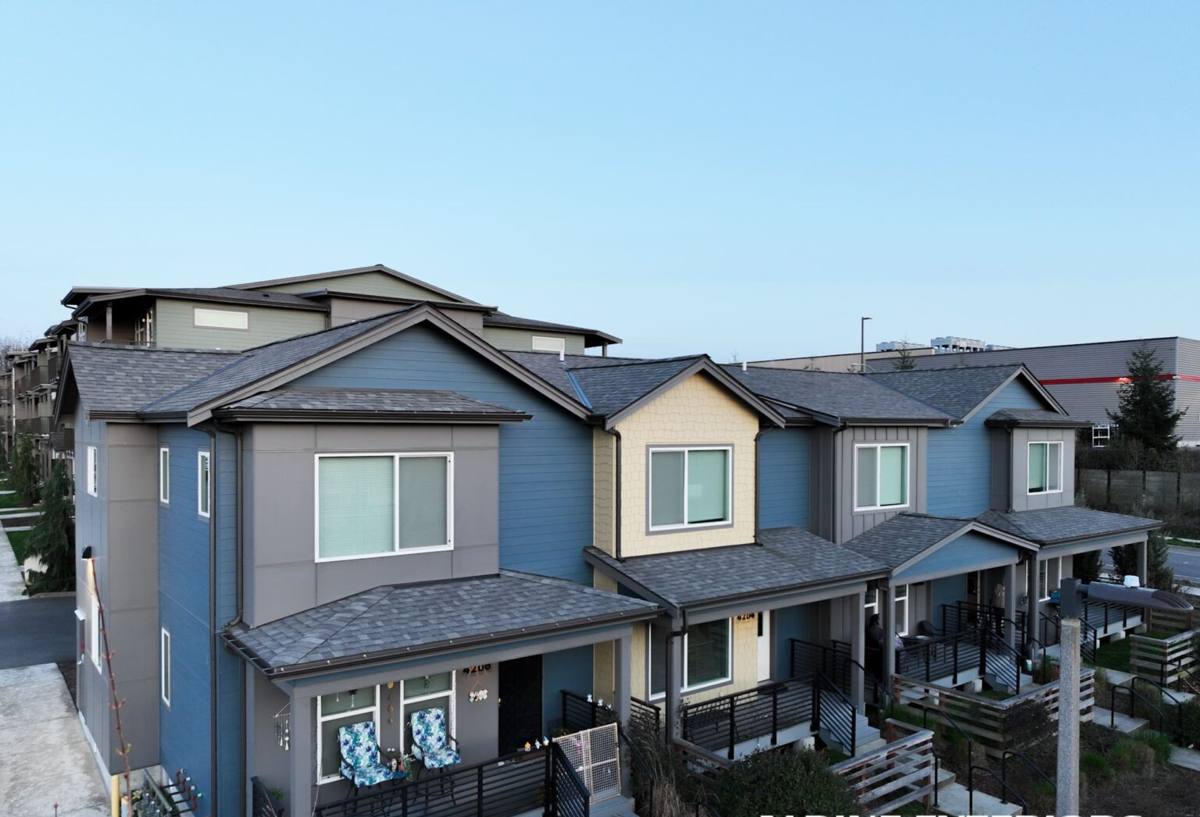
What Whatcom County Weather Asks of a New Window Install
Lynden sits inland from the coast, but the same weather pattern that brings salt air and driving rain to the rest of Whatcom County still reaches the valley — long stretches of steady, low-intensity rain, humid air that lingers in low spots, and a moss season that runs most of the year on anything north-facing or shaded. None of that is dramatic on any given day, but it's relentless, and it's exactly the kind of slow, constant moisture exposure that finds every shortcut in a window install.
For new construction specifically, that means:
- Framing openings get exposed to rain for days or weeks before windows go in — we check for water staining or swelling in the rough opening before we install, not after.
- Sill flashing has to shed water outward even during wind-driven rain, not just straight-down rain, which is the more common event here.
- Any hardware, fasteners, or trim exposed to the elements needs to hold up to persistent damp and, closer to the coast, salt-laden air that accelerates corrosion on the wrong metals.
- Moss and algae growth on sills and trim isn't cosmetic — it holds moisture against the surface longer, which matters more on a new house than an old one because new caulk and finishes haven't been weather-tested yet.
Getting the Rough Opening and Flashing Right the First Time
Sill pans and drainage
Every new-construction window we install gets a sloped sill pan or equivalent flashing at the bottom of the opening — not just a bead of sealant. The idea is simple: any water that gets past the window itself (and over enough years, some always does) needs a path back out, not a place to collect. On a house with our regional rain volume, skipping this step is one of the most common causes of hidden rot we find when we're called in to fix someone else's install.
Integrating with the water-resistive barrier
The window flange has to be woven into the house wrap in the right order — building paper or synthetic WRB laps over the top flange and under the side and bottom flanges, so water draining down the wall sheds past the window instead of behind it. This only works if it's done before the siding goes on, which is why window installation on new construction has to be coordinated tightly with the framing and siding schedule, not treated as an isolated task.
Fastening and squaring
A window that's slightly out of square will still look fine and might even operate fine for a while, but it puts uneven stress on the seals and corners, which is where leaks start. We shim and fasten to keep the frame square and plumb, check it with a level at multiple points, and confirm the unit operates smoothly before we move on to flashing tape and trim.
Choosing Window Products for a Lynden New Build
New construction gives you a real choice of frame material and glazing package, since you're not constrained by an existing opening. The right call depends on the home's design, budget, and how exposed the elevation is to weather.
| Frame Material | Typical Strength | Trade-Off to Know |
|---|---|---|
| Vinyl | Cost-effective, low maintenance, good energy performance | Limited color/finish options; can expand/contract more with temperature swings |
| Fiberglass | Very stable dimensionally, strong, holds paint well | Higher upfront cost than vinyl |
| Wood with clad exterior | Classic interior look, good insulator | Exterior cladding and seals need to be installed correctly to keep moisture out of the wood core over time |
| Aluminum | Strong, slim sightlines | Poor insulator unless thermally broken; more prone to condensation in our humid climate |
Whatever frame material you choose, we pay close attention to glazing spec — U-factor and solar heat gain — because Washington's energy code sets minimum performance requirements for new construction windows, and that's checked at inspection. We help you land on a product that clears code comfortably rather than just barely, since "barely" leaves no room for a field measurement error or a slightly less efficient install detail.
Why we don't push whatever's cheapest
We stick to window lines with a documented installation spec and a real manufacturer warranty structure, because on new construction the warranty is only as good as the install — if the flashing and fastening don't match the manufacturer's requirements, a warranty claim can get denied regardless of the product. That's a professional standard for us, not a sales pitch: we'd rather install a mid-tier window correctly than a premium one cut a corner.
Our New-Construction Window Process
- Plan review and measurement — we work from the framing plans (or field-verify openings once framed) to confirm sizes before ordering, since a bad measurement on new construction means a delay waiting on a special order.
- Ordering and lead-time coordination — windows get scheduled against your framing timeline so they arrive when the openings are ready, not sitting exposed on site or holding up the framer.
- Opening inspection — we check that rough openings are square, properly sized, and dry before install.
- Sill pan and flashing installation — sloped drainage and WRB integration, done in the correct sequence with your house wrap.
- Window setting, shimming, and fastening — squared, plumb, and fastened to manufacturer spec.
- Flashing tape and air-sealing — sealed at the interior and exterior per the window and WRB manufacturer's instructions.
- Final check — every window is operated, checked for square, and visually inspected for a continuous water-management path before we sign off.
Coordinating With Your Builder and Siding Crew
New-construction windows sit at the intersection of three trades — framing, window installation, and siding — and most of the leak problems we're called out to fix started as a scheduling or communication gap between those trades, not a bad product. We work directly with builders and general contractors on Lynden projects to make sure the sequence holds: framing complete and dry, windows in and flashed, then siding installed over a system that's already sealed correctly. If we're doing your siding as well, this coordination is internal and simpler; if another crew is handling siding, we document our flashing work clearly so there's no ambiguity about what's been done and what the siding trade needs to lap over.
Common Mistakes We Catch on Whatcom County New Builds
- Flashing tape applied in the wrong order relative to the house wrap, so water gets directed behind the barrier instead of over it
- No sill pan, or a flat sill pan that doesn't slope water back outside
- Windows fastened before the opening was confirmed dry after a rain delay
- Trim and cladding installed tight against the window frame with no room for the assembly to shed water or move seasonally
- Glazing spec that meets code on paper but leaves no margin once the actual install details are accounted for
- Hardware or fasteners chosen without accounting for long-term exposure to damp, moss-prone conditions
Cost Factors for New-Construction Window Installation
Every new build is different, but the same handful of factors drive most of the cost variation we see on Lynden projects:
| Factor | Why It Matters |
|---|---|
| Frame material and glazing package | Vinyl, fiberglass, wood-clad, and aluminum all carry different material costs, and higher-performance glazing costs more upfront |
| Number and size of openings | More and larger windows mean more material, labor, and flashing detail |
| Elevation exposure | Walls facing prevailing wind-driven rain often warrant extra flashing attention, which adds labor time |
| Access and building height | Second-story or hard-to-reach openings take longer to install safely |
| Scheduling coordination | Tight coordination with a framing crew's timeline is more efficient than piecemeal, delayed installs |
As a broad range, homeowners typically see new-construction window installation run somewhere in the low hundreds to under a thousand dollars per opening installed, before you factor in premium glazing or specialty shapes — but the only way to get a real number is a look at your actual plans and openings.
Why Hire a Crew That Already Works Lynden
A crew that regularly works Lynden and the surrounding Whatcom County area already knows what the local building department expects at inspection, has a working relationship with local suppliers on lead times, and has seen how houses in this specific microclimate hold up over time — which flashing details actually matter here versus in a drier climate, and which corners get exposed first when the rain sets in for the season. That local pattern recognition is the difference between an install that looks right on install day and one that's still performing correctly five wet winters later.
If you're building new in Lynden and want windows installed by a crew that treats the flashing and sequencing as seriously as the product itself, we're glad to walk your plans with you. Reach out for a free, no-pressure estimate — there's a form below to get started.