 Ferndale
 Why Sudden Valley Roofs Take a Different Kind of Beating
Sudden Valley sits close enough to Lake Whatcom and the marine air moving in off Bellingham Bay that roofs here deal with a combination most inland Whatcom County homes don't: salt-tinged moisture, wind-driven rain that gets pushed sideways under poorly flashed edges, and a moss season that runs long because the tree cover keeps everything shaded and damp for months at a time. A roof that would hold up fine in a drier part of the county can start showing problems here within a few years if it wasn't built for this specific mix of conditions.
Metal roofing handles this environment better than most other options, but only when it's specified and installed correctly for it. The wrong panel coating, the wrong fastener, or a flashing detail that's "good enough" elsewhere in Washington can turn into a real problem on a shaded, moisture-heavy lot in Sudden Valley.
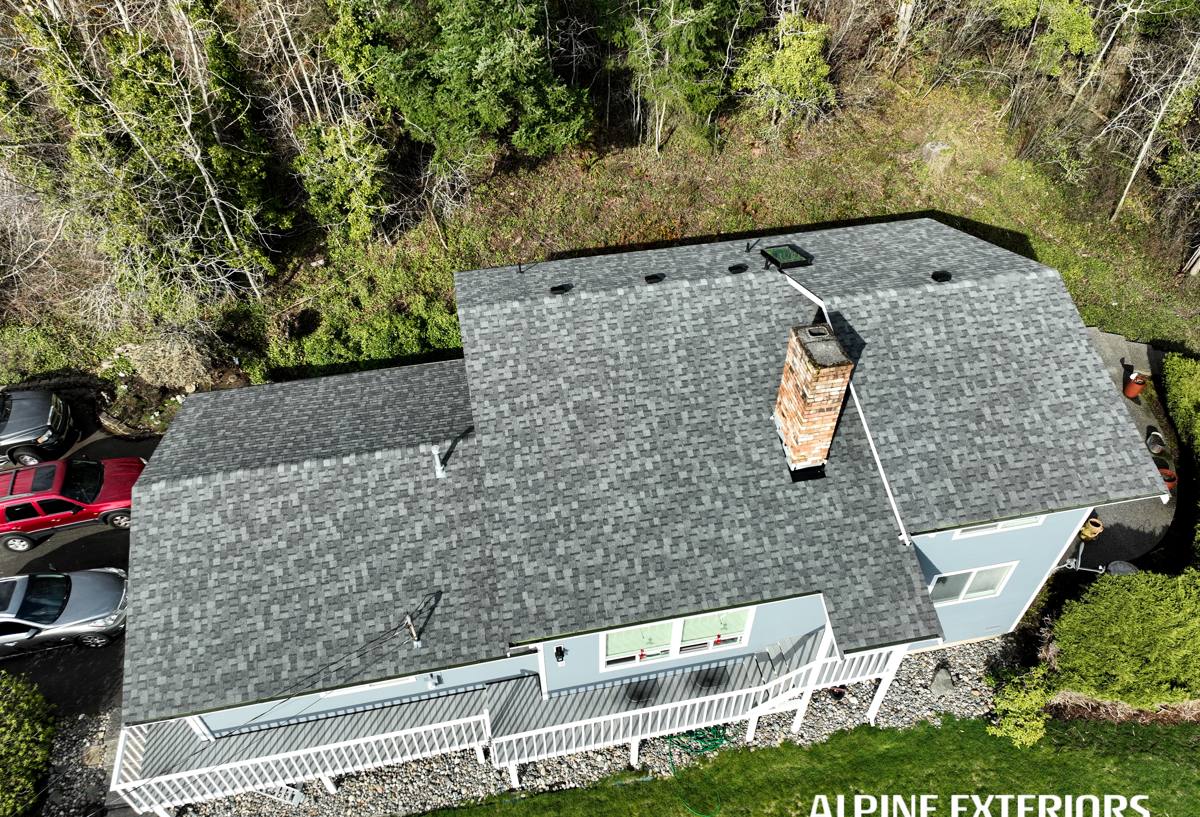
What Salt Air, Rain, and Moss Actually Do to a Roof
Salt Air
Homes closer to the water pick up airborne salt that settles on every exterior surface, including the roof. Over time, salt exposure accelerates corrosion on unprotected or poorly coated metal, degrades cheaper fasteners, and can eat away at exposed cut edges faster than people expect. This isn't a reason to avoid metal roofing — it's a reason to be selective about panel coatings and fastener grade.
Driving Rain
Storms coming off the water don't just fall straight down — wind pushes rain sideways and up under laps, ridge caps, and anywhere a roof transitions into a wall, chimney, or skylight. Standard flashing details that work fine on a calm, low-wind roof can leak here if they weren't built with wind-driven rain in mind.
Moss Season
Tree cover around many Sudden Valley properties keeps roof surfaces shaded and slow to dry, which is exactly what moss and moisture-loving growth need to take hold. On shingle roofs, moss works its way under tabs and lifts them, trapping moisture against the deck. Metal roofing doesn't give moss the same foothold, but valleys, panel seams, and areas where debris collects still need to be detailed so water and organic matter don't sit and hold moisture against the metal.
Why Metal Roofing Fits This Environment
Metal roofing isn't the right fit for every home or every budget, but for the specific conditions in Sudden Valley it has real advantages worth understanding honestly:
- Sheds water fast. Steep-profile metal panels move driving rain off the roof quickly instead of giving it time to work under laps.
- Doesn't feed moss the way organic roofing does. There's no granule surface or exposed fastening pattern for moss to grip and spread across.
- Long service life when the coating and install are right. A properly coated and installed metal roof is built to handle decades of coastal Washington weather, not just a few wet seasons.
- Lower long-term maintenance. Fewer moss treatments, fewer tab repairs, less granule loss to worry about compared to asphalt shingle roofs in shaded, damp settings.
The trade-off is upfront cost and installation sensitivity — metal roofing done wrong (wrong fasteners, wrong underlayment, sloppy flashing) causes problems that are more expensive to fix than a shingle mistake. That's why the install matters as much as the material.
What a Correct Metal Roofing Job Looks Like Here
Coating and Panel Selection
Given the salt air exposure around Sudden Valley, we steer toward coatings and finishes rated for coastal or marine-adjacent environments rather than a standard inland spec. This isn't about brand marketing — it's about matching the coating chemistry to what the air is actually doing to the metal over time.
Fasteners and Flashing Hardware
Fastener grade matters more here than in a drier, inland part of the county. We use fasteners and flashing components rated to resist the corrosion that salt-tinged moisture accelerates, and we pay close attention to any dissimilar-metal contact points that can cause galvanic corrosion over time.
Underlayment
A quality synthetic or self-adhered underlayment is non-negotiable under metal roofing in this climate. It's the backup layer that protects the deck if wind-driven rain ever does get past a lap or seam during a bad storm.
Flashing Details at Every Transition
Valleys, chimneys, skylights, wall transitions, and ridge caps are where wind-driven rain actually finds its way in. These details get built for sideways-blowing rain, not just straight-down rain, with proper laps and sealant placement rather than relying on caulk to cover a shortcut.
Ventilation
Trapped moisture under a roof deck accelerates rot and undercuts the life of any roofing material, metal included. We check and correct attic ventilation as part of the job when it's inadequate — it's a small add that protects a much bigger investment.
How Our Process Works
- On-site assessment. We look at your existing roof, tree cover, sun exposure, and how water currently moves across and off the roof — this tells us where past problems have likely started.
- Honest scope and coating recommendation. We explain what panel type, coating, and fastener spec make sense for your specific lot and exposure, and why — not a one-size-fits-all package.
- Written estimate. Clear line items, no vague allowances buried in the total.
- Tear-off and deck inspection. Any deck damage from prior moisture intrusion gets addressed before new material goes down — covering up a soft deck is how future leaks start.
- Underlayment and flashing installed to spec. This is where most of the long-term performance actually gets decided, not just the panels themselves.
- Panel installation. Proper fastening pattern, panel spacing, and seam work for wind and rain exposure specific to your property.
- Final walkthrough. We go over the completed roof with you and explain what maintenance, if any, it actually needs going forward.
Cost Factors for Metal Roofing in Sudden Valley
Every roof is different, but these are the main variables that move the price up or down. We won't quote a number without seeing the roof, but this gives you a realistic sense of what drives cost.
| Factor | Why It Matters Here |
|---|---|
| Panel and coating grade | Coastal-grade coatings cost more upfront but hold up far better against salt air over the life of the roof |
| Roof complexity | More valleys, dormers, and transitions mean more flashing work, which is where labor cost concentrates |
| Existing deck condition | Moisture damage from moss or old leaks may require deck repair before new roofing goes on |
| Tree cover and access | Heavily wooded lots can mean more setup, protection, and cleanup work during the job |
| Ventilation upgrades | Correcting inadequate attic ventilation adds cost but protects the roof investment long-term |
| Tear-off vs. re-cover | Full tear-off costs more than a re-cover but lets us properly inspect and address the deck underneath |
Why Working With a Crew That Knows Sudden Valley Matters
A roofing crew that mostly works drier, more open sites elsewhere in the county doesn't always think about salt exposure or heavy shade the same way. Knowing that a lot sits close to the water changes the coating recommendation. Knowing a property has heavy tree cover changes how we detail valleys and plan for debris buildup. This kind of local, on-the-ground judgment is what separates a roof that performs for decades from one that starts giving you problems in year five.
We're a Ferndale-based crew working Whatcom County, and Sudden Valley's mix of lake-adjacent moisture, wind exposure, and tree cover is a condition set we account for directly in how we spec and install a metal roof — not an afterthought applied after the fact.
Signs Your Current Roof Needs Attention
- Moss or dark streaking building up in shaded valleys or north-facing slopes
- Water stains on interior ceilings, especially near chimneys, skylights, or wall transitions
- Granule buildup in gutters (a sign an existing shingle roof is breaking down)
- Rust streaking or visible corrosion on any existing metal flashing or accents
- Soft spots or sagging when walking the roof deck (if safely accessible) or visible from the attic
- Daylight visible through the roof deck from inside the attic
If you're seeing any of these, it's worth having someone look at the roof before the next storm season rather than after.
Maintenance That Actually Matters After Install
A correctly installed metal roof doesn't need much, but a little attention goes a long way in this climate:
- Clear debris out of valleys and off the roof surface where trees overhang, so organic matter doesn't sit and hold moisture
- Keep gutters clear so water isn't backing up under the roof edge during heavy rain
- Do a visual check after major windstorms for any lifted flashing or debris impact
- Trim back overhanging branches where practical to reduce shade, debris, and moss pressure
If you're weighing metal roofing for a home in Sudden Valley, we're happy to walk the roof with you, explain what we're seeing, and put together a straightforward, no-pressure estimate. Use the form below to get started.